Tuesday, November 30, 2010

Donna VanLiere

Donna VanLiere is the New York Times and USA Today bestselling author of The Christmas Hope books and Angels of Morgan Hill. Her most recent book, The Christmas Journey (St. Martin's Press) is a modern retelling of the Nativity with brilliant watercolor paintings inside.

I recently asked her what she was reading. Her reply:
As usual, I am reading several books at one time (what is that about my personality?). Azar Nafisi's memoir, Reading Lolita in Tehran is not only the author's own story of life in Iran but also a book of social history. For two years Nafisi gathered seven of her female students (she taught at a university in Tehran) to secretly read forbidden Western classics like The Great Gatsby and Lolita. I was drawn to this work because, while Iran's leaders were calling America The Great Satan, Nafisi's life and the lives of her students were becoming intertwined with the ones they were reading about in the pages of each "forbidden" novel.

I'm also reading The Genesee Diary by Henri Nouwen, a Dutch priest. I found this book at a library book sale and was interested when I read the back flap. The book is a diary of a seven-month long stay Nouwen spent at a Trappist monastery in Genesee County in upstate New York. Nouwen was at a point in his life where he needed to do some soul searching and the monks gladly welcomed him. I've read other Nouwen works and always find him to be an honest, insightful writer and full of humor.

Two weeks ago I was doing some work for the Nashville Rescue Mission when an employee handed me a book, "My gift to you," he said, "For helping the mission." The book was Same Kind of Different as Me, a true story by Ron Hall and Denver Moore. Denver grew up working on cotton plantations and by the age of thirteen he'd dealt with more loss than most of us will have in a lifetime. Ron grew up poor but learned to work hard to keep the wolf from the door. His hard work led him into the world of upscale art dealing. Ron is traveling the world looking for art and Denver is a homeless drifter when their lives intersect. These men, and the gutsy Deborah are all real people and the narrative reflects their voices with gritty pain and emotional warmth.

Finally, I'm reading The Secret Garden out loud to my children each day. It has been so many years since I'd read it that I had forgotten much of the beginning. At one point, my 9-year-old daughter said, "This book sure has a lot of people dying, Mom. Will they ever stop dying so the book can keep going?" Life is hard for little Mary at the beginning: she was born to a mother who never really wanted her and raised by servants till her sixth year when cholera broke out in India and her favorite nurse was the first to be struck, followed by other servants and her parents. Talk about getting the reader's attention! We're halfway through and my kids have been able to put the death and pain of the beginning behind them and are loving this beloved classic.
Visit Donna VanLiere's website.

The Page 69 Test: The Christmas Secret.

The Page 69 Test: Finding Grace.

--Marshal Zeringue

Monday, November 29, 2010

Lisa Rogak

Lisa Rogak is the New York Times bestselling author of more than 40 books. Her works have been mentioned in the Wall Street Journal, Parade Magazine, USA Today, Family Circle, and hundreds of other publications, and she has appeared on Oprah. Her latest book is Haunted Heart: The Life and Times of Stephen King, a full-length biography published in January, 2009.

Rogak’s book, Michelle Obama In Her Own Words, the companion volume to Barack Obama In His Own Words, was published in March 2009, and was a main selection at the Black Expressions Book Club.

Earlier this month I asked her what she was reading. Her reply:
These days I write biographies -- my next is on Stephen Colbert, due out in October 2011 -- but my attention span is pretty short because I also write a lot of blog posts and brief FOB articles for magazines on food, wine and travel. Plus, I live on the road full-time, so I have to be careful about what I pack because I limit my life to what can fit into a carry-on. I have no permanent address and I'm in a foreign country more often than not, so I can't rely on a decent library nearby and I have to plan ahead where I know I'll be in a place where Amazon can ship books. When I'm in the States, I usually head for the nearest bookstore to buy a few books from my wish list. I haven't yet tried to wrap my brain around a Kindle, mostly because it's one more permanent thing to carry.

I read primarily non-fiction because I learn so much from seeing how other writers tell a story. All this means that the books I choose have to serve a very important purpose, and are somehow work-related.

I'm currently working as co-author on a book along the lines of Marley & Me and Dewey the Library Cat, so obviously I want to read other similar tear-jerky animal & human memoirs. It helps that I'm just a sucker for these kinds of books.

I just finished Homer's Odyssey: A Fearless Feline Tale, or How I Learned about Love and Life with a Blind Wonder Cat by Gwen Cooper, just out in paperback, which I loved. And awhile back I devoured Making Rounds with Oscar: The Extraordinary Gift of an Ordinary Cat by David Dosa.

Since at this moment I'm in southern Florida for a couple more days before traveling overseas, I have to hit the bookstore for my next two picks:

Oogy: The Dog Only a Family Could Love by Larry Levin and Huck: The Remarkable True Story of How One Lost Puppy Taught a Family--and a Whole Town--About Hope and Happy Endings by Janet Elder.
Visit Lisa Rogak's website.

--Marshal Zeringue
Sunday, November 28, 2010

Gary Corby

Gary Corby is a first time novelist, former systems programmer at Microsoft, and lives in Australia with his wife and two daughters.

His new book is The Pericles Commission.

Recently I asked him what he was reading. His reply:
I usually have several books going at once.

The Naked Olympics by Tony Perrottet. It's a short and fascinating account of the ancient Olympics, as it really happened. Really it's a series of anecdotes. This counts as book research, because the third book in my series is set at the Olympics of 460BC. It's so nice when work can be such fun.

Get Out Or Die by my friend Jane Finnis, is an historical mystery set in Roman Britain. It's written in a straightforward, relaxing style. Jane knows her British Roman history, and she uses it expertly in her stories. Her description of how ancient publicans ran a mansio -- a roadside inn -- is vivid. I don't know how Jane would feel about this, but you could almost classify Get Out Or Die as an ancient historical cozy, which to my mind is a good thing.

New Scientist I read every issue. This way I can pretend I still have some scientific background (I began life as a mathematician). If I ever write SF, I'm all set to go.

A Drink Before The War by Dennis Lehane. I sheepishly admitted while on book tour that I'd never read any Lehane. What was this Mystic River that everyone keeps raving about? I immediately had thrust into my hands the first of the series. Noir is not typically my thing, but this one has me absorbed.
Visit Gary Corby's blog.

The Page 69 Test: The Pericles Commission.

--Marshal Zeringue

Friday, November 26, 2010

Jay Kirk

Jay Kirk's nonfiction has been published in Harper's, GQ, the New York Times Magazine, and The Nation. His work has been anthologized in Best American Crime Writing 2003 and Best American Crime Writing 2004, and Best American Travel Writing 2009 (edited by Simon Winchester). He is a recipient of a 2005 Pew Fellowship in the Arts and is a MacDowell Fellow. He teaches in the Creative Writing Program at the University of Pennsylvania.

His new book is Kingdom Under Glass: A Tale of Obsession, Adventure, and One Man's Quest to Preserve the World's Great Animals.

Earlier this month I asked him what he was reading. His reply:
Ideally I would have some kind of machine that decides what I read each night. Like a vending machine where I put in a coin, and a book comes out, and I can’t put in another slug for another book. Such a machine might make me a more committed reader. Instead, what often happens is, I’ll read ten pages of something, dislike it, and then read three more things, dislike that too, or just not get into the groove, and then I have to go search my bookshelves, which I’ve been doing for fifteen years or so now. It’s a really bad habit. It’s not like this always happens to me though. I’ll go for months happily reading, loving everything I pick up, gaining momentum. But then I find myself back in this purgatory of indecision, caught between a history, a novel, or a how-to. Sometimes, on especially bad nights, I’ll just read the dictionary. It drives my wife, a librarian, crazy. However, lately, I did re-subscribe to the New York Times, to the paper version that actually arrives at my door, and in a way this has temporarily solved the problem. I also recently began reading War and Peace on a Kindle (having messed up my rotator cuff, so that reading anything that big is just too painful; going Kindle was not my first choice, but it’s turned out to not be such a bad thing). I read most of Franzen’s Freedom on my Kindle, too. I probably shouldn’t mention it here, though, since the Kindle is actually on loan from Amazon.com, and I was supposed to return it like six months ago. They’ll probably read this now and then remove the “buy” button for my book.
Read an excerpt from Kingdom Under Glass, and learn more about the book and author at Jay Kirk's website.

The Page 99 Test: Kingdom Under Glass.

--Marshal Zeringue

Wednesday, November 24, 2010

Julie Metz

Julie Metz is the recipient of a MacDowell Fellowship; her work has appeared in publications including the New York Times, Publishers Weekly, Glamour, Hemispheres, and the New York City storysite Mr. Beller's Neighborhood. She lives with her family in Brooklyn, New York.

Metz is the author of Perfection: A Memoir of Betrayal and Renewal.

Not so long ago I asked her what she was reading. Her reply:
My reading habits are as wide-ranging as I can manage in the time I have, typically the hour before I drift off to sleep. Sadly I am not a fast reader, so my To Be Read Pile is always overflowing, a testament to great ambition. In my fantasy, my future life allows me morning hours of reading over cups of green tea. Here are some of my recent reads, in no particular order:

Jennifer Egan, A Visit From the Goon Squad

A sequence of related stories narrated from different points of view. We follow characters as they scramble through their teens and early twenties, make mistakes, start careers in the music industry, enter into and bust up marriages and along the way we see how time changes them for better and worse. The stories coalesce into a beautiful whole—biting, funny, innovative, and true.

Laura Furman, The Mother Who Stayed

An editor sent me this collection of stories in galley form. This book has really stayed with me. The stories probe the relationship between mother and child, in the loosest sense of the word. With wonderfully rendered scenes of American landscape, the stories form a kind of national portrait so much greater than the domestic dramas of the plots.

Kiran Desai, The Inheritance of Loss

I did not read this novel when it first came out…it was one of many novels on my To Be Read pile. When I finally read it during my summer holiday, I knew from the first page that I was in for a fantastic read. Desai’s gorgeous writing offsets a frequently harrowing tale of loss as a cantankerous retired judge, his aging cook, his teenaged granddaughter and a few neighbors live out their days in a remote village in India beset by political strife. Far away, the cook’s son struggles to make a life in New York City. The story sounds grim, but it is real and full of the kind of soaring emotion that quickens the heart.

Nancy Milford, Savage Beauty

Another from the To Be Read pile—I hadn’t known much about the poet Edna St. Vincent Millay. In these pages I learned about her desperate early childhood in Maine, followed by early literary success at college and New York City in the 1920s and 30s. Edna smoked in public, and further scandalized society with her many love affairs, drank like a fish, and ended up a morphine addict. Along the way she wrote poems that were in their day as well known the lyrics to “Stairway to Heaven” were for my generation or Lady Gaga’s “Bad Romance” are for my daughter’s. She lived like a rock star. An eye-opening read, and a surprising page-turner.

John Banville, a.k.a. Benjamin Black, Christine Falls

Every once in a while I love a good mystery. This one, written by John Banville under his pseudonym Benjamin Black fits the bill nicely. 1950s Dublin, a hard-boiled pathologist who suffers for his endless curiosity hunts down clues in the death of a woman named Christine Falls. No spoilers here, except to say that it’s not really about the plot. Though there is plenty of plot.

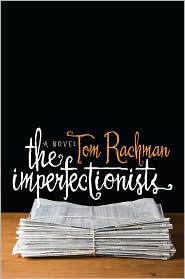
Tom Rachman, The Imperfectionists

I loved this book, another series of interconnected stories—funny and heartbreaking—about the lives of journalists who muddle through their lives while working at a failing newspaper in Rome.

Jonathan Franzen, The Corrections

I am re-reading this brilliant novel in preparation for my book group’s next selection—Franzen’s newly published Freedom. We are still going to travel to my boyfriend’s Midwestern family this Christmas. In fact, compared to the dysfunctional Lambert clan, this novel makes our own families seem like comforting wellsprings of sanity.
Read an excerpt from Perfection, and learn more about the book and author at Julie Metz's website.

The Page 99 Test: Perfection.

The Page 69 Test: Perfection.

--Marshal Zeringue

Tuesday, November 23, 2010

Jeri Westerson

Jeri Westerson is a journalist, author of Veil of Lies, Serpent in the Thorns, The Demon's Parchment, and noted blogger on things mysterious and medieval.

Earlier this month I asked her what she was reading.  Her reply:
Very often I find myself escaping from fiction by reading nonfiction. Of course, I read a lot of nonfiction anyway to research for my own fiction, but to escape even that, I’ll look for an interesting alternative. Usually, I don’t care for memoirs (I think of them as waaah texts: “Oh look at my poor tragic life.”). But in this case, I was drawn to Julia Child’s book My Life in France, as part of it was used for the delightful movie Julie and Julia. In the movie, I craved more of Julia and less of Julie and here it was in spades.

The fun part about reading the book is that you can hear her strident voice throughout and it’s a very charming read. I like to do my own fair share of gourmet cooking, though with a writer’s time constraints I don’t get to do as much as I used to. And let me tell you, the book makes you want to cook. She describes in almost lurid detail her adventures in dining in France, the amazing people she met and learned from, and how a bored housewife overseas discovered what was to become her life’s work. And oh the food! The butter! Sacre Deu! She even includes her beurre blanc recipe and all the details on how she labored over getting the recipes just so for American cooks with American ingredients so that each recipe would be utterly fool proof. Amazing to think that in the fifties, housewives preferred easy boxed food to the fresh stuff we enjoy now and that Renaissance was partly due to people like Julia Child. Do not read this book on an empty stomach. Bon appétit!
Learn more about the author and her work at Jeri Westerson's website, her "Getting Medieval" blog, and the Crispin Guest Medieval Noir blog.

Westerson wrote about Crispin Guest's place among fictional detectives for The Rap Sheet.

The Page 69 Test: Veil of Lies.

The Page 69 Test: Serpent in the Thorns.

The Page 69 Test: The Demon's Parchment.

--Marshal Zeringue

Sunday, November 21, 2010

Sarahlee Lawrence

Sarahlee Lawrence was born and raised on her family ranch in Terrebonne, Oregon. After a decade spent studying, traveling, river rafting, and earning an MS in Environmental Science and Writing from the University of Montana, she returned to the ranch, where she owns and operates an organic vegetable farm.

Her new memoir is River House.

Recently I asked Lawrence what she was reading. Her reply:
I read only non-fiction, mostly first-person memoir or the like. I am a slow reader and enjoy poetic prose from the late Ellen Meloy in Anthropology of Turquoise, Terry Tempest Williams’ in Red, or Edward Abbey’s Desert Solitaire.

The book on my bed stand is Harriet Fasenfest’s Householder’s Guide to the Universe. She’s full of vim and vigor and gets life on the page with all its complexities. Tough questions and tough answers.

Frankly, I don’t read enough. Between farming, family, rivers, and the drafts of my own book, I have very little time for sitting still or reading for pleasure. I admire anyone who does.
Read an excerpt from River House and learn more about the book at the publisher's website.

Learn more about Sarahlee Lawrence's organic vegetable farm.

--Marshal Zeringue

Friday, November 19, 2010

Signe Pike

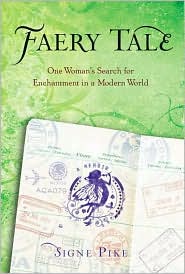
Signe Pike worked for Random House, Ballantine Books, and then Penguin/Plume before leaving New York City to write her newly released book, Faery Tale: One Woman's Search for Enchantment in a Modern World.

Earlier this month I asked her what she was reading. Her reply:
Perhaps it's my background as a book editor, but it seems I'm seldom able to just read one book at a time! Because editors are so busy reading and working on their author's manuscripts, we joke about never having time to read. Then I went straight from the editing world to researching my own book project, which required a lot of translated old texts, etc. so now that my own book is done, I am only just now getting the opportunity to read just for the fun of it... and I have a lot of catching up to do.

The first book I tackled was The Shadow of the Wind by Carlos Ruiz Safon. I was browsing the tables at a local bookstore when a customer saw it in my hands and and enthused, "You have to read that book." It's a stunning and gorgeously written gothic saga that takes place in 1950's Barcelona, and while it took me a good 50 pages to get truly sucked in, after that, I couldn't put it down. Safon does things with perspective and voice that most novelists would be hard pressed to pull off, and he does it with such an honest flourish - it's a story that stays with you long after you've turned the last page.

Now I'm caught between Little, Big by John Crowley and Diana Gabaldon's Voyager, the third book in The Outlander series. Such a dichotomy!

Little, Big tells the tale of Smoky Barnable as he travels by foot to a mysterious and otherworldly place called Edgewood -- it's literary, a wee bit experimental, daring, and voicey, and you have to work for it. Bookseller friends have told me (which made me feel better) that they picked it up and put it down several times before it caught its legs, and then they were absolutely riveted, so I continue to dip in when I feel so moved.

Diana Gabaldon, on the other hand, had me at hello. Fresh out of college, I was such a snob about any sort of romance - until I got assigned to assist two women at Ballantine books who specialized in romance and thrillers. I learned that romance novels are as soothing as bubble baths and chocolate, and also had the opportunity to read and help edit a good many of them. Romance writers are societal angels, put on this earth to fatten our imaginations, ease our heartbreak, and carry women away, often just when we need it most. They're my guilty pleasure. I had been hoping to read the Outlander series when it first came out but never had the time. Now that I've been to Scotland twice and spent a good deal of time there, I couldn't wait to get my hands on this sweeping and beautifully researched saga of a woman named Clare who somehow manages to fall through an ancient stone circle, finding herself in an 18th century Scotland. Now I can't get enough.

As a reader I'm always trying to keep myself open, to keep from pigeon-holing myself by saying, I only like literary fiction, or I only read memoir. Reading is so very personal, and it's such an escape -- I want to continue to surprise myself in what I read, learn, or am exposed to.
Read an excerpt from Faery Tale, and learn more about the book and author at Visit Signe Pike's website, blog, and Facebook page.

--Marshal Zeringue

Wednesday, November 17, 2010

Ken Harmon

Ken Harmon is the author of The Fat Man, "a satire of traditional Christmas stories and noir" in which "a hardboiled elf is framed for murder in a North Pole world that plays reindeer games for keeps, and where favorite holiday characters live complex lives beyond December."

Last week I asked him what he was reading. His reply:
I am not one of those readers that can read multiple books at once. Confusion is not the concern, but it always feels like an illicit affair, like the other book knows it is being ignored and that the characters in the story are plotting their revenge. But this article is not about my insanity. Presently, I am reading The Rise of Theodore Roosevelt, the first book in Edmund Morris’ trilogy. Last summer, I read, Candice Millard’s The River of Doubt about Roosevelt’s nearly fatal trip to the Amazon. I became curious about the man that would make such a trip.

Before I started the Morris trilogy, I read Mystery Man by Colin Bateman and laughed out loud at a character more insecure than me (see above comment regarding literary adultery) and before that I enjoyed Alan Bradley’s The Sweetness at the Bottom of Pie. Quite simply, I want to adopt his 11-year old heroine Flavia de Luce. I want to adopt her and take her to my office. If you knew Flavia, if you’ve ever worked in a sea of cubes, you’d know why.
Visit Ken Harmon's website.

The Page 69 Test: The Fat Man.

--Marshal Zeringue

Monday, November 15, 2010

Susie Linfield

Susie Linfield directs the Cultural Reporting and Criticism program in the graduate journalism department at NYU and is the author of The Cruel Radiance: Photography and Political Violence, which has just been published by the University of Chicago Press.

Earlier this month I asked her what she was reading. Her reply:
During the school year, when I'm teaching, it's often hard for me to read anything not connected to my work. But this summer I indulged in whatever I wanted. My partner and I were renting an old farmhouse in Great Barrington, and much to my surprise and delight, the owners were Philip Roth fanatics. I got to read--and re-read--tons of Philip Roth. Most memorable was The Anatomy Lesson, where the character of Milton Appel, the hectoring Jewish critic--based on Irving Howe--is reconfigured, in a moment of hilarious, malicious slyness, as a pornographer. Lying on a couch in a country house and re-reading these books--frequently bursting into fits of laughter--was pure bliss.

Less blissful, for obvious reasons, was Eliza Griswold's The Tenth Parallel, an account of her travels along the fault lines of Muslim-Christian antagonisms in parts of Africa and Asia. While the reporting in this book is highly impressive, I was somewhat less impressed with her analysis--or, rather, lack of analysis. Griswold left me wanting more--left me wanting to know what meaning she made of the deadly fanaticisms she was encountering.

As a journalist, I am addicted to newspapers; I read periodicals as much as I read books. And for various reasons, I am obsessed with (i.e. always worried about) the situation in the Mideast. Every day I read, on the web, Haaretz, the Daily Star of Lebanon, Al-Hayat, and Al-Ahram.

And last night, as a treat, I started The Finkler Question.
Read an excerpt from The Cruel Radiance, and learn more about the book at the University of Chicago Press website.

--Marshal Zeringue