Thursday, April 7, 2011

John Darnton

John Darnton is an award-winning journalist and best-selling novelist. He worked for forty years for The New York Times as a reporter, foreign correspondent and editor. He won two George Polk Awards and the Pulitzer Prize. He has written five novels: Neanderthal, The Experiment (both on the NYTimes best-seller list), Mind Catcher, The Darwin Conspiracy and Black and White and Dead All Over.

His new book is Almost a Family: A Memoir.

Recently I asked Darnton what he was reading. His reply:
Latest book was Flaubert's Sentimental Education, which I read for a book group (otherwise I probably would never have picked it up). It's a slow start and it's hard to sympathize with the main character -- almost all the characters, in fact -- but over some 460 pages, the satire takes a back seat and the story, about obsessive love, kicks in. By the end, it's unstoppable.
Learn more about the author and his work at John Darnton's website.

The Page 99 Test: Almost a Family.

--Marshal Zeringue

Wednesday, April 6, 2011

Stephen Anable

Stephen H. Anable was born in Boston and graduated from Stanford and Harvard universities. His short fiction and essays have been published in magazines and anthologies. At various times during his life, he has been a stand-up comic, a journalist, an actor, a social worker, a scriptwriter, and the communication coordinator at a cemetery.

His new novel is A Pinchbeck Bride.

Last month I asked him what he was reading. His reply:
Right now I’m reading The Wives of Henry VIII by Antonia Fraser. I had never known Henry VIII was basically a crowned serial killer who’d executed his wife Anne Boleyn on what he knew were trumped-up charges (I’d always thought she’d done something to tick him off…). I enjoyed Fraser’s classic biography, Mary Queen of Scots, so thought I’d give this a try. I like history from a remote period because it has nothing to do with (my) writing.

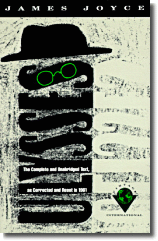
And, since you asked, I’m actually tackling re-reading Ulysses for the first time since college, when I crept gingerly through it while taking a course on James Joyce. I’m just loving it!—the whole detail of life on a warm spring day in Edwardian Dublin: the pubs, Trinity College, Mr. Bloom enjoying his fried liver, his wife thinking salacious thoughts. I picked this up because I needed a jolt of rich language, the reading equivalent of Black Forest cake.

Whenever I’m working on something and feel the need for stylistic inspiration, I read something luscious: Nabokov, Anne Sexton, Iris Murdoch, Ruth Rendell.
Visit Stephen Anable's website.

--Marshal Zeringue

Tuesday, April 5, 2011

Carolyn Korsmeyer

Carolyn Korsmeyer is Professor of Philosophy at the University at Buffalo. She is the author of numerous works in philosophy, especially aesthetics and philosophy of art, including Making Sense of Taste: Food and Philosophy (1999) and Gender and Aesthetics: An Introduction (2004). She is a past president of the American Society for Aesthetics.

Her new book is Savoring Disgust: The Foul and the Fair in Aesthetics.

Recently I asked Korsmeyer what she was reading. Her reply:
I have the habit, possibly not a good one, of reading several books at the same time. At the moment I am reading – or more accurately perusing – Mark Twain’s Autobiography, too hefty to be comfortable for long stretches of time but wonderful to pick up now and then. Twain is as pithy and amusing when writing letters or diary entries as he is when crafting fiction.

By my fireplace, resting on top of Twain, is W.G. Sebald’s Austerlitz, a compelling, weird, and mentally exhausting narrative of a man rediscovering his Jewish past, a past he forgot after being sent to Wales as a young child to escape the war in Europe.

Upstairs, I am reading Kipling’s Kim, which I recently bought in an airport bookstore and am finding quite absorbing. That followed Sue Grafton’s U is for Undertow, not only excellent airplane reading but also an intricately plotted book with vividcharacters and an increasingly likable narrator. Fiction keeps me going by providing excursions away from everyday demands. I need a daily dose and frequently reread old favorites. For bathtub reading I recommend paperbacks, preferably ones not on loan from friends.
Learn more about Carolyn Korsmeyer's Savoring Disgust at the Oxford University Press website.

The Page 99 Test: Savoring Disgust.

--Marshal Zeringue

Monday, April 4, 2011

Jim Krusoe

Jim Krusoe is the author of the novels Erased, Girl Factory, and Iceland. His stories and poems have appeared in the Antioch Review, Bomb, the Chicago Review, the Denver Quarterly, the American Poetry Review, and other publications. He teaches at Santa Monica College and lives in Los Angeles.

His new novel is Toward You.

Last month I asked Krusoe what he was reading. His reply:
About ten or so years ago I read a short fictional excerpt in Granta magazine that impressed me so much I kept waiting for it to appear as a book. Well, it has, and though it’s a short book, Javier Marias’s Bad Nature: With Elvis in Mexico does not disappoint. Marias has been a favorite writer of mine for some years now—especially his mid-career work—which seems to combine maximum elegance with breakneck daring, and Bad Nature exemplifies this seeming oxymoron more than most, especially the daring part.

The narrator of the story is a guy who accompanies Elvis during his stay in Mexico while he films Fun in Acapulco. (I should add here that another movie of The King’s, Blue Hawaii, was responsible for my starting to smoke. The film was so intensely unbearable that I went out to the lobby—I’d come with friends so it was impossible to leave—and, rather than kill myself on the spot, I bought a pack of Salems. They were my first cigarettes ever.) In any case, Marias’s Elvis exits fairly early, and the rest of the piece is like being trapped in a dream of sleazy a Mexican cabaret with prostitutes and gangsters, the dreamer facing nearly certain death. I loaned my own copy to a writer who promptly finished it and loaned it to another who loaned it to another, etc. It’s a fabulous read.

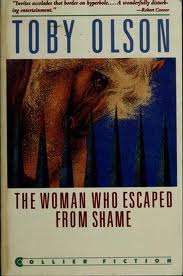
And speaking of dream-like novels set in sleazy Mexican cabarets with gangsters who threaten to kill the protagonist, I can’t resist mentioning here Toby Olson’s The Woman Who Escaped from Shame, even though I read it a while ago. It takes the above mix and adds to it pornographic movies and miniature horses (no, really miniature, the size of Jack Russell terriers). Olson’s novels move with the logic of beautiful and dangerous dreams; he’s another favorite of mine.

And then, speaking of mostly helpless individuals caught up in menacing dream-driven plots (are you detecting a theme?) I commend as well Julia Holmes’ first novel, Meeks, in which her hero/victim moves about in a world where the rules become clear only after it’s too late to change one’s actions. It’s radiant, funny, scary and disorienting—the best sort of read.
Read reviews and excerpts from Toward You, and learn more about the novel at the publisher's website.

The Page 69 Test: Girl Factory.

The Page 69 Test: Erased.

The Page 69 Test: Toward You.

--Marshal Zeringue

Sunday, April 3, 2011

Ben Kane

Ben Kane is the author of The Forgotten Legion and The Silver Eagle. He lives in North Somerset, England.

His latest novel is The Road to Rome, the final book in The Forgotten Legion trilogy.

Recently I asked Kane what he was reading. His reply:
I've been lucky recently, and managed to read several novels back to back. Normally, thanks to my writing and a young family, I manage one novel perhaps every 4 months. One of the recent treasures I've read is The Blade Itself, the first book of a wonderful trilogy by Joe Abercrombie. I've not read much fantasy since I was a boy, but this came so highly recommended by friends and on Amazon threads that I went for it. I wasn't disappointed either. Written from the standpoint of half a dozen or more characters, Abercrombie's writing is fast-paced, gritty and full of black humor. The fact that one of the main characters is a thoughtful torturer (with a tiny amount of remaining conscience) might give you some idea of what lies within the book's pages. I've since read the second book and am about to start the third, and delighted to know that there are more books set in the same world.

I've also been lucky enough to reread The Eagle of the Ninth by Rosemary Sutcliff. While it's a young adult title, the author wrote that her books were for all 'from eight to eighty-eight'. It's true to say that the book -set in first century AD Roman Britain and about the lost eagle standard of a legion - is as good now as it was when I read it as a ten or eleven year old. With two central characters - a maimed and bitter Roman centurion, and his slave, a courageous British tribesman, and central themes of honor, loyalty and the search for redemption against all odds, this book stands out as one of the best novels in the last 60 years. It's a suitable testament to its durability that it's still in print, 57 years after it was first published, and that it is currently showing in movie theaters all over the USA as The Eagle.
Visit Ben Kane's website and blog.

--Marshal Zeringue

Saturday, April 2, 2011

Larry D. Sweazy

Larry D. Sweazy's first western, The Rattlesnake Season, a Josiah Wolfe, Texas Ranger novel, was released by Berkley Books in 2009. Book #2 in the Josiah Wolfe series, The Scorpion Trail, followed in 2010. Book #3, The Badger's Revenge, was released on April 05, 2011, and Book #4, The Cougar's Prey, will be released in October, 2011.

A couple of weeks ago I asked him what he was reading. His reply:
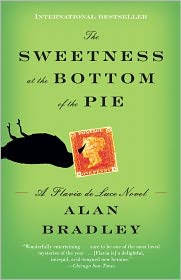
I’m just finishing up reading The Sweetness at the Bottom of the Pie by Alan Bradley. A couple of things grabbed me about this stunning novel right off, beyond the fact that it is a compelling read. It is a first novel, and the author was 70 years old when it sold. Simply put, it’s never too late to make your dream come true. Bradley obviously didn’t let his age stop him. The narrator, 11 year old Flavia de Luce, is written in first person. I thought it was a brave choice for a 70 year old male writer to tackle the voice of an 11 year old girl, but Bradley pulls it off seamlessly. Of course, Charles Portis pulled off nearly same thing with True Grit, but this is different, and just as literary. I love the idea that a writer has the courage and freedom to tell a story as he sees fit, and if it’s good enough, it will find an editor brave enough to buy it, who will then publish it, and set it out into the world to succeed or fail on its own merits.

The novel is a historical mystery set in 1950s England. Bradley had never been to England until after he wrote novel. More courage on the writer’s part. And even though the narrator is 11 years old, this book is not being marketed as a YA (young adult) novel, but as an adult mystery. All of that said, once the reader encounters Flavia, it’s a rip-roaring start to a great story, and a love affair that promises to last beyond the first book, since this is also the beginning of a series. Flavia is an aspiring chemist who lives in a house that was once considered one of the finest estates in England, but has fallen into disrepair. Flavia’s mother has died. Her father is heart-broken. And her two sisters are older, and off on their own adventures, pretty much leaving Flavia to herself to practice her chemistry. That changes when she finds a dead bird on the front stoop with a stamp stabbed through its beak, and hours later, when she finds a dead man in the garden, who is mysteriously connected to her grieving father. What comes next is a twist at every turn, description worthy of a master, quirky characters, and a fantastic mystery, that shouldn’t be missed. This is one of best debuts I’ve read in a long time.
Watch the trailer for The Badger’s Revenge, and learn more about the book and author at Larry D. Sweazy's website and blog.

The Page 69 Test: The Badger’s Revenge by Larry D. Sweazy.

Read--Coffee with a Canine: Larry D. Sweazy and Brodi and Sunny.

--Marshal Zeringue

Friday, April 1, 2011

John Vorhaus

John Vorhaus is the author of The Comic Toolbox: How to Be Funny Even if You’re Not. An avid poker player, he has written several books on that subject, including the bestselling Killer Poker series and the poker-world novel Under the Gun. A veteran creative consultant, he has taught writing in twenty-four countries on four continents, most recently running the writing staff of the Russian version of Married ... with Children.

His new novel is The Albuquerque Turkey.

Last month I asked Vorhaus what he was reading. His reply:
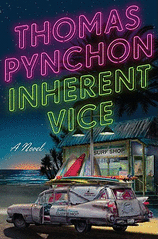
Since my next novel is set in 1969, I was excited to see how a master like Thomas Pynchon handled the task, and so picked up his noirish new novel, Inherent Vice, which follows the stoned adventures of detective Larry “Doc” Sportello through the drugs-and-corruption underworld of a semi-fictitious, late ‘60s Los Angeles. Having grown up in LA in the late ‘60s, I was interested to see where Pynchon’s research had yielded verisimilitude, and where he cut a corner or two in the name of good storytelling.

This is a challenge I’m facing every day in my current work, a coming-of-age tale set in Milwaukee in 1969. Of course I wasn’t there then, and Internet resources on the subject are scarcer than you might expect. Nor is it entirely necessary that I adhere strictly to ‘60s reality, since my protagonist is only fifteen years old, and his first-person narrative yields only the evidence available to a fifteen-year-old’s eyes. In this sense, I made a conscious decision to “cheat the research.” Had I selected a third person narrator, I would have been much more responsible for a full and accurate portrayal of the era – and the fact is, I hate research like a cat hates baths, for the simple reason that when I’m researching I’m not writing, and I’d rather be writing, full stop.

Interestingly, I detect a similar cheat in Inherent Vice. By assigning the storytelling to the limited, subjective (stoned) perspective of Doc Sportello, Pynchon deals himself the liberty of capturing such details as he sees fit, and ignoring or eliding the ones he doesn’t need or doesn’t choose to pursue. In that sense, I found Inherent Vice to be a totally uplifting read. If my approach mimics a master’s, it can’t be too off base.

On an emotional level, I thought I also detected something of Pynchon’s yearning, and in it a yearning common to all authors. Having succeeded in writing eyeball-bleed fiction (fiction that’s a challenge – albeit a worthy one – for the reader) he clearly decided to go for something less stressful here. I can almost hear his inner monologue: Sure, I can write riveting and authentic historical fiction (Mason/Dixon) and I can write game-changing science fiction (V, Gravity’s Rainbow) but can I write a pot-boiler? Dunno. Only one way to find out

“Only one way to find out.” These are the words, I think, that drive every writer to ever higher levels of challenge and achievement. No sooner have we conquered one writing task than we set ourselves new and more difficult ones. My own career is a picture-book history of this, as I progressed from advertising copywriter to songwriter to sitcom writer to hour-drama writer to screenplay writer to comic novelist to serious novelist. I have now arrived at a genre I define as “voice fiction,” fiction with something to say. I expect to be here for quite some time, but I don’t expect to stay here, because writing is a “have more/need more” condition. Once I’ve conquered voice fiction, I know I’ll be motivated to do something I haven’t done. That’s how a real writer rolls.

Just ask Thomas Pynchon.
Visit John Vorhaus's website and blog.

The Page 69 Test: The Albuquerque Turkey.

--Marshal Zeringue

Thursday, March 31, 2011

Nancy Martin

Nancy Martin, winner of the Lifetime Achievement award for mystery writing from RT Book Reviews, is the author of Foxy Roxy (originally published as Our Lady of Immaculate Deception) and the bestselling Blackbird Sisters mysteries. She lives in Pittsburgh, Pennsylvania.

Martin's new novel is Sticky Fingers.

Earlier this month I asked her what she was reading. Her reply:
Like many writers, I often read two books at once. This winter, I read Fannie Flagg’s I Still Dream About You while also plugging through Jonathan Franzen’s Freedom. Both books held me fast, and I soon realized they were both telling the same kind of story—although in very different ways.

I have spent the winter mulling over the best and worst qualities of what we might call an “epic” story—a grand, sprawling tale that attempts to define and illuminate a time and place. The Great American Novel is one, surely, that attempts to showcase America through the eyes of finely drawn characters who exemplify some noteworthy qualities in our national persona. (Definition is mine, so feel free to argue with me!)

The voice of Freedom is sure and clear—not exactly witty, but intelligent, and a distinctly—in my view—male perspective. The female characters all seemed to exist to serve the male characters, but perhaps that perception is a weakness of mine. (We are told over and over that Patty is smart as well as beautiful, but she makes one self-serving blunder after another.) I felt the author’s self indulgence in the rock star character who had it all—too much intelligence, sex appeal, and insight to be believable. Politics—including the sexual kind—as well as avarice, ambition and happiness are explored along with a flailing look at mountaintop mining. It’s all impressive, of course. But—perhaps because I live now in Pittsburgh, but spent a year on a West Virginia mountaintop—I felt a sting of the author’s disdain for anyone who lives west of the Delaware.

Fannie Flagg’s novel—told primarily from the point of view of a former Miss Alabama—is lighter and funnier, but no less ambitious in examining daunting issues. She explores the race riots in Birmingham, the rise and fall of the steel industry, and the push of commercial real estate that despoils communities. It’s all done with a much lighter tone, but perhaps that’s a wise move? She allows the reader to draw conclusions. Her male characters are all on the page to serve the female ones, however. And perhaps her characters are too glib, too funny, too saccharin? Miss Alabama listens to Rosemary Clooney and laments the loss of civility among business associates—a bow to the reading demographic the author is clearly courting--but the character spends the book contemplating suicide in no uncertain terms. The story is a balance of light and weighty.

I find myself wanting to talk to other readers about both books.—Surely that’s one sign they both deserve “epic” status?
Visit Nancy Martin's website and blog.

The Page 69 Test: Our Lady of Immaculate Deception.

The Page 69 Test: Sticky Fingers.

--Marshal Zeringue

Wednesday, March 30, 2011

Lela Nargi

Lela Nargi is a freelance reporter and author of books – some about food; some about material culture and knitting; and most recently, about bees, in the form of her first children’s book, The Honeybee Man (Schwartz & Wade/Random House, March 2011). She’s written numerous essays for such journals as Gastronomica, Petits Propos Culinaires, Descant, and Natural Bridge.

Earlier this month I asked her what she was reading. Her reply:
I’m in that weird holding pattern between books – wanting to read but not able to find just the right thing. Sometimes, this has to do with the fact that I’m in the process of writing a book or an essay and I’m purposefully not reading – I’ve found, to my horror, that I accidentally steal ideas, phrases, voices and not reading ensures that I stay honest. But at the moment, I’m just plain uninspired by the books I’ve got lying around.

Someone recently gave me a novel they thought I’d like, but I lost interest after a few pages. Novels are tricky. Those I enjoy are few and far between and usually not contemporary: Salinger’s Raise High the Roofbeam, Carpenters (which I’m actually thinking of picking up again – maybe this afternoon, it’s raining here in Brooklyn, perfect Salinger weather); The Moviegoer, Walker Percy’s first (and somewhat imperfect) first novel; T.H. White’s The Once and Future King, which I absolutely cannot wait to read to my daughter, once she’s old enough to be patient for the endless riveting descriptions of falconry and knightly arms and other arcana; Lolita of course. I don’t like to read just for reading’s sake; I don’t enjoy quick, simple reads to pass the time. I want to lose myself in language, the more unexpected the better. I’ve only ever made it through the first 75 pages of Ulysses (three times), but I’ve enjoyed every minute that I was reading and re-reading it.

I’m more frequently drawn to nonfiction, and I just put a library hold on To a Mountain in Tibet by Colin Thubron. I hope it will be as engrossing as some of my favorite “travel” books: The Black Tents of Arabia by Carl Raswan, Aldo Buzzi’s Journey to the Land of the Flies; My Journey to Lhasa by Alexandra David-Neel; Peter Matthiessen’s The Snow Leopard, which I admit, made me angry in fits and starts as I read it. This may not have been the case 10 years ago but now, as a parent, the idea of abandoning my young child (and one whose other parent has just died) in order to undertake my own spiritual journey, strikes me as self-indulgent in the extreme. Still, this didn’t impede my enjoyment – I don’t mind having conversations and arguments with the books I’m reading.

This brings me around neatly enough to the other category of book that is consistently appreciated in my house: the children’s book. There are two reasons for this. First, I’m someone’s parent and this someone, at the age of 7-1/2, still enjoys being read to at bedtime – and I am in absolutely no hurry to see this tradition come to an end. We’re in the process of finishing up J.M. Barrie’s Peter Pan, but we’re both finding ourselves in a bit over our heads. Some of the language eludes even me, which does not make for relaxing pre-bed story time. Past favorites have been Edward Eager’s books about magic; The House of Arden and The Magic City by Eager’s chief literary influence, the truly remarkable storyteller E. Nesbit; and the Little House on the Prairie series. I literally wept aloud as I read Wilder’s descriptions of her family’s first Christmas on the prairie, when Santa (in the unlikely guise of neighbor Mr. Edwards) has brought her and Mary each a tin cup, a candy cane, a heart-shaped cake and, making the whole experience almost too marvelous for them to bear, a shiny new penny. That, and her intense descriptions of Indians preparing for battle in their camps by the creek then finally, after days of terrifying war cries piercing the night, filing past the Ingalls' home on their horses, hundreds of them with their “proud straight” backs and eagle feathers waving on their heads and their “straight black hair” blowing in the wind. It’s not often I’ve felt the weight and fascination of American history. Man, do these books ever drive it home.

Second, I’ve just published my first children’s book, The Honeybee Man, about an urban apiarist and his tender relationship with his bees. Ever since I signed the contract with Random House three years ago, I’ve been inundated with requests from friends and acquaintances for my editor’s name, a contact email for my agent. It seems everyone has an idea for a children’s picture book; and how hard could one be to write, really? The truth is, amazingly hard. Trying to follow-up with a second one now, and finding the experience to be the greatest challenge of my writing career, I’m astounded that I ever managed to hammer out the first one. And that the bookshelves are teaming with excellent examples written by myriad excellent authors. I didn’t appreciate the genius of Sendak, Jean de Brunhoff, Ruth Kraus, Margaret Wise Brown, and Arnold Lobel before I wrote a kid’s book of my own. Well, yes I did, but I certainly did not fathom the challenges and complexities that lie behind a slim little picture-laden volume of 1,000 words. In a picture book more even than in a short story – which so many people believe to be the ultimate literary difficulty – the words you DO NOT write are ever so more relevant than those that you do. How do you flesh out a complete and engaging story, replete with emotional impact and global immediacy, in this minuscule space? I swear, it’s magic. Now I re-read my own childhood favorites – about wild things and talking elephants, giant carrots and runaway bunnies, best frog-and-toad friends – and am duly astonished.
Visit Lela Nargi's website and blog.

Read--Coffee with a Canine: Lela Nargi and Jaffa.

--Marshal Zeringue

Tuesday, March 29, 2011

Brad Parks

Brad Parks’s debut, Faces of the Gone, became the first book ever to win the Nero Award and Shamus Award, two of crime fiction’s most prestigious prizes. His second book, Eyes of the Innocent, is now out from St. Martin’s Press/Minotaur Books. Library Journal gave it a starred review, calling it “as good if not better (than) his acclaimed debut.”

Some time ago I asked Parks what he was reading. His reply:
On the face of it, I can think of few things – this side of Ulysses – that I would be less likely to read than a mystery series involving an Episcopal priestess.

I mean, I’m a guy! I like Jack Reacher! Harry Bosch! I’m not just going to read some precious little cozy with a…

Oh, wait, the Episcopal priestess is a former Army helicopter pilot? And she’s having a not-so-secret love affair with the town police chief? And the chief’s wife has just been brutally murdered, making the chief the lead suspect? And… well, hang on, this is getting interesting.

That’s the set-up for Julia Spencer-Fleming’s All Mortal Flesh. It’s the fifth book in her series involving Clare Fergusson and Russ Van Alstyne, but for whatever reason it was the first one I picked up.

I was quickly hooked. Her characters are fleshy and very human, with their nobilities and their imperfections existing quite plausibly side-by-side. The world she created for them is real and well-populated by interesting folks. And her pacing is sublime – brisk enough to keep things interesting, but not so fast that you lack time to digest the next surprising development.

And, really, her stuff defies easy categorization. It’s a bit of a traditional mystery, yet there are also harder-edged elements. It’s got romance, of course, but it’s a long way from having a shaved-chested dude on the cover. It’s also thriller-ish at times. And, man, can she throw in a wicked twist or two at the end.

Really, it’s just good writing. I’m now going back to the beginning of the series and starting with In the Bleak Midwinter – which won just about every Best First award in sight the year it came out – and getting some of the back-story between Clare and Russ. I hope to be caught up by the time the seventh book in the series comes out this spring.

Join me. You’ll have a great time.
Visit the official Brad Parks website and Facebook presence.

Read "The Story Behind the Story: Eyes of the Innocent, by Brad Parks" at The Rap Sheet.

The Page 69 Test: Faces of the Gone.

The Page 69 Test: Eyes of the Innocent.

--Marshal Zeringue