Wednesday, February 11, 2015

Sally Hepworth

Sally Hepworth has lived around the world, spending extended periods in Singapore, the U.K., and Canada, where she worked in event management and Human Resources. She is the author of Love Like The French, published by Random House Germany in February 2014. She lives in Melbourne, Australia with her husband and two children.

Her new novel is The Secrets of Midwives.

Last month I asked Hepworth about what she was reading. Her reply:
The last book I read was The Pilot’s Wife by Anita Shreve. This is a gripping novel about a woman who wakes to the news that a plane piloted by her husband has crashed, killing him and 103 passengers. An investigation into the crash ensues, forcing Kathryn into an investigation of her own, into her husband of fifteen years, a man she’d thought she known.

This book contains all the elements that I look for in fiction: mystery, romance, and surprises. The characters are well-drawn and Shreve’s language is emotive, though I will admit some of the imagery of the plane crash will take a while to be wiped from my mind. The structure—flipping back and forth in time—allows the backstory to be filled in in a way that helps unravel the mystery. The story continues to develop and by the end, I was positively unable to put the book down until its satisfying conclusion.

Right now I’m reading Little Mercies by Heather Gudenkauf, a novel about a social worker (and mother of three) who makes a tragic mistake that (according to public opinion) puts her alongside the parents she removes children from. It is also about a ten year old girl who suddenly finds herself alone in the world. When the lives of the two women collide –which hasn’t happened as of page 120—I’m told they will be able to help each other through their respective tragedies in unexpected ways.

So far, I’m intrigued. I’m only half way through, but this was one of those books that had me at ‘Hello.’
Visit Sally Hepworth's website, Facebook page, and Twitter perch.

The Page 69 Test: The Secrets of Midwives.

My Book, The Movie: The Secrets of Midwives.

--Marshal Zeringue

Tuesday, February 10, 2015

Patricia Bracewell

Patricia Bracewell taught literature and composition before embarking upon her writing career. The first novel of her trilogy about Emma of Normandy, Shadow on the Crown, was published by Viking in 2013. The second book in the series The Price of Blood has just been released.

I recently asked the author about what she was reading. Her reply:
At the moment I’m reading The Dovekeepers by Alice Hoffman – a book that’s been on my ‘to read’ list for a long time. The setting is Israel, and the story begins in the year 70 C.E. High marks to Hoffman for taking a dramatic historical event – the siege of Masada – and inventing a human story that takes place within the walls of that forbidding citadel. It’s a gripping tale of war, hardship and desperation told from the viewpoints of four women who endured it. She accomplishes what every historical novelist seeks to do – illuminate a time, a place, an event so vividly that the reader is sent scurrying to learn more. Her description of Masada was so compelling that I was doing an internet search for it even before I made it to the end of the book.

I’m also deep into the most recent Louise Penny mystery, The Long Way Home. This series is set in Quebec, and my Canadian husband and I have both enjoyed Penny’s books over the years. I’ve become quite fond of the recurring characters that live in her invented village of Three Pines. Three Pines itself is like a little town inside a snow globe, charming and hospitable – well, except when someone gets murdered. But not every novel is set there. Penny has taken us inside the walls of a nearby monastery, to Quebec City, to Montreal and in this most recent book we even make a flying visit into Dumfries, Scotland. There is always a mystery to be solved, of course, but I’m especially drawn to the relationships of her characters and I’m interested in how the author has managed to make them grow and change over the course of ten books. In between murders her characters reflect on human nature, death, loss, art, poetry, marriage and a host of other topics. These books are detective novels for deep thinkers.
Learn more about the book and author at Patricia Bracewell's website and blog.

The Page 69 Test: Shadow on the Crown.

My Book, The Movie: Shadow on the Crown.

--Marshal Zeringue

Monday, February 9, 2015

Peter Swanson

Peter Swanson is the author of two novels, The Girl with a Clock for a Heart, and The Kind Worth Killing, available from William Morrow in the United States and Faber & Faber in the United Kingdom. His poems, stories and reviews have appeared in such journals as The Atlantic, Asimov’s Science Fiction, Epoch, Measure, Notre Dame Review, Soundings East, and The Vocabula Review. He has won awards in poetry from The Lyric and Yankee Magazine, and is currently completing a sonnet sequence on all 53 of Alfred Hitchcock’s films. He lives with his wife and cat in Somerville, Massachusetts.

Recently I asked Swanson about what he was reading. His reply:
I am currently reading The Girl on the Train by Paula Hawkins. I am partly reading it because I've heard such good things about it, but also because I will be doing a reading with Paula Hawkins in England in February, and I always try to read the book of an author I'm speaking with. So far, the book is gripping, pulling you into the world of two very unreliable narrators. Can't wait to find out what happens next.

The book I just finished is Deep Water by Patricia Highsmith. It is one of her best, the story of a dysfunctional marriage that quickly turns murderous. Highsmith was the absolute best at painting portraits of everyday sociopaths, and Vic Van Allen, the protagonist in this novel, is absolutely chilling.
Visit Peter Swanson's website, Facebook page, and Twitter perch.

My Book, The Movie: The Kind Worth Killing.

The Page 69 Test: The Kind Worth Killing.

--Marshal Zeringue

Sunday, February 8, 2015

Dennis Palumbo

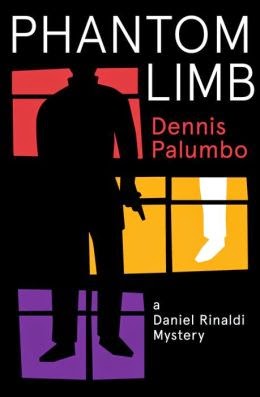
Formerly a Hollywood screenwriter (My Favorite Year; Welcome Back, Kotter, etc.), Dennis Palumbo is now a licensed psychotherapist and author. His mystery fiction has appeared in Ellery Queen’s Mystery Magazine, The Strand and elsewhere, and is collected in From Crime to Crime (Tallfellow Press). His acclaimed series of crime novels (Mirror Image, Fever Dream, Night Terrors and the latest, Phantom Limb) feature psychologist Daniel Rinaldi, a trauma expert who consults with the Pittsburgh Police.

Recently I asked Palumbo about what he was reading. His reply:
I’ve just finished the latest Michael Connelly, The Burning Room, featuring LAPD detective Harry Bosch. As usual, Connelly’s police procedure stuff is fascinating, and the plot complex, but there’s a subtle air of melancholy throughout the book. Bosch is perhaps a year away from retirement, and his eventual departure from the force (and perhaps the series of novels) lends poignancy to the story.

For a change of pace, now I’m reading The Return of George Washington, by Pulitzer Prize-winning historian Edward J. Larson. It covers the little-explored period in Washington’s life between resigning from the Continental Army and becoming our country’s first president. Fascinating, well-written stuff.
Visit Dennis Palumbo's website.

My Book, The Movie: Night Terrors.

The Page 69 Test: Phantom Limb.

My Book, The Movie: Phantom Limb.

--Marshal Zeringue

Saturday, February 7, 2015

John Fair

John D. Fair's books include Muscletown USA: Bob Hoffman and the Manly Culture of York Barbell. He is a retired history professor (Auburn University, Montgomery, and Georgia College & State University) and has competed in nearly eighty weightlifting/powerlifting meets, served on the national AAU weightlifting committee, and judged many physique competitions, including the 1973 Mr. America Contest. He is currently Adjunct Professor of Kinesiology and Health Education at the University of Texas at Austin’s Stark Center for Physical Culture and Sports.

His new book is Mr. America: The Tragic History of a Bodybuilding Icon.

Recently I asked the author about what he was reading. Fair's reply:
I am currently reading a lot accounts by and about Steve Reeves and the two autobiographies by Debbie Reynolds who co-starred with Reeves in the 1954 film Athena ​in preparation for my next book with David Chapman on "Muscles in the Movies."
Learn more about Mr. America: The Tragic History of a Bodybuilding Icon at the University of Texas Press website.

--Marshal Zeringue

Friday, February 6, 2015

Jamie Mason

Jamie Mason was born in Oklahoma City, but grew up in Washington, DC. She’s most often reading and writing, but in the life left over, she enjoys films, Formula 1 racing, football, traveling, and, conversely, staying at home.

Her new novel is Monday's Lie.

Recently I asked the author about what she was reading. Mason's reply:
I’m deep into Karen Abbott’s Liar, Temptress, Soldier, Spy and it’s every bit as good as I’d hoped it would be. Abbott is one of my favorite non-fiction writers going. I was hooked on her methods by American Rose: A Nation Laid Bare: The Life And Times of Gypsy Rose Lee. It was a book club assigned read, and I didn’t care one whit about Gypsy Rose Lee -- until about a paragraph and a half into that book.

Karen Abbott’s M.O., thus far anyway, is to take a slice of underreported history and show us what we’ve missed. The research makes it chewy, but the words make it delicious. She seems as interested in the language of her work as she is in the facts and the amazements of the stories she chooses to tell. It’s riveting.

This latest one, Liar, Temptress, Soldier, Spy, reveals the escapades of four female Civil War spies, two Union, two Confederate. Each woman’s background and personality are so vividly drawn that their adventures seem almost inevitable, because, well, of course they would do that. What else would they do? You feel like you know them.

It’s wonderful.

I just came off one of the best memoirs I’ve ever read: Josh Stallings, All The Wild Children. It’s an unusual stream-of-conscious timeline that reveals Stallings’ take on his tumultuous upbringing. But again, it’s the insights and the language that moved me, and both of these elements raise this story beautifully above a wallow. In the end, it kind of wrecked me, but I can only thank him for it.

So, I’ve had a good run of books lately. Up next, I’ve got a read-a-thon that’s the result of a contest I ran in the lead up to the release of Monday’s Lie. I gave away five copies (or will have done by the time this article runs) and the winners will each assign me a book that I’ll read in the week before my launch to keep my mind off my nerves. I hope they give me good ones!

Then for my own reading, the next on the pile is Station Eleven, by Emily St. John Mandel. I’ve heard so much good about this book. Can’t wait!
Visit Jamie Mason's website.

The Page 69 Test: Monday's Lie.

My Book, The Movie: Monday's Lie.

--Marshal Zeringue
Thursday, February 5, 2015

John Batchelor

John Batchelor is Emeritus Professor at the University of Newcastle. He was also previously a Fellow of New College, Oxford. His books include biographies of Joseph Conrad, H. G. Wells, Virginia Woolf, John Ruskin, and Tennyson: To Strive, To Seek, To Find.

Not so long ago I asked Batchelor about what he was reading. His reply:
What do I read? At the moment I read a great deal of Kipling, and a great deal about Kipling. I have recently read and reviewed the astonishing new 3 volume edition of Kipling's complete Poems (some 2000 pages in all) edited by Thomas Pinney, of Pomona University, and published by Cambridge University Press. I am also reading Kipling's prose including his Indian tales and his remarkable novel about the sea, Captains Courageous. I have also just re-read Kipling's Kim which I regard as a supreme masterpiece, a novel as great in its way as Joseph Conrad's near contemporary masterpiece Lord Jim. Both were published at the turn of the 19th and 20th centuries, the moment of historical transition between the Victorian age and the modern world.

Until he wrote Kim Kipling had displayed a racial distance from the Indians among whom he lived - a racial distance all too predictable, and all too understandable, within the context of the British Empire in Queen Victoria's later years. In Kim Kipling enters the skin of an Irish boy who in turn enters the skin of Indian people so completely for much of the narrative we can forget that he is technically 'white'. And the novel celebrates a beautiful, extraordinary relationship between two people of cultures both remote from that of the British reader for whom the text was written: the Irish boy who feels that he is Indian, and the Tibetan Lama who is seeking enlightenment and moral growth. The novel comes down, delicately but decisively, on the side of the Lama's world view rather than that of the British for whom it was written.

In addition I am reading historical studies of 19th century India, especially William Dalrymple's The Last Mughal, an account of the fall of Delhi in the Indian Mutiny of 1857.
Read more about Tennyson: To Strive, To Seek, To Find at the publisher's website.

My Book, The Movie: Tennyson: To Strive, To Seek, To Find.

--Marshal Zeringue

Wednesday, February 4, 2015

Michael Kardos

Michael Kardos is the author of the novels Before He Finds Her (2015) and The Three-Day Affair, an Esquire best book of 2012, as well as the story collection One Last Good Time, which won the Mississippi Institute of Arts & Letters Award for fiction, and the textbook The Art and Craft of Fiction: A Writer’s Guide. His short stories have appeared in The Southern Review, Crazyhorse, Harvard Review, and many other magazines and anthologies, have won a 2015 Pushcart Prize, and were cited several times as notable stories in Best American Short Stories. He was named by Library Journal as a Big Breakout Author for February 2015.

Last month I asked Kardos about what he was reading. His reply:
I’m researching my next novel, which involves a sleight-of-hand magician and a professional card sharp. So I’m currently reading (though “reading” isn’t exactly the right word: it’s more like wading through confusedly) one of the ur-texts of sleight-of-hand card magic, The Expert at the Card Table, first published in 1902 by an anonymous author with the pseudonym S. W. Ednase. The past century’s top card magicians all swear by this book, though a typically confounding sentence reads like this: “To cull four cards, numbers 3, 6, 2, 5 – undercut about one-third deck, in-jog first card and shuffle off. Undercut to in-jog, run one less than first number, in-jog running one more than second number, out-jog running one less than third number, and throw on top.” It’s not what you’d call a fast read.

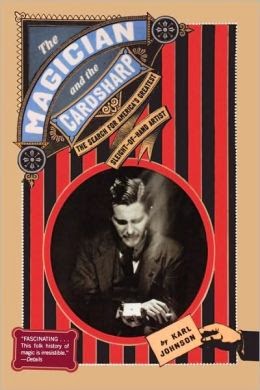
I’m also reading a terrific memoir about professional card cheats, specifically about the quest for the holy grail of false deals, the “center deal.” The book is The Magician and the Card Sharp by Karl Johnson.

Finally, I’m midway through a 1958 novel by W. C. Heinz called The Professional. It’s about a journalist who’s covering the training of a middleweight championship contender. I forget who recommended it to me, but it’s very good so far, and I admire how it is unabashedly about boxing, with a subplot of more boxing.
Visit Michael Kardos's website.

The Page 69 Test: The Three Day Affair.

My Book, The Movie: The Three-Day Affair.

My Book, The Movie: Before He Finds Her.

--Marshal Zeringue

Tuesday, February 3, 2015

Rebecca Scherm

Rebecca Scherm’s debut novel is Unbecoming, published by Viking. Scherm holds an MFA from the Helen Zell Writers Program at the University of Michigan, where she currently teaches. Her work has appeared in The New York Times, Jezebel, Subtropics, The Hairpin, Hobart, McSweeney’s Internet Tendency and Fiction Writers Review.

Recently I asked the author about what she was reading. Scherm's reply:
Right now I’m reading Almost Famous Women, Megan Mahew Bergman’s new collection. I bought it last night when I got the time of a friend’s reading wrong and arrived at the bookstore more than an hour early. What was there to do but curl up with a new book? Bergman’s stories are simultaneously grounded and strange, delicate and frank. Her work reminds me of Elizabeth McCracken. When other people began to arrive and I had to put the book away, I had that fiction jet lag, when you reappear in the real world and aren’t quite sure where or who you are.

Because my book is just out and it’s an exciting time (a little too) exciting for me, I’ve been rereading: Ann Patchett’s Bel Canto, which I sometimes think I know by heart, and Dashiell Hammett. Hammett is strange comfort food, I know, but it works for me.

Over the holidays I read Paula Hawkins’s The Girl on The Train, which was just delicious. I always read dark or violent books over Christmas, and I don’t want to think too deeply about why that is. I read Lolita on Christmas day many years ago, and I remember that as a very good Christmas.
Visit Rebecca Scherm's website.

--Marshal Zeringue

Monday, February 2, 2015

Thomas F. Schaller

Thomas Schaller is professor of political science, University of Maryland, Baltimore County. He writes a political column for the Baltimore Sun and lives in Washington, DC.

His latest book is The Stronghold: How Republicans Captured Congress but Surrendered the White House.

Recently I asked the author about what he was reading. Schaller's reply:
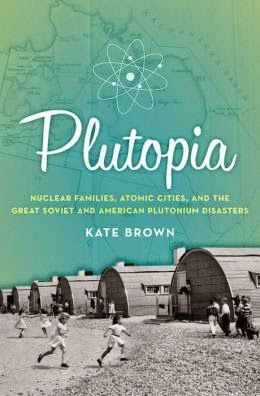
Right now I’m reading my UMBC colleague, noted historian and good friend Kate Brown’s book, Plutopia, about the atomic communities in America and the USSR. Kate is a great historian, in part because she’s a former journalist and investigates and interviews people with a keen eye and keener ear for human narratives—and then writes in a voice that engages readers.

I recently finished Lawrence Wright’s investigation of Scientology, Going Clear. It’s a fascinating account of Scientologists and their founder, L. Ron Hubbard. I found it a bit disappointing in its failure to explain how a person like Hubbard is capable of transforming himself from a minor figure into a cult leader. This is a fascinating—and frightening—process, one that tells us something about the human condition and how some individuals (not just religious leaders) capitalize upon human frailty. But otherwise, it was a good read.

As a DC'er, I also finally got around to reading Mark Leibovich’s This Town, which is one of those books that everybody inside the Beltway reads, pretends not to or not to have liked it if they do admit to reading it, but on some secret level actually did like. Leibovich provides a new take on an old critique about the self-serving and self-satisfied nature of the political-celebrity culture of the nation’s capital.

And then I always have a series of books I’ve started, put down, picked up and put down another time or two, but plan to finish at some point. At present that list includes works of both fiction (Chad Harbach’s The Art of Fielding) and non-fiction (Neil Shubin’s Your Inner Fish). And I confess my shame at having not gotten around yet to reading Thomas Piketty’s Capital in the Twenty-First Century. They ought to revoke my tenure for that transgression.
Follow Thomas F. Schaller on Twitter.

--Marshal Zeringue