Monday, April 13, 2015

Shanna Mahin

Shanna Mahin is a middle-aged, high school dropout with a fierce desire to overcome what her 9th-grade English teacher predicted would be a lifetime of wasted potential. She mourns his passing for a variety of reasons, not the least of which is the missed opportunity to point out that she has finally transcended a lifetime of shitty jobs—including dog walker (which was actually kind of great), cook, telemarketer, celebrity personal assistant, theme restaurant waitress, and failed drug dealer, all of which she feels comfortable saying, because the statute of limitations has got to be up by now—to become a bona fide writer. Yep. For money and everything.

Recent fellowships and residencies include the MacDowell Colony, the Norman Mailer Writers Colony, PEN Center USA Emerging Voices, the Atlantic Center for the Arts, Writers at Work, and the Eda Kriseova Creative Nonfiction Fellowship at the Prague Summer Program, among others.

Mahin's new novel is Oh! You Pretty Things.

Last month I asked the author about what she was reading. Her reply:
I just finished Bret Anthony Johnston’s Remember Me Like This. I picked it up because I loved his book on writing (Naming the World), and also because I bought a skateboard that has the book cover screened on it as part of a fundraiser for PEN Center USA. I don’t think you’re allowed to own a skateboard with an image of a book you’ve never read. And Oh My God. It’s so, so good. It’s such a magical blend of beautiful, literary writing (which makes sense, since he teaches at Bennington) and page-turning plot twists. It’s a brutal, violent, heart-wrenching story, but there’s virtually no violence on the page. I’m looking forward to reading it again (and again) to break down how he did that. It’s really something.

I always think I don’t like dystopian work (why do I think that?), so I probably wouldn’t have chosen Find Me if it hadn’t been written by Laura van den Berg, and that would have been a shame because it’s fantastic. Wait, am I using that word wrong? Do I mean post-apocalyptic? It’s kind of both. Like Bret Anthony Johnston’s book, it’s a perfect blend of fast-paced story and exquisite writing. When did all these literary writers get so damn good at high concept storytelling? I’ve been a fan of hers since her first book of stories, What the World Will Look Like When All the Water Leaves Us, but I went into this book squinting, partly because of the dystopian angle and partly because I sometimes find people who are great short story writers are often, well, less great novelists. Not so here.

Right now I’m reading Christopher Noxon’s Plus One, which is shaping up to be a scathingly funny send up of Hollywood celebrity culture, a subject close to my heart because it’s the same territory my book explores. I found him because we’re speaking on a panel together at the L.A. Times Festival of Books in late April. I’m trying to figure out a way to make him my new best friend. I’m going to start with alcohol. If that doesn’t work, maybe cupcakes.
Visit Shanna Mahin's website, Facebook page, and Twitter perch.

Coffee with a Canine: Shanna Mahin & Riley.

--Marshal Zeringue

Sunday, April 12, 2015

Moriah McStay

Moriah McStay attended Northwestern University and the University of Chicago. Two graduate degrees and seven jobs later, she’s finally figured out what she wants to be when she grows up. Now she lives in Memphis, Tennessee, with her husband and three daughters. She’s happy with all the choices and chances that brought her there.

Everything That Makes You is her first novel for teens.

Late last month I asked the author about what she was reading. McStay's reply:
As a 2015 YA debut, most of the books I’ve read recently have yet to come out. (Some of my favorites have been The First Time She Drowned by Kerry Kletter and Simon vs. the Homo Sapiens Agenda by Becky Albertalli, so keep an eye out for those.)

However, I just enjoyed a leisurely week at the beach, during which I devoured The Bone Clocks by David Mitchell. Like most of Mitchell’s books, it’s hard to pinpoint what The Bone Clocks is about. It begins in England in 1984, as fifteen-year-old Holly Sykes runs away from home to live with her much older boyfriend. The first section is told from Holly’s point of view. We see her on and off through the rest of the book, in chapters told through other characters. The final section is once again hers, sixty or so years later.

Like Mitchell’s Cloud Atlas, The Bone Clocks takes significant leaps of time and jumps heads in a way that’s not altogether clear, at first. While I think Cloud Atlas was the better book—pure genius, really—Mitchell performs the same magic with The Bone Clocks, masterfully weaving storylines through at the end. Various themes run through this book—love, classism, have-and-have-nots, mortality and the stretch of time. It’s a dense, beautifully written thing, with just the right amount of strange thrown in. I was happily surprised by some overlapping characters and plot point from two of his other books, Cloud Atlas and The Thousand Autumns of Jacob de Zoet. I have no idea if he planned the connections ahead of time or if they occurred to him while writing, but it’s a great little treat for those who read those prior. Mitchell’s written several other books I haven’t read, and my curiosity has been piqued. I want to know what other little secrets hide in those books.
Visit Moriah McStay's website.

--Marshal Zeringue

Saturday, April 11, 2015

Kirker Butler

Kirker Butler has worked as a lifeguard, a country music DJ, a Tommy Hilfiger Jeans specialist, a medical supply deliveryman, a Christian music DJ, a bartender, a precious jewelry clerk, a prop PA, a telemarketer for a comedy club, a wedding DJ, a brewery waiter, a videotape editor, an entertainment news producer, an actor, a bouncer at a nightclub (one night), a host at a different nightclub, a singing telegram guy, a receptionist at Neiman Marcus, and the set decorator for N’SYNC’s first “I Want You Back” video.

Today, Butler is a two-time Emmy nominated writer and producer who has written for Family Guy, The Cleveland Show, The Neighbors, and Galavant. His graphic novel, Blue Agave and Worm was published in 2010. Additionally, Butler has written for The Academy Awards, E! News Daily, and the WB series What I Like About You.

His new novel is Pretty Ugly.

Recently I asked him about what he was reading. Butler's reply:
Because my brain works better if I’m doing more than one thing at a time, I am currently reading three books. I’m almost finished with Paul Beatty’s The Sellout and it is hands down the funniest book I’ve read in a long time. It’s absurd and infuriating and hilarious and illuminating. It’s one of those books that so well done it almost makes me angry.

I’m also reading the e-book Chunk, my friend Brian Donovan’s memoir about growing up as a fat kid and into a fat adult. It’s very poignant in places and very funny throughout.

I also just started Elmer Gantry by Sinclair Lewis. It’s been sitting on my shelf for a couple years now, and it just felt like the right time to take it down and read it. I’ve been kicking around a story idea about an evangelist who rises to fame, and then I thought, “maybe I should save myself the trouble and just read Lewis’ much better version of the story I would write.”
Visit Kirker Butler's website.

The Page 69 Test: Pretty Ugly.

--Marshal Zeringue

Thursday, April 9, 2015

Robert K. Lewis

Bay Area resident Robert K. Lewis has been a painter, printmaker, and a produced screenwriter.

His new book is Innocent Damage, the third novel featuring ex-cop and recovering junkie Mark Mallen.

Recently I asked Lewis about what he was reading. His reply:
There are actually quite a few books on my nightstand at the moment…

I’m currently working on an article for a brand new crime fiction fan site, The Life Sentence. The subject of the article is Don Pendleton’s The Executioner series. I’d read quite a few of these books in the very distant past, so I thought it would behoove me to go back and re-read the first five or so, along with a few of the more recent ones, to help reacquaint myself with the series protagonist, Mack Bolan. I was happy to find that the books are still a complete fun ride, and the titles still ring fabulous for me: War Against the Mafia, Battle Mask, Miami Massacre, Slayride, etc.

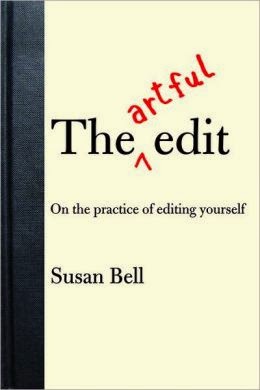
Next on my nightstand is one of the greatest books ever written for writers regarding the subject of self-editing: The Artful Edit, by Susan Bell. I’ve read it many times and it’s become sort of a ritual to read before I begin an edit on a current book project.

Then there is Creative Visualization by Shakti Gawain. This is an incredibly helpful book, as it aids me in visualizing how I want my career to go, and then to go out and make it happen. Beyond that, it shows us how empowered we really are in directing and defining our lives.

And finally, there is Narcissus and Goldmund, by Herman Hesse. I know this seems out of place, given that I write about the seedy underworld of San Francisco’s Tenderloin district, however it’s one of my all-time favorite novels, one that I read over and over again. Narcissus and Goldmund is perfect in its symmetry and character development, and as a writer, I’m a strong advocate for reading outside your genre as often as you can.
Visit Robert K. Lewis's website and blog.

The Page 69 Test: Innocent Damage.

--Marshal Zeringue

Wednesday, April 8, 2015

Declan Burke

The Lost and the Blind is Declan Burke’s sixth novel. Previous novels include Eightball Boogie, Crime Always Pays and Absolute Zero Cool.

Late last month I asked the author about what he was reading. Burke's reply:
I know that there are some crime / mystery authors who prefer to read outside the genre, for fear of being unduly influenced (or subconsciously mimicking) another writer’s style or story, but most of my reading tends to be in the genre. What I’m always looking out for, though, are crime / mystery novels that deliver more than a straightforward (or, indeed, delightfully complicated) ‘whodunit’.

So far this year I’ve come across a few novels that delivered a very satisfying read in that respect. The first was Celeste Ng’s debut, Everything I Never Told You. It opens dramatically, by telling us that, “Lydia is dead. But they don’t know this yet.” We subsequently discover that Lydia Lee, the teenage Asian-American daughter, had drowned in a local lake, although no one knows if the drowning was murder, suicide or a tragic accident. As it happens, the distinction remains blurred throughout as Celeste Ng investigates not only Lydia’s life, but also that of her parents, James and Marilyn Lee. In the process she explores issues such as proto-feminism (the novel is set in the 1970s, but frequently harks back to the 1950s), cultural assimilation (or lack thereof), and racial identity, all of which are issues the teenage Lydia was trying to accommodate, as well as deal with the pressures of adolescence. The book reminded me very much of Megan Abbott’s work, which I intend as a very high compliment.

Another novel I found very striking was Richard Beard’s Acts of the Assassins, which opens with Jerusalem-based Roman speculator – i.e., investigator – Gallio charged with discovering the whereabouts of the missing body of the recently crucified cult leader, Jesus. The book is the second in Beard’s ‘Messiahs Trilogy’ (the first was Lazarus is Dead), and while the story that evolves does so in large part faithful to the events of the New Testament and the Acts of the Apostles – fascinating enough, in my opinion – Beard also brings a narrative style he calls ‘quantum fiction’ to the table. This allows him to not only compress the time period of the New Testament, which means that Gallio find himself on the trail of what appears to be a serial killer who is murdering the apostles in a variety of gory ways, but also allows him to treat the historical tale in a contemporary fashion – e.g., Gallio uses modern technology, takes airline flights, and has access to contemporary weaponry. It’s a compelling investigation on the one hand, but it’s also a profound meditation on faith. It is also, you might be surprised to learn, very funny.

Finally, John Connolly’s latest Charlie Parker novel, A Song of Shadows, represents yet another step forward from a writer who might be entitled to rest on his laurels at this stage. A private investigator, Parker is recovering in the coastal Maine town of Boreas from very serious wounds sustained in his previous outing, The Wolf in Winter (in fact, Parker has been declared clinically dead three times, and resuscitated), but when an amateur Nazi-hunter washes up dead on a nearby beach, Parker finds himself thrust into an investigation that brings him face to face with the horrors of the Holocaust. The supernatural elements of the Parker novels remain, but Connolly has increasingly bent the tropes to fit the language of mythology, and here Parker is characterised rather explicitly as a Christ-like figure who is prepared to make the ultimate sacrifice on behalf of his fellow man (and woman).
Visit Declan Burke's Crime Always Pays blog.

--Marshal Zeringue

Tuesday, April 7, 2015

Aline Ohanesian

Aline Ohanesian was born in Kuwait and immigrated to So. Cal at the age of three. After getting her MA in History, she abandoned her PhD studies when she realized her heart belonged to the novel. Her writing was a finalist for the PEN Bellwether Award for Socially Engaged Fiction and the Glimmer Train Best New Writers Award.

Ohanesian's new novel is Orhan's Inheritance.

Recently I asked the author about what she was reading. Her reply:
I just finished re-reading To Kill a Mockingbird. I hadn't read it since middle school, so when the controversy broke out about Harper Lee's second novel, I wanted to revisit her first book with fresh eyes. I have to say that the book deserves every accolade it has ever received. It's truly a timeless masterpiece. I love a novel that can make me care deeply about a set of characters, teach me about the political and social issues of a particular historical period, and keep me guessing and interested the entire time. Some award winning books make you scratch your head at all the praise they receive, but this isn't one of them. Oddly enough, I had just finished American Pastoral by Philip Roth. It won a Pulitzer and though it was smart, I didn't enjoy reading it. I didn't care all that much about "The Swede." The narration and over analysis got in the way of the story telling and the political allegory could be oppressive at times. The treatment of women in the book was just awful. They were all either cold, violent, mentally unstable, or over-intellectual. (Roth's estimation, not mine.) Reading these two novels one after the other created an interesting juxtaposition in my mind. Every novel is an exploration of the human spirit. I'd rather explore with Ms. Lee as my guide.
Visit Aline Ohanesian's website.

The Page 69 Test: Orhan's Inheritance.

--Marshal Zeringue

Monday, April 6, 2015

Margaret Dilloway

Margaret Dilloway is the author of How to Be an American Housewife and The Care and Handling of Roses with Thorns.

Her new novel is Sisters of Heart and Snow.

Recently I asked Dilloway about what she was reading. Her reply:
I began Outlander a few days ago because of several obsessed friends who kept talking about the books and the new TV series. Now I’m obsessed with it. I bought the book to entertain me on a long flight but I’m almost done with it—I’ll have to get the next book for my trip! I made my husband watch the first episode, too, and he just said, “It was okay.” Can you believe it? I guess he wasn’t quite as into the romance of it. He just started talking about time-traveling incongruities, but hopefully there are enough of those and battle scenes that he’ll stay interested, too.
Visit Margaret Dilloway's website and blog.

My Book, The Movie: The Care and Handling of Roses with Thorns.

The Page 69 Test: The Care and Handling of Roses with Thorns.

Coffee with a Canine: Margaret Dilloway and Gatsby.

--Marshal Zeringue

Sunday, April 5, 2015

S. M. Hulse

S. M. Hulse received her MFA from the University of Oregon and was a fiction fellow at the University of Wisconsin–Madison. Her stories have appeared in Willow Springs, Witness, and Salamander. A horsewoman and fiddler, she has spent time in Washington, Montana, Idaho, and Oregon.

Hulse's new novel is Black River.

Recently I asked the author about what she was reading. Her reply:
Lately, for no particular reason, I’ve found myself reading quite a few books about Alaska. I suppose it’s a natural outgrowth of my interests in Western literature and in exploring the ways in which people are shaped by places and vice versa. Two standout titles include Richard Leo’s memoir Edges of the Earth and Eowyn Ivey’s novel The Snow Child.

Edges of the Earth chronicles Leo’s move to Alaska from New York City and his first years homesteading with his family. While I wouldn’t be temperamentally suited to living in similar circumstances, something about the idea of taking off for the wilderness undoubtedly holds a certain appeal for many of us, and I enjoyed reading about the ups and downs of Leo’s early days in rural Alaska.

The Snow Child is a reimagining of a classic Russian fairy tale in 1920’s Alaska. I appreciated the way Ivey incorporated the fantastical elements of the story with very detailed, realistic depictions of what it must have been like to attempt to forge a living in a remote part of Alaska at that time in history.
Visit S. M. Hulse's website.

The Page 69 Test: Black River.

--Marshal Zeringue

Saturday, April 4, 2015

Stacy Henrie

Stacy Henrie has always had an avid appetite for history, fiction and chocolate. She earned her B.A. in public relations from Brigham Young University and worked in communications before turning her attentions to raising a family and writing inspirational historical romances.

Henrie's latest novel is A Hope Remembered.

Recently I asked the author about what she was reading. Her reply:
I recently read Lost in Shangri-La: A True Story of Survival, Adventure, and the Most Incredible Rescue Mission of World War II by Mitchell Zuckoff. It was exactly the kind of nonfiction book I love to read—one that is well written, reads more like a story than a textbook, and highlights some lesser known piece of history. This book, about two men and one woman who survive a plane crash in the jungle of New Guinea among a native tribe, was fascinating. Their time among the natives and their daring rescue made this a page-turner.

I also finished re-reading The Dressmaker by Kate Alcott. This story about the Titanic hearings is also a fantastic read. Part women’s fiction, part romance, I love how this book explores the bravery and cowardice of humans in the face of severe trial as we follow Tess Collins, a seamstress anxious to change her future, aboard the fated ship and through the senate hearings.
Visit Stacy Henrie's website.

My Book, The Movie: Hope Rising.

The Page 69 Test: Hope Rising.

The Page 69 Test: A Hope Remembered.

--Marshal Zeringue

Friday, April 3, 2015

Judith Claire Mitchell

Judith Claire Mitchell is the author of the novels The Last Day of the War and A Reunion of Ghosts. She teaches undergraduate and graduate fiction workshops at the University of Wisconsin-Madison, where she is a professor of English and the director of the MFA program in creative writing. She has received grants and fellowships from the Michener-Copernicus Society of America, the Wisconsin Institute for Creative Writing, the Wisconsin Arts Board, and Bread Loaf, among others. She lives in Madison with her husband, the artist Don Friedlich, and Josie the West Highland White Terrier.

Last month I asked the author about what she was reading. Mitchell's reply:
Mostly what I read are short stories and novels in draft form by undergraduates and graduate students. This is a pleasure, but a different kind of pleasure from reading actual published books. Recently, however, I did manage to get through two published books, one a novel and the other a biography.

First, the novel: I’d been hearing lots about the British author Sarah Waters so I got hold of her latest, The Paying Guests, without knowing a thing about it. It turned out to be a riveting story set in the 1920s about murder and love affairs and, equally as interesting, domestic life after World War One. It was an intense read, gripping and rapidly paced, with a lot of food for thought, particularly about the way lesbians had to navigate their world back then, but while it was definitely a page-turner, there was a satisfying balance between plot and characterizations, and I appreciated the larger story of how we adjust (or fail to adjust) to the world that seems to change too slowly for some of us and too rapidly for others.

I also plowed through John Lahr’s biography of Tennessee Williams. I will read anything John Lahr writes and I’m fascinated by the plays of Tennessee Williams as well as by the way artists with enormous egos are able to function in the world, so, although it was long, I enjoyed it from start to finish. My one problem with biographies, though, is that you inevitably wind up getting attached to the main characters, and then they always go and die in the end. In the case of Tennessee Williams, however, I think it was a miracle he didn’t die in the middle.
Visit Judith Claire Mitchell's website.

Coffee with a Canine: Judith Claire Mitchell & Josie.

The Page 69 Test: A Reunion of Ghosts.

--Marshal Zeringue