Saturday, January 12, 2013

Christine Wade

Christine Wade is a researcher and writer who fell in love with the Hudson River when she first attended Bard College and has lived on its shores in New York City and the Catskill Mountains ever since. Seven Locks, her first novel, won a James Jones Fellowship Award for an unpublished novel in 2009.

Recently I asked the author about what she was reading.  Wade's reply:
Well, it is not hard for anyone to imagine that when you are researching and writing a novel you can only read books that pertain to it. But what surprised me as a first-time novelist is that during the production year it is also difficult to read randomly or at all. At times I like to read in a focused way: all of one century, all of Bloomsbury or The Beats, all of one author. But at other times I like to read randomly and jump around to books as I come upon them. It is interesting that even then reading themes emerge.

Both of my recent picks just happened to be about New York in the 70’s: Just Kids by Patti Smith and Let the Great World Spin by Colum McCann. Both books were standing upright among the librarian’s choices on the display table at my local library, albeit on different weeks. As a cruise through that era I definitely preferred the novel, which was much broader and ultimately deeper. It depicted many aspects of those times that Smith didn’t touch, and I think it said more about relationships too. I found Smith a little cagey---stylistically upfront and casual, seemingly honest but ultimately a low revealer. She writes well though and a tour through the downtown streets and art scenes of the day was worth the trip.

Let the Great World Spin had me hooked by page 60 because it quoted Rumi so joyously from the mouth of a character unlikely to read Persian verse and made her poetic outburst seem entirely authentic. McCann can make the unexpected believable: He is able to channel his inner sex worker from the Bronx and his radical liberation theology priest from Ireland and his enterprising single mother from Guatamala all in equal measure. And others too. He is a weaver in the way that epic story tellers are. And he connects the many threads that comprise a day in the not so distant, but distant enough past, to the cloth wrapped around our post 9/11 present. We have been here before and know the place, and are delighted to be here again. Though I barreled through the book to the finish, days later the voices of his cast of characters are still whispering to me as I walk the streets of New York, looking up between the tall buildings to the sky.
Visit Christine Wade's website.

The Page 69 Test: Seven Locks.

My Book, The Movie: Seven Locks.

--Marshal Zeringue

Friday, January 11, 2013

Marilyn Yalom

Marilyn Yalom was educated at Wellesley College, the Sorbonne, Harvard and Johns Hopkins. She has been a professor of French and comparative literature, director of an institute for research on women, a popular speaker on the lecture circuit, and the author of numerous books and articles on literature and women's history. In 1991 she was decorated as an Officier des Palmes Académiques by the French Government.

Yalom's books include Maternity, Mortality, and the Literature of Madness, Blood Sisters: The French Revolution in Women's Memory, A History of the Breast, A History of the Wife, Birth of the Chess Queen, The American Resting Place, and How the French Invented Love: 900 Years of Passion and Romance (2012).

A couple of weeks ago I asked the author about what she was reading. Yalom's reply:
Robert Massie’s Catherine the Great lives up to its best-selling hype. It really is meticulously researched, artfully crafted, and immediately compelling. Surprisingly, this massive biography reads like a novel seen from the point of view of its heroine, the very great Catherine, who comes across as exceedingly human, even approachable, as she ascends to power and learns to command a vast empire. Massie seems to have entered into her skin and given her voice.

Unlike many other rulers, male and female, Catherine left behind a treasure trove of personal as well as state documents. Written in French, Russian, and her native German, these documents give us rare access into Catherine’s mind as she corresponded with French philosophes like Voltaire and Diderot, as she beckoned her lovers in intimate missives, and as she took it upon herself to write a new set of laws for her empire. How this offspring of minor German nobility made her way to Russia as a teenager, was married off to the hapless heir to the Russian crown, learned Russian, changed her religion from Lutheranism to Russian Orthodoxy, got rid of her husband and replaced him, and then ruled successfully for almost four decades makes for a gripping, sprawling, exciting epic.

As a female monarch, Catherine ranks right up there with Elizabeth I of England, and was arguably even more influential than Cleopatra, Maria-Theresa of Austria, and Queen Victoria—all legendary rulers. Several years ago, when I was writing Birth of the Chess Queen, I discovered that Catherine, like Elizabeth I, was a fine chess player, and it was because of her renown that the chess queen ultimately made its way onto the Russian chess board. Whereas other European nations had been using the chess queen as a replacement for the Arabic vizier since the year 1000, it took the Russians 800 years longer to allow a female figure onto the board. Had it not been for Catherine, the Russians might still be playing chess with all masculine or animal figures. It’s high time for another major female figure to make her way into the Russian political scene!
Visit Marilyn Yalom's website.

Yalom's How the French Invented Love is one of Publishers Weekly's top nonfiction books of 2012.

--Marshal Zeringue

Thursday, January 10, 2013

Fiona Halloran

Fiona Deans Halloran teaches history at Rowland Hall-St. Mark's School in Salt Lake City, Utah. Her new book is Thomas Nast: The Father of Modern Political Cartoons.

Last year I asked the author about what she was reading. Halloran's reply:
My reading these days veers wildly between books that interest me for some reason and books I’ve assigned to students. One price of teaching such smart, thoughtful young people is that I have to keep up. I don’t mind – even with books I’ve read before my school-related reading introduces me to new ideas and reminds me of my favorite stories in American history.

One such book, which I finished for the third time last week, is John Mack Faragher’s Daniel Boone. Tracing Boone’s life from his origins in a Quaker-dominated village settled by his grandparents to his death in Missouri, Faragher encouraged me to watch the settlement of Kentucky from a variety of perspectives. For Boone, it was an adventure, a challenge, a business and a vocation. For many settlers from North Carolina and Virginia, Kentucky represented freedom from planter domination. Native people, especially the Shawnee, feared the aggression of white settlers and sought to protect hunting lands. Faragher’s greatest strength lies in his ability to celebrate cultural conflict as the result of cascading, interconnecting accidents. But for this, everything might have been different. But for that, Boone might not have found himself trapped inside a besieged fort, dodging bullets and sympathizing with his daughter Jemima (who had been shot in the rear end).

I love American history. I’ve loved it since I learned to read. But European history is like a guilty pleasure. It’s that secret slug of eggnog you grab when no one’s looking. Whenever I can steal some time from my work-related and research-related reading, I reach for something European.

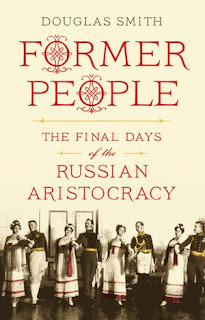
Right now, I’m reading Douglas Smith’s Former People. Tracing the lives of aristocrats during the Russian Revolution, the book reveals a side of early Soviet history I’ve never encountered. He builds the book around two families – the Sheremetovs and the Golitzyns – but the cast of characters rivals The Forsyte Saga. They all suffer. Many die. Some sympathize with the Revolution, some resist it. Some escape, others remain in Russia for honor, stubbornness, or patriotism. Smith can explain complicated ideas (like the bizarre and unpredictable reconstruction of “class” by the Soviet government in the 20s) with admirable clarity. But his sensitive tone and obvious sympathy for his subjects helps bring them back to life.

It’s such a sad, terrible story that at times I have to put it down. And of course, like so much history, there ain’t no happy ending.
Learn more about Thomas Nast at The University of North Carolina Press website.

My Book, The Movie: Thomas Nast.

--Marshal Zeringue

Wednesday, January 9, 2013

Carola Dunn

Carola Dunn is the author of 20 Daisy Dalrymple mysteries, set in
England in the 1920s, three Cornish mysteries, and over 30 Regencies.
Her latest books are Gone West (Daisy) and The Valley of the Shadow (Cornwall).

Not so long ago I asked Dunn about what she was reading.  Her reply:
Half the Sky by Nicholas Kristof and Sheryl WuDunn

An old Chinese proverb says: Women hold up half the sky. Until recent years, China didn't do very well at observing the implication, that women's contribution to society is as important as men's.

Nicholas Kristof and his wife, intrepid journalists, have been all over the world documenting the condition of women. Their book starts out with some appalling stories of horrible things done to women just because they are women, so appalling I wasn't sure I could go on reading. But gradually they introduce ways of helping to change how societies treat the female half of humanity. They end on a hopeful note: Things are changing, will change, and while never perfect can be much improved. They suggest ways the reader can contribute to positive change.

Chasing Venus: The Race to Measure the Heavens by Andrea Wulf

This is a fascinating story about how scientists from all over Europe travelled all over the world in the 1700s to measure the rare transit of Venus across the face of the sun. It occurred twice in that century then not again until the late 1800s. This measurement would allow calculation of the dimensions of the solar system and be of inestimable value to navigation. The scientists faced all the difficulties and dangers of travel at the time; among others, a war between France and England. Though astronomers from both countries took part, they were not immune to getting involved in naval battles.

On the lighter side, I've been rereading some Edmund Crispin (aka Bruce Montgomery) mysteries from the '40s and '50s. His protagonist, Gervase Fen, an Oxford lecturer, is one of my favourite amateur detectives. He gets involved in the most extraordinary adventures. For instance, in The Moving Toyshop he figures out how and why a toyshop found in one part of Oxford one night miraculously reappears in another part of the city thereafter. Not to mention what actually happened in the shop and who is responsible.

Also for fun, I've read the recent books of a couple of favourite fluffy/cozy authors, Marian Babson (No Cooperation from the Cat; The Cat who Wasn't a Dog) and JoAnna Carl (The Chocolate Cupid Killings; The Chocolate Cupid Clue). As you can see, Marian's books tend to favour cats, whereas I'm a dog-person, but she's a good writer. JoAnna (aka Eve) sets her stories in a chocolate shop, instant success as far as I'm concerned.

At present I'm reading Wealth and Poverty of Nations, by David S. Landes, because it was cited by Kristof and sounded interesting—I've always had an interest in geography's influence on culture [If I remember correctly, I wrote in one of these blogs about Jared Diamond's Collapse, which contrasts the environmental fates of pairs of apparently similar societies]. Purely as a writer, Landes is by no means as good as Kristof, much of whose prose is crystalline. But Kristof is a journalist (not that that guarantees good writing!) and Landes is an economic historian.

And I just finished it. Landes gets a bit over-polemical as he reaches modern times, but I was sorry that, having written it in the late '90s, it didn't cover the past 15 years or so. I would have liked to see what he made of them.
Learn more about The Valley of the Shadow at Carola Dunn's website and blog.

Read--Coffee with a Canine: Carola Dunn and Trillian.

The Page 69 Test: The Valley of the Shadow.

--Marshal Zeringue

Tuesday, January 8, 2013

Mary Jane Clark

Mary Jane Clark's novels include the KEY News media thriller series and the Wedding Cake mystery series. A veteran writer and producer for CBS News, Clark worked for almost three decades at the network’s New York City headquarters. Her books are published in twenty-three languages.

Footprints in the Sand is the latest Wedding Cake mystery.

Recently I asked Clark about what she was reading.  Her reply:
You might not think that someone who constantly murders people in her own stories would be a big fan of the forever-running-somewhere television show Little House on the Prairie, but I am. For years and years I have loved watching the Ingalls family members and the trials and tribulations they faced, always triumphing because of their keen work ethic, strong values and abiding love for one another. I still watch it often in re-runs and I always feel better after I do.

So when I spotted Prairie Tale by Melissa Gilbert on the book shelf, I picked it up. Gilbert, you’ll remember, played Laura Ingalls. In this memoir, she recounts not only what it was like to work on the show but her experiences growing up and surviving in Hollywood. She is unflinching in her portrayal of her own challenges in the entertainment business and her personal life. There have been many painful episodes but, like her character Laura, Gilbert keeps on going.

You’ve got to admire that.

I enjoy (and try to write) stories with strong female lead characters who confront tough situations, keep their wits about them and save themselves. Melissa Gilbert’s real life story proves the adage that truth can be stranger than fiction.
Learn more about Footprints in the Sand at Mary Jane Clark's website and Facebook page.

My Book, The Movie: Footprints in the Sand.

--Marshal Zeringue

Monday, January 7, 2013

Elizabeth J. Duncan

Elizabeth J. Duncan is a winner of the Malice Domestic Best First Traditional Mystery Novel Competition. She was shortlisted for the Agatha and Arthur Ellis Awards. Her latest Penny Brannigan mystery is A Small Hill to Die On.

Late last year I asked Duncan about what she was reading.  Her reply:
I’ve just finished reading Until the Night by Giles Blunt, whom I consider Canada’s best crime writer. He’s certainly my favourite. The sixth in the John Cardinal series, Until the Night might be the best of the lot. It’s complex, surprising, and above all, superbly well written. It’s literary crime fiction.

In this novel Blunt does the nearly impossible – he pulls together two strands of distinct narrative in a way that stuns the reader. The two narratives involve different points of view, different times, different characters and yet everything makes perfect sense when all the elements collide at the end in an unforgettable climax. Blunt has years of experience writing for television and it shows; his story telling is visual and visceral.

His characters are crisp, sharply defined, flawed and human. They make mistakes; they say the wrong things and they take decisions they regret. But as they reveal themselves to us, we feel closer to them and identify with their struggles.

Several of his books are set in winter, which plays out brilliantly in the small Northern Ontario city where the action takes place. His descriptions are evocative; he must know at least forty words for cold.

Giles Blunt is a supremely talented writer at the height of his creativity. I can’t say enough good things about his writing. Don’t wait until the night to start reading him.

In the non-fiction area, I always enjoy a telling biography, so was delighted when a friend gave me a copy of Uggie--My Story for my birthday.

In this honest reflection, the dog that stole our hearts in The Artist looks back on his show biz career and the huge success that came to him in 2012. Uggie describes the set backs he endured along the way and the hard work and long hours that he and his trainer/dad Omar Muller have put in. Although he now travels the world first class, is mobbed at personal appearances and has his paw prints enshrined at Grauman’s Chinese Theatre in Hollywood, this well-grounded canine celebrity gives credit where it’s due and offers an honest, open look at life in the movie lane.

Truly, the best autobiography written by a dog. You can hear Uggie’s adorable bark on every page.
Visit Elizabeth J. Duncan's website and blog.

The Page 69 Test: The Cold Light of Mourning.

The Page 69 Test: A Brush with Death.

Read--Coffee with a Canine: Elizabeth J. Duncan and Dolly.

--Marshal Zeringue

Saturday, January 5, 2013

Ashley Ream

Ashley Ream got her first job at a newspaper when she was 16. After working in newsrooms across Missouri, Florida and Texas, she gave up the deadlines to pursue fiction. Her debut novel, Losing Clementine, which sold at auction, was a Barnes & Noble debut pick and a Sutter Home Book Club pick. She and her books have appeared in L.A. Weekly, Los Angeles Magazine, Bust Magazine, the Kansas City Star and Marathon & Beyond Magazine. She lives in Los Angeles where she works at a nonprofit, runs ultramarathons and is finishing her next novel.

A couple of weeks ago I asked Ream what she was reading.  Her reply:
We’re alike, you and I. Yep, you there on the other side of the screen. We read a lot. Nearly everything. Not quite everything because neither of us is going in for fifty shades of anything, but we’re down for nearly anything else. That does make it hard when you’re asked to write about what you read because you can’t just type “damn near everything” and walk away. It makes people testy. So here are a few books I’ve enjoyed recently, one from each category of reading I do. (That’s right. Category. I put thought into this, dammit.)

The Oh-My-God-I-Will-Never-Be-This-Good Book

Arcadia by Lauren Groff

Some writers just knock my socks off. They knock them off and pick them up and slap me about the face with them. Groff is one of those, and Arcadia is her best book, which is saying something. The story follows Bit Stone, the first child born to Arcadia, a hippie commune in rural New York state, from the 1960s into a quasi-dystopian near future. Whether her character is a small child, a teenager or a grown man, Groff still gets the voice just exactly right. The setting is vivid, and the plot is powerful. It’s the sort of book that drives other writers to drink and despair and then, if we’re lucky, spurs us to work harder.

The Just-for-Fun Book

A Discovery of Witches by Deborah Harkness

Someone – I can’t remember who or I would give them credit – told me about the term “comfort reading.” I like that. It honors what this kind of book does for me without making it sound less worthy of discussion. This is the kind of book I read when I want to escape. A fair bit of it was read in the bath. (Somebody remind me to buy more lavender bubbles.) A Discovery of Witches, the first in a planned trilogy, has – well – witches, also vampires and time travel and alchemy. I won’t be the first person to call it Harry Potter for adults, but it’s the best analogy. So we’re going with it.

Non-Fiction Bedtime Book

A Short History of Nearly Everything by Bill Bryson

I always read non-fiction before bed. I have no particularly good reason for this. I just do. Some things we have to accept. Bill Bryson is a favorite – this book in particular.

The title is apt. The book covers nearly every scientific discipline you can think of, and in a pinch, it’s big enough to bludgeon that annoying neighbor with the yappy dog who won’t shut up at 1 a.m. Not that I’ve done this. (They can’t prove anything.)
Visit Ashley Ream's website.

--Marshal Zeringue

Thursday, January 3, 2013

Paul Bracken

Paul Bracken is the author of Fire in the East and The Command and Control of Nuclear Forces. He is a professor of management and political science at Yale University, and was previously a member of the senior staff of the Hudson Institute under Herman Kahn and a consultant to the Rand Corporation. He serves on several Department of Defense advisory boards and works with global multinational corporations on strategy and technology issues.

His new book is The Second Nuclear Age: Strategy, Danger, and the New Power Politics.

Recently I asked the author about what he was reading.  Bracken's reply:
I just read Colin Wilson's Rasputin and the Fall of the Romanovs (1964). It offers a fantastic view of the inner workings of elites in the Russia of Nicholas and Alexandra , and just how crazy the mix of people and institutions can get. More deeply, Wilson argues that Rasputin illustrates the interaction of big historical mega trends with individuals who literally alter the direction of these trends. Had Rasputin been assassinated in 1910, rather than 1916, Russia might never have got into World War I, and almost surely would have developed into a constitutional monarchy. No Lenin, no Stalin. Maybe no Hitler. No cold war.

Another book I read is The Diary of Anais Nin (Volume Two, 1934-1939). The Diary puts you on the frontier of working psychoanalysis in New York and describes the depressions, madness, and human condition of New Yorkers in the 1930s. Nin assisted the therapist Otto Rank, and then began to see patients herself. It is so interesting to compare the unhappiness of patients in the 1930s with those of today. America is a very different country at a very different period of national development.
Learn more about The Second Nuclear Age at the Times Books website.

--Marshal Zeringue

Wednesday, January 2, 2013

Sofka Zinovieff

Sofka Zinovieff has published two acclaimed works of nonfiction, Eurydice Street and Red Princess, a biography of her paternal grandmother.

Her latest book is The House on Paradise Street, her first novel.

A few weeks ago I asked Zinovieff what she was reading.  Her reply:
The last book I read was Jeanette Winterson’s Why Be Happy When You Could be Normal – a beautiful, hilarious and distressing look back at the childhood that was made famous by her first book Oranges are Not the Only Fruit. Adopted and brought up in an unhappy, Pentecostal, working-class household in northern England, Winterson brings shame to her adopted mother by admitting she is gay. The response is what gave the book’s title. What Winterson also reveals is how hard it was to leave behind her painful past, even after huge success as a writer. Although it is often dark, the story is one of brutal honesty and redemption. The prose is luminous.

J. M. Ledgard’s Submergence is one of the most interesting books I have read in a long time. This novel tells a thrilling story in poetic language, and manages to cover most of the important subjects of our times, from terrorism to global warming, without being heavy or overwhelming. And it’s a love story.

Anne Rowe’s Orpheus. A biography of the mythological character. Learned, lyrical and endlessly interesting.

I am currently reading Juliet Gardiner’s Wartime: Britain 1939-1945 as part of the research for the book I am writing now. Gardiner has gathered up a wonderful collection of archives to give a fascinating and accessible picture of what life was like during the war. Ration cards, awful food (“Mock duck” and “mock cream” feature as well as spam), black-out blinds, and plans for the best methods of suicide if the Nazis actually managed to invade. Captivating.

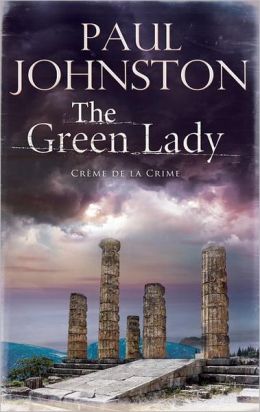
I don’t usually read crime fiction, but I was given a copy of The Green Lady by Paul Johnston. Like me, he is a Brit living in Greece, who is fascinated by Greek society and history and putting it into fiction. This fast-paced thriller takes the myth of Persephone (with her prolonged stay in the underworld after eating too many pomegranate seeds) and combines it with the corruption of the contemporary Athenian super-rich, ecological protesters and dubious politicians. Hugely enjoyable.
Visit Sofka Zinovieff's website.

The Page 69 Test: The House on Paradise Street.

--Marshal Zeringue
Tuesday, January 1, 2013

Jesse Bullington

Jesse Bullington writes historical fantasy informed by his knowledge and enthusiasm for the darker parts of European folklore (and fact). He is the author of The Sad Tale of the Brothers Grossbart, The Enterprise of Death, and the newly released The Folly of the World.

Last month I asked the author what he was reading.  His reply:
I’ve been up to my eyebrows in research reading for most of the autumn, which doesn’t always make for the most thrilling recommendations, but now that I’ve wrapped up a few projects I’ve been able to pick up some more entertaining titles. Most of what I’ve currently got on-deck are short story anthologies or collections, as I find those are more agreeable to being set aside for extended periods as I’ve juggled pleasure reading with research. That said, there is one novel I’ve been very much enjoying, too…

It’s funny, because the previous time I penned one of these columns I was reading a Stephen Graham Jones title, and I’m once again under his literary thrall. This time it’s The Last Final Girl, a sort-of post-modern send-up of slasher movies. As with Demon Theory, an earlier novel of his, he’s written it as a highly stylized screenplay of sorts, though I think here he has improved upon the structure, as it’s more prose and less script, if that makes sense. The book really wouldn’t work if Jones was trying to satirize the genre, but his obvious affection for and intimacy with slasher movies helps elevate it into something really brilliant and fun; as with the best examples of pastiche, it’s engaging in a conversation with its subject even as it’s replicating it.

The next one is a bit of a cheat, as it’s an anthology that I have a piece in (which I co-wrote with Molly Tanzer): Fungi, edited by Silvia Moreno-Garcia and Orrin Grey. The broad and unusual theme led to their assembling one hell of an impressive line-up (which begs the question of why they included me, but I’m not one to look a gift horse in the mouth). The stories, written by John Langan, Paul Tremblay, A.C. Wise, Jeff VanderMeer, Camille Alexander, Lavie Tidhar, Laird Barron, Simon Strantzas, and Nick Mamatas, to name just a few, run the gamut of what you might expect from the premise of “fungal fiction,” and the hardcover special edition has illustrations by Bernie Gonzalez and extra stories by Claude Lalumière, E. Catherine Tobler, and J. T. Glover. Mostly dark and really unusual, I can’t recommend this weird, unique book enough.

And speaking of Orrin Grey, who co-edited the above, I recently read his debut short story collection Never Bet the Devil. It’s a first rate assembly of what I would describe as pleasant horror stories—Grey’s emphasis on atmosphere instead of shock tactics and ultra-violence is downright refreshing. I tore through this book in no time at all.

Finally, I’ve been making my way through The Book of Cthulhu II, edited by Ross E. Lockhart. It’s a great collection of both original and reprint stories, and a highly worthy follow-up to his first Book of Cthulhu, which I thought was one of the best Lovecraft-inspired anthologies I’ve ever read. Old standbys like Neil Gaiman’s “Shoggoth’s Old Peculiar” and Friz Leiber’s “The Terror from the Depths” are always welcome, but what really makes it something special is the inclusion of newer, progressive voices in Lovecraftian fiction, such as by Caitlin R. Kiernan, W.H. Pugmire, Livia Llewellyn, Cody Goodfellow, William Browning Spencer and the aforementioned Molly Tanzer and Orrin Grey. For those with the Innsmouth Look, this is a great addition to the canon, and for those who have prematurely dismissed HPL and his heirs as schlock, this should prove a persuasive refutation.
Learn more about The Folly of the World at Jesse Bullington's website.

The Page 69 Test: The Folly of the World.

--Marshal Zeringue