Sunday, October 11, 2015

Vicki Delany/Eva Gates

Eva Gates is the national bestselling author of the Lighthouse Library cozy series from Penguin Obsidian, set in a historic lighthouse on the Outer Banks of North Carolina. The first in the series is By Book or By Crook, and Booked for Trouble was released on Sept. 1st, 2015. Eva is the pen name of Vicki Delany, one of Canada’s most prolific and varied crime writers.

Recently I asked the author about what she was reading. Her reply:
I just finished reading The Nightingale by Kristin Hannah for my book club. I was one of the few members of the club who didn’t love it. I thought the writing of descriptive passages was excellent, but the two main characters had very little depth. But mostly, there wasn’t a single original or unexpected idea in the entire book. Every plot twist was signalled way ahead. The story of the occupation of France during WWII and of the resistance has been told many times, as well as the vital importance women played in it. Hannah brought nothing fresh to it.

Once book club duties were over I dived into nEvermore an anthology of Edgar Allen Poe-related short stories. I don’t read many short stories, as I prefer novels, but several of my author friends have stories in this collection and I found the concept compelling. I am not finished so won’t comment on which stories I liked best or which I found wanting, but so far I am enjoying it very much.

The next book on my night table is The Marsh Madness by Victoria Abbott. This is the fourth in the Book Collector mysteries, and so far the books have been a joy. Very witty and full of the author's love of the golden age of mystery.
Visit Eva Gates's website, Facebook page, and Twitter perch. Visit Vicki Delany's website and look for the first in her Year Round Christmas series, Rest Ye Murdered Gentlemen, from Berkley Prime Crime, on Nov. 3rd.

The Page 69 Test: Booked for Trouble.

--Marshal Zeringue

Saturday, October 10, 2015

Emily Holleman

Emily Holleman is a Brooklyn-based writer. After a two-year editing stint at Salon.com where she had to worry a lot about politics, celebrities and memes, she returned to her true passion: fiction. She's currently working on a set of historical novels that reimagines the saga of Cleopatra from the perspective of her younger sister, Arsinoe. The first of these, Cleopatra's Shadows, is currently available from Little, Brown.

Recently I asked Holleman about what she was reading. Her reply:
I just finished Kate Atkinson’s A God in Ruins. It’s one of those books that tears through you and reminds you of the brilliance of fiction, why you wanted to write it in the first place. It tells the story of Teddy Todd—Ursula’s often ill-fated younger brother, for those who read Life After Life—as he survives a harrowing stint as a British bomber pilot in World War II and continues onto a life he’d never thought he’d had, full of the “ordinary” middle-class mishaps, tragedies and occasional wonders. Atkinson manages to distill great and small moments of the human experience with exquisite precision: a parent’s heart-wrenching disappointment in a child, the daunting secrets and sacrifices of a married couple, an old man’s deep-seeded longing for the imperfect idyll of his childhood. The novel spans much of 20th century British history—the senseless violence of the Second World War, the soul-searching and bucking up of its aftermath, the Flower Child ethos ebbing away into something sterner, more sensible, perhaps. And—miraculously! in the same damn book!—Atkinson also manages to confront the form of the novel itself: why we imagine these lives that have never been and why, given the epic bloodshed that marred the past hundred years, this imagining matters.

On the other end of both the modern-ancient and fiction-non-fiction divide, I’m in the midst of Adrian Goldsworthy’s Caesar. I’m not entirely sure if this one counts, as I’m reading it in part as background research for my next novel (a sequel to Cleopatra’s Shadows in which Julius Caesar plays a pivotal role.) But, in any event, I would recommend it to anyone with even a passing interest in antiquity or the extent to which “great men” do—or don’t—shape history. The book is one of the most comprehensive biographies of the Roman general out there; it not only covers Caesar’s life in exquisite detail, it also casts a lens on the man and the fascinating, vaguely traumatized Rome in which he lived, teetering between its pride in its unique political system and the recent horrors of political violence that system had wrought.

Next up: Lauren Groff’s Fates and Furies and Claire Vaye Watkins’ Gold Fame Citrus.
Visit Emily Holleman's website.

--Marshal Zeringue

Thursday, October 8, 2015

Chris Knopf

Chris Knopf's mysteries have critics likening Sam Acquillo to Dashiell Hammett's Sam Spade, Raymond Chandler's Philip Marlowe and Robert Parker's Spenser, while repeatedly comparing Knopf to Elmore Leonard.

His new novel is Cop Job.

Recently I asked Knopf about what he was reading. His reply:
No matter how much praise some books receive, sometimes I feel it’s not enough. When the trailers for the movie version of Gone Girl started showing up, I grabbed a copy of the book, knowing that unavoidable spoilers were heading my way. My expectations were fairly neutral, being naturally inured to popular opinion, yet after only a few pages, I was stunned at how good the book was.

Let me count the ways: The prose seems effortless, beguiling in it’s seeming earnestness and sincerity. Amy is at once sophisticated and naïve, observant, coolly funny and deliriously in love. Even without the spoilers, I knew no good would come of this idyllic circumstance, which only made Amy’s narrative that much more involving. As the points of view shift from Amy to Nick and back again, and between their fragmented identities, the writing never falters, and Flynn never loses control over her complex story. The suspense was palpable throughout. The central mystery fractures into multiple mysteries, the protagonists’ reliability comes deeper into question, each stage of the process amping up the suspense and delivering ever more delightful surprises. In many ways the heart of the story is the zeitgeist, the tectonic social forces that fuel the events, that seem to unleash the sociopathic tendencies of both protagonists that may well have remained forever dormant. The ambiguity of the conclusion. The last line could have been, “And they lived uneasily ever after.” A tour de force, and further proof that literary isn’t a genre, it’s a quality that transcends categorization.

Speaking of transcending category, Margaret Vandenburg’s The Home Front is a story about Todd Barron, the CO of a team of drone pilots who wages war and wreaks havoc on enemies in Afghanistan from the air-conditioned comfort of a control room in Nevada. He and his wife Rose also have a severely autistic son, Max. You may not readily see how his experiences at work and home create a dynamic that intensifies and ultimately defines the moral of the tale, but that’s the brilliance of Vandenburg’s novel. Rose has her own battle underway, as she tries to deploy every available treatment – from established medicine to exotic New Age – to rescue their son as he recedes inexorably into a world entirely inaccessible to his parents. Here the war is mostly between hope and will versus resignation and despair. Todd and Rose are essentially good people, true of heart and devoted to each other, yet seemingly powerless against their son’s agonizing affliction, and the irreconcilable directions each of their lives are taking. This is a wholly original work, and as the New York Times said, “The novel is schematic, but also profoundly timely." (Disclosure: Home Front is published by The Permanent Press, where I’m a co-publisher.)

I bought An Astronaut’s Guide to Life on Earth on the strength of Chris Hadfield’s extraterrestrial rendition of David Bowie’s “Space Oddity”, which got about a billion hits the moment it landed on YouTube. It’s extraordinarily beautiful and compelling and you can watch it any time you want, which I highly recommend. While not as transcendently moving, the book is pretty good. What I like most is the understated voice – Hadfield’s modesty living peaceably with his pride of accomplishment for being the first Canadian to reach his cosmological heights. You also get a good dose of astronaut procedural, as he takes you through the the rigors of training, and his honest feelings of insecurity in the face of so many worthy competitors. I read a lot of non fiction, and I’m mostly drawn to real stories by exceptional people. This is one of the best and most frankly rendered. No ghost writer in sight – I hope that means he actually wrote the thing himself.
Visit Chris Knopf's website.

Coffee with a canine: Chris Knopf & Sam.

--Marshal Zeringue

Wednesday, October 7, 2015

G. M. Malliet

G.M. Malliet is the author of the Max Tudor novels Wicked Autumn, A Fatal Winter, Pagan Spring, and A Demon Summer, all books shortlisted for the Agatha Award for best traditional mystery novel. Her new novel is The Haunted Season, the fifth Max Tudor mystery.

Recently I asked the author about what she was reading. Malliet's reply:
I am just getting around to reading the entire oeuvre of Tana French, and I am more than halfway through The Secret Place, her fifth book. I am dreading reaching the end because I don't believe she has a sixth book in the series out. Her writing is gorgeous in what I think of as an Irish sort of way, inventive and reaching--not straining--for metaphor. Think: a far more accessible James Joyce. Just when you think the English language has been pushed to the boundaries, someone comes along with descriptions of sky and sea and the ridges of personality that amaze.

In each book French has chosen to explore a different setting and aspect of life in modern Ireland, and to study people circling round the different social classes. If I had to choose a favorite so far it would be Broken Harbor, where she examines the economic crash that brought so many people to the brink, and in some cases, pushed them over.
Visit G. M. Malliet's website, blog, Facebook page, and Twitter perch.

The Page 69 Test: A Fatal Winter.

--Marshal Zeringue

Tuesday, October 6, 2015

Sarah Bowen

Sarah Bowen is an Associate Professor of Sociology at North Carolina State University. She teaches classes and conduct research related to health, food, inequality, and development.

Her new book is Divided Spirits: Tequila, Mezcal, and the Politics of Production.

Recently I asked Bowen about what she was reading. Her reply:
Right now I am reading Edible Memory: The Lure of Heirloom Tomatoes and Other Forgotten Foods, by Jennifer Jordan. Jordan tells a story of how certain foods become “heirlooms” and the meanings and memories that people attach to those foods. She traces the history of specific foods: for example, tomatoes, the food most closely associated with the heirloom craze, as well as “nearly forgotten” fruits and vegetables like plums and turnips, which rarely appear in popular food writing. But she also notes that the connections between food and memory are not just the province of old-fashioned tomatoes or antique apples, but can attach to the vast range of foods that people eat. (She gives an example of a boxed cake mix that her great-great-aunt used to make). I think this is such an important point, especially in a context in which food choices are increasingly imbued with moral undertones.

One of the books that I read recently with my students (in my graduate seminar on Sociology of Food) was Fresh Fruit, Broken Bodies: Migrant Farmworkers in the United States, by Seth Holmes. It is an ethnography of the everyday lives of Mexican migrant farmworkers. Holmes crosses the border from Mexico into Arizona with a group of migrants and is jailed with them. He lives and works alongside farmworkers on a strawberry farm in the United States, and he also travels to the rural Oaxacan region where many of the farmworkers are from. With his clear and evocative writing, Holmes dramatically illustrates the emotional and physical suffering experienced by migrant farmworkers and how their suffering embodies multiple forms of structural violence. It is the kind of book that keeps churning around in your head long after you finish reading it, and my students continued to talk about it even after the class had ended.

I also love to read fiction. I joke that my favorite genre is “agricultural fiction” or “food fiction,” which isn’t really a genre, but I love novels that integrate themes about farming or the food system, like Ruth Ozeki’s My Year of Meats, which is still one of my favorites. I recently read The Peculiar Sadness of Lemon Cake, by Aimee Bender. In it, 9-year-old Rose discovers that she has a unique gift. She can taste the emotions that people feel while making foods; for example, she tastes the despair her mother experiences (but later denies) as she bakes a lemon cake. The book explores Rose’s family life as she grows up in Los Angeles. I was particularly intrigued by the twist that the novel puts on the notion of terroir. Essentially, terroir is the idea that place has a taste, and in Rose’s case, taste also has an emotion. Rose is eventually able to discern both the place where a particular ingredient comes from, as well as the emotions of the person who prepared the food.

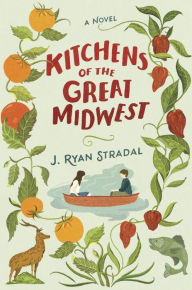
Also in the category of “food fiction,” I just finished Kitchens of the Great Midwest: A Novel, by J. Ryan Stradal. It tells the story of Eva Thorvald, who has a “once-in-a-generation” palate. We meet Eva at different points in her life; each chapter is told from the perspective of a different character and centered around one dish (and includes recipes!). I adored this book. The story itself is a great one: about parents and children, love and loss, dreams and identity. But what I loved most of all was how Stradal juxtaposes Midwestern food traditions with the rise of foodie culture: from bar cookies and state fairs to heirloom tomatoes and pop-up restaurants. Again, he shows how the foods that people gather around and use to create a sense of community are more alike than different, whether we’re talking about chicken and wild rice casserole (featured in the first chapter) or dry-cured pork shoulder (featured in the last chapter). I was reading this book and Edible Memory at the same time, and it was a great pairing.
Visit Sarah Bowen's website.

--Marshal Zeringue

Monday, October 5, 2015

Virginia Baily

Virginia Baily holds a PhD and MA in English from the University of Exeter. She founded and co-edits Riptide, a short-story journal. She is also the editor of the political series of the Africa Research Bulletin. She lives in Exeter, Devon.

Baily's debut novel is Early One Morning.

Recently I asked the author about what she was reading. Her reply:
I am reading the advance sampler of a book that will be published in October: The Penguin Book of the British Short Story. If the ten stories in the sampler are anything to go by, it will be a fabulous read. I am excited about this book not just because it aims to provide one example of work from each of the 150 greatest British short story writers – starting with Daniel Defoe and coming right up to date and so gives a taster of the genius that lies beyond, but also because the very fact that Penguin commissioned such a work seems evidence to me of the resurgence of the short story in the UK. I love short stories, I think they offer a very particular literary experience. As Neil Gaiman said: “Short stories are tiny windows into other worlds and other minds and other dreams. They are journeys you can make to the far side of the universe and still be back in time for dinner.”

I have just finished reading Samantha Harvey’s The Wilderness. I read a wonderful review of her latest novel, Dear Thief but before I could buy the book, saw that there was a copy of her first one, The Wilderness on my bookshelf, unread, waiting for me to notice it. It is a devastating and merciless portrayal of dementia and the loss of memory which somehow manages to be beautiful and vivid too.

I am also dipping in to Fernando Passoa’s The Book of Disquiet – sometimes just reading a few lines and letting them filter through my consciousness. I find him illuminating in a hard-to-pin-down kind of way. It’s as if his baffling words have opened some little window I didn’t quite know was there and allow me to squint through it at an oblique angle. I found this today: “even though nothing truly merits the love of any soul, if, out of sentiment, we must give it, I might just as well lavish it on the smallness of an inkwell as on the grand indifference of the stars.”
Learn more about Early One Morning at the publisher's website.

My Book, The Movie: Early One Morning.

--Marshal Zeringue

Sunday, October 4, 2015

Sandra Dallas

Award-winning author Sandra Dallas was dubbed “a quintessential American voice” by Jane Smiley, in Vogue. She is the author of The Bride’s House, Whiter Than Snow, Prayers for Sale and Tallgrass, among others. Her novels have been translated into a dozen languages and optioned for films. She is a three-time recipient of the Women Writing the West Willa Award and a two-time winner of the Western Writers of America Spur Award.

Her new novel is The Last Midwife.

Recently I asked Dallas about what she was reading. Her reply:
The last book I read was Go Set a Watchman, the novel Harper Lee wrote prior to To Kill A Mockingbird. I found the book inspiring. Not because it is a brilliant book. It isn't. If it had been published in the 1950s you probably wouldn't have heard of it. What inspires me is that the author took this ordinary story and turned it as America's best-loved novel. If she can do that, maybe there's hope for the rest of us writers who agonize over really crummy first drafts.
Visit Sandra Dallas's website and Facebook page.

Writers Read: Sandra Dallas (May 2011).

Writers Read: Sandra Dallas (October 2013).

--Marshal Zeringue

Saturday, October 3, 2015

Michael Golding

Michael Golding’s first novel, Simple Prayers, was published in 1994 and has been translated into nine foreign languages. Benjamin’s Gift, his second novel, was published in 1999. He is also a screenwriter, whose works include the adaptation of Alessandro Baricco’s Silk. He lives in the foothills of the Sierra Nevadas in Northern California.

Golding’s new novel is A Poet of the Invisible World.

Recently I asked the author about what he was reading. Golding's reply:
At the moment I’m midway through Philip Roth’s American Pastoral, and its brilliant, rambling voice leaves me breathless. The story of a high school football hero, “Swede” Levov, whose life is shattered by the actions of his rebellious teenage daughter, it paints a vivid portrait of the clash between generations: the postwar children of the 1940s, whose lives glowed with promise, and the antiwar children of the 1960s, who turned the world upside down. Roth’s writing is like a speed train barreling through the night—you often fear the novel will jump the tracks and crash, but you hold on, exhilarated by the ride. It’s in the tradition of novels like The Great Gatsby in which the story is told through the eyes of a peripheral narrator—in this case, Roth’s alter ego Nathan Zuckerman—but the author manages to barge his way into the hearts and minds of nearly all of characters. The novel explodes with anger, wails with a deep sadness, and is rich in mid-century historical detail. I can go for days without wanting to pick it up. Its truths are painful. But once I pick it up, I find it hard to put it down.

I just finished a lovely novel called Claire Marvel by John Burnham Schwartz. John gave me a generous blurb for my new novel, so I thought I’d read one of his books that had slipped by me. Claire Marvel is exquisite. Written in beautiful, haunting prose, it captures the oddness and delicacy of falling in love, the maddening way two people can slip by each other, and how we sometimes make choices that lead to grave, unexpected results. It’s tender and wise and it touched me deeply.

I’ve also been reading a wonderful book called Thirteen Ways of Looking at the Novel by Jane Smiley. A meditation on the art of novel writing, it examines what a novel is and why we derive such pleasure from reading them. The first half of the book is devoted to questions of craft and historical context. The second half examines 100 novels Smiley challenged herself to read when she reached an impasse in her own work. It’s an autobiography of the author’s life as a reader, and an insightful—and playful—investigation into what fiction is all about.
Visit Michael Golding's website.

--Marshal Zeringue

Friday, October 2, 2015

Jonathan Weisman

Jonathan Weisman is a Washington-based economic policy reporter for the New York Times.

His new novel is No. 4 Imperial Lane.

Recently I asked the author about what he was reading. Weisman's reply:
So much of what I read these days seems linked to what I am struggling to write. My new novel-in-process is about two young missionaries working to record and preserve the language of a dying tribe of former headhunters in the Philippines, swept up by war and the swirl of geopolitical forces that are too big for them to comprehend. I read Euphoria by Lily King to get me into an anthropological state of mind. Now I am trying to better understand the religious fervor of a true-believing Christian imbued with a Christ-like sense of sacrifice. I am determined to keep my protagonist sympathetic, and not a caricature of a religious nut.

To that end, I am reading Bonhoeffer: Pastor, Martyr, Prophet, Spy by Eric Metaxas. That might sound like an unlikely choice, but Dietrich Bonhoeffer was a devout Christian theologian and clergyman in Nazi Germany who stood up for the Jews, tried in vain to keep the church pure as National Socialism wedged into every aspect of German life, plotted to assassinate Hitler, and was ultimately executed by the Nazis for his sins. He never wavered in his faith, nor did he ever fear for his safety. What better place to look for inspiration?

For a little relief, I'm also reading Aquarium by David Vann just for the soulfulness of his little girl protagonist and the heartfelt sadness of her story.
Follow Jonathan Weisman on Twitter.

My Book, The Movie: No. 4 Imperial Lane.

--Marshal Zeringue

Thursday, October 1, 2015

Dawn Lerman

Dawn Lerman is a board-certified nutrition expert and a contributor to the New York Times Well Blog. Her company, Magnificent Mommies, provides nutrition education to students, teachers, and corporations. She lives in New York City with her two children, Dylan and Sofia.

Lerman's new book is My Fat Dad: A Memoir of Food, Love and Family, with Recipes.

Recently I asked the author about what she was reading. Her reply:
I have always been a fan of diaries and memoirs. My favorite book as a child was the Diary of Anne Frank. I would read, and re- read the same sentences over, and over as I world disappear into her little annex, her world.

“I can shake off everything as I write; my sorrows disappear, my courage is reborn.” – Anne Frank

“Although I'm only fourteen, I know quite well what I want, I know who is right and who is wrong. I have my opinions, my own ideas and principles, and although it may sound pretty mad from an adolescent, I feel more of a person than a child, I feel quite independent of anyone.”

Her words inspired me to live better, to appreciate more, and to find my own solace in the pages of my own journal.

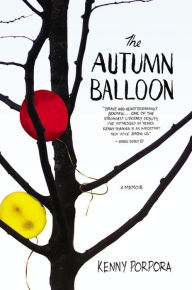
I just finished reading Autumn Balloon by Kenny Porpora and It Was Me All Along by Andie Mitchell. Both of these memoirs deal with the effects of growing up in toxic homes, riddled with addiction and turmoil, where the lines between parent and child are blurred. The main characters in each story eventually thrive and rise above the odds.

Growing up with a 450-pound dad who battled food addiction and a wanna-be actress mom who was not present in the way I needed, I really related to the despair, loneliness, and desire that these two protagonist faced. I laughed. I cried. I called my sister quoting the beautiful pages filled with gut-wrenching raw dialogue. The impact of their stories and their words stayed with me weeks after finishing. In the words of my ad man dad, "You've come along way baby."
Visit Dawn Lerman's New York Times blog and Facebook page.

--Marshal Zeringue