Monday, December 17, 2018

Sarah Bailey

Sarah Bailey lives in Melbourne, Australia and has two young sons and one very old cat. She has fifteen years experience in the advertising industry and is currently a director at creative projects company Mr Smith.

Bailey's second novel is Into The Night.

Recently I asked the author about what she was reading. Her reply:
There has been quite a diverse mix of books on my reading pile recently which I always enjoy. It’s nice to dive into completely different worlds and I certainly feel like I’ve met some characters I won’t forget.

Hidden Killers, Lynda La Plante

I am on a Lynda La Plante binge at the moment because I am lucky enough to be interviewing the master of the police procedural in Australia this February! I love her female protagonist Jane Tennison and it is interesting to read about her navigating her role as a junior police officer in the 1970’s. I love how smart and assertive she is while still being so empathetic.

Little Fires Everywhere, Celeste Ng

This book, Ng’s second, completely pulled me in. I found it utterly intoxicating. It was structured in an interesting way, with the ending at the beginning but even though you knew what happened, the way Ng teased out why, and managed such a range of wonderful characters, was masterful.

The Lost Man, Jane Harper

Jane’s third book is a bit different from her other two, it’s more family drama than a crime thriller, but I absolutely loved it. A popular local farmer died in the middle of one of the most isolated parts of Australia. Suicide is suspected, as is accidental death, but as the family gather in their dead brother’s farmhouse it becomes apparent that perhaps something more sinister is at play. It simmers with tension and as a reader you absolutely feel like a fly on the wall, watching the secrets bubble to the surface as the truth is slowly revealed.

The Wolf Hour, Sarah Myles

Set in both Africa and Australia in 2008, this beautiful family drama explores the notion of what it means to be good, and the complexity that comes with trying to navigate another culture. It also looks at the challenges parents face when their children grow up and how much the decisions they make reflect on them. It is a book about responsibility and letting go they but acknowledges that family ties are strong and visceral. The Wolf Hour tackles complicated and dark issues but they are considered in a clever and nuanced way.
Visit Sarah Bailey's website.

The Page 69 Test: Into the Night.

My Book, The Movie: Into the Night.

--Marshal Zeringue

Saturday, December 15, 2018

Yona Zeldis McDonough

Yona Zeldis McDonough is the author of seven novels and dozens of novels for children. She is also the editor of two essay collections and her short fiction, essays and articles have appeared in numerous national and literary magazines. McDonough is also the fiction editor for Lilith magazine.

Her new middle-grade novel is Courageous.

Recently I asked McDonough about what she was reading. Her reply:
I just started The Subway Girls by Susie Orman Schnall. Part of the novel takes places in 1949, and focuses on the Miss Subways beauty contest, which offered its contestants a shot at a little Park Avenue luster and local fame. I can still remember those seeing those placards for Miss Subways in the1960s and early 1970s and so I was immediately captivated by the subject. Orman has a natural story telling flair and I’m eager to read more of her novel.
Visit Yona Zeldis McDonough's website.

Coffee with a Canine: Yona Zeldis McDonough & Willa and Holden.

--Marshal Zeringue

Thursday, December 13, 2018

Ellie Alexander

Ellie Alexander (also known as Kate Dyer-Seeley) is a Pacific Northwest native. Her love for the Pacific Northwest runs deep. Hence why all of her books (whether she’s writing as Ellie or Kate) are set there. From the Shakespearean hamlet of Ashland, Oregon to the Bavarian village of Leavenworth, Washington to the hipster mecca of Portland, Oregon and a variety of other stunning outdoor locales, the Pacific Northwest is a backdrop for every book and almost becomes another character in each series.

Alexander's new novel, The Pint of No Return, is her second Sloan Krause mystery.

Recently I asked the author about what she was reading. Her reply:
It’s officially “reading season” in my house. Wait, who am I kidding? It’s always reading season in my house. I’ll rephrase that. It’s perhaps my favorite reading season. There’s nothing better than lighting a fire and curling up on the couch with a warm drink and a new read. Winter’s blowing winds, torrential rains, and dumping snow call for lazy days lingering over a great book.

Because I write multiple mystery series, I try to avoid reading the genre when I’m working on a manuscript. I read anything and everything I can get my hands on, but here are a few of my favorite recent reads.

Eleanor Oliphant is Completely Fine by Gail Honeyman. I read this book in a day and then I quickly regretted devouring it. Now, I’m going to have to go back and read it again. Maybe with a glass of wine to remind myself to sip it slowly. The book follows Eleanor Oliphant on her daily routine working at dead-end job where her co-workers ridicule her awkward social interactions and inability to recognize that most of the time the joke’s on her. This is a book that must be read until the end. At the beginning of the book I found myself wondering if Eleanor had a social anxiety disorder or was on the autism spectrum, but as her story evolves we learn that her emotional struggles stem from something much deeper. Eleanor’s journey is heartbreakingly sad, and equally uplifting.

The Women in the Castle by Jessica Shattuck. I read a lot of historical fiction. As in a lot. I’m drawn to historicals because I think they teach us so much about today. The mistakes we keep making and repeating. The progress forward, and the long, slow slides backward. The Women in the Castle is the perfect example of why I think every reading list should include historical fiction. The book is set in Germany at the end of World War II. We follow the struggles of three women trying to survive, to rebuild their lives, and to make sense of what has happened to their homeland. I found myself stopping often while I was reading this book, because I was struck at the many parallels with our current political culture. A thought-provoking and timely read.

How To Stop Time by Matt Haig. Part sci-fi, part historical, part romance. I loved everything about this book. Admittedly I’m a sucker for anything involving time travel, so the fact that the main character, Tom Hazard, has been alive for centuries had me hooked from the first line. If you read The Time Traveler’s Wife, this is the book for you. Tom may have seen Shakespeare on stage and watched the witch trails in person, but he teaches us that the stretch of time can be long and lonely. The gift of this read is the message that in our quest for the extraordinary we can often lose touch with the fact that the magic is most often in the ordinary.
Visit Ellie Alexander's website.

The Page 69 Test: The Pint of No Return.

--Marshal Zeringue
Tuesday, December 11, 2018

Kitty Zeldis

Kitty Zeldis is the pseudonym for a novelist and non-fiction writer of books for adults and children. She lives with her family in Brooklyn, NY.

Her new novel is Not Our Kind.

Recently I asked Zeldis about what she was reading. Her reply:
After the Fire by Lauren Belfer. This is a novel that skillfully moves back and forth between the past and present, and has as its center a fictional piece of music written by J.S. Bach. Belfer did extensive research, but the novel is never weighed down by it; instead, it’s woven seamlessly into the prose. As a writer of historical fiction myself, I admire how well she accomplished this, and how the novel seemed so graceful and effortless. Brava Belfer!
Follow Kitty Zeldis on Facebook.

My Book, The Movie: Not Our Kind.

--Marshal Zeringue

Sunday, December 9, 2018

Fran Hawthorne

Fran Hawthorne spent more than three decades as a reporter and editor (on staff at Fortune and BusinessWeek; as a regular contributor to The New York Times and many other publications), and as the author of award-winning nonfiction books, before finally returning to her childhood dream: writing fiction.

Her debut novel The Heirs was published by Stephen F. Austin State University Press in May 2018 and sold out its first printing within two months. It’s a story of second-generation Holocaust guilt among soccer families in suburban New Jersey in 1999.

Recently I asked Hawthorne about what she was reading. Her reply:
I belong to three book clubs. Plus, I review fiction for the New York Journal of Books. Of course I want to read my friends’ newest oeuvres. And I always try to read books about the Holocaust, Poland, and other topics related to my novel The Heirs and also to the new novel I’m working on –- In short, I can hardly remember the book I read two books ago.

Luckily, I do remember some of the best:

I recently reviewed Gone So Long -- the story of a father’s attempt to reconcile with his long-estranged daughter after he’s been imprisoned for murdering her mother -- by the National Book Award finalist Andre Dubus III. To quote my own review: “Gone So Long has everything a novel could ask for: It’s a literary page-turner that explores the grit and pain of working class lives through complex personalities and beautifully pungent, multisensory language.”

Heretics, by the renowned Cuban writer Leonardo Padura and translated by Anna Kushner, thoroughly bowled over one of my book clubs. We loved the complex, interwoven plot lines stretching from 17th century Amsterdam and Poland, to 21st century Cuba, as well as the detailed historical research. (However, at 545 pages, it does drag on a bit.)

Here’s an advance peek: I’m reviewing a historical novel called Wunderland by the little-known author Jennifer Cody Epstein, coming out in April. I chose it for its Holocaust theme without knowing much about Epstein, and it’s turned out to be a pleasant surprise. As one narrative plunges forward from 1933 Berlin, the other spirals backwards from New York in 1989 to Berlin in 1946, unraveling a daughter’s search to learn about her parents’ Nazi past.

On the other hand, I may be the only critic who did not adore Jennifer Egan’s Manhattan Beach. Yes, it was unfair of me to want another A Visit from the Goon Squad (which I did adore), but I found the heroine of this novel to be annoyingly too perfect.

(Okay, readers: Now you can pile on your criticisms of my novel The Heirs. Fair’s fair.)
Visit Fran Hawthorne's website.

My Book, The Movie: The Heirs.

The Page 69 Test: The Heirs.

--Marshal Zeringue

Saturday, December 8, 2018

G.A. McKevett

Since publication of her first novel in 1986, Sonja Massie has authored more than 60 published works, including the highly popular and critically acclaimed Savannah Reid Mysteries under the pseudonym G.A. McKevett.

Her new novel is Murder in Her Stocking.

Recently I asked McKevett about what she was reading. Her reply:
At the moment, I’m reading two books, one for entertainment and the other for self-improvement. The entertaining one is a novel, Deadly Focus, written by a dear, longtime friend of mine, Sue Hinkin. She has been writing quality fiction for decades, but has only now been published. One of the most determined and dedicated artists I’ve ever known, Sue has inspired everyone in her realm, and we all knew it was simply a matter of time until the world discovered and began to enjoy her writing, as we have for years. I’m so proud of her and happy for her. If you like gritty, suspenseful, fast-paced stories with rich, relatable characters, I highly recommend this book and the others Sue will be releasing soon.

The second book I’m reading, The Untethered Soul by Michael Singer, was recommended to me by another precious friend, Holly Foster Wells, when I was griping to her recently about the “chattering monkeys” raging inside my head. The nasty little beggars refuse to give me a moment’s rest! Lately, I’ve experienced some lifechanging events that require a lot of decision making on my part. As I try to remain cool, calm, and collected, debate the pros and cons of the situation, and figure out which paths to take, these obnoxious critters—whom I’ve named Alarmist Agatha, Downer Delilah, Nervous Nadine, and Furious Frieda—natter back and forth between my ears, driving me to distraction. It’s been quite a challenge, trying to make logical choices with these drama queens screaming their emotional nonsense at me and each other, day and night. I’m halfway through this wise, easy to read, enlightening book, and I do believe it’s changing my life. How lovely it will be when I can learn to ignore these melodramatic ninnies!
Visit G.A. McKevett's website.

My Book, The Movie: Murder in Her Stocking.

The Page 69 Test: Murder in Her Stocking.

--Marshal Zeringue

Thursday, December 6, 2018

Alan Cumyn

Alan Cumyn is the award-winning author of several wide-ranging and often wildly different novels. His historical novels The Sojourn and The Famished Lover chronicle the First World War and Great Depression experiences of artist Ramsay Crome. His human rights novels, Man of Bone and Burridge Unbound, follow a torture victim through survival and post-trauma. Losing It is a darkly funny and truly twisted novel about madness, while his Owen Skye books for kids–The Secret Life of Owen Skye, After Sylvia and Dear Sylvia— hilariously trace the calamitous trials of childhood and the pangs of early love. Cumyn’s young adult novel Tilt is a funny, sexy exploration of a teenaged boy’s obsessions as he lives through an impossibly absurd time of life. All Night, a literacy project, follows a young artsy couple through a stormy night of hard truths and romantic dreams. And Hot Pterodactyl Boyfriend brings a touch of Kafka to the previously ordered love life of a high school senior who has no idea what might fly out of the primordial past. His latest novel, North to Benjamin, is a psychological thriller that sees a young boy, Edgar, dragged north by his unstable mother, testing his formidable survival skills.

Recently I asked Cumyn about what he was reading. His reply:
I have been living in Ho Chi Minh City (Saigon) for the last couple of months and waited till I got here before reading a few of the classics. Everyone references Graham Greene's The Quiet American, and now I can see why – the rich atmosphere of the city in the 1950s, the brilliant way the book encapsulates so many central themes of the country in the love triangle between the aging Brit Fowler, the brash young American Pyle, and the beautiful local flower Phuong. Complicating all of their lives is the seamy politics of the place and of the day. So much has changed in the city in the more than 60 years since Greene finished the book, but you can still walk up and down Rue Catinat (now called Dong Khoi – Total Revolution), you can still sit on the sidewalk veranda outside the Intercontinental Hotel where Greene and so many of his ex-pat friends hung out, and I'm living an easy walk from the site of the old Da Kao Bridge, where Pyle meets his untimely end.

Far more recent is Viet Thanh Nguyen's 2016 Pulitzer Prize-winning novel The Sympathizer, which evokes the Saigon of 1975 especially, as the southern government is crumbling and so many are fleeing the arrival of the Communist forces. The protagonist is a spy for the North, sent to the United States to keep tabs on potential plotters abroad, and Greene's work is acknowledged in the novel. I can't help wondering if there is also a debt to recent accounts of the most famous spy of the Vietnam war, Pham Xuan An, who worked as a reporter for Time, Reuters and others while feeding information to the North. His story is captured in Larry Berman's 2007 Perfect Spy: The Incredible Double Life of Pham Xuan An. The character of An who emerges from Berman's biography is far more likable than the spy in The Sympathizer. An managed to fool so many people, yet remained friends with them to an incredible degree. As the army he sympathized with came pouring into the city in 1975, An was running around trying to help as many friends as possible – Americans and South Vietnamese – evade the chaos all knew was coming. When George W. Bush visited Vietnam in 2006, An’s son was an official translator, a living symbol of nations getting past the bitterness of war.

It's an extraordinary thing to be able to come to a city like this and stay for a while, and read such stirring and complex accounts of what has happened here in the not-so-distant past.
Visit Alan Cumyn's website.

--Marshal Zeringue

Tuesday, December 4, 2018

Harriet Brown

Harriet Brown is the author of Body of Truth and Brave Girl Eating. She has edited two anthologies and has written for the New York Times Magazine, O Magazine, Psychology Today, Prevention, and many other publications. She is a professor of magazine journalism at the S.I. Newhouse School of Public Communications at Syracuse University.

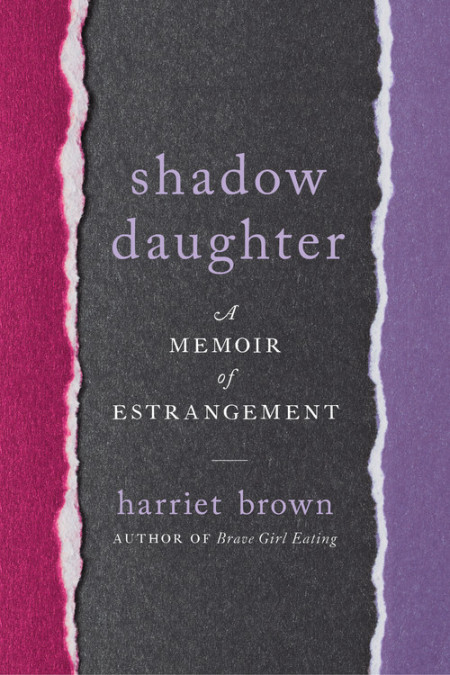
Brown's new book is Shadow Daughter: A Memoir of Estrangement.

Recently I asked the author about what she was reading. Her reply:
I’m always reading several books at a time. I just finished The Other Einstein, by Marie Benedict, a work of historical fiction about Albert Einstein’s first wife, Mitza Maric. She was a brilliant physicist and mathematician who was completely overshadowed by her famous husband. She contributed a lot to Einstein’s work, especially the theory of relativity; some suggest it was actually her theory. We’ll never know for sure. But what we do know is that Mitza gave up her own chance at a career to support her husband’s, and he repaid her by having an affair with his cousin and ultimately divorcing Mitza. As a non-physics person I love the science in this book as well as the history and the human drama.

I’m also reading At Eighty-Two by May Sarton, a Belgian-born poet, fiction writer, and journal keeper; this was her last journal published before her death in 1995. Sarton writes about the tension between art and life. She writes of the creative gifts of solitude and the frustrations of growing old and infirm. She writes beautifully about what it’s like to be human, and a woman, and alive. I’ve been reading her work since I was 20, and have returned to it again and again throughout my own life and career.
Visit Harriet Brown's website.

--Marshal Zeringue

Monday, December 3, 2018

John Zubrzycki

John Zubrzycki is a Sydney-based author, journalist and researcher, specializing in South Asia, in particular India.

He is the best-selling author of The Last Nizam: An Indian Prince in the Australian Outback (2006) and The Mysterious Mr Jacob: Diamond Merchant, Magician and Spy (2013). His new book is Empire of Enchantment: The Story of Indian Magic.

Recently I asked Zubrzycki about what he was reading. His reply:
I've just finished Ravi Agrawal's India Connected: How the Smartphone is Transforming the World’s Largest Democracy. What's great about this book is not only its breezy style, but the fact that most people in the world don't realise just how transformative India's digital revolution is. In no time at all India went from being a country where having a landline was the preserve of the privileged few to having 700 million people using cell phones. India leapfrogged the PC and laptop eras and now the vast majority of internet traffic goes through smartphones. Why used old-fashioned voice calls and email when you can communicate via Whatsapp? Why use credit cards when its easier to use mobile wallet apps, as over a hundred million Indians already do? Aggarwal starts off by following Phoolwati, a semi-literate woman from Rajasthan as she rides a blue bicycle from village to village teaching other women ‘the magic of the internet’. Using voice recognition which now comes in most major Indian languages, illiterate women can conjure up images of the Taj Mahal or access information on government services. Aggarwal maintains that the smartphone is what the Model T Ford was to America more than a century ago, calling the device “the embodiment on the new Indian Dream”. But he is careful not to get carried away with such comparisons, ending the book with a timely reminder, namely: “Technology will never fix poverty, inequality and broken infrastructure.” Even for someone who visits India as frequently as I do this book was a real eye-opener.
Visit John Zubrzycki's website.

--Marshal Zeringue

Sunday, December 2, 2018

Simon R. Green

Simon R. Green was born in Bradford-on-Avon, Wiltshire, England, where he still lives. He is the author of more than fifty science fiction and fantasy novels.

His new novel is Murder in the Dark.

Recently I asked Green about what he was reading. His reply:
I’ve been enjoying the hell out of Meddling Kids by Edgar Cantero. The book has a great high concept, which is what if the Scooby Gang encountered actual H P Lovecraft style monsters on one of their adventures? And then suffered from post-traumatic stress disorder? And then had to get back together again as adults when they discover the case isn’t quite as over as they thought it was? Great fun.

Then there’s Peter S Beagle’s new collection of short stories, The Overneath. Beagle writes marvellous stories where the magical intersects with the real world and real people. He matches a poetic sensibility with perfectly observed characters. Prose that’s a pleasure to read.

And finally, I’ve been working my way through the complete collection of ghost stories by M R James, A Pleasing Terror. James wrote the best ghost stories ever. Still scary, and often disturbing, even after all these years.
Visit Simon R. Green's website.

My Book, The Movie: Murder in the Dark.

--Marshal Zeringue