Thursday, March 14, 2019

Margaret Verble

Margaret Verble is an enrolled citizen of the Cherokee Nation of Oklahoma. Her first novel, Maud's Line, was a finalist for the Pulitzer Prize. She lives in Lexington, Kentucky.

Verble's new novel is Cherokee America.

Recently I asked the author about what she was reading. Her reply:
I tend to buy a whole bunch of wildly different kinds of books in a one or two day period. Then I stack them on my bedside table, and select them for reading according to how I’m feeling at a particular moment, usually in the evening. If I’m writing on the early drafts of a novel, I go lightly on fiction, more heavily on background sources for my work, biographies, histories, or true crimes. Of the books I’ve read in the past two months, my favorites are these:

Lincoln in the Bardo, by George Sanders, is the best novel I’ve read in a couple of years. It’s innovative in style, evocative of deep emotion, historically grounded, and spiritually intriguing. I will read it again. And again. Once is not enough to grasp fully its genius.

The Authenticated History of the Famous Bell Witch, by M.V. Ingram, was first published in 1894, and is the best account of a mystery that hasn’t been solved to this day. I grew up in Nashville hearing about this witch, which haunted the John Bell family in Robertson County, TN, from 1817 to 1821, and then again for a two week period seven years later. The witch was seen and heard by hundreds of people, including doctors, lawyers, legislators, preachers, and Andrew Jackson. The accounts of the phenomenon are so astonishing that I was worried I’d been tricked by a book that wasn’t what it purported to be. So I went to the online newspaper archives of the Nashville Tennessean to be sure it was really published over a hundred and twenty years ago. I quickly found it reviewed on June 26, 1910, as an old, but fascinating, read.

To help correct my deficiencies from being raised in the segregated South, I try to regularly include African American literature or history in my reading. I recently finished Aristocrats of Color: The Black Elite, 1880-1920. This isn’t the first book I’ve read on this particular subject, but the scholarship is sparse, and I am unaware of any first-class literary fiction that brings this fascinating caste of people to life since Edward P. Jones’s masterpiece, The Known World.

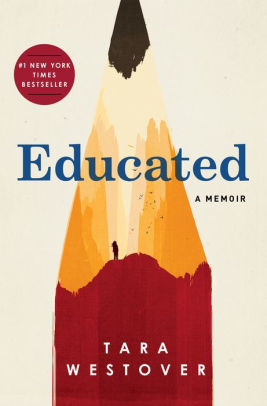
I generally avoid memoirs. I think too many are written, most of our lives aren’t as extraordinary as we think, and biography is a more honest endeavor. That said, I’ve recently read Tara Westover’s, Educated. I found it a harrowing page-turner, hard to put down, and so packed it could be the foundation of an entire semester’s inquiry into the psychology of abuse, the relationship between hyper-religion and mental illness, and the pathology of patriarchy. It's as good as everybody says.

Finally, last night I finished Andrew Morton’s, Wallis in Love: The Untold Story of the Duchess of Windsor, the Woman who Changed the Monarchy. I worked in the U.K. for nine years, and used to have a home there close to the edge of Windsor Great Park. I loved that home and miss it, so I often dip into British literature and history. This is neither the most scholarly nor most scandalous biography of the Duchess of Windsor I’ve ever read, but it certainly held my attention. I was sorry when it ended.
Visit Margaret Verble's website.

--Marshal Zeringue

Tuesday, March 12, 2019

Claire Booth

Claire Booth is a former true crime writer, ghostwriter, and reporter. She lives in California. Her Sheriff Hank Worth Mysteries include The Branson Beauty and Another Man's Ground. The newly released third book in the series is A Deadly Turn.

Recently I asked Booth about what she was reading. Her reply:
I usually have both a fiction and a nonfiction book going at the same time. I’ve tried, but I just can’t read two novels simultaneously. If I do one of each, I find I get the most out of both.

Right now, I’m immersed in the absolutely delightful Dreyer’s English. It’s by Benjamin Dreyer, the copy chief of Big 5 publisher Random House, and it’s a word geek’s dream. You might think it would be a dry lecture on grammar and usage, but it’s not. It’s a witty takedown of pretentious rules and an affirmation of the important ones, like the error of using an apostrophe to make a word into a plural (“For a modest monthly fee, I will come to wherever you are, and when, in an attempt to pluralize a word, you so much as reach for the apostrophe key, I will slap your hand.”)

Dreyer talks about everything from comma placement to dangling modifiers to often-confused words. This is one of my favorites: discreet and discrete (“often mixed up, not only but particularly by the authors of frisky personal ads.”)

I could go on and on, but I’ll leave you to discover the wonders of this book yourself. It’s a must for anyone who loves writing and language.

The other book I’m currently enjoying is Cathy Ace’s The Wrong Boy. Ace is Welsh and has set this book in her homeland. Her joy in this comes through clearly, even though the story itself is dark and layered in menace. Ace has always had a great ability to create really distinct characters, and she does it again here. I’m not finished with it yet, so I can’t weigh in on the ending, but I can say that it’s tightening itself around me like a vise, which I love. So if you’ll excuse me, I’m going to succumb to its pull and get back to reading!
Visit Claire Booth's website.

My Book, The Movie: A Deadly Turn.

The Page 69 Test: A Deadly Turn.

--Marshal Zeringue

Monday, March 11, 2019

Crystal King

Crystal King is a novelist, editor, professor, social media professional, and critical & creative thinker.

Her debut novel, Feast of Sorrow, is about Marcus Gavius Apicius, the man whose name is on the world’s oldest known cookbook.

Her new novel, The Chef's Secret, is a story about a famous Italian Renaissance chef, Bartolomeo Scappi, who was the cuoco segreto (private cook) to several Popes.

Recently I asked King about what she was reading. Her reply:
Time travel has been on my mind lately, it seems. A desire to escape the things of this world? I’m not sure, but I’ve been fortunate to find a bookish escape in several time travel books in recent months.

An Ocean of Minutes by Thea Lim was one of my favorite reads last year. In the midst of a deadly flu pandemic, time travel has been developed as a way to thwart the virus. The cost of the cure is prohibitive for most, so the solution is to jump people ahead to the time when the virus has run its course. Sounds great, right? Except that there is a catch. If you can’t pay for the cure for your loved one in this time frame (interestingly, the 1980s), you can sell yourself into several years of indentured servitude twelve years into the future, working for big corporations to pay off the cost. But that cost proves to be even more devastating for our protagonist, Polly. Absolutely gripping.

I loved The Psychology of Time Travel by Kate Mascarenhas for its take on how time travel was invented--by four women in 1967. One of them suffers a breakdown, is ostracized by her peers, and erased from the history of time travel’s invention. I loved the nearly all female cast, the inventiveness of moving through time, and how two women, Ruby and Odette, are at the heart of a really strange murder mystery. It begs so many questions, particularly--how can you kill a time traveler if they can always move ahead and see how they will die? A fantastic, fast-paced read.

Middlegame by Seanan McGuire isn’t out in the world as of this writing, but I managed to score an early copy. It’s my first introduction to the author, and wow, what a way to enter the world of her imagination. This is time travel of a totally different kind, a story that rips the reader through the worlds of two twins, one who sees and manipulates the world through math, the other through words. Ambitious, epic, and one I highly recommend for the TBR list.
Visit Crystal King's website.

The Page 69 Test: Feast of Sorrow.

--Marshal Zeringue

Sunday, March 10, 2019

Soraya M. Lane

Soraya M. Lane graduated with a law degree before realizing that law wasn't the career for her and that her future was in writing. She is the author of historical and contemporary women's fiction, and her novel Wives of War was an Amazon Charts bestseller.

Lane lives on a small farm in her native New Zealand with her husband, their two young sons and a collection of four legged friends. When she's not writing, she loves to be outside playing make-believe with her children or snuggled up inside reading.

Lane's new novel is The Spitfire Girls.

Recently I asked the author about what she was reading. Her reply:
I have just finished reading The Beantown Girls by Jane Healey. Jane and I are both published by Lake Union (Amazon Publishing), and this book is fantastic, a really great historical women’s fiction read. I liked that it explored something very unique that women were part of during WWII, and I particularly loved the ending.

Right now I’m finishing judging published romance books for Romance Writer’s of America’s RITA award, so those titles are top secret, but next on my reading list for pleasure is Liane Moriarty’s Nine Perfect Strangers. Liane is one of my favourite authors, her books are very addictive, and she’s my go-author for a great vacation read.

I also have Lucinda Riley’s Seven Sisters series waiting to read - we’re heading away in April to Australia, so I’m going to be carrying a lot of paperbacks with me! Yes, I’m very old school, I read on my Kindle for non-fiction research and some reading, but nothing beats holding a paperback.
Visit Soraya Lane's website.

My Book, The Movie: The Spitfire Girls.

The Page 69 Test: The Spitfire Girls.

--Marshal Zeringue

Friday, March 8, 2019

Andrew Ridker

Andrew Ridker was born in 1991. His first novel, The Altruists, is out now from Viking/Penguin. It will be published in seventeen other countries. He is the editor of Privacy Policy: The Anthology of Surveillance Poetics and his writing has appeared in The New York Times, The Paris Review, Guernica, Boston Review, The Believer, St. Louis Magazine, and elsewhere. He is currently an Iowa Arts Fellow at the Iowa Writers' Workshop.

Recently I asked Ridker about what he was reading. His reply:
I recently finished Falconer by John Cheever. I’ve long admired Cheever’s short fiction, but Falconer was unlike anything I’d ever read by him—or anyone, for that matter. In theory it’s the story of a man, Ezekiel Farragut, who is sent to jail for murdering his brother. But Cheever is less concerned with crime and punishment as he is the strange assortment of men who populate Falconer State Prison. Many pages of this short novel are given over to anecdotes delivered by the inmates and staff. These mini-stories are remarkable feats of voice, eccentric and yet wholly believable. Cheever was never incarcerated himself, but he taught a writing class at Sing Sing once, and drew on countless details from that experience while working on the novel. Gritty, unusual, and sexually frank, Falconer is time well spent.

Next on the to-read pile is Vivian Gornick’s memoir Fierce Attachments and Hanif Kureishi’s Intimacy. I loved Gornick’s The Odd Woman in the City, a memoir in fragments about living and walking in New York; it makes you feel as though no sensible person could live anywhere else. I’m a great admirer of Kureishi’s best-known novel, The Buddha of Suburbia, and by all accounts Intimacy is a brutally honest depiction of male selfishness and ennui—a turn-off for some, but catnip to me.
Visit Andrew Ridker's website.

--Marshal Zeringue

Thursday, March 7, 2019

David Downie

David D. Downie has called Paris and the Marais home since 1986. He has written for over 50 publications worldwide including Bon Appétit, The Los Angeles Times, Town & Country Travel, The San Francisco Chronicle, epicurious.com, and Salon.com. He is the author of the critically acclaimed Paris, Paris: Journey into the City of Light, three Terroir guides, as well as several cookbooks and crime novels. He lives with his wife, Alison Harris, a photographer, and creates custom tours via his "Paris, Paris Tours" blog site.

Downie's new novel is The Gardener of Eden.

Recently I asked the author about what he was reading. His reply:
Please understand, when I write “read” I mean listen: blind in one eye, I have low vision in the other. So, I listen to books, most of them read to me by my wife, or I use Librivox.org for audio. Right now, we’re reading A Legacy of Spies by John le Carré. I love his early books—A Small Town in Germany, The Spy Who Came in From the Cold. Some of his later novels didn’t work for me. This one proves le Carré is still the measure of greatness, the best spy fiction writer, ever. The hero is Peter Guillam, now white haired, the last of the disciples of the fictional spymaster, Smiley. Wonderful, un-put-down-able so far, above all for the characters and dialogue.

If ever an old tale, told again a few years back, is a must-read right now, and too topical for comfort, it is Robert Harris’s flawlessly, masterfully written An Officer and A Spy, about the Dreyfus Affair. Polanski is turning it into a movie, working on the streets of Paris as I type this. And the anti-Semitism that drove that shockingly nightmarish affair is rife—again—in France and elsewhere.

A very oldie but a very unexpectedly goodie thriller in the detective genre is the unappealingly named Bat Wing by Sax Rohmer. He wrote the Fu Manchu series and dozens of other mediocre books but this novel is excellent. Voodoo, murder, an elaborate frame up, moody, creepy settings in London and the English countryside, plus a budding romance, all the ingredients come together in this reassuring classic.
Visit David Downie's website.

The Page 69 Test: The Gardener of Eden.

My Book, The Movie: The Gardener of Eden.

--Marshal Zeringue

Tuesday, March 5, 2019

Phillip Margolin

Phillip Margolin has written over twenty novels, most of them New York Times bestsellers, including Gone But Not Forgotten, Lost Lake, and Violent Crimes. In addition to being a novelist, he was a long time criminal defense attorney with decades of trial experience, including a large number of capital cases.

Margolin's new novel is The Perfect Alibi, his second book in the series featuring Robin Lockwood, ex-MMA fighter and Yale law school graduate.

Recently I asked the author about what he was reading. Margolin's reply:
I am addicted to reading and I started reading several novels a week in elementary school. I don't limit myself to one genre so my choices are all over the place. Over ten years ago, I read Book One of Don Quixote by Miguel de Cervantes and really enjoyed it. For some reason, I never got around to reading Book Two. During a recent trip to Spain, I started feeling guilty and bought a new edition of the book. It is hilarious and not the least bit dated. I just finished rereading Book One and took a break to go on vacation, during which I read Heretic, the third book in Bernard Cornwell's Grail Trilogy. Cornwell is one of my favorite writers of historical novels. His Sharpe series is fantastic and Heretic and the other books in the trilogy were terrific. I love Agatha Christie but I've read almost all of her novels, so I recently switched to Dorothy Sayers. I finished my vacation reading with the 1935 Lord Peter Wimsey/ Harriet Vane novel Gaudy Night. I am halfway through and really enjoying it. When I finish I will go back to Book Two of Don Quixote, and I vow to finish it this time.
Visit Phillip Margolin's website and Facebook page.

The Page 69 Test: The Perfect Alibi.

--Marshal Zeringue

Monday, March 4, 2019

Kristen Ghodsee

Kristen Ghodsee is Professor of Russian and East European Studies at the University of Pennsylvania. Her books include Red Hangover: Legacies of Twentieth-Century Communism, Why Women Have Better Sex Under Socialism: And Other Arguments for Economic Independence, and the newly released Second World, Second Sex: Socialist Women's Activism and Global Solidarity during the Cold War.

Recently I asked Ghodsee about what she was reading. Her reply:
Right now, I am reading the excellent book, Cold War Anthropology: The CIA, The Pentagon and the Growth of Dual Use Anthropology, by David H. Price. I have long been interested in the impact of Cold War politics on the discipline of anthropology, and back in graduate school I remember reading an essay by Laura Nader about what she called the “Phantom Factor” in anthropology: the persistent (if hidden) presence of the United States’ Central Intelligence Agency (CIA) in the production of anthropological knowledge about the world. Both Nader and now Price document the uncomfortable relationship between the scholarly study of foreign cultures and the needs of the U.S. military in its efforts to prevent the spread of world communism. After World War II, the CIA had also funneled research monies through dummy funding agencies toward unsuspecting scholars and into many academic research centers and area studies institutes. The Price book exhaustively demonstrates how ethnographic research was often repurposed by the CIA, without the consent of the scholars who produced it. The history of the discipline of anthropology in the United States has been deeply shaped by this covert influence.

I think what I find most fascinating about the discussion is how the use of research grants and fellowships also kept some anthropologists from becoming to critical of U.S. foreign policy, something that Nader also wrote about in the late 1990s. I believe that scholars in all disciplines have a duty to understand the history of knowledge production in their fields, and particularly how that knowledge has been politicized or coopted for different (even nefarious) purposes.
Learn more about Second World, Second Sex at the Duke University Press website.

My Book, The Movie: The Left Side of History.

The Page 99 Test: The Left Side of History.

--Marshal Zeringue

Saturday, March 2, 2019

Marsha Forchuk Skrypuch

Marsha Forchuk Skrypuch is the acclaimed author of over sixteen picture books and novels. Her earlier picture books include Enough, Silver Threads, Daughter of War, Aram's Choice and The Best Gifts.

In 2013 she won the Silver Birch Fiction Award for Making Bombs for Hitler and the Red Cedar Award for Last Airlift: A Vietnamese Orphan's Rescue from War.

Skrypuch's new book is Stolen Girl, the latest volume in her WWII trilogy.

Recently I asked the author about what she was reading. Her reply:
Because I write historical fiction, I never read any fiction set during an era I'm actively writing in, and while in the throes of novel writing, I have to go on a bit of a fiction diet to stay on track. I read a ton of research material, and for pleasure, I am a little bit addicted to books about consumer fraud. They're informative and utterly different from what I need to read as research and they don't seem to get me off track from my own writing deadlines.

Here are three recent ones that I loved:

Marion Nestle's Unsavory Truth reveals how the food industry controls the narrative about what we hear about food and nutrition. She details the research studies that have been funded by food industry groups (Coca Cola, Nestle, fruit councils, dairy councils, POM, nut councils, Hershey and so on) and how the results invariably can be used for marketing by the funder. As an example, high-bush blueberries, pomegranate juice, and pecans being touted as "super-foods". There's no such thing as a super-food.

Larry Olmsted's Real Food/Fake Food is compulsively easy to read and it is oh so informative. I am on a quest now to find real and fresh parma-reggianno cheese and authentic, fresh olive oil. I am glad to know why ordering red snapper in a restaurant is a bad idea and why one should never ever dine in a sushi restaurant. It surprised me to read why Costco, Walmart and some of the other big-box stores are actually more reliable than restaurants and grocery stores when it comes to sourcing healthy seafood and meat. Much of what Olmsted relates is alarming but it's mitigated by the fact that he advises the reader on how to spot fake food and how to go about buying the real stuff.

Sandy Skotnicki's Beyond Soap is about how we're damaging the micro-biome of our skin by applying hundreds of ingredients by way of lotions and potions and make-up. How we strip off our natural oils only to spend a fortune on trying to replace them. And how we're giving ourselves dermatitis, eczema, rosacea and acne by irritating our skin from all these ingredients and also by over-washing. There are a couple of quotes that stand out, like, "organic and 'natural' is good for food but not for skin care", and "when showering, don't lather up all over, just wash your bits".
Visit Marsha Forchuk Skrypuch's website.

My Book, The Movie: Making Bombs for Hitler.

The Page 69 Test: Making Bombs for Hitler.

My Book, The Movie: Stolen Girl.

--Marshal Zeringue

Friday, March 1, 2019

Amber R. Clifford-Napoleone

Amber R. Clifford-Napoleone is an associate professor of anthropology and director of McClure Archives and University Museum at the University of Central Missouri. She is the author of Queerness in Heavy Metal Music: Metal Bent and the newly released Queering Kansas City Jazz: Gender, Performance, and the History of a Scene.

Recently I asked the author about what she was reading. Her reply:
With the publication of my second book, I found myself with time to tackle those stacks of books we all squirrel away for that day! I tend to read more non-fiction than fiction, but I make a point of reading fiction when I come to the end of a big project– a kind of reward for myself.

First, I was a 4-Her for most of my young life, from the age of 6 all the way through my undergraduate degree. I’ve gotten really interested in the history of 4-H, especially since my grandmother (a long-time 4-Her) passed away. Given my academic background, of course, what interests me is women, gender, and sexuality. I’m reading Gabriel Rosenberg’s The 4-H Harvest: Sexuality and the State in Rural America. Rosenberg suggests that 4-H was a political and economic project designed to enculturate young people into a modernist view of rural life in America. As a rural kid and a 4-Her I’m not sure if I agree with Rosenberg’s conclusions or not, but it is a fascinating work on a rural institution that so many Americans know nothing about.

I’ve also been reading Shameless: A Sexual Reformation by Nadia Bolz-Weber. Bolz-Weber is a minister and founder of House of Sinners and Saints, a church in Colorado. I was raised in a Baptist family, and most of my students have a religious background. In addition, I give guest lectures across the country and frequently talk to young LGBTQ+ people who have or want to come out, but their religious education has taught them they are bad, or evil, or irredeemable. This book does a wonderful job of suggesting that we need a new reformation that takes Christian concepts of sexuality, and rejects them in favor of a more just, compassionate, and truly faithful system. It has caused me to think quite a bit about a student I met last year who came to me crying because she had come out as a lesbian, and her entire church family had rejected her. She was raised in an insulated fundamentalist community, she was left feeling like she had no family, literally orphaned by her church. Bolz-Weber’s book is giving me a new, stronger place from which to help students like those I meet. I also find Bolz-Weber’s approach to religious writing to be interesting– more narrative than parable.

For fiction this time, I elected to read two things. The first was The Best Bad Things: A Novel by Kristina Carrasco. I typically read science fiction and fantasy, I like escapism at the end of an intellectual project. This book I picked on a whim, it combined everything I like about my work: playing with gender and expression, a strong-willed woman tilting at power, and a narrative that moves like a race car. It’s the timeline of Carrasco’s work that is the best part, it functions as a character without a name. I read it slowly but it went by so quickly– it's an almost breathless read. Alma Rosales, the center of the story, is going about the work of pushing every boundary, while at the same time trying to have real relationships with people that are, for one reason or another, out of reach. It's one of the most inventive books I’ve read in a long time, and far and away the most creative book that could be classified as LGBTQ+ I’ve encountered.

The other fiction I read? I’ve got to be honest, my guilty pleasure is Game of Thrones. I spent my winter break reading the entire series. Some series have such depth and richness, they defy description. Lord of the Rings, for example, can’t be explained no matter how brilliant the films. Asimov’s Foundation series, Dune, these are all series that span not just volumes but lifetimes. I loved these series as a young person, stories so deep and detailed that one tiny fact in volume one could come back to change everything in volume three. As wonderful as the television series is, it is a grain of sand compared to the beach that is Game of Thrones. It’s a shame that Martin is under such pressure to finish because of the television series, when it should be the kind of work that Martin can take decades to complete. And for the record, House Lannister all the way.

What’s next on my book list? I’m re-reading Families We Choose by Kath Weston, a classic ethnography of kinship, lesbians, and gay men in the 1990s. I’ve assigned it for my students in kinship, and am looking forward to a fresh reading of a book that was so formative to my work and my life. It takes the activist phrase “Close Friends and Chosen Family,” and demonstrates why that stands the test of time, culture, and change.

And finally, a word about Dune. Dune is my favorite book of all time, I never leave home without a copy in my bag. I still think it's one of the best books ever written about the interwoven pressures of faith, family, and politics writ large. The documentary about Jodorowsky’s Dune mirrors Herbert’s concepts as well. What does a messiah look like, and under what pressure is that kind of hero-protagonist created? Is it nature or nurture, mysticism or fate, which leads us to become who we are? What is the point of our existence? This is the subject of Dune, not sandworms and stillsuits. It is a masterwork.
Learn more about Queering Kansas City Jazz at the University of Nebraska Press website.

--Marshal Zeringue