Friday, February 4, 2011

Russell K. Schutt

Russell K. Schutt is Professor and Chair of Sociology at the University of Massachusetts and Lecturer on Sociology in the Department of Psychiatry, Harvard Medical School. His books include: Investigating the Social World: The Process and Practice of Research; Organization in a Changing Environment; and Responding to the Homeless: Policy and Practice.

His new book (with Stephen M. Goldfinger) is Homelessness, Housing, and Mental Illness.

Last month I asked him what he was reading. His reply:
My focus as a sociologist is on how individuals shape and are shaped by their social environment. In Loneliness: Human Nature and the Need for Social Connection, John Cacioppo (a psychologist) and William Patrick (a science writer) discuss research on the importance of the most basic element of the social environment: other people. Not content to simply highlight the importance of social ties for individual functioning, the authors link the need for social connections to our evolutionary past and to our physiological functioning and show that individual variation in sociability can shape the environment people experience. Although I have already finished Loneliness, it continues to inform my understanding of more recent books like Nudge: Improving Decisions About Health, Wealth, and Happiness. In this entertaining book, behavioral economists Richard Thaler and Cass Sunstein explain why people make the choices they do and how those choices can be shaped by “choice architecture.” As I explain in my own latest book, Homelessness, Housing and Mental Illness, the choice of many homeless mentally ill people is to reject the social connections that Cacioppo and Patrick argue are so essential to human well-being; reading Thaler and Sunstein is helping me understand how social policies can alter such self-defeating preferences while still respecting individual autonomy. In a way, this brings me to the book I am just starting to read, J. L. Heilbron’s Galileo. Galileo was one of the most respected intellectuals of late Renaissance Italy, but after his scientific observations convinced him that prevailing understanding of the universe was mistaken, he chose to use his knowledge to challenge established thinking and the preferences of his friend, the Pope. Galileo failed in this attempt during his own lifetime, but his effort ultimately changed the course of science and, thanks to Heilbron and others, continues to improve our understanding of the social context of science. Finally, Linda Gray Sexton’s memoir of surviving her mother’s suicide, Half in Love, reminds us how much we need science like that presented in Loneliness to understand this most tragic of losses. Although Anne Sexton’s poetry may have had an enduring effect on the world of literature, her suicide and the agonies that led up to it overwhelmed the social environment in which her daughter developed. Having just traced in my own memoir the origins and effects of my father’s suicide and my mother’s abandonment when I was a child, I found that Half in Love provides a compelling picture of parents’ signal importance in shaping their children’s social environment and hence their life course.
Learn more about Homelessness, Housing and Mental Illness at the Harvard University Press website.

The Page 99 Test: Homelessness, Housing, and Mental Illness.

--Marshal Zeringue

Thursday, February 3, 2011

Daniel Rasmussen

Daniel Rasmussen graduated summa cum laude and Phi Beta Kappa from Harvard University in 2009, winning the Kathryn Ann Huggins Prize, the Perry Miller Prize, and the Thomas Temple Hoopes Prize.

His new book is American Uprising: The Untold Story of America's Largest Slave Revolt.

Last month I asked him what he was reading. His reply:
I just finished Gene Dattel’s Cotton and Race in the Making of America: The Human Costs of Economic Power. Dattel’s fascinating book explains just how important cotton was to the American economy from the invention of the cotton gin through the Great Depression. A retired financier, Dattel is able to deftly draw connections between the business of cotton and the politics of this nation. Unlike many academic histories (Dattel is, like me, an independent scholar), Cotton and Race in the Making of America looks upon history through a broad scope, daring (and succeeding) in its ambition to present cotton as the building block upon which this country was built. Because of his business perspective, Dattel is able to show how the business of cotton was no mere Southern phenomenon; rather, southern slave-owning planters, northern merchants, and British bankers all worked closely together. And racism, as the northern exclusion laws and riots and segregation demonstrated, was not uniquely Southern either. Anyone looking to understand 19th century American history from an economic perspective should pick up this book and read it.
Learn more about American Uprising and its author at Daniel Rasmussen's website and blog.

The Page 99 Test: American Uprising.

--Marshal Zeringue

Wednesday, February 2, 2011

Kevin Fenton

Kevin Fenton lives in Saint Paul, Minnesota and works as an advertising writer and creative director. His fiction has appeared in the Northwest Review, the Laurel Review, and the Emprise Review. His writing on graphic design has been anthologized in Looking Closer 2 and Emigre No. 70: The Look Back Issue. He holds an M.F.A. in Creative Writing from the University of Minnesota and a J.D. from the University of Minnesota Law School.

His new novel is Merit Badges.

Recently, I asked him what he was reading. His reply:
I’m currently reading Jane Leavy’s The Last Boy: Mickey Mantle, although I’m reading it more slowly than I’d like because I’ve been so busy lately. It’s a uniquely grown-up biography in that it’s not about the hero-worship of childhood or the disenchantment that comes in adolescence when you first realize that your heroes are flawed. Instead, Leavy’s book presents the man in full, as both hero and human. The Last Boy also shows how profoundly satisfying it can be to read researched, long-form writing: her retelling of the first tape measure home run is a great human story and it’s just one small part of the book. Blogs and tweets and status updates can do a lot of wonderful things but they can’t do what researched story telling can and I so hope we don’t lose this form.

I’m also currently enjoying a book of photography—From Here to There: Alec Soth’s America. I was originally attracted to Soth’s work because when I was at Mass MOMA in North Adams, MA, I stumbled upon a photograph he did of a Winona boathouse. It takes me a long time to put into words what I like about photography so I don’t want to say anything glib. The photographs of places I knew seemed to be true to the essence of the place, though.
Visit the Merit Badges website and Kevin Fenton's blog.

The Page 69 Test: Merit Badges.

--Marshal Zeringue

Tuesday, February 1, 2011

Laura Furman

Laura Furman was born in New York, and educated in New York City public schools and at Bennington College. Her first story appeared in The New Yorker in 1976, and since then her work has been published in many magazines, including Yale Review, Southwest Review, Ploughshares, American Scholar, Preservation, House & Garden, and other magazines. Her books include three collections of short stories, two novels, and a memoir. She is the recipient of fellowships from the New York State Council on the Arts, the Dobie Paisano Project, the Guggenheim Foundation, and the National Endowment for the Arts. She has received grants in residency at Yaddo in Saratoga Springs, N.Y., and in 2009 she was a visiting artist at the American Academy in Rome. She taught for many years in the Department of English at the University of Texas at Austin. Series editor of The PEN/O.Henry Prize Stories since 2002, Furman selects the twenty winning stories each year.

Her new book is the story collection, The Mother Who Stayed.

Last month I asked her what she was reading. Her reply:
It’s end-of-the-world weather, even in sunny Austin, Texas, and I’ve just read a novel that’s appropriate to the sky, Next by James Hynes.

The novel’s hero is Kevin Quinn of Ann Arbor, Michigan, a funny guy, attractive despite his bad case of arrested development and priapism, both of which lead to melancholy visits to his past and strange episodes in his Odyssey around Austin one fine, sunny June day.

Reading a novel set in a familiar place offers the fun of identifying the real places behind the fictional names—Crazy Maria’s disguised as Anna’s Taco Rapido—but by the end of the book the joke was on me. Next is much more than the musings and regrets of a middle-aged man.

I can’t think of Austin now without being haunted by the powerful ending of Next.

The novel is gripping, funny, and entertaining. The writing is terrific. Toward the end, our hero Kevin Quinn is reminded to pay attention. The readers of Next by James Hynes should heed this advice.
Copyright (c) 2011 by Laura Furman
Read more about The Mother Who Stayed.

--Marshal Zeringue

Monday, January 31, 2011

Milton T. Burton

Milton T. Burton is the author of Nights of the Red Moon and two previous crime novels.

A few weeks ago I asked him what he was reading. His reply:
I used to go through several books a week, but since I started writing I hardly read any more. I just finished Winchester: The Way It Really Was by Pauline Muerrle, the last Winchester Custom Shop engraver. It is available through her website. I recommend it highly.

Now I am slowly making my way through an anthology called Delta Blues which is a collection of Southern Noir short stories with an introduction by Morgan Freeman.
Milton T. Burton has been variously a cattleman, a political consultant, and a college history teacher. Burton lives in Jacksonville, Texas.

Read chapter one of Nights of the Red Moon, and learn more about the novel at the publisher's website.

Visit Milton T. Burton's blog.

My Book, The Movie: Nights of the Red Moon.

The Page 69 Test: Nights of the Red Moon.

--Marshal Zeringue

Saturday, January 29, 2011

John McMillian

John McMillian is an assistant professor of history at Georgia State University in Atlanta, Georgia, where he specializes in studying 20th century social movements and the Vietnam War Era. His new book is Smoking Typewriters: The Sixties Underground Press and the Rise of Alternative Media in America.

Early this month I asked him what he was reading. His reply:
It’s an unusual time to be answering this question. I now teach at Georgia State University, in Atlanta, and we’ve just finished up our winter break, which was almost a month long. And I had such big hopes for all the reading I wanted to accomplish during that period! Even during the semester, when I’m teaching full-time, I still manage to consume a good amount of media: the New York Times (daily), and my favorite magazines: The New Yorker, The Atlantic, and Harper’s (which has just gotten better now that Thomas Frank is a regular columnist). I also read web magazines like Slate and Salon, and I’m a devoted follower The Daily Dish, by far my favorite blog. But during most semesters, I rarely manage to steal enough time to read whole books just for pleasure.

In early December, however, while looking forward to my break, I ordered a box of books from Amazon.com, and I was excited about all of them: Keith Richards’s, Life, Jill Lepore’s The Whites of Their Eyes: The Tea Party’s Revolution and the Battle Over American History, Edmund White’s memoir City Boy: My Life In New York During the 1960s and 70s, Patti Smith’s Just Kids, and two novels: Thomas McGuane’s Driving on the Rim and Jonathan Franzen’s Freedom.

I’m chagrined to admit that the only one of these books that I’ve completely finished is Keith Richards’s autobiography. But at least I finished it in a memorable way! On New Year’s Eve, I stayed in by myself, and read about the last 250 pages in one long sitting, while sipping from a bottle of wine. My reading was punctuated by the sounds of people in my neighborhood yelling and setting off fireworks, and it was interrupted by wonderful phone calls from a couple old friends. I finally closed the cover and went to bed at about 1:00 a.m. And I had a really lovely time that night. I think I’m going to make it a New Year’s Eve tradition.
Visit John McMillian's website, and learn more about his book at the Oxford University Press website.

The Page 99 Test: Smoking Typewriters.

--Marshal Zeringue

Thursday, January 27, 2011

Andrew Ervin

Andrew Ervin is the author of Extraordinary Renditions, a collection of three novellas about which the New York Times Book Review wrote, “The variety of viewpoints and the author’s evident intimacy with an ancient foreign capital are promising, and Ervin makes it plain that he is taking on weighty themes: history, empire, race, the power of art.”

His short fiction has appeared in Conjunctions, The Southern Review, Golden Handcuffs Review, Fiction International, Monkeybicycle, and elsewhere.

Earlier this month I asked Ervin what he was reading. His reply:
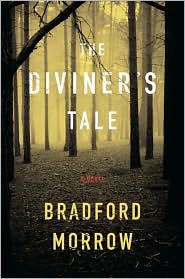
Everything I read—and I mean everything—affects what I think and what I write, so I try to be careful about the books I pick up. I’m writing a novel now about a professor who gets fired for plagiarism and goes to live on the remote Scottish island where Orwell wrote Nineteen-Eighty Four. For inspiration, I’ve recently started Joseph McElroy’s Women and Men, which I planned to bring with me overseas for the holidays, but I chickened out simply because this 1192-page hard cover was too heavy to drag on a transatlantic cattle car. I’m 169 pages in, but the rest will probably wait until the summer. Instead, I carried with me a series of smaller (but no less profound) books: The Emperor’s Children by Claire Messud and Disgrace and In the Heart of the Country by J.M. Coetzee. I also finally got around to Richard Russo’s That Old Cape Magic and, lastly, I was lucky enough to get my mitts on an advance copy of Bradford Morrow’s forthcoming The Diviner’s Tale, which is an amazing novel.

As far as what I’m reading right now, I’m glad to have an excuse to look again at Jack Green’s brilliant and scathing Fire the Bastards! It’s a short book—part rant, part analysis—that examines in petulant detail the terrible critical reception that William Gaddis’s The Recognitions received upon its publication in 1955. I personally consider that novel to be the high water mark of twentieth-century literature, but the critics weren’t very kind at first. In fact, the book was met with a flurry of poorly conceived, spiteful, anti-intellectual, and willfully-misrepresenting reviews. There’s an awkwardly warm kiddie pool in hell awaiting lazy, dogmatic book reviewers. Green responded in detail to each and every one of the critics and in doing so took on the entire book-criticism industry (an industry in which I’ve freelanced for over a decade, I might add).

The Dalkey Archive Press edition reproduces the tirades Green first published in an underground newspaper titled newspaper, which were composed without punctuation, line breaks, or discretion.

As Steven Moore writes in his introduction, while Gaddis’s reputation has gotten much, much better over the past half-century, the “review media, on the other hand, hasn’t improved; if anything, it has degenerated.” Fire the Bastards! should be required reading for everybody who reviews literature—or purports to.

Like everyone I know, I have a to-read-soon pile that could reach Uranus. Up next for me will be Nemesis by Philip Roth and a reread of Stewart O’Nan’s Last Night at the Lobster. At the recommendation of an editor pal whose tastes I’ve learned to trust I’ve also ordered copies of As She Climbed Across the Table by Jonathan Lethem and Kate Christensen’s The Epicure’s Lament, which I want to get to before her new novel drops later this year. I’m looking forward to that a lot.
Visit Andrew Ervin's website.

--Marshal Zeringue

Wednesday, January 26, 2011

Louise Penny

Louise Penny’s first novel, Still Life, won the New Blood Dagger, Arthur Ellis, Barry, Anthony, and Dilys awards. Her second book, A Fatal Grace, won the 2007 Agatha Award for Best Novel, as did her third, The Cruelest Month. Her next, A Rule Against Murder, was a New York Times bestseller, followed by The Brutal Telling, which was a New York Times, USA Today, Entertainment Weekly, and National Indie bestseller. Her latest novel is Bury Your Dead.

A little over two weeks ago I asked her what she was reading. Her reply:
Right now, beside my bed, I have a splayed Ngaio Marsh. The Fontana paperback cover from 1977 shows an elderly man in white tie and tails slumped in the back of a car, a nasty wound on his head. I think he's dead. The book's called Death in a White Tie and was first published in 1938, so it's time travel as well. Back to pre-WW2 London. That alone is fascinating. The pages are quite brown now from age - and the style is showing its age as well. I loved Ngaio Marsh as a teenager. While she herself was a New Zealander, she set most of her books in Britain. Her series hero is Chief Inspector Roderick Alleyn. I admit to having had a bit of a crush on him. And to Mrs. Marsh's credit, as the series progressed, so did Alleyn, eventually getting married (to Troy) and having at least one child.

But while there's a definite charm to the book its power for me is pure nostalgia - still a formidable attraction. The writing is stilted and sort of silly. The victim - Lord Robert - is called Bunchy and is described as a 'pet'. Alleyn himself is more than a little annoying at times, calling his solid second in command nick names that are a little too precious. There is not much emotion, or real characterization. I haven't yet reached the death of Bunchy (beyond suspecting that's him on the cover) - but I think when he does 'go' there'll be a series of, 'poor old Bunchy,' murmured around his club and that'll be about it.

Still, it is harmless and fun and I don't lie in bed worrying what that thump might have been. I just finished another Ngaio Marsh, so I thought I'd try this one. Easy, light, distracting. Just right for a Quebec winter.

As I read that, I was also reading the latest GM Maillet. Her publisher sent it asking that, if I like it, I might agree to endorse it. Frankly, I get quite a few of those requests and since I'm a slow reader and feel overwhelmed by the demand I generally decline with thanks. Though I'm more likely to agree to a debut author since I remember how much I was helped with my first book.

But I'm such a fan of GM Maillet, who writes traditional mysteries. She's American, but she sets her books in the UK. So I was enthusiastic to read her latest, which is also the start of a new series. The book will come out later in 2011 and is called The Michaelmas Mystery, though that might change - you never know. Either way, it's a terrific book. Lots of fun - pithy, insightful and often hilarious descriptions of characters. I read it in just a few days, by the fire. Which for me is lightning speed. I happily wrote an endorsement.

Next on the pile? The Rule of St. Benedict, The Life of Thomas Merton, Monastic Life, and The Naked Now by Richard Rohr. I start writing my next book in March and its set in a fictional monastery in Quebec. So the research begins. I find it all fascinating.

Hope you're enjoying whatever book you're into! How magnificent to be enthralled by stories.
Visit Louise Penny's website and blog.

Coffee with a Canine: Louise Penny & Trudy.

The Page 69 Test: Still Life.

My Book, The Movie: A Fatal Grace.

The Page 99 Test: The Cruelest Month.

The Page 99 Test: A Rule Against Murder.

The Page 69 Test: The Brutal Telling.

My Book, The Movie: The Brutal Telling.

--Marshal Zeringue

Tuesday, January 25, 2011

Caroline Leavitt

Caroline Leavitt's novels include: Girls In Trouble, Coming Back To Me, Living Other Lives, Into Thin Air, Family, Jealousies, Lifelines and Meeting Rozzy Halfway. Various titles were optioned for film, translated into different languages, and condensed in magazines.

Her essays, stories and articles have appeared in Salon, Psychology Today, Cookie, New York Magazine, Parenting, The San Francisco Chronicle, The Chicago Tribune, Parents, Redbook, The Washington Post, The Boston Globe and New Woman, as well in numerous anthologies.

Leavitt's new novel is Pictures of You.

Earlier this month I asked her what she was reading. Her reply:
The Sweet Relief of Missing Children by Sarah Braunstein popped in my door and though I know you can’t tell a book by its cover, this cover image haunted me so much, that I was sure that what was inside was going to be as spectacular as what was outside. A polite-looking little girl stands with her back towards us, the grass green as any suburb. And, of course, there is that title! I wanted to read Braunstein because her novel is really about all my favorite themes: reinvention, running away, vanishing into another life, all issues that circle like a hamster wheel in my head. For me, the only drawback is that sometimes, the writing of this book almost overshadows the story. Still, Braunstein’s writing zips and glints and is positively brilliant, and if the various stories she tells aren’t always holding completely together for me, I’m hooked enough and patient enough to wait and see what final alchemy she does.
Visit Caroline Leavitt's website and blog.

The Page 69 Test: Pictures of You.

My Book, the Movie: Pictures of You.

--Marshal Zeringue

Monday, January 24, 2011

H. Bruce Franklin

H. Bruce Franklin is the author or editor of nineteen books and more than 300 articles on culture and history published in more than a hundred major magazines and newspapers, academic journals, and reference works. He has given over five hundred addresses on college campuses, on radio and TV shows, and at academic conferences, museums, and libraries, and he has participated in making four films. He has taught at Stanford University, Johns Hopkins, Wesleyan, and Yale and currently is the John Cotton Dana Professor of English and American Studies at Rutgers University in Newark.

Some time back I asked him what he was reading. His reply:
The future history of our species will be profoundly affected by what we do or do not do to our planet's seas. Two great and most timely books that can offer us guidance are Paul Greenberg's Four Fish: The Future of the Last Wild Food and Sylvia Earle's The World Is Blue: How Our Fate and The Ocean's Are One.

For some very different insights into the intricate relations between our species and some fish that might seem most alien, read James Prosek's Eels: An Exploration ... of the World's Most Amazing and Mysterious Fish.
Visit H. Bruce Franklin's website.

--Marshal Zeringue