Wednesday, March 14, 2012

Christopher Hebert

Christopher Hebert graduated from Antioch College, where he also worked at the Antioch Review. He has spent time in Guatemala, taught in Mexico, and worked as a research assistant to the author Susan Cheever. He earned an MFA in creative writing from the University of Michigan and was awarded its prestigious Hopwood Award for Fiction. He lives in Knoxville, Tennessee, with his son and wife, the novelist Margaret Lazarus Dean.

Hebert's new novel is The Boiling Season.

Recently I asked him what he was reading.  His reply:
Over the last year I did a ton of reading for research and for various nonfiction projects I’ve been working on. All of it worthwhile, but that kind of reading doesn’t always make for unmitigated enjoyment. I decided to make 2012 the year of reading pleasurably, and so far so good.

I just finished Jennifer Egan’s A Visit From the Goon Squad, which I’d pushed aside for forever. It’s a brilliantly fun book, which is all the more impressive considering how subtle it moves and develops. It’s the first time I’ve read Egan, and I was amazed by her deftness, the startling economy of what she can accomplish in prose. And the restraint she shows in putting together these fragmented pieces in a way that somehow doesn’t feel fragmented at all. Though the book ranges all over in time and space and with a vast cast of characters, I put it down feeling as though I’d had an intensely intimate experience.

The book I just picked up is Sabina Murray’s story collection Tales of the New World. I met her recently at a reading and heard her read from it, and then I immediately raced to the front of the line to buy a copy.

I’ve made it only as far as the opening novella, “Fish,” which is the most—and I assure you this is a word I save for only very special occasions—enchanting thing I’ve read in a long, long time. And not just because it has fairies in it.

The protagonist of “Fish,” Mary Kingsley, born in 1862, is an English spinster who escapes her suffocating family and society by becoming a trader, explorer, and amateur ichthyologist in the deepest unexplored reaches of Africa. Mary is one of the most charmingly defiant characters I’ve ever read. The fact that she’s an actual historical figure is impressive, but the real magic is the effortless irreverence with which Murray imbues her.

I’m a little reluctant to start the next story; I’m not quite ready to leave Mary Kingsley behind.
Learn more about the book and author at Christopher Hebert's website.

The Page 69 Test: The Boiling Season.

--Marshal Zeringue

Monday, March 12, 2012

Jim DeFelice

Jim DeFelice’s new book, The Helios Conspiracy (Tor/Forge), received a starred review from Kirkus, who called it “complete success with its appealing investigator, rapid-fire dialogue and convincing storytelling.”

He is the co-author of American Sniper, the New York Times number one best-seller.

A couple of weeks ago I asked the author what he was reading.  His reply:
One of the things I like most about traveling is that it gives me a chance to read. Generally, I leave the e-reader home – I like to pick up things at the airport or train station book store that are a little unusual, for me, at least.

On a recent trip from New York to Washington, I grabbed a copy of Mafiaboy, the first-person account by Michael Calce with Craig Silverman of a hacker’s crimes and misdemeanors during the early days of on-line computing and the internet. It’s a fascinating book, and kept me good company both down and back. The portrait of a teenage hacker is at once charming and extremely alarming. Silverman did an excellent job shaping the work and letting Calce tell the story in his own words – not an easy task.

A few days later, on a trip to Texas, I picked up Tom Rachman’s The Imperfectionists on the way to the airport. This is a novel organized around a series of short stories and character sketches that taken together form almost a love story for newspapers. The book tells the story of a paper very much like the International Herald Tribune, but it’s really a lot more than that. I swear I’ve met at least half the journalists in the book.

I’m not sure I could come up with two more different books. But that’s part of the fun of traveling – you never know what new experience the road will bring.
Visit Jim DeFelice's website and blog.

--Marshal Zeringue

Sunday, March 11, 2012

Tobias Buckell

Tobias S. Buckell is the author of Halo: The Cole Protocol, Sly Mongoose, Ragamuffin, Crystal Rain, and the newly released Arctic Rising. His books have been finalists for the Nebula Award, the Prometheus Award, and the Romantic Times Award for Best Science Fiction Novel. He hails from the Caribbean, where as a child he lived on boats in Grenada and the British and U.S. Virgin Islands. When he was a teenager, his family moved to Ohio after a series of hurricanes destroyed the boat they were living on, and he attended Bluffton University in Bluffton, Ohio, where he still lives today. Buckell fell in love with science fiction at a young age, reading Arthur C. Clarke and Isaac Asimov novels when he was seven years old.

Recently I asked him what he was reading.  His reply:
I'm reading Saladin Ahmed's Throne of The Crescent Moon. It's like 1001 Arabian Nights meets high fantasy, and so far it's pretty awesome. Saladin has written a number of cool short stories, and this is his first book. And it's a heck of a splash in the genre. It's nice not getting the same old orcs/elves/rangers routine, but something different. Goes a long way with me. And it's not just that it's something different, Saladin can spin a good yarn, so it's been a lot of fun so far.
Visit Tobias S. Buckell's website and blog.

My Book, The Movie: Ragamuffin.

The Page 99 Test: Sly Mongoose.

--Marshal Zeringue

Saturday, March 10, 2012

Ali Brandon

Ali Brandon is the national bestselling author of Double Booked for Death, the first in the new Black Cat Bookshop mystery series from Berkley Prime Crime. Writing as Diane A.S. Stuckart, she is the critically acclaimed author of historical romance and short fiction, as well as the award-winning Leonardo da Vinci mystery series, also from Berkley.

A few weeks ago I asked her about what she was reading.  Her reply:
One of the best things about finishing a manuscript is that it frees you to indulge in the recreational reading that you denied yourself while under deadline. That means I’ve finally been able to sit down with a few books that have been lingering in my TBR pile. Since I’m an eclectic reader, the titles I’ve pulled out for mention come from all parts of the literary spectrum.

First up is The Adventures of Bindi Girl by Erin Reese. Subtitled, Diving Deep Into the Heart of India, it’s the travel memoirs of a thirty-something former executive who decides to ditch it all to backpack through India. She lives with the locals and in various backpacker “camps,” striking up friendships with fellow free spirits along the way. As a former yoga instructor, I have long had an affinity for India and her culture; thus, I leaped eagerly into this book. In the end, however, I wandered out again feeling vaguely unsatisfied.

While Reese is a talented and engaging author, I wanted to like her account much more than I actually did. Bindi is a fast read with short chapters reminiscent of blog posts—not surprisingly, since Reese is a former popular travel blogger—but it swiftly took on the tone of a wanna-be version of the staggeringly successful Eat, Pray, Love. The continual “see how well I blend in with the culture and how much the Indian people love me” references seemed more an exercise in self-indulgence than a thoughtful look at this fascinating country. I would recommend instead the 2004 memoir Holy Cow: an Indian Adventure by Sarah Macdonald, with its greater honesty and more in-depth observations.

Moving off in a totally different direction, I recently picked up a copy of South Beach Cinderella by Sharon Potts. Disclaimer: Sharon is a fellow member of the Florida chapter of Mystery Writers of America. But up until that point—bad me—I’d never gotten around to reading any of her novels. And so I figured it was time to rectify that error.

If you’ve read her previous work, you know Potts as an up-and-coming suspense author. But, like many writers, she had the urge to try something a little different…in this case, way different. South Beach Cinderella is a delightful hybrid of edgy chick lit/misty-eyed romance that has genuine LOL moments. Successful (and slightly OCD) career woman Frankie Wunder is ready to make a move to the mommy track. Unfortunately, she discovers that her charming dentist husband has been checking out more than teeth on the billboard models who advertise his thriving practice. Frankie promptly dumps him and goes on a quest to find a replacement husband who is ready to jump into daddy mode. In keeping with her compulsive tendencies, she puts together a list of potential candidates who meet her strict guidelines for the hubby/dad-to-be and begins the vetting process. But you know what they say about the best laid plans.

Potts’ Frankie is, by turns, a snarky and poignant figure, while her secondary characters serve as well-drawn foils in this “girl-grows-into-woman” romantic comedy. I’ve since read one of Potts’ suspense novels, Someone’s Watching. While it was competently written and carefully plotted, the novel had a far more workman-like feel to it…I could readily spy the by-the-numbers underpinnings. I have to say that I much prefer the humorous contemporary voice of Cinderella.

Finally, I read a wonderful unpublished novel entitled Mandragora. A novelization of Niccolo Machiavelli's play The Mandrake, this manuscript came to my attention by way of an email from Port of Spain, Trinidad. The as-yet unpublished author is a charming older gentleman named H.D. Greaves. He was familiar with my Leonardo da Vinci mystery series written as Diane A. S. Stuckart and, given the similar time periods of our writings, asked me if I would blurb his book. I have to admit I was a bit reluctant at first—most professional writers agree that reading an unpublished author’s manuscript is fraught with peril—but the tone of his request won me over.

I was pleasantly surprised by what I found once I finally dove into his book. As I told Harold, it’s not an easy read, in that you have to take it slowly to catch all the nuances, but I see this being a book that becomes popular via word of mouth. And so, the quote I gave him is as follows: With a dramatic style that is, by turns, suspenseful and laugh out loud funny, Greaves brings the classic work to life for modern readers without sacrificing its Renaissance soul. I hope that one day soon I’ll be seeing my new friend Harold’s book on the shelves.
Visit the official Ali Brandon--AKA Diane A.S. Stuckart--website.

Read--Coffee with a Canine: Diane Stuckart & Ranger, Delta, Oliver and Paprika.

My Book, The Movie: Double Booked for Death.

--Marshal Zeringue

Thursday, March 8, 2012

Carola Dunn

Carola Dunn is the author of the Daisy Dalrymple mystery series, set in England in the 1920s, most recently Gone West; and the Cornish mystery series, comprising so far Manna from Hades and A Colourful Death, with more to come. In fact, she has just finished writing the third, Valley of the Shadow.

Last month I asked Dunn what she was reading.  Her reply:
Who knew Sir Isaac Newton spent his later years working for the Royal Mint? History, mystery, biography, science, would-be magic, they all come into this fascinating book: Newton and the Counterfeiter: The Unknown Detective Career of the World's Greatest Scientist by Thomas Levenson. Newton used his logical skills to catch a man who'd been ripping off the national monetary system for years. An interesting sidelight is Newton's belief in the Philosopher's Stone, that turns dross to gold, and his search to discover/create it.

In the realm of science, I read The Hidden Reality: Parallel Universes and the Deep Laws of the Cosmos by Brian Greene. I didn't understand a lot of it, but the concepts—branes, bubble universes etc.--were fascinating.

The Wolf in the Parlor: How the Dog Came to Share Your Brain, by Jon Franklin, was what you might call speculative science. Franklin postulates that dogs and humans co-evolved, that without dogs we would not have become what we are—and vice versa. Being a dog-lover, I go for this theory whole-heartedly.

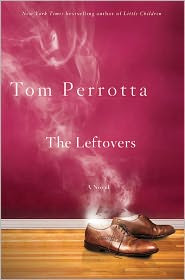
Another interesting book I read recently was fiction—you could call it fantasy. The Leftovers, by Tom Perrotta, is about a small group of people coming to terms with being among those left behind after the so-called Rapture—which doesn't seem to be anything like what Rapture-believers expect. The people who suddenly vanish aren't necessarily good, nor are they Christians. They're of all beliefs and none. The discombobulating effects on society and on individuals are well-imagined and the main characters are sympathetic, though I have to say I would have liked some sort of explanation of what happened.

I enjoy reading mysteries as well as writing them. One of my favourites is Spencer Quinn's Chet and Bernie series. Bernie is a private eye in LA, and Chet is his dog. The books are written from Chet's point of view, normally something I avoid like the plague. But Quinn does the dog's voice so beautifully, it really feels like a dog's thinking. He gets distracted by passing smells, doesn't understand a good deal of what Bernie says to him, and can't imagine anything wrong with the world as long as his person is with him. As I mentioned, I'm a dog person! I caught up with the series with The Dog Who Knew Too Much.

Another series I like is Roderic Jeffries Majorcan mysteries. Murder Majorcan Style is the latest in Inspector Alvarez's questionable triumphs—he usually works out whodunnit, but his superior chief never gives him credit. Alvarez loves brandy, good food, Mallorca, naps, and women, not necessarily in that order. He's in no hurry, but he gets there in the end. The setting is wonderfully portrayed, with the conflict between the natives and the invading hordes of Northern Europeans.
Visit Carola Dunn's website.

Read--Coffee with a Canine: Carola Dunn & Trillian.

--Marshal Zeringue

Wednesday, March 7, 2012

Catherine McKenzie

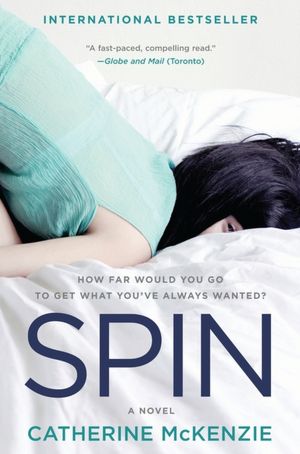
Catherine McKenzie was born and raised in Montreal, Canada. A graduate of McGill University and McGill Law School, McKenzie practices law in Montreal. Her novels Spin and Arranged are International Bestsellers. They, along with her third novel, Forgotten, will all be published in the US by William Morrow in 2012.

Recently I asked McKenzie what she was reading.  Her reply:
I’ve just finished reading The Marriage Plot by Jeffrey Eugenides and The Leftovers by Tom Perrotta. I’m currently reading the Steve Jobs biography. Both of these novels are extremely well written. What struck me in The Marriage Plot was how Eugenides seems to be both poking fun at the traditional narrative in what is generally called “women’s fiction” while essentially following that very narrative. I also couldn’t help wondering, given all the recent debate on the issue, whether the book would have received the same amount of attention that is has – deservedly – received if it was written by a woman. I thought Perrotta explored a very interesting premise in The Leftovers – what would life be like for the survivors after a catastrophic worldwide event & brought a neat twist to it by taking this type of premise out of its usual sci-fi genre into general fiction. I’m also enjoying the Steve Jobs biography though I’m already convinced that though I love his products, the man himself would have driven me nuts.
Visit Catherine McKenzie's website.

The Page 69 Test: Spin.

--Marshal Zeringue

Tuesday, March 6, 2012

Jacqueline E. Luckett

Jacqueline E. Luckett worked in sales for Xerox for twenty years. During that time she married, raised a family, and took creative writing classes where she reignited her love of writing.

In 2004, she formed the Finish Party (featured in O Magazine, October 2007) along with seven other women writers-of-color. She calls these outstanding women her mentors and advisors, her friends and the toughest (and most loving) readers around.

Her new novel is Passing Love.

A few weeks ago I asked Luckett what she was reading.  Her reply:
I’m not really one for reading non-fiction, but lately a few titles have caught my attention. I’m nearly two-thirds through this one: The Warmth of Other Suns: The Epic Story of America’s Great Migration, by Isabel Wilkerson.

Though I’d bought the book when it was first released, I shied away from it because I expected a dry compilation of facts and statistics. I bought the book because I felt it was a necessary addition to my library. Recently, after a friend read Wilkerson’s book and raved about it so much, I immediately took it off my shelf and began to read.

My parents came to California from Mississippi. My mother arrived, along with her three sisters, during World War II. My father came after serving in the Army. My parents had been sweethearts in Mississippi. Though he always said he intended to move to Seattle, I know my father came to California for my mother. They were married shortly after his arrival.

Little did I know that my parents were a part of the Great Migration that Wilkerson describes. The book reads like a great novel with beautiful language, interesting characters, and compelling stories. Wilkerson follows three Black Americans who left the South in the 30s,40s and 50s for what they believed would be better lives in New York, Chicago and Los Angeles. Though the stories are personal, they represent millions.

The narrative weaves smoothly between the three migrants—Robert, a doctor, George, an orange picker/activist, and Ida Mae, a sharecropper’s wife—in such a way that I feel their fear, the tension of their decisions to leave, the difficulty of finding jobs, traveling on the road, and the sad realization that, though more subtle (and often not), Jim Crow existed in nearly as large a scale in the North and the West as it did in the states they were fleeing.

Yet, the history is there: the treatment of sharecroppers, the clash between the haves and the have-nots, the reluctance to leave the only home some had ever known. Wilkerson tells all in anecdotes drawing from newspapers, history books, and the hundreds of interviews she conducted. There’s an intimacy to the book that makes me want to keep reading to find out what happens to each of the characters. When Robert Pershing drives through Arizona and is refused a motel room and forced to drive three-hundred miles without stopping, I’m with him. When Ida Mae fears that the sharecropper will keep her family from leaving his farm, I’m with her. When George runs for the next bus out of town because the orchard owners consider him a rabble-rouser, I’m with him. This involvement is exactly what I want from a good read.

The stories are the same ones all my relatives and parents experienced and lived. But that’s not what makes me enjoy this book. It’s well written, exciting, sad, and informative. It makes me think and to cherish, all the more, the sacrifices my parents made for my sister and me, so that we could have a prejudice-free, different, and better life. Their vision was exactly the same as all of those millions of black southerners who packed up all they had to live their dreams.

This book makes me proud, and though I’m fairly certain how the stories will end, as I move toward the last pages, I’m as excited to read as I am when I find a good novel. I want to know what happened to the characters and what events bring them to the end of their journeys—and, that’s what I want from any good book.

Wilkerson leaves her reader with much to think and talk about. The book inspires us all to speak to our elders and to learn their stories.
Visit Jacqueline E. Luckett's website and blog.

The Page 69 Test: Passing Love.

My Book, The Movie: Passing Love.

--Marshal Zeringue

Monday, March 5, 2012

Eva Stachniak

Eva Stachniak was born in Wroclaw, Poland. She moved to Canada in 1981 and has worked for Radio Canada International and Sheridan College, where she taught English and humanities. Her first short story, “Marble Heroes,” was published by The Antigonish Review in 1994, and her debut novel, Necessary Lies, won the Amazon.ca/Books in Canada First Novel Award in 2000. She is also the author of Garden of Venus, which has been translated into seven languages.

Her latest novel is The Winter Palace.

A few weeks ago I asked Stachniak what she was reading.  Her reply:
I have just finished reading The Appointment, by Herta Müller. I’ve wanted to read her for some time not only because she is a superb writer and won the Nobel Prize for literature in 2009. Müller grew up in Communist Rumania while I grew up in Communist Poland, we are both emigrants, of the same generation, and such similarities of fate are important to me.

As soon as I started reading The Appointment I knew how much our experience of totalitarianism differed. In the “Socialist prison camp,” as we referred to the Communist block, Ceausescu's Romania was in a league of its own. Life in Communist Poland may have been bleak, humiliating and often absurd, but it lacked the degree of cruelty and senselessness that was part of everyday Romanian experience. Müller is sparing in her details, but these she divulges are enough to re-create the feeling of helplessness under totalitarian oppression and the doomed struggle to preserve human dignity. As the last sentence of the novel asserts: “The trick is not to go mad.”

The Appointment is a dark but immensely powerful novel. It is born out of the totalitarian experience, of being watched and spied upon at all times, of trying to save one’s dignity in an inhuman, perverted world.
Visit Eva Stachniak's website.

--Marshal Zeringue
Saturday, March 3, 2012

Zoë Sharp

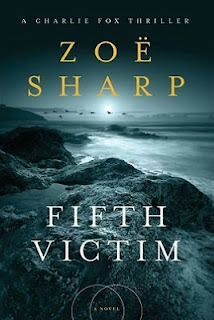
Zoë Sharp’s crime thriller series features former British Special Forces soldier turned bodyguard heroine, Charlie Fox. Two installments, First Drop and Fourth Day, were nominated for Barry Awards for Best British Crime Novel. The latest in the series is Fifth Victim.

Recently I asked Sharp what she was reading. Her reply:
I’m reading a real mix of things at the moment. The first is an e-thology of short stories by Graham Smith, Harry Charters Chronicles, which all feature a noir alcoholic gumshoe in the mould of Marlowe and Spade. Laconic and wisecracking – as well as hard drinking – Harry Charters dispenses rough justice rather than the legal kind. He shouldn’t be a sympathetic character, but he is not without his own brand of charm. Graham Smith is a comparatively new writer, and although this sometimes shows in the prose, his enthusiasm and characterisation shine through. It kept me turning the pages to the end.

The next on the reading pile is Sue Grafton’s V is for Vengeance. I confess that although I was an avid follower of Grafton’s PI Kinsey Millhone from the beginning of the alphabet series to about N or M, I’ve fallen way behind with the later books. I’ve been asked to moderate a panel at CrimeFest in May with Ms Grafton, so I’m bringing my reading up to date. This has been a great opportunity to catch up with tales of the California private eye and remind myself what I’ve been missing. I’m not usually a fan of mixed first and third person, and I have to say that I preferred the sections when Kinsey was front and centre, but the writer carried off the intertwined narratives with her usual aplomb.

Lastly, is The Etymologicon by Mark Forsyth, which I received for Christmas and have been dipping into ever since. It’s tagged as ‘a circular stroll through the hidden connections of the English language’ and it’s certainly that. If you want to know what is the longest grammatically correct sentence containing only one word, or why you should be afraid of money, or the connection between Botox and sausages, this is the book for you. Mark Forsyth imparts all this in a highly entertaining style. The perfect gift – especially for yourself.
Visit Zoë Sharp's website.

The Page 69 Test: Fifth Victim.

--Marshal Zeringue

Friday, March 2, 2012

Greg Robinson

Greg Robinson, a native of New York City, is associate professor of history at l'Université du Québec à Montréal.  His books include A Tragedy of Democracy.

His new book is After Camp: Portraits in Midcentury Japanese American Life and Politics.

Last month I asked Robinson what he was reading.  His reply:
Much of the reading I have been doing lately has been in connection with my new Ph.D. seminar on "History and Biography"--the first doctoral level course I have ever taught. The course is designed to be thematic in nature, and to assist the students in the course, none of whom is a specialist in History of the United States, in thinking about their dissertations. I have thus outlined various forms of biography to cover in turn over the semester—political history, women’s history, autobiography, psychohistory, etc. as well as historical fiction. In the same way, I have tried to spread my wings a bit in deciding on what course readings to assign my students. It has been particularly fun for me to select various classics of the biographical genre and to read through them (primarily in French) in order to gain insights for class discussions.

Suetonius’s Twelve Caesars gets a bad rap for being composed of scandalous tales of the private lives of the Roman emperors. What struck me in Suetonieus’s portrait of Augustus was how simple and human he was, down to his wearing the ancient Roman equivalent of platform heels to look taller. (Admittedly, this was deflating the God Augustus had been made). I also appreciated Suetonius’s logical sense as a researcher in investigating surviving palace furniture to judge the ostentation at Augustus’s court. I did wonder how Suetonius, writing a hundred years after Augustus’s death, found records of the color of his teeth.

Another fun read was the entry on Michelangelo in Giorgio Vasari’s Lives of the Artists. Michelangelo was the only living artist to be featured in Vasari’s first edition—such was his reputation even during his lifetime! Vasari gives us an account of the great man’s life, then makes him come alive in very human terms by repeating a whole series of anecdotes featuring his pithy (not to say bitchy) remarks about other artists.

Conversely, James Boswell’s The Life of Samuel Johnson, at least in French translation, seemed rather slow going: the exhaustive account of Johnson’s conversation was, well, exhausting at times. Though Boswell is often slammed as obsequious, I was reminded just how central he is in his biography, which is really about Johnson’s relationship with him. I could not help thinking of the work in funny counterpoint with Gertrude Stein’s The Autobiography of Alice B. Toklas. Also, one surprising thing I had not noticed before (and do not know whether it is generally remarked upon) is Boswell’s references to a freedom suit brought in 1778 by a Black slave in a court in Scotland. Unlike Johnson, a critic of slavery, Boswell affirms his approval of the institution and support for the slave trade.

Another work that was a joy to rediscover was Josephine Tey’s The Daughter of Time, though it fits somewhat loosely into the biographical genre. Penned by a celebrated mystery novelist, the work recounts how a police detective sidelined by injury uses the tools of his trade in the service of biography, challenging the received portrait of King Richard III as a murderer. It is compulsively readable, and also suggests methods of deductive analysis to the attentive reader.

I have been reading one book entirely for pleasure: Jonathan Gill’s Harlem. A tour de force history of Harlem through 400 years, the book combines urban history, cultural criticism, and many other elements. To his credit, without reducing the primary role of African Americans, Gill studies Jewish, Italian and Puerto Rican communities as well, and digs up a multitude of new information that he incorporates with seeming effortlessness in his study.
Learn more about After Camp at the University of California Press website.

Writers Read: Greg Robinson (July 2009).

--Marshal Zeringue