Wednesday, April 18, 2012

Joseph Olshan

Joseph Olshan is the award-winning author of ten novels including Nightswimmer and The Conversion. He spends most of the year in Vermont.

His latest novel is Cloudland.

Earlier this month I asked Olshan what he was reading. His reply:
I am reading two books at present. The first is The Eustace Diamonds by Anthony Trollope, the third novel in the Palliser series. Most Trollope fans will understand it when I say that reading his novels is like eating candy. They have wonderful, intricate plotting, great characters, they give an instructive overview of the political scene in England during the 19th century, and they dissect and parse the vagaries and traditions of the upper classes. Trollope is particularly good at creating feckless yet compelling young men. I blistered through Phineas Finn and look forward to Phineas Redux, which is the novel in the series that follows The Eustace Diamonds.

The other book I am reading is Destiny of the Republic: A Tale of Madness, Medicine and the Murder of a President by Candice Millard. This is an amazing non-fiction account of the life of President James Garfield, an extraordinary dark horse of a fellow who is assassinated and whose well-being becomes the obsession of Alexander Graham Bell, who believes that one of his inventions can save the president's life.
Visit Joseph Olshan's website.

The Page 69 Test: The Conversion.

The Page 69 Test: Cloudland.

--Marshal Zeringue

Tuesday, April 17, 2012

Jenny Lawson


Jenny Lawson is a columnist and one of the most popular bloggers on Twitter with hundreds of thousands of followers. Her blog averages between 2-3 million page views per month. Lawson lives in the Texas Hill Country with her husband and daughter.

Her new book is Let's Pretend This Never Happened (A Mostly True Memoir).

Recently I asked her what she was reading.  Her reply:
Right now I'm reading The Visual Dictionary and I'm rereading Neil Gaiman's Sandman series. One of my favorite collections of books ever.
Visit Jenny Lawson's blog.

Read more about Let's Pretend This Never Happened (A Mostly True Memoir).

--Marshal Zeringue

Monday, April 16, 2012

Richard Harland

Richard Harland is the author of many fantasy, horror, and science fiction novels for young readers, including Worldshaker, Liberator, the Eddon and Vail series, the Heaven and Earth Trilogy, and the Wolf Kingdom quartet, which won the Aurealis Award. He lives in Australia.

His reply to my recent query about what he was reading:
Right now I'm reading A Darkling Plain, which is number four in Phillip Reeve's "Mortal Engines" series. Great steampunk fantasy (or steampunk science fiction, whichever you like to call it), especially for anyone who's read the three previous novels. Airships, predatory mobile cities, underwater limpets, Stalkers—A Darkling Plain brings together all the best elements of the series; plus Tom, Wren, Anna Fang, Fishcake and even Hester coming back on stage. Maybe it wouldn't be so great for a reader who didn't know the world from the previous, but I love that world and I just want to keep reading more and more of it.

To be honest, I love it now, but I hated it when I first read book number one, Mortal Engines. Not because it was so bad but because it was so good—and because Reeve's world had a definite resemblance to the juggernaut world I'd been planning for ten years! Grrr! Gnash! I was furious that he'd snuck in ahead of me. It took me six months to get over the disappointment and realize that, in spite of similar world-features, the mood and tone of my story was totally different. Since Worldshaker came out—and this April, its sequel Liberator—nobody has accused me of copying from Mortal Engines, so I can now enjoy Reeve's books with no pangs of rivalry!

(I exaggerate: one single blogger accused me of copying, but since he hadn't read Worldshaker, I don't reckon that counts. Yes, in synopsis, it can sound similar …)

I haven't finished A Darkling Plain yet, so I don't know if it wraps up the series once and for all. I guess the novel doesn't quite have the beautifully taut story of Predator's Gold (book number two), and it can't have the mind-blowing originality of Mortal Engines as book number one. But I can't put it down …

When I say I can't put it down, I mean I can't put my iPad down, because I downloaded it for reading on my iPad. A new experience for me! I had an eye operation three weeks ago, which went without a hitch, I'm happy to report! But now I need reading glasses, and I can't have myself tested glasses until the eye has settled down. So I'm reading A Darkling Plain on my iPad in large print, super-huge font size! My wrist would be aching if I had to turn so many pages, but a tap on the side of the screen, and the story goes whizzing past!

My other favorite reading in the past three weeks has been The Spook's Apprentice [US title--Revenge of the Witch], by Joseph Delaney. (Yes, I've been catching up on a lot of YA stuff.) A great supernatural story, where the hero has to learn how to quell and control different kinds of ghosts, boggets and witches. It presents some truly eerie scenes and develops some creepy old-style tension. Not all ghosts, boggets and witches in Delaney's world are bad, but when they're bad, boy, are they bad! The story works from a relatively simple scenario and keeps on drawing new twists and turns out of it.

I think it was more scary for me because I didn't actually read it, I listened to it. After the eye op, I bought some audio books (the iPod size ones for which I use my own ear-buds, so handy!) Listening to somebody tell you a ghost story is somehow far better than reading one for yourself. Pauses, lowered voice, the kind of thrilling delivery that makes the hairs stand up on the back of your neck ... All I can say is, I did some of my listening when I was out walking for exercise, and I could've kept walking and exercising or hours!

Another audio book I listened to was non-fiction, The Brain That Changes Itself, by Norman Doidge. I reckon those new discoveries are really interesting—about how the brain isn't fixed, one part for each function, but can re-wire itself. It wasn't great to listen to as audio book, though—I found myself often wanting to fast forward (which I couldn't do unless I jumped all the way to the next chapter). Too much hagiography on the academic researchers in the field—they were supposed to be charismatic, but that's not how they came across to me. Fiction is the place for characters! I'd have preferred to hear more about the ideas—not the small-grain research detail but the big picture of what it all means. I think Doidge must be very much oriented to Freudian psychoanalysis, because he consistently slanted his interpretation that way.

I did like the idea that thinking about exercises can develop muscle strength and tone to at least 30% of what you'd get from actually performing them. Now that's my sort of brain!
Visit Richard Harland's website.

--Marshal Zeringue

Sunday, April 15, 2012

Wiley Cash

Wiley Cash is from western North Carolina. He has a Ph.D. in English from the University of Louisiana-Lafayette and teaches English at Bethany College.

His stories have appeared in Crab Orchard Review, Roanoke Review and The Carolina Quarterly.

Cash's first novel, A Land More Kind Than Home, is now out from William Morrow.

Recently I asked the author what he was reading. His reply:
Right now I’m reading Nothing to Envy: Ordinary Lives in North Korea by Barbara Demick. It’s an incredible study of what people there face every day. It actually reads like fiction, and it’s heartbreaking when you stop and consider that it’s all true. I grew really interested in North Korea after reading Adam Johnson’s stellar novel The Orphan Master’s Son. Like Demick, he was actually able to visit North Korea while being accompanied and monitored by “minders.” Even with first person accounts and fictional stories by people who lived and traveled there, it’s amazing how much we don’t know about the country.
Visit Wiley Cash's website.

--Marshal Zeringue
Friday, April 13, 2012

Robin Wasserman

Robin Wasserman is the author of the Seven Deadly Sins series, Hacking Harvard, and the Skinned trilogy, which bestselling author Scott Westerfeld called "spellbinding." She has a master's degree in the history of science, and is fascinated by Renaissance philosophy, religion, magic, science, and the interplay among them.

Her new novel is The Book of Blood and Shadow.

Earlier this month I asked Wasserman what she was reading. Her reply:
When I was a kid, I was always the kind of person who had three or four books going at once (one to read over dinner, one to hide under my covers, one to hide under my desk at school, one for the bathtub, etc - you can see what my childhood was like). I seem to be heading back in that direction, although I've now learned better than to try to pair reading and showering. (At least until someone gifts me with a waterproof Kindle.) These days my apartment is littered with half-read books, and I pick one or the other up depending on what I'm doing. This week, I'm just back from a trip, which means David Foster Wallace's Consider the Lobster, one of my all time favorites, for the plane. Usually when I'm flying, I try to find something so fast-paced and riveting I won't notice the time passing -- a couple weeks ago, that was Peter Straub's terrifying Ghost Story, a Stephen-King-esque novel about small town evil. But for this trip, I didn't have time to go to the bookstore. Fortunately, Consider the Lobster, a book of ridiculously brilliant essays about things like tennis, politics, lobsters, and porn, turns out to be the perfect go-to flying book, not because you fly through the pages, but because you're forced to puzzle out every single sentence, taking apart the prose like a puzzle. Your brain is working so hard to get through the essay that you barely notice the flight attendants spilling drinks on your head. So I saved that for the plane rides; while I was actually on the trip, I read whatever I could find lying around the hotel's little library, which meant Colson Whitehead's Zone One and Rick Riordan's Lightning Thief. Zone One is a post-zombie-apocalypse novel, ie it's set during the cleanup efforts of a zombie apocalypse, when all that's left to do is mop up the remaining undead and try to forget about that time you saw mommy eating daddy's brains. Needless to say, it is terrifying. But also beautiful. The Lightning Thief, on the other hand...well, I probably don't need to say anything about that one except that I'm a moron for not reading it sooner and I can now see why it has a zillion fans, but in case you've been living under a no-children's-books allowed rock: It's the story of a kid who discovers he's the son of a Greek God and is thus totally screwed, in the most fun way possible. Basically Harry Potter, but with lightning bolts and tridents. Suffice to say: It was more fun than the vacation.
Visit Robin Wasserman's website and blog.

--Marshal Zeringue

Wednesday, April 11, 2012

Daniel O'Malley

Dan O’Malley graduated from Michigan State University and earned a Master’s Degree in medieval history from Ohio State University. He then returned to his childhood home, Australia. He now works for the Australian Transport Safety Bureau, writing press releases for government investigations of plane crashes and runaway boats.

His debut novel is The Rook.

Not so long ago I asked O’Malley what he was reading.  His reply:
I’ve always got a few books on the go, at least three – a new one, a re-read, and a research book. My current re-read is Death Before Wicket by Kerry Greenwood. Greenwood is a fellow Australian author and this is one of her books about the Hon. Phryne Fisher, a woman of style and elegance who solves murders in 1920’s Melbourne. Except that this one is set in Sydney. Now, although I am a huge fan of Phryne Fisher, I was a little wary the first time I read this because I am not a fan of cricket. It’s unpatriotic, but I can’t lie about it. I find cricket boring. However, this book is not really about cricket, and it is definitely not boring. Instead, it is about the odd characters at a university, and the period’s fascination with the occult. It features Phryne at her very best: sophisticated, merciless, and not averse to picking up the odd lover or two.

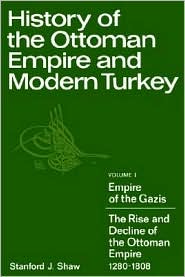
The research read is History of the Ottoman Empire and Modern Turkey, Volume 1: Empire of the Gazis: The Rise and Decline of the Ottoman Empire 1280-1808 which, like its title, is long and scholarly. But, it’s ideally suited to what I’m interested in. The author, Stanford J. Shaw, has given the reader an extremely good description of the Ottoman Empire. If you want to know how the empire came to be (and I do), this book gives you an excellent narrative, showing the big picture. However, if you want to know the nuances and peculiarities of life in Topkapi Palace (and I want that as well), this book shares all the little details. Terrifically useful.

My latest acquisition is From the Deep of the Dark by Stephen Hunt. Now, I’m only sixty-some pages into this one, and normally I would hesitate to comment, since I’m still getting the taste of it. However, this is the sixth book in Hunt’s Jackellian series, and so I can spout its praises without any hesitation. The Jackellian books are characterized by having ten thousand ideas crammed into them, any one of which could make a book by itself. Overall, I suppose you could characterise them as steampunk, but it’s steampunk with artificial intelligence, fairy-created mutants, genetic manipulation, sorcery, and pneumatic buildings. This one has a heroine whom I already like, and the promise of some claustrophobic terrors under the sea. I was home ill today, feeling so bad that I couldn’t concentrate even on a book this good. But any Jackellian novel is worth faking being sick to stay home and read it – if your supervisor doesn’t read your website.
Visit Daniel O'Malley's website and blog.

--Marshal Zeringue

Monday, April 9, 2012

James Reese

James Reese is the New York Times bestselling author of The Dracula Dossier, The Book of Shadows, The Book of Spirits, and Witchery.

His new book is the YA novel, The Strange Case of Doctor Jekyll and Mademoiselle Odile.

Recently I asked Reese about what he was reading. His reply:
What am I reading? Hmm. Let me look at the stack next to my comfy chair. Oh, yeah…

There’s The Last Werewolf by Glen Duncan, which I finished two days ago. Decided to explore a few literary takes on “out there” subjects – may get to Colson Whitehead’s Zone One soon, too – and decided to tackle the Duncan after Anne’s Rice’s The Wolf Gift (in keeping with a four-legged theme, I suppose). I loved the originality of the Duncan and eagerly await this summer’s sequel, Talulla Rising. Props, too, to Mr. Duncan for making me laugh out loud at one point, a rare feat while I’m reading. (For those of you so inclined, I’ll tell you it happened with the first line of Chapter 23 – a nod to some classic Gothic lit that was both so in character and so in keeping with the storyline, I really got a kick out it.)

On the egghead side of things, I’m proud to say I’m finally (finally!) just over two hundred pages away from finishing Proust. It’s been a six-month project; and though it’s been tough going at times, I’ve been under its spell for quite a while now, and happily so. True: Not much happens, but it doesn’t happen so beautifully, in prose that is truly spellbinding (the Scott Moncrieff translation for me, merci bien) and this seven-novel novel is reflective of a worldview that is so utterly complete it seems to me every novelist’s duty to give it a go at some point. But yes, it’s a commitment. No argument there. My advice: Commit!

Dipping into Wilde’s Dorian Gray, again. It’ll be my read on a flight to Boston tomorrow.

And picked up The Story of Art, by E.H. Gombrich at the Brooklyn Museum of Art recently. A classic. Clarity in a field – art history – not exactly known for its clarity. The other non-fiction I’m working on now is Babel No More, an investigation of polyglots, or people who somehow manage to learn multiple languages. Fascinating.

Finally, as I’m writing YA and Middle Grade fiction now too, and loving it, I’ve just finished Jane, by April Lindner, which riffs on Jane Eyre and eagerly awaiting Carl Hiassen’s next, Chomp.

That’s it for now, ‘cause if I start to move the stacks of books surrounding my chair I’m afraid they’ll start to fall.
Visit James Reese's website.

The Page 69 Test: The Dracula Dossier.

--Marshal Zeringue

Saturday, April 7, 2012

Tiffany Baker

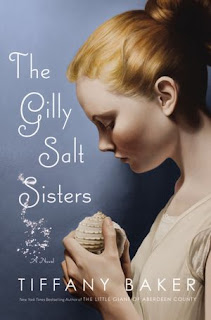
Tiffany Baker is the author of the New York Times bestselling The Little Giant of Aberdeen County and the newly released The Gilly Salt Sisters.

Recently I asked her what she was reading. Her reply:
If you know my books, you’ll know I am sucker for magic and myths, so I guess it makes sense that I’m devouring Kathryn Harrison’s Enchantments right now, which is all about the end of the Tsar’s rule, told in the voice of Rasputin’s daughter. I am mildly obsessed with all things Russian—from their pre-history, to the times of Tsars, all the way up to current events. Harrison’s book is so lush with detail, I can almost taste the snow, and it’s a fantastic blend of history and fable. I love the way she incorporates the Russian fairy tales I knew as a child into the story. If you’re not familiar with Baba Yaga, I highly encourage a little research. She’s an old woman who lives in the forest in a hut made of bones and set on chicken feet, and she flies through the air in a mortar and pestle. She scared the bejesus out of me when I was little, and now I have great fun spooking my own kids with stories about her.

In that vein, one book I have on order is From Beast to Blond, by Marina Warner, who is a British literary/social critic. Her new book is called Stranger Magic, which I also plan to read. She deals with what fairy tales mean, and why magic is so important. I have a PhD in Victorian literature, so sometimes I like to get my academic nerd on, and read about what literature means in the bigger scheme of our lives. Why do we read fiction? What do our national and cultural myths mean? Who tells what stories and why? These are all important questions for a novelist to ask, I think.

One book I just finished that I was surprised I liked was A Sense of An Ending, by Julian Barnes, which of course won the Booker Prize. My husband convinced me to read it, and I did so in one sitting. That book just messes with your head. It’s the kind of book you immediately turn back to the beginning of and start over, where everything you thought you knew is wrong. Genius. Also, it strikes me as a very male novel. I believe that men and women internalize and deal with aging very differently. We look at the past differently. I think the books I write are heavily feminine, so this was an excellent glimpse into the male psyche.

We need to talk about cookbooks. I read them the way some folks read novels. I’m working through Nigel Slater’s Tender right now—a love song to all things vegetable. Also, he’s an amazing writer.

In between all of this, I’m always a couple of days behind on The New York Times, and, of course, I have to keep up with everyone on Twitter, and all my friend’s writing blogs. My fellow novelist Joshilyn Jackson is a hoot online, and there’s also Mary Doria Russell, Eleanor Brown, and Margaret Dilloway. I love the Internet and the digitization of books. Now, I can read everything, all the time, everywhere, on any kind of device. What’s not to love about that?
Visit Tiffany Baker's website.

Read more about The Gilly Salt Sisters.

The Page 69 Test: The Little Giant of Aberdeen County.

--Marshal Zeringue

Thursday, April 5, 2012

Christopher Fowler

Christopher Fowler is the acclaimed author of over sixteen novels, including the award-winning Full Dark House and other Peculiar Crimes Unit mysteries: The Water Room, Seventy-Seven Clocks, Ten Second Staircase, White Corridor, The Victoria Vanishes, Bryant & May on the Loose, and The Memory of Blood.

Last month I asked Fowler what he was reading.  His reply:
Elizabeth Jenkins. She established her reputation as a biographer, producing volumes on Jane Austen, Henry Fielding, Lady Caroline Lamb and a pioneering work on Elizabeth I, but a fascination with a certain kind of suburban cruelty drew her to darker reaches, and her best novels reflect peculiarly English crimes. Harriet (1934) was based on the true account of a ‘natural’ – a Victorian term for someone of subnormal intelligence - who was systematically starved to death in 1877 by venal relatives chasing her inheritance. The book is exact and excruciating in its unsentimental detail, and has finally resurfaced in a handsome new edition from Persephone Books.

And the first ever detective novel, which just resurfaced...The Notting Hill Mystery by Charles Warren Adams had been serialized in the magazine Once A Week between 1862 - 1863. Until crime expert Julian Symons mentioned it in 1972, the number one slot had always been taken by Wilkie Collins with The Moonstone, although Gaboriau’s boring L’Affaire Lerouge had been published in France in 1866. This is presented in the form of diary entries, family letters, witness interviews, a chemical analysis report and a crime scene map. Its hero is an insurance investigator building a case against a sinister baron, and the case incorporates kidnapping, acid poisoning, three murders, a dodgy mesmerist and – of course – a rich uncle’s will, all embellished with George Du Maurier’s illustrations.
Visit Christopher Fowler's website.

The Page 69 Test: The Victoria Vanishes (Peculiar Crimes Unit Series #6).

--Marshal Zeringue

Tuesday, April 3, 2012

James Thompson

James Thompson is an established author in Finland. His novel, Snow Angels, the first in the Inspector Vaara series, was released in the U.S. by Putnam and marked his entrance into the international crime fiction scene. Booklist named it one of the ten best debut crime novels of 2010, and it was nominated for the Edgar, Anthony, and Strand Critics awards. His second Vaara novel, Lucifer’s Tears, released in March, 2011, earned starred reviews from all quarters, and was named one the best novels of the year by Kirkus.

The third in the series, Helsinki White, was released 2 weeks ago, on March 15. Around that time I asked Thompson what he was reading.  His reply:
I’m reading an excellent book, Witness the Night, by Kishwar Desai. Here’s a blurby description:

A family is slaughtered. Thirteen people poisoned, stabbed, and burned. The only suspect: the lone survivor, a fourteen year-old girl who appears to have been raped, beaten and found tied to her bed. Her guilt or innocence is of less importance than the reputations of those involved. Witness the Night is a plunge down the rabbit hole to Punjab, India, a fairytale world where houses are painted ice pink, sea blue, and mint green. To a place where female foeticide is a norm, and female newborns are often fed opium, placed in milk-filled urns, and buried in the garden. A fascinating and startling book.
Visit James Thompson's website and blog.

The Page 69 Test: Snow Angels.

The Page 69 Test: Helsinki White.

--Marshal Zeringue