Friday, October 12, 2012

Nathaniel Comfort

Nathaniel Comfort is associate professor, Department of the History of Medicine, Johns Hopkins University, and a participant in The Oral History of Human Genetics project. His new book is The Science of Human Perfection: How Genes Became the Heart of American Medicine.

Recently I asked Comfort what he was reading. His reply:
Books are like people. I don’t just read them; I have relationships with them. And—don’t judge me—I’m a polyamorous reader. I think that, if one is open about it, one can be involved with many at once.

I read a lot of science-writing and history-of-science blogs—a lot of terrific material comes out online nowadays, even for historians. But these I read fast and mostly forget. It’s people-watching, with a little flirtation now and then.

For a harmless fling, I picked up Stanley Fish’s How to Write a Sentence (I love a good writing manual), but I think I’m going to end the relationship. Frankly, I’m bored. Its own sentences have no spark for me. So it sits, plaintively splayed on my bedside table. I’m thinking of shelving it and calling on some old friends: my dogeared but ever elegant Strunk and White, and perhaps Anne Lamott’s lyrical, witty Bird by Bird.

I have a deeper relationship with Nikolas Rose’s The Politics of Life Itself. It’s a muscular book, large and dense and a little intimidating. Rose argues that all politics—broadly construed—is becoming about life, health, physiology, and genes. Biomedicine is fundamentally a kind of engineering. The question for Rose is not whether that’s okay—it’s happening, like it or not—but rather how we are going to go about it. As we become “biological citizens,” how can we maintain the values, morals, and goals that make us human? We have our arguments—I think, for example, that Rose is rather sanguine about “individual eugenics”—but we communicate well.

But at night what I come home to these days is Richard Powers’s The Time of Our Singing. It’s a sprawling novel of race, family, time, and music in Black America. Powers’s prose is so lovely I sometimes steal away for a quickie of 3-5 pages, savoring his sentences, and marveling at the literary devices and the insights into humanity. I delay the day when I close its back cover, because though I trust we’ll meet up again, there’s nothing like the first time.
Read more about The Science of Human Perfection, and visit Nathaniel Comfort's blog.

--Marshal Zeringue

Thursday, October 11, 2012

Meg Howrey

Meg Howrey is a classically trained dancer who has performed with the Joffrey, Los Angeles Opera, and City Ballet of Los Angeles. She made her theatrical debut at Lincoln Center, and toured with the Broadway production of Contact, for which she won the 2001 Ovation Award for Best Featured Actress in a Musical.

Her latest novel is The Cranes Dance.

Last month I asked Howrey what she was reading.  Her reply:
I was asked recently to write about my favorite backstage novels and I included in the list a childhood favorite: Noel Streatfeild’s Ballet Shoes. Searching through the Internet for a little background on the author, I discovered that Ballet Shoes was actually based on Streatfeild’s first book, an adult novel called The Whicharts, which I promptly ordered. The Whicharts has all the same characters as Ballet Shoes, the same basic premise, even many of the same sentences, but things are not quite so heart-warming and charming. An equivalent reading experience might be if one learned that The Wizard of Oz was based on an early adult novel of L. Frank Baum’s, and in that book Oz is this sort of tawdry carnival Dorothy works at, The Tin Man is a bit of letch, the Scarecrow gets Glinda the Good Witch pregnant, and Toto has mange. It’s probably a way more accurate depiction of London theatrical life in the 20’s than Ballet Shoes, but I wasn’t prepared and read it in one disturbed evening.

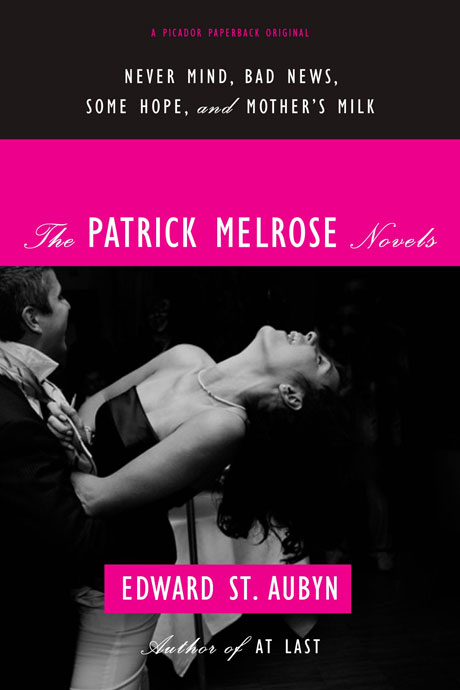
So to lighten the mood I turned to Edward St. Aubyn’s The Patrick Melrose Novels, where in four books we have incestuous rape, heroin addiction, alcoholism, a lost inheritance and a couple of excruciating dinner parties. This may sound like it’s not for the faint of heart, but if that’s true then one simply needs to get a stronger heart and read these books. The Patrick Melrose Novels are stylish, witty, acute, searing, hilarious and brilliantly executed. In and around and underneath all the delicious dialogue, the coruscating portraits, the paragraph after paragraph of lightning bolt writing, is a novel of ideas. Big ones. Read with a pencil handy for underlining.
Visit Meg Howrey's website.

The Page 69 Test: The Cranes Dance.

--Marshal Zeringue

Wednesday, October 10, 2012

Tanya Katerí Hernández

Tanya Katerí Hernández is Professor of Law at Fordham University School of Law.

Her new book is Racial Subordination in Latin America: The Role of the State, Customary Law, and the New Civil Rights Response.

Recently I asked the author what she was reading. Her reply:
I just finished reading Toni Morrison’s Home. It is about a black Korean-War veteran who returns to the United States with psychic war wounds and difficulty navigating the complexities of the U.S. racial terrain. The other primary character is the veteran’s sister who has her own challenges attempting to live with dignity in a historical context where black women were often to reduced to work horses, sex objects, or objects of medical experimentation. I admit that this may sound like an odd choice of fiction with which to relax from the professional demands of constant academic reading. But Toni Morrison’s lyrical writing and the loving relationships that sustain the characters made the book an absolute pleasure to read. One of my favorite quotes from the book is “Listen here, you from Georgia, and you been in a desegregated army and maybe you think up North is way different from way down South. Don’t believe it and don’t count on it. Custom is just as real as law and can be just as dangerous (emphasis added).” The quote exemplifies the book’s illustration of talking about racial stratification in realistic terms while at the same time being embedded within a context where survival is directly tied to how the characters speak truth to one another to lovingly support one another. It is this same theme that I humbly try to address in my own scholarly work about the customary law of race regulation in Latin America, and I greatly admire Toni Morrison’s mastery in showing that racial discrimination is real but that its targets are more than just victims.
Read an excerpt from Tanya Katerí Hernández's Racial Subordination in Latin America, and learn more about the book at the Cambridge University Press website.

The Page 99 Test: Racial Subordination in Latin America.

--Marshal Zeringue

Tuesday, October 9, 2012

Vicki Delany

Vicki Delany's More than Sorrow received a starred review from Library Journal which called it “a splendid Gothic thriller.” Delany is also the author of the Constable Molly Smith series, a police procedural set in British Columbia, and the Klondike Gold Rush books, a light-hearted historical series.

Not so long ago I asked the author what she was reading. Delany's reply:
Before writing this piece, I thought I’d pop back a year and a half and see what I was reading then. I said I was reading modern-Gothics while writing my own new thriller, More than Sorrow. And, I’m happy to say, More than Sorrow has just been released.

September has been a great month for releases by favourite authors, and I’m happily buying away. In my TBR pile I have Until the Night by Giles Blunt, Watching the Dark by Peter Robinson, and The Face of the Enemy by Beverle Graves Myers and Joanne Dobson. Perhaps my favourite type of book is the British-style police procedural, and no one does it better than Peter, who seems to be able to keep on doing it and keeping up the quality. Last year, I read his standalone Before the Poison, which I greatly enjoyed. It’s a true modern-Gothic novel which is my second favourite style of writing!

I had a fabulous summer of reading. The weather here was just about perfect (unless you’re a farmer) and I spent many lazy days sitting in the sun on the deck by the pool. Reading, reading, reading.

Over the summer I took a trip back into time and re-read some of the books by Trevanian. Remember him? Shibumi and the The Summer of Kayta were as good as I remembered. Sure the protagonist in Shibumi is a little bit over the top, perfection-wise, but still a darn good book. And The Summer of Kayta is, in my mind, almost perfect. The suspense builds slowly, with nothing but atmosphere and character to keep it going, until just a few pages before the end. I doubt that book would get published today.

Right now, I’m reading the third book by Tana French. For some reason her work never came to my attention until a couple of weeks ago. I enjoyed In the Woods very much, an intense psychological police thriller – just my sort of thing – and then I immediately went for The Likeness. Which I didn’t enjoy nearly as much, I found it very repetitious and too long, but I thought I’d give her one more try with Faithful Place. I’m about half done that one at the moment, and it’s great. So I see Broken Harbour in my future.
Visit Vicki Delany's website, Facebook page, and Twitter perch.

The Page 69 Test: More Than Sorrow.

--Marshal Zeringue

Monday, October 8, 2012

George Cotkin

George Cotkin is a Professor of History at Cal Poly, San Luis Obispo. His books, in addition to his just published Dive Deeper: Journeys with Moby-Dick, are William James, Public Philosopher, Reluctant Modernism: American Thought and Culture, 1880-1900, Existential America, and Morality’s Muddy Waters: Ethical Quandaries in Modern America.

Recently I asked him what he was reading.  His reply:
I gorged myself on fiction this summer (especially excellent, Paul Russell’s The Unreal Life of Sergey Nabokov, Ben Lerner, Leaving the Atocha Station, Julian Barnes, The Sense of an Ending, William Boyd, Waiting for Sunrise, Thaisa Frank, Heidegger’s Glasses, Irvin Yalom, The Spinoza Problem, and some of Alan Furst’s espionage novels). Now, I am fulfilling a hankering for non-fiction.

That desire has been satisfied lately by two books. I stumbled somewhere upon a citation to a book that I had never heard about before: Jonathan Williams, A Palpable Elysium: Portraits of Genius and Solitude. A poet, raconteur, hiker, and all around appealing “odd duck,” Williams delights with photographs and text. He travels around the south searching out strange characters and places. He writes with exuberance and sly sensitivity about outsider artists such as Howard Finster and about old friends (many of them famous poets and photographers). There is much that is delightful about this book.

A new book project, Feast of Excess: Creating a New American Culture, 1952-1974 has got me to reading Judith Malina’s Diaries from 1947-1957. Along with her husband Julian Beck, she was a founder of The Living Theatre. Malina knw everyone – John Cage, Merce Cunningham, James Agee, to name a few – in the Village in the early 1950s. She writes with great insight into her therapy with Paul Goodman, into the challenges of doing experimental theater in an age of conformity, and much about her rather enthusiastic search for love. And her diary entries are both literary and revealing.

I just picked up last night two new books. Paul Elie, Reinventing Bach and Sylvie Simmons, I’m Your Man: The Life of Leonard Cohen. Although I have no strong interest in Bach as such, I am a big fan of Elie’s earlier book, The Life You Save May Be Your Own: An American Pilgrimage, which was about Thomas Merton, Dorothy Day, Walker Percy, and Flannery O’Connor. I had read Simmons’s book on Serge Gainsbourg with great interest and since I appreciate Cohen’s music, I anticipate finding much of interest in her new volume.
Learn more about George Cotkin's Dive Deeper at the Oxford University Press website.

--Marshal Zeringue

Sunday, October 7, 2012

Jason Webster

Jason Webster was born near San Francisco in 1970 and educated in England, Germany, Italy and Egypt. After graduating from Oxford University in Arabic and Islamic History, he moved to Spain, where he has spent most of his adult life.

His crime fiction series set in the Spanish city of Valencia - his adopted home - features Chief Inspector Max Cámara of the Spanish National Police. The first novel in the series, Or the Bull Kills You, involves a murder in the complex and tightly-knit bullfighting community. The second novel in the series is A Death in Valencia.

Last month I asked Webster what he was reading.  His reply:
I’ve recently finished The Twelve [US title: The Ghosts of Belfast] by Stuart Neville, which is something of a classic. I met Stuart over the summer at the Harrogate Crime Festival, and it was great to then go away and read his book with the author’s voice and intonations still in my mind. An Ulster accent is very distinctive, and goes very well with the subject matter. Now that ‘the troubles’ are officially over, it’s harder to get a sense of what life is really like there these days: ‘rumbling tensions’ don’t make for very good headlines. So I learned a huge amount about what Northern Ireland looks like from the inside. It’s not pretty, the wounds still run deep. And Stuart Neville is just the right person to lead us into the labyrinth: The Twelve is informative, thrilling, complex and simply a great read.

I’m writing a book about WWII at the moment, so the vast majority of my reading is focussed on various aspects of the conflict. Perhaps the most powerful account of what it was like to be there at the time is found in Panzer Commander by Hans von Luck. An associate of Rommel, Von Luck fought in almost all the theaters of the war, including North Africa, Normandy and the Eastern Front. He was captured by the Soviets in 1945 and was repatriated to Germany in the 1950s. Unlike many soldiers’ accounts, the pace never drops, the prose is clear and precise, and the thrill and horror of being in battle are wonderfully expressed. Anyone who wants to get inside the world of a soldier should read this book.

Finally, I’m reading a brilliant book called Timbuctoo by Tahir Shah. It tells the true story of Robert Adams, an American who became the first Westerner to travel to the legendary Saharan city - and live to tell the tale. It’s a great romp of a read, with a wealth of detail about the period - the early 19th century - with beautiful pen-portraits of some of the great characters of the age, including the Prince Regent and Sir Joseph Banks. There is also something of a moral in the tale as well, about a society gone mad with greed. The echoes with our current situation are all too evident. As with all Tahir Shah books, it’s a page-turner, and it’s hard to put down. Even now I’m itching to stop talking about it and get back to reading it…
Visit Jason Webster's website and blog.

My Book, The Movie: Or the Bull Kills You.

The Page 69 Test: Or the Bull Kills You.

Writers Read: Jason Webster (September 2011).

The Page 69 Test: A Death in Valencia.

--Marshal Zeringue

Friday, October 5, 2012

John A. Long

John Long is vice president of research and collections at the Natural History Museum of Los Angeles County. His books include Frozen in Time: Prehistoric Life of Antarctica and The Rise of Fishes.

His new book is The Dawn of the Deed: The Prehistoric Origins of Sex.

Not so long ago I asked him what he was reading.  Long's reply:
Every night my wife and I try to find some time to read aloud to each other, and for fun right now we going through book 5 of George Martin’s Game of Thrones series, entitled A Dance with Dragons. I find the act of reading to each other a lot of fun and we each try and outdo one another with theatrical intonations, really getting into the characters as we perceive them. As both of us are writers we find the exercise a great way to improve our writing skills. Plus the books are total fantasy escapism, set in beautifully complex imaginary worlds of old.

For research on the next book I’m writing (a sequel to Dawn of the Deed about the history of biological fertilization), I’m reading a text book about sexuality in ancient Greek times, Eva Keuls’s Reign of the Phallus (University of California Press, 1993). It’s a stunning book, a real eye and mind opener to how the ancients perceived sex, women, and the role of sexual politics in their society. I visited Athens in June this year to set the mood for writing the opening chapter about Aristotle. I bought the book up at the Getty Villa shop, without doubt one of the nicest places to pick up books on ancient history.

Another book I just read recently and thoroughly enjoyed was Mike Brown’s How I Killed Pluto and Why It Had It Coming. This book is an engrossing tale of the day to day work of making big astronomical discoveries, as recounted by Brown, an internationally famous astronomer based at Caltech who was the main player in relegating the once ‘planet Pluto’ to being just another large body in the Kuiper belt. I heard him speak about it at one of our museum’s “First Friday” gigs this year and went straight out to buy his book. I particularly liked his humanizing of science, showing how the highlights (eg falling in love, marriage, births) and routines of life intermesh almost imperceptibly with the act of making big scientific finds. The international intrigue and politics of when someone else from another astronomy group attempts to ‘steal your unpublished discovery’ reads like a James Bond plot involving secret codes to hide outer solar system co-ordinates of newly discovered dwarf planets.

In between all this heavy stuff, the science that I live and breathe daily, I also like to delve into a little biography. I was dragged into this genre kicking and screaming when my wife Heather began writing a book on the life of a 1920’s silent film actress, Claire Adams, who starred in many great films but may have been deliberately written out of Hollywood history by her first husband, Benjamin B. Hampton, who wrote the first definite history of Hollywood but seems to have accidentally left dear wifey out. So I enjoy reading Heather’s blog entitled ‘Chasing Claire Adams’ as well as her draft chapters as they roll off the production line. The book is now completed and in fine tuning mode, but still searching for the right publisher.

Through Heather’s attendance at the International Biographers meetings, she brings back stacks of new books after each meeting, all signed by their authors. I’ve since read and totally enjoyed Stacy Schiff’s amazing journey into the life of Cleopatra (2010), Clarence Darrow: Attorney for the Damned by John Farrell (2011), and have Lois Banner’s Marilyn: the Passion and the Paradox (2012) waiting for me as soon as Heather puts it down.
Learn more about The Dawn of the Deed at the University of Chicago Press website.

The Page 99 Test: The Dawn of the Deed.

--Marshal Zeringue

Thursday, October 4, 2012

Janice Law

Janice Law is an acclaimed author of mystery fiction. The Watergate scandal inspired her to write her first novel, The Big Payoff (1977), which introduced Anna Peters, a street-smart young woman who blackmails her boss, a corrupt oil executive. The novel was a success, winning an Edgar nomination, and Law went on to write eight more in the series, including Death Under Par (1980) and Cross-Check (1997).

After Death Under Par, Law set aside the character for several years to write historical mysteries The Countess (1989) and All the King’s Ladies (1986). After concluding the Peters series, she wrote three stand-alone suspense novels: The Night Bus (2000), The Lost Diaries of Iris Weed (2002), and Voices (2003). Since then, Law has focused on writing short stories, many of which appear in Ellery Queen’s Mystery Magazine.

Her latest novel is Fires of London.

Recently I asked Law what she was reading.  Her reply:
At the moment, I am reading Pierre Puvis de Chavannes by Aimee Brown Price in an attempt to discover why a French muralist, fond of pallid gods and goddesses, was so popular with avant-guard painters from Van Gogh to Picasso. Answer: some serious weirdness, especially in his smaller, more personal paintings. His work for the Boston Public Library goes on my must see list.

I am also struggling through a book of renaissance Scottish poetry, The Makars, ed. J.A. Tasioulas, which is extremely interesting if slow going. Fortunately, unfamiliar words are glossed at the bottom of each page. This is essential, as lowland Scots, familiar from my parents, has changed a great deal over the centuries, at least as much as standard English from Chaucer.

I’ve also made some less strenuous discoveries this summer. My favorite has to be the Australian pianist Anna Goldsworthy’s Piano Lessons, a thoughtful and sensitive memoir of her years studying with Eleonora Sivan, a Russian emigre of vast musical knowledge who was no slouch in the life and character department, either. Even an amateur violinist like me can envy her lessons.

Of professional interest, were several good new thrillers and mysteries. Three, each with a new angle, were Robert Harris’s The Fear Index, Jussi Adler-Olsen’s The Keeper of Lost Causes, and Alan Furst’s Mission to Paris. The Fear Index is a clever mix of science fiction and financial thriller. To say more would spoil the up-to-the-minute plot, but I enjoyed it the more having done a scholarly article on one of its famous predecessors. Suffice to say that Harris has updated an old story with panache and what has recently turned out to be prescience.

The Keeper of Lost Causes is Scandinavian noir, Danish style, and the sadistic villains would have tipped this into the frankly unpleasant range if not for the wonderful addition of the detective’s assistant, Assad. Detective Carl Morck is a good character, but it is his Muslim assistant, a man of many talents and dubious provenance, who really adds a distinctive touch to this story of cold cases and delayed revenge.

Mission to Paris is fun because of its glimpses of the movie business just before the Second World War. Hero Frederic Stahl, Austrian born and Hollywood acclimatized, negotiates the treacherous atmosphere of pre-War Paris with Fascist sympathizers and pro-German propagandists with a realistic mix of fear and aplomb and, refreshingly, falls for an age- appropriate woman.

I’ve also been reading Hillary Mantel, not just Bring up the Bodies, her super sequel to the outstanding Wolf Hall in her ongoing trilogy about Thomas Cromwell, but some of her earlier work. Fludd is a terrific short novel about a mysterious stranger– angel, devil, magician or some blend of all three– who transforms the lives of an old priest burdened with a modernizing bishop and a young nun tyrannized by a too conservative superior. Wonderfully written.

Finally, old but good and now reissued in an attractive paperback, P.G. Wodehouse’s Young Men in Spats. No, Jeeves and Bertie are absent, but the assorted Drones of Bertie’s club are in fine form in this collection of the master’s short stories. Seldom have trifles been packaged with so much invention and so much style. Laughter guaranteed.
Visit Janice Law's website and blog.

The Page 69 Test: Fires of London.

--Marshal Zeringue

Wednesday, October 3, 2012

Susanna Moore

Susanna Moore is the author of the novels The Big Girls, One Last Look, In the Cut, Sleeping Beauties, The Whiteness of Bones, and My Old Sweetheart, and two books of nonfiction, Light Years: A Girlhood in Hawai’i and I Myself Have Seen It: The Myth of Hawai’i.

Her new novel is The Life of Objects.

A few weeks ago I asked Moore what she was reading.  Her reply:
I am reading books for a freshman seminar that I teach at Princeton: The Left Hand of Darkness by Ursula K. Le Guin, We Have Always Lived in the Castle by Shirley Jackson, White Noise by Don De Lillo, and a collection of Grimms' fairy tales. The class is called "Extraordinary Popular Delusions and the Wisdom of Crowds," which is a twist on the 19th century book by Charles Mackay called Extraordinary Popular Delusions and the Madness of Crowds. I am interested in the way that rumors, folk tales and even fiction reflect, mutatis mutandis, whatever is troubling us in our culture.

When I finish teaching in December, I am going to read Richard Ford's Canada, then a strange and lovely novel about a young American girl in early 20th century Japan, The Ginger Tree, written by Oswald Wynd, and Sharon Olds' new book of poetry.
Visit Susanna Moore's website.

The Page 69 Test: The Life of Objects.

--Marshal Zeringue

Tuesday, October 2, 2012

Gigi Amateau

Gigi Amateau is the author of A Certain Strain of Peculiar, Chancey of the Maury River, Claiming Georgia Tate, and the newly released Come August, Come Freedom: The Bellows, The Gallows, and The Black General Gabriel.

Last month I asked the author what she was reading. Amateau's reply:
Oh, to choose which to share! I have five stacks of books to read in my office and a couple of different stacks upstairs. Being surrounded by books I love makes me so happy. Here are five that I’m enjoying right now:

Non-fiction: No Time to Lose: A Timely Guide to the Way of the Bodhisattva by Pema Chodron. I started reading this when I was on a writing retreat at The Porches in Norwood, Virginia earlier this summer. There is so much suffering and violence in the world and it is hard to know how to make sense of our times and, I think, it’s easy to feel like we are small and inconsequential when it comes to making things better. I’m Christian, Pema Chodron is Buddhist, and her heart has something important to say to mine. She inspires me to work with my mind and my heart to ease my own suffering and the suffering of our planet and everyone.

Fiction: The Round House by Louise Erdrich. I’m just starting this novel and the language is such a marvel that even though I know the story will turn dark and mysterious, I also know I’m in the good, steady hands of a masterful storyteller. This book contains my favorite elements: multiple generations of family, sacred places, community, mystery, justice vs. injustice, and mysticism.

Young Adult Fiction: Summer and Bird by Katherine Catmull. Ohhhh, sooo delicious. A fairytale! Two sisters searching for their parents who’ve gone missing in a different world. The story unfolds in a lush setting in this world and in an alternate world.

Picture Book: Each Kindness by Jacqueline Woodson, Illustrated by E.B. Lewis. I read this picture book, which comes out this month, at the Penguin booth recently in Naples, Florida at the Southern Independent Booksellers Alliance Trade Show. The Penguin reps let me sit down and linger over Each Kindness. I started crying about halfway through it. I think this one is about how hard it is to learn the lesson of kindness. How hard it is on the person you’re ignoring or withholding from and also how, once you realize you want to change and reach out to a fellow human being, you are filled with regret that you could ever have lived without being kind. I so admire the stories of Jacqueline Woodson and the artwork of E.B. Lewis. The two of them together also broke my heart open with their previous collaboration, The Other Side.

Poetry: The Cuckoo’s Haiku and Other Birding Poems by Michael J. Rosen, Illustrated by Stan Fellows. This book makes me so darn happy. Michael J. Rosen brings together haiku and birding field notes and Stan Fellows adds watercolor illustrations of common North American birds. It all comes together for one glorious, inspiring field guide!
Visit Gigi Amateau's website.

Read--Coffee with a canine: Gigi Amateau & Biscuit and Cola.

--Marshal Zeringue