Sunday, December 28, 2014

Andrew Hadfield

Andrew Hadfield is Professor of English at the University of Sussex. He is author of a number of works on early modern literature, including Edmund Spenser: A Life.

Recently I asked the author about what he was reading. Hadfield's reply:
I like to make a clear distinction between books that I read for work – where I try to be as systematic as possible – and pleasure, where I read as wide and random a mixture as I can manage. I’ve been working on English perceptions of Rome and I found David Karmon’s The Ruin of the Eternal City: Antiquity and Preservation in Renaissance Rome (2011) a fascinating and extremely useful account of Renaissance Rome’s dilemma about what to do with its recent past. Charles Nicholl’s Traces Remain (2013) collects the writer’s essays and reviews over the last twenty-five years. Not only does it contain a lively and diverse range of reflections on how the past is preserved, from the last sad journey of the seventeenth-century travel writer, Thomas Coryat to a new candidate for Jack the Ripper, but it is elegantly written and full of reflections about what is always left behind.

I read mainly literature, history, and, sometimes, biographies. I’ve really enjoyed the sharp wit, poignant insights and precise style of Elizabeth Taylor (1912-75), who is finally getting her due as a disturbing and brilliant novelist alongside Muriel Spark and Barbara Pym. Blaming, her last book, which was published posthumously, is a magnificent, often hilarious work about bereavement, which alternately comforts and shocks the reader. I’m looking forward to reading many more of her novels.

I quite enjoyed Helen Macdonald’s H Is For Hawk (2014), an account of one woman’s determined battle to rear a goshawk, Mabel. I read it because I have a long-standing interest in T. H. White, whose own account of his attempts to train a hawk, The Goshawk (1951), serves to anchor Helen Macdonald’s own experiences. McDonald’s book is fascinating and moving at times as she struggles to subdue the iron will of the bird of prey, overcome her grief after the premature death of her beloved father, and forge her own style. She is least successful in the last of these aims and the book is sometimes marred by poor writing.
Learn more about Edmund Spenser: A Life at the Oxford University Press website.

My Book, The Movie: Edmund Spenser: A Life.

--Marshal Zeringue

Friday, December 26, 2014

Casey Walker

Casey Walker has a PhD in English Literature from Princeton University. His essays and short fiction have appeared in The Believer, Esquire, Narrative, Boston Review and The Los Angeles Review of Books. He lives in Iowa with his wife, novelist Karen Thompson Walker. Several trips he’s made to China, including one accompanying a delegation of officials from a small California city, laid some of the groundwork for his new novel, Last Days in Shanghai.

Earlier this month I asked Walker about what he was reading. His reply:
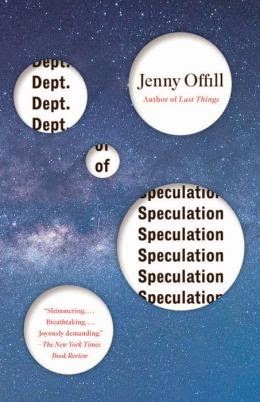
The most recent book I read with total purposelessness—that is, not Marilynne Robinson’s Housekeeping, which I re-read for the course I’m teaching; not Assembling California, by John McPhee, which I started as research for a new novel; and not Goodnight, Moon or The Very Hungry Caterpillar, which I read daily to my wide-eyed daughter—is Jenny Offill’s fractured and beautifully broken novel Dept. of Speculation. Offill assembles the novel from riveting moments of attention, often no more than a paragraph or a few lines long. Her style reminds me a little bit of Mary Robison, gem-like sentences in an arrangement always on the cusp of disorder. The narrator of Offill’s book is a new mother and the novel has the most brilliant way of rendering the dizzy, sleepless, animal world that newborns and their parents inhabit: “The baby’s eyes were dark, almost black, and when I nursed her in the middle of the night, she’d stare at me with a stunned, shipwrecked look as if my body were the island she’d washed up on.” Careful observations like this are stitched together with language in a different, more philosophical register: “A thought experiment courtesy of the Stoics. If you are tired of everything you possess, imagine that you have lost all these things.” It’s a compelling, exciting alternation, and it makes haunting and lovely reading.
Follow Casey Walker on Twitter.

Learn more about Last Days in Shanghai at the Counterpoint Press website.

The Page 69 Test: Last Days in Shanghai.

--Marshal Zeringue

Wednesday, December 24, 2014

Greg Garrett

Greg Garrett, the 2013 Centennial Professor at Baylor University, is the author of twenty books of nonfiction, memoir, and fiction. His latest book is Entertaining Judgment: The Afterlife in Popular Imagination, which explores the stories we tell about death and the afterlife--and why we tell them. BBC Radio has called Garrett "one of America's leading voices on religion and culture," and he has also written on such topics as spirituality and suffering, film, U2, Harry Potter, and the boom in superhero narratives.

Recently I asked the author about what he was reading. Garrett's reply:
I was in France and the UK this summer as everyone was commemorating the centennial of World War One, and since then, I have been thinking about war and wartime literature. I’m a novelist, cultural critic, and pop culture theologian, and as writer and as reader I’m particularly interested in the ways that literature and culture help us make meaning of big questions. So here are some imaginative works I’ve been reading or re-reading lately about war:

Poetry of the First World War: An Anthology (edited by Tim Kendall) represents the wide range of poems produced by the truly gifted poets of the era (Wilfred Owen, Rupert Brooke, and others). These writers wrote during the era, and many of them lived through (or died in) the trenches of that horrible war. I’m particularly drawn to Owen’s “Dulce et Decorum Est,” perhaps the best-known poem of the war, and certainly one of its finest. It describes the horrifying death of one of the speaker’s comrades during a chlorine gas attack, and rebukes the old saying that it is glorious to die for one’s country.

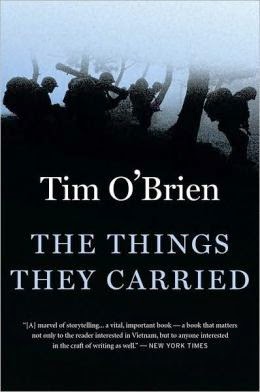
Tim O’Brien’s The Things They Carried has more than combat on its mind—it also wrestles with questions of memory, story-telling, and the value of art—but it remains the best work on Vietnam from the Texas writer acclaimed as our best chronicler of the Vietnam War. From its opening title story, which introduces us to the characters with whom we’ll journey through the book (including the narrator, “Tim O’Brien”) to the closing story, “The Lives of the Dead,” which talks about how stories can save us, O’Brien is demonstrating how to tell a true war story—and teaching us that maybe war stories have more in common with our ordinary stories than we imagine.

Phil Klay’s Deployment deservedly won the National Book Award for Fiction this year. I taught it in my fiction class early in the fall, and we all felt, smugly, as if we were prophets at the announcement. Like the World War One poets, like O’Brien, he’s telling us about the experience of battle and about trying to reconcile it with the experience of the home front—two things that are not meant to be meshed. The title story is a masterpiece of the “soldiers’ return” story written by other great American writers including Hemingway and Fitzgerald. The narrator’s family can’t hope to understand what the narrator has gone through. Words cannot convey the experience. And yet words are all we have. And when they are good words, hard, and beautiful like these, there is a grace and beauty even to the harsh and horrid truth.
Learn more about Entertaining Judgment at the Oxford University Press website.

--Marshal Zeringue

Monday, December 22, 2014

Nina Darnton

A journalist for thirty years, Nina Darnton wrote her first novel, An African Affair three years ago.

Her new novel is The Perfect Mother.

Recently I asked the author about what she was reading. Darnton's reply:
I often have two books going at the same time. But when I started reading Donna Tartt’s The Goldfinch, I knew that strategy wouldn’t work. I simply couldn’t put it down and, when life intervened and I was forced to, I returned to it in any spare moment I had. It is a rare combination of a page turner that is also brilliantly written and conceived with believable characters about whom I came to care.

There are a few other books I’ve read recently that I have to mention: The Circle by Dave Eggers, which chilled me by its presentation of the dystopian society we may be headed for where privacy is no longer a cherished concept. I also loved Rainy Royal, by Dylan Landis, a book of short stories that hang together to produce a study, an examination, a presentation of a compelling character, cruel and kind, artistic and wounded.

Finally, I love everything by Robert Harris, most recently An Officer and a Spy a retelling of the Dreyfus case. It is one of my favorite forms of fiction – using real life events (in this case the railroading, trial, punishment and final exoneration of an innocent man) and subjecting them to a novelist’s powers of analysis and imagination. Sometimes one can reach a deeper truth, or at least a fuller understanding of historical facts by way of fiction. This is one such time.
Visit Nina Darnton's website.

My Book, The Movie: The Perfect Mother.

--Marshal Zeringue

Saturday, December 20, 2014

K.V. Johansen

K. V. Johansen is the author of The Leopard (Marakand, Volume One) and Blackdog and numerous works for children, teens, and adults.

Her latest novel is The Lady (Marakand, Volume Two).

Recently I asked Johansen about what she was reading. Her reply:
I tend to always be reading a bunch of things at once, switching between them as the mood takes me.

Just finished Foxglove Summer by Ben Aaronovitch

Read it at one sitting as soon as I wrested it from the Spouse’s hands. (He got it first because he’s the one that paid for it, house rule.) I love this series. Very well-conceived ‘magic-in-the-real-world’ fantasy, very good mysteries, great characters. I enjoy the way that the landscape, human-made and natural, carries weight and reality and becomes essential to the story.

The Thousand Names by Django Wexler

I’m enjoying this and wondering where the larger plot of the series is going. I like his battle scenes; they’re very well done, both technically and emotionally. I’ll definitely be reading The Shadow Throne afterwards.

The Wise Man’s Fear by Patrick Rothfuss (audiobook)

I like to listen to audiobooks while I’m cooking; it keeps me from suddenly thinking of a good line and rushing off to my computer, leaving things to burn. I find it has to be books I’ve read before, though; I don’t like listening to something new nearly so much, but listening to something I’ve already read seems to come at it from a different angle and enrich the reading. With Rothfuss, it draws extra attention to his prose, which is quite beautiful. As a story, Wise Man’s Fear works really well in this format, since aside from the framing narrative, it’s written to be an oral tale. I do wonder how Kvothe managed to tell all that in a single day, with interruptions, though, because it certainly can’t be read aloud in that time! I suspect Chronicler must actually be accused of embellishing it extensively later, if not of making it all up in the first place. (Okay, not really. Probably not really ....) I want to know more about Bast; he’s definitely becoming the most intriguing character in this for me.

Perdido Street Station by China MiƩville

I’d read The City and the City a while ago and found it interesting, though it demanded a conscious “let’s pretend” about basic human nature (whereas I find it’s far easier for literary belief to allow the impossible when it’s about almost anything else), but a friend’s interest in MiĆ©ville got me to pick up this one. I’ve only just begun it, but I’m finding that the characters and world are really working well together and pulling me in without reservation. Beautiful prose, too.

The Soldier-Son Trilogy by Robin Hobb

I’ve liked some Hobb more than others. I haven’t quite made up my mind about this one yet. Lately I’ve been finding myself more irritated than interested in child-protagonists in adult books, but that’s probably just a phase I’m going through -- and he’s bound to grow up soon. That aside, which really is just the reading mood I’m in, Hobb always writes well. It’s what I think of as American-frontier fantasy.

Strathclyde and the Anglo-Saxons in the Viking Age by Tim Clarkson

This is a period and a place that I’ve always been very interested in. A very well-rounded history so far.

Roots and Branches by Tom Shippey (rereading)

I’ve been re-reading this collection of essays on Tolkien lately, for the third time, I think it is. I always find Shippey very enjoyable and thought-stimulating.

I’ve also been reading Colin Cotterill’s Dr. Siri Paiboun mysteries. They’re set in Laos in the seventies; in addition to the setting, which is a look at place and time I didn’t know that much about, they have what I most look for in a mystery, which is good writing, a complex problem that has its origins in ordinary human drives (I’m not a fan of the sadistic serial killer mystery mode), and main characters with some integrity and intelligence.
Visit K. V. Johansen's website.

The Page 69 Test: The Leopard.

Coffee with a Canine: K.V. Johansen & Ivan.

The Page 69 Test: The Lady.

--Marshal Zeringue

Thursday, December 18, 2014

Stacy Henrie

Stacy Henrie has always had an avid appetite for history, fiction and chocolate. She earned her B.A. in public relations from Brigham Young University and worked in communications before turning her attentions to raising a family and writing inspirational historical romances.

Henrie's new novel is Hope Rising.

Earlier this month I asked the author about what she was reading. Her reply:
Though historical romance is what I write and read the most, every so often I crave a funny contemporary romance. I also like Jane Austen adaptation novels. So Pride, Prejudice, and Cheese Grits by Mary Jane Hathaway, a story of two people whose pride nearly keeps them apart like Elizabeth and Mr. Darcy, fit the bill. I love the premise of these two college professors and writers with a mutual passion for the Civil War who began their acquaintance on very rocky ground. Ransom Fielding gave Shelby Roswell a scathing review of her Civil War book in a national magazine before the two of them end up teaching at the same college. The story is a fun blend of humor, romance, and Southern charm.
Visit Stacy Henrie's website.

My Book, The Movie: Hope Rising.

The Page 69 Test: Hope Rising.

--Marshal Zeringue

Tuesday, December 16, 2014

David Niose

David Niose has spent the last decade immersed in secular-progressive politics and the culture wars. He has served as president of two Washington-based advocacy groups—the American Humanist Association and the Secular Coalition for America—and litigated cases across the country on behalf of church-state separation and equal rights. He is the author of Nonbeliever Nation: The Rise of Secular Americans, as well as the popular Psychology Today blog "Our Humanity, Naturally," and has been featured on Fox News, MSNBC, the Associated Press, The National Journal, Christian Science Monitor, BBC, and many other media outlets. He is currently Legal Director of the American Humanist Association.

Niose's new book is Fighting Back the Right: Reclaiming America from the Attack on Reason.

Recently I asked the author about what he was reading. His reply:
I’m currently reading The Affluent Society by John Kenneth Galbraith – the updated fortieth anniversary edition that was released in 1998. This book is recognized as a classic, but I still don’t think it gets the attention it deserves. In fact it is particularly relevant today as a refutation of conservative economics.

Galbraith was everything you’d want a public intellectual to be, and this book was his masterwork for the general reader. He took a complex subject, economics, and presented it from a unique standpoint that broke with traditional thinking. And importantly, he conveyed his new ideas with a lucid style of writing that was easy for the non-economist to understand. He was also very witty.

Many people don’t know that Galbraith invented the term “conventional wisdom,” and presented the concept in this book. He was critical of the herd mentality and obviously admired and practiced independent thinking. One of my favorite quotes from the book is, “It is much safer to have a firm anchor in nonsense than to put out on the troubled seas of thought.”

Next on my reading list will be Living the Secular Life by Phil Zuckerman, who is one of America’s great scholars on secularism. His academic work is among the most frequently cited on the subject, and I’m expecting that this book will be another important contribution.
Visit David Niose's blog, Facebook page, and Twitter perch.

--Marshal Zeringue

Monday, December 15, 2014

Kelly Bowen

Kelly Bowen grew up in Manitoba, Canada. She worked her way through her teenage years as a back country trail guide and ranch hand and spent a year working on a cattle station in Australia. She attended the University of Manitoba and earned a Master of Science degree in veterinary physiology and endocrinology.

But it was Bowen's infatuation with history and a weakness for a good love story that led her down the path of historical romance. When she is not writing, she seizes every opportunity to explore ruins and battlefields.

Currently, Bowen lives in Winnipeg with her husband and two boys, all of whom are wonderfully patient with the writing process. Except, that is, when they need a goalie for street hockey.

Bowen's new novel is I've Got My Duke to Keep Me Warm.

Recently I asked the author about what she was reading. Her reply:
City of Women – David R. Gillham

This was an exceedingly well written novel set in Berlin, 1943. It is, essentially, the story of ordinary women who do extraordinary things for reasons that are not always black and white. Every once in awhile you come across a book that you can’t help but insert yourself into the plot and then ask, ‘what would I have done under those circumstances’? And if you can’t answer right away, and find yourself still thinking about it months later, then the author has truly achieved something special. This is one of those books.
Visit Kelly Bowen's website.

The Page 69 Test: I've Got My Duke to Keep Me Warm.

--Marshal Zeringue

Saturday, December 13, 2014

Lee A. Farrow

Lee A. Farrow is professor of history and distinguished teaching professor at Auburn University–Montgomery. Her new book is Alexis in America: A Russian Grand Duke's Tour, 1871-1872.

Recently I asked author about what she was reading. Farrow's reply:
I read a lot and I read across genres. I teach Russian and World History, so I read a lot of history. Recently, I read and enjoyed Candice Millard’s Destiny of the Republic about the assassination of President Garfield and Hitlerland: American Eyewitnesses to the Nazi Rise to Power by Andrew Nagorski.

In the spring, I’ll be teaching a course on Russia’s path to revolution, so I’m getting ready to reread Nikolai Gogol’s Dead Souls, "The Overcoat" and "The Nose"; Alexander Pushkin’s Eugene Onegin; and Ivan Turgenev’s Fathers and Sons.

I belong to two book clubs, one of which focuses on one author at a time. Last year, we read all Jane Austen; this year, we are reading Henry James, so I am currently reading Portrait of a Lady.

I am also the co-chair of our university’s common reading committee, so in that capacity I have recently read and enjoyed Lucky by Alice Sebold and Ghost Map by Stephen Johnson.

I also like to read popular fiction (Gone Girl, 11/22/63) and foreign fiction (Orhan Pamuk, Salman Rushdie) for fun, and I enjoy books on art theft and forgery and science and forensics.

Finally, in my new job as the Director for my university’s Center for Excellence in Learning and Teaching, I am reading books on student engagement and teaching.

Some of my all-time favorite novels are Anna Karenina by Leo Tolstoy, Fathers and Sons by Ivan Turgenev, Confederacy of Dunces by Kennedy O’Toole, The Great Gatsby by F. Scott Fitzgerald, and Animal Farm by George Orwell.
Learn more about Alexis in America at the LSU Press website.

--Marshal Zeringue

Thursday, December 11, 2014

Elizabeth Speller

Elizabeth Speller studied Classics at Cambridge University. She is the author of The Return of Captain John Emmett and The Strange Fate of Kitty Easton, both of which received stellar critical acclaim. She lives in England.

Speller's latest novel is The First of July.

Not so long ago I asked the author about what she was reading. Her reply:
I’ve just finished two very different non-fiction books: but there’s a sort of connection. At the centre of both is a powerful connection with place.

John Huth is a Harvard professor. His web page begins with a quotation from Kipling and explains his areas of study as being Experimental Particle Physics and Cultures of Navigation. It seems appropriate to the topic of his book that I’m lost immediately.

In The Lost Art of Finding our Way Huth explores a fascinating question: before signposts and early maps, and millennia before SatNav, how did human beings find their way, often accurately, across great distances? I read facts from his account out aloud to everybody: snakes measure distances in paces (yes, improbable, I know) and am delightedly smug when I find I already know one of Huth’s tips for orientation (lichen grows on the north side of trees). But perhaps most fun (and, in an emergency, most useful) is the suggestion for experimenting with navigation using these features of topography and nature. Riveting for the armchair walker or the real adventurer.

I came to re-read some of the Austrian author Stefan Zweig’s novellas after seeing Wes Anderson’s movie The Grand Budapest Hotel; Anderson explained that his delicious, fantasy middle-European setting was inspired by Zweig’s early twentieth-century fiction.

At the heart of this biography of Zweig - The Impossible Exile, by George Prochnik - is an attachment to the idea of a place. The biography is not sentimental but it draws on all the senses in depicting the sugar-dusted exterior of sophisticated pre-war Vienna and the chilly darkness within. A darkness only exceeded by exile.

This is not just a chronology of a life – in fact Prochnik seems fairly uninterested in the most successful parts of Zweig’s career. It is a recreation of the world represented by this hugely successful author (although one looked on with a degree of contempt by his more serious literary contemporaries) and how this world was lost.

I think this is an exceptional work because of two central themes. Zweig is not a man of great nobility, though with some eccentric charm, and probably not a Great Novelist (whatever that may be). He was born into a wealthy secular Jewish family, his books sold on a vast scale, but his tragedy was an experience shared by many Jewish Europeans in the 1930’s and 40’s, and the dismantling of his world was the permanent dismantling of Vienna’s rich cultural and intellectual society.

I have wrestled all my life with homesickness so ached as I read Prochnik’s profound contemplation on exile. Zweig’s forced departure from Austria – in the face of the malignity of Nazism (which he greatly underestimated at first) is a poignant and increasingly desperate Odyssey. Even German - the words that are Zweig’s trade – are now the language of tyranny.

But there can be no homecoming; instead there are Zweig’s efforts to carry with him a home, a culture that has already vanished. Prochnik makes Zweig’s Vienna so real that the disillusionment, loneliness and fear felt by the author and his young wife, Lotte, as they move from place to place are utterly persuasive (How far might the Nazis get? Where might the couple finally belong?). Mouth-watering Viennese food is described in the early part of the book and as the Zweigs settle and unsettle in London, Bath, New York and, finally, Brazil, Lotte attempts to find ingredients for the food they once loved in Austria.

When Zweig and Lotte finally decide they have reached the only possible end of their journey - in Brazil’s Petrópolis - their decision is as moving as any carefully contrived fiction. The photograph of the couple, dead from a barbiturate overdose, might seem gratuitously morbid but, with her body curled into his, her hand protectively covering his fingers, the image speaks only of love, togetherness, and escape from the intolerable.
Visit Elizabeth Speller's website.

Coffee with a Canine: Elizabeth Speller and Erwin.

--Marshal Zeringue