Sunday, January 11, 2015

Jo Perry

Jo Perry earned a Ph.D. in English, taught college literature and writing, produced and wrote episodic television, and has published articles, book reviews, and poetry. She lives in Los Angeles with her husband, novelist Thomas Perry. They have two adult children. Their three cats and two dogs are rescues.

Perry's new novel is Dead Is Better.

Recently I asked the author about what she was reading. Her reply:
I read very little when I am engrossed in writing. Then, when the writing is complete, I binge on books.That might explain why I am half-way through a number of terrific books. Some fiction. Some non-fiction:

Roy Edroso's novel, Morgue for Whores, has a dark and hilarious opening involving a help-desk worker who wakes up to find dead people in his apartment. I can't wait to see how the help-desk guy figures out how to help himself, but I suspect things will get much worse before they improve for him.

I'm also reading A. Roger Ekirch's At Day's Close: Night in Times Past. We like to think that, despite the passage of time, certain aspects of human experience are always the same. The night hours, for example, and how we use and experience them. But for those who lived before artificial illumination penetrated the darkness, night was wild, subversive, very long, and involved two discrete sleep periods interrupted by a period of wakeful activity.

The other book is Andrew Solomon's The Noonday Demon: An Atlas Of Depression. This part-memoir, part history of inner darkness is––despite its topic––exhilarating because of Solomon's supple writing and the range of information he provides about this affliction.
Visit Jo Perry's website.

My Book, The Movie: Dead is Better.

Coffee with a Canine: Jo Perry & Lola and Lucy.

The Page 69 Test: Dead is Better.

--Marshal Zeringue

Saturday, January 10, 2015

Andrew Shanken

Andrew Shanken is Associate Professor of Architecture at UC Berkeley. His first book 194X, is a cultural history of American architecture, planning, and consumer culture in this formative and strained moment for the architectural profession. He also publishes widely on architecture and memory.

His new book is Into the Void Pacific: Building the 1939 San Francisco World's Fair.

Recently I asked the author about what he was reading. Shanken's reply:
I've been reading a lot about the history of geography and cartography, along with nightly doses of Harry Potter with my six-year old son. The former is for a book called Off the Map, which is a visual history of urban planning in the 20th century. Denis Cosgrove's Geography and Vision is full of insights about what he calls the "morphological imagination," or the way that people have imagined the shape of the earth and its parts, as well as how they have represented them. They are essays, rather than heavily armed academic arguments, and this gave him poetic liberty to write with unusual elegance.

I've also been reading Daston and Galison's Objectivity, a stunning history of the imagery in scientific atlases. It's a model of sweeping history that uses visual evidence vividly.

Finally, since I'm living in Mexico and learning Spanish, I've also been reading some early 20th-century Mexican novels, including B. Traven's Macario.
Learn more about Into the Void Pacific at the University of California Press website.

The Page 99 Test: Into the Void Pacific.

--Marshal Zeringue

Friday, January 9, 2015

Chris Marie Green

Chris Marie Green is the author of the urban fantasy Vampire Babylon series and the Jensen Murphy, Ghost for Hire series, which features a fun-loving spirit from the 80s. Her newest novel is Another One Bites the Dust.

Shortly before Christmas I asked the author about what she was reading. Her reply:
I’m reading Seanan McGuire’s Amazon serial Indexing. There are a few reasons I picked this up. First, I’m a fan of McGuire’s October Daye books. Second, Indexing is an urban fantasy about a super-secret agency that tracks down fairy tales that materialize in the real world and have the potential to wreak havoc. The premise immediately got the attention of my inner geek girl! Third, this is a serial, and I was curious to see how McGuire handled the structure.

Since it’s still the holiday season, I also wanted to read something festive, so I’m enjoying Hear Me, a new adult paranormal by Viv Daniels. The premise here is really compelling, too: there’s a village that’s separated from a magical forest by ringing bells. One day, the bells stop. Oh, oh! It’s a perfect Christmas read.
Visit Chris Marie Green's website, Facebook page, and Twitter perch.

My Book, The Movie: Shadows Till Sunrise.

--Marshal Zeringue

Thursday, January 8, 2015

Phillip Margolin

Former trial attorney Phillip Margolin has been writing full-time since 1966. All of his many novels, including the recent Worthy Brown's Daughter, Sleight of Hand, and the Washington Trilogy, have been New York Times bestsellers.

His new novel is Woman with a Gun.

Recently I asked the author about what he was reading. Margolin's reply:
I took Ken Follett’s Fall of Giants, the first book in his Century Trilogy, on a long trip and turned the 900 or so pages as fast as I could. It starts in 1911 and recounts World War I through the eyes of Germans, English nobility and coal mine workers, an aide to President Woodrow Wilson, a pair of poor Russian brothers and others. The book is riveting and educational which is tough to do. As soon as I finished it I ran out and bought book two.
Visit Phillip Margolin's website and Facebook page.

My Book, The Movie: Woman with a Gun.

The Page 69 Test: Woman with a Gun.

--Marshal Zeringue

Wednesday, January 7, 2015

Nancy McCabe

Nancy McCabe is the author of four memoirs about a range of topics: adoption and heritage; violence against women, memory, and creativity; travel, childhood, reading, and children’s literature.

McCabe’s most recent book is From Little Houses to Little Women: Revisiting a Literary Childhood.

Recently I asked the author about what she was reading. Her reply:
I read voraciously, and usually have several books going at the same time, usually at least one literary novel, one “fun” novel, one children’s or young adult book, one nonfiction book, sometimes poetry as well. As I started compiling a list of what I’m reading right now, I began to see a common theme: all have something to do with keeping classic books relevant to current readers. Here are some of the books that I’m currently in the middle of:

A Fortunate Age, by Joanna Smith Rakoff: This is a fat, old-fashioned kind of novel that my friend Sara gave me for my birthday. It reminds us both of the beginning of our friendship, thirty years ago, when we met in graduate school at the University of Arkansas. When we were brain dead from required reading, we’d go to the Dickson Street Book Shop and buy fun novels with a point of view that rotated between four different characters—what we came to call “four women” novels. We continued to exchange these books throughout our twenties. Like those books, A Fortunate Age follows the stories of four women who met in college. This is both “literary” and “fun,” a great combination. Not mindless, just a pleasure, with compelling characters and beautiful writing. And it’s a tribute to Mary McCarthy’s The Group, which was published in 1963 and established the “Four Women” genre, which has its roots in Louisa May Alcott’s Little Women.

So We Read On: How The Great Gatsby Came to Be and Why It Endures by Maureen Corrigan. This was a birthday gift from my daughter Sophie. A few years ago, we both reread The Great Gatsby and went to see the Baz Luhrmann movie, which we didn’t feel quite captured the spirit of the book. I also am a big fan of Maureen Corrigan’s reading memoir Leave Me Alone, I’m Reading, which was one of my inspirations to write my own reading memoir. So We Read On is both informative and engaging. I don’t know that I would have picked up this book if it were by anyone else; I didn’t think I had a particular interest in Fitzgerald. But Corrigan draws me so completely into his world and writing process, on a recent visit to the DC area I felt compelled to go to Rockville, MD to find his grave.

Home for the Holidays by Heather Vogel Frederick. While Rakoff updates The Group and Corrigan refreshes my interest in The Great Gatsby, Frederick’s middle-grade mother/daughter book club series reminds us why classics endure and that they continue to be relevant to young readers. And the books in the series revolve around four girls—another take on the four-women novel? In Home for the Holidays, these girls are encountering Maud Hart Lovelace’s Betsy-Tacy series for the first time. This was a favorite series from my childhood, and these books deserve to be way better known than they are. Through great plotting and characterization, Frederick creates a story that is a joy in its own right. The Betsy-Tacy references are a fun dimension to the book as well, and give me hope that Frederick will lead young readers back to Lovelace’s delightful novels.
Visit Nancy McCabe's website.

--Marshal Zeringue

Tuesday, January 6, 2015

Thomas Perry

Thomas Perry's novels include the Jane Whitefield series (Vanishing Act, Dance for the Dead, Shadow Woman, The Face Changers, Blood Money, Runner, and Poison Flower), Death Benefits, and Pursuit, the first recipient of the Gumshoe Award for best novel.

His new novel, the eighth in the Jane Whitefield series, is A String of Beads.

Last month I asked the author about what he was reading. Perry's reply:
Yesterday afternoon I finished some very unusual reading. It was my proofreading of my wife, Jo Perry's, second novel. The first in the series, Dead is Better, will be published by Page Burner Press in January. The one I was reading is Dead is Best. I met Jo in 1975. We've worked in two universities together and then wrote prime-time network television together for eleven years, raised our two children to adulthood together, and spent nearly every day together. I should know every atom of the contents of her mind by now, but reading her books has reminded me that's not possible. The human mind is endlessly inventive, and contains universes of knowledge, impressions, images, and ideas. As I read, I can pick out places in the books that we visited together, but they're transformed by thought, feeling, and narrative purpose into other, fictional places. I can recognize in the narrator and his universe some attitudes and ideas that Jo has. But the narrator is a fat middle-aged dead male with a scathing sense of humor and a profane mouth, somebody as far from my small, graceful, beautiful wife as anyone could be. And yet the wisdom, the humor, the scary and suspenseful parts of the novel are all hers, and all fresh and unfamiliar to me. You would think that after thirty-five years you'd know somebody. But each time there's a new book, a new story unfolding, you meet the writer of that book for the first time.
Visit Thomas Perry's website and Facebook page.

--Marshal Zeringue

Sunday, January 4, 2015

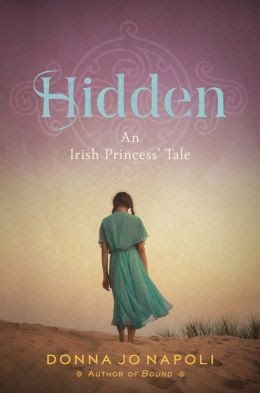
Donna Jo Napoli

Donna Jo Napoli is the acclaimed and award-winning author of many novels, both fantasies and contemporary stories. She won the Golden Kite Award for Stones in Water in 1997. Her novel Zel was named an American Bookseller Pick of the Lists, a Publishers Weekly Best Book, a Bulletin Blue Ribbon, and a School Library Journal Best Book, and a number of her novels have been selected as ALA Best Books. She is a professor of linguistics at Swarthmore College in Pennsylvania.

Napoli's new book is Hidden.

Late last year I asked the author about what she was reading. Her reply:
The last three books I've read are: The Secret Life of Violet Grant by Beatrice Williams, Jack of Spies by David Downing, and This Is the Water by Yannick Murphy.

Williams' book is marvelous in its organization. We are in the heads of two main characters where one is in the 1960s and one is decades earlier. The character in the pre-WWI period winds up united with the one in the 1960s through the shear tenacity of the younger woman. I loved the two points of view -- they gave insights into the sexual and social politics of their time as well as into the particular characters.

Downing's book is a heartbreaker. The setting is just prior to the outbreak of WWI, and the main character is a spy for the Brits. He's a rather ordinary guy -- reasonably intelligent, working hard to be decent. But he makes errors that lead to personal misery. I love that, because we all do that. It's reassuring to see a person struggle with his own needs, and lose, and then have to find a way to keep on going. The reassuring part is that you know he will -- because we must, we have no choice but to pick ourselves up and try harder the next time. I get very tired of reading only about heroes.

I'm actually in the middle of Murphy's book right now. This one I picked up because the presentation of information is so different. I opened it up, read a paragraph and knew I had to have this book. I plan to finish it on my next plane right (tonight -- I've just been visiting grandchildren -- but I have to go now). At this point I feel like it's a story where the suspense comes from knowing so many characters are doomed but not knowing exactly how bad it will get and not knowing if they will make things worse for themselves. This prospect, also, I find reassuring: we often are our own worst enemies. The author has a tight grip on the psyches of her characters... and I ache for them even as I wish they'd change.
Visit Donna Jo Napoli's website.

--Marshal Zeringue

Saturday, January 3, 2015

Diane Kelly

A former Assistant Attorney General and tax advisor, Diane Kelly inadvertently worked with white-collar criminals. Lest she end up in jail, Kelly decided self-employment was a good idea. Her fingers hit the keyboard and thus began her award-winning Death and Taxes romantic mystery series. A graduate of her hometown's Citizen Police Academy, Kelly also writes the hilarious K-9 cop Paw Enforcement series.

Recently I asked the author about what she was reading. Her reply:
Right now I’m reading two books.

The first is Bob Newhart’s I Shouldn’t Even be Doing This! and Other Things that Strike Me as Funny. I’ve always loved Bob Newhart’s unique approach to comedy as a total straight man. Nobody does it like him! I’ve enjoyed all of his TV shows and had the privilege of seeing him perform live in Fort Worth a few years ago. He was great! I recently took a stand-up comedy class and did my first open mic, so I realize how much work goes into doing stand-up.

I’m also reading Amy Poehler’s Yes Please. I dream of writing for television with a crazy team of creative types, so it was a given that I’d pick up her book. It’s an interesting mix of insider information, personal stories, and life lessons learned, often the hard way. I recommend both of these books to anyone who has any interest in comedy, television, or biographies of interesting people.
Visit Diane Kelly's website, blog, Facebook page, and Twitter perch.

Coffee with a Canine: Diane Kelly & Reggie, Junior, and Brownie.

--Marshal Zeringue

Thursday, January 1, 2015

Karen Harper

New York Times bestselling author Karen Harper is a former high-school and college English teacher. Winner of the 2005 Mary Higgins Clark Award for her outstanding novel, Dark Angel, Harper is the author of numerous romantic suspense novels, historical novels, and a series of historical mysteries.

Her new novel is Broken Bonds, book #3 in The Cold Creek Trilogy.

Last month I asked the author about what she was reading. Harper's reply:
"What is Karen Harper reading?" Research for a new trilogy with a forensic psychologist heroine, someone who interviews people who knew the deceased, in this case to learn if the death was murder or suicide. However, the heroine also has narcolepsy--a disease about which I knew little. It is terrifying and challenging--just what I needed for my main character.

So I'm reading, among other research, a fascinating book about a female law student who got hit with narcolepsy and how she handled it. It will really help me get inside my protagonist's head. The book is Wide Awake and Dreaming: A Memoir of Narcolepsy by Julie Flygare. It's also a can-do book in the line of the current Reese Witherspoon movie Wild and other overcoming, inspirational books about conquering fears or a disease.
Visit Karen Harper's website and Facebook page.

The Page 69 Test: Broken Bonds.

--Marshal Zeringue

Tuesday, December 30, 2014

David Krugler

David F. Krugler is Professor of History at the University of Wisconsin, Platteville. His new book is 1919, The Year of Racial Violence: How African Americans Fought Back.

Recently I asked the author about what he was reading. Krugler's reply:
I’m just finishing reading two books, a novel and a work of nonfiction. The novel is a World War II spy thriller by the British author David Downing. Stettin Station (Soho Press, 2009) is part of a series featuring John Russell, a jaded but morally centered journalist. An American by birth, Russell considers himself British—he grew up in Great Britain—but he now lives in Berlin. The novel is set in November and December 1941. The Soviet Army has halted the German advance in the east, the Japanese are preparing for an attack on U.S. naval forces at Pearl Harbor. A combat veteran of the First World War, Russell abhors war, yet he cheers for U.S. entry into this global conflict so that the Nazis can be defeated all the sooner. Russell must tread a dangerous path. He loathes the Nazis, but he must report Joseph Goebbels’ ceaseless hokum in order to keep his credentials as a journalist. As a U.S. citizen, he can leave Germany, but what about his lover Effi, a German film star who shares his anti-Nazism, and his German-born teenage son Paul? Russell increases the risks by meeting secretly with German communists to find out what is happening to Germany’s Jews. What I really like about Stettin Station, and Downing’s other John Russell novels, is that his characters traverse a treacherous landscape in which all actions require constant compromise and the calibration of ‘lesser evils.’ To bond with his son, for example, Russell attends a Nazi military rally. It’s a testament to Downing’s skill as a novelist that we don’t condemn Russell for doing this but rather cheer his efforts to be a good, decent man in a place and time where so few good, decent people can be found.

The other book is by historian and journalist Jill Lepore: The Whites of Their Eyes: The Tea Party’s Revolution and the Battle over American History (Princeton University Press, 2010). I’ve long been a fan of Lepore’s historical scholarship and her work for The New Yorker, so I picked up the book to see how she did in blending the two. Very well, it turns out. The Whites of Their Eyes follows Lepore as she attends and reports on numerous Tea Party rallies held in Boston starting in 2009. Lepore describes the grievances and concerns shared by the rally attendees and speakers, but her primary interest is in what was said about American history at these events. The Founding Founders were popular topics, as was the American Revolution. What concerns Lepore, as a historian, is inattention to historical context and the multiple, changing ways in which the United States has worked to create a more perfect union based on the principles of the Revolution. With that in mind, she frequently takes diversions from the present-day to the past to tell us how Americans since the Revolution have understood (and argued about) what it means to be an American and what a democracy should look like. Her historical review of voting practices and methods, for example, is especially insightful, as is her comparison of enduring myths about the Revolution with historical evidence and accounts. “What was the Revolution about? What is history for?” she muses in her epilogue. If you thought the answers to both questions were permanently fixed, by the end of the book you’ll likely think differently. But you’ll also believe the answers are worth finding.
Learn more about 1919, The Year of Racial Violence at the Cambridge University Press website.

--Marshal Zeringue