Tuesday, July 12, 2016

Simone Zelitch

Simone Zelitch's novels include Louisa, which won the Goldberg Prize for Emerging Jewish Fiction. Her work has been featured on NPR and recent honors include a National Endowment for the Arts grant.

Zelitch's new novel is Judenstaat.

Recently I asked the author about what she was reading. Her reply:
A few weeks ago, I picked up a book that had been on my shelf for a while, Rasheeda Phillips’s Recurrence Plot and Other Time Travel Tales. Rasheeda took a fiction class with me years ago, and she’s a housing attorney with with Community Legal Services, as well as the creator of The Afrofuturist Affair. When is the last time a book gave me actual nightmares? This one did.

Recurrence Plot begins the day a woman turns twenty-one. She gave birth at the age of fourteen—like her mother before her—a path that feels inevitable; she takes her own life on her twenty-first birthday—like her mother before her. Her daughter grows up remembering the future, and the power tamped down by medication. A home-made time-machine creates connections between her past and future selves, with ambiguous consequences. She investigates a research institute at the fictional, sinister Parallel University which experiments on young black teens who are “at risk” for criminal behavior, assuming that their lives lead in one direction: they emerge hardened and changed.

The book interpolates expository passages about how the brain and body process time, as well as allusions to quantum physics, and segments that feel like a “choose your own adventure story” or are intended to be read backwards. Does time only flow forward? Is its direction inevitable? These questions are played out in poor African-American communities in my hometown of Philadelphia. Recurrence Plot is a challenging, weird, and wild read. As a teacher at Community College of Philadelphia, I found myself considering the lives of my my primarily African-American students; almost all of them are trying to spring a trap. That’s why they’re in my classroom.

In fact, Rasheeda Phillips responds to issues of violence and displacement as an Afro-futurist, a movement exemplified by artists such as the author Octavia Butler and the musician Sun Ra. She believes in the power of individual consciousness, rooted in tradition and community. Most recently, “redevelopment” of her Sharwood neighborhood led her to create a Community Futures Lab, including a “quantum time capsule, exploring oral histories/futures, preservation, displacement, and alternative temporalities within the North Philadelphia community known as Sharwood/Blumberg.” Alternative temporalities? Why not? As Phillips makes clear, time is a complicated business.

Then, yesterday, I finished another book about traps, and how to spring them, nonfiction by Jerome Gold: In the Spider’s Web. Gold spent fifteen years as a case-worker at a juvenile prison, and with extraordinary honesty, he considers his complex and contradictory role: a counselor and confidant, a guard who wrestles teenagers to the ground, a quasi-parent enforcing rules that are both essential to the teenagers’ well-being, and the very definition of imprisonment. When Jerry locks a kid into her room, it’s not punitive. It’s protective. It’s about giving her a chance to punch the door—just once—to cry without shame, not to have anything to prove. But that door still has a lock.

Gold was with the U.S. Special Forces in Vietnam. He is particularly good with “gang-kids” because he understands violence—feels it in his body as he puts it, “the taste of it in my mouth, its rippling on the skin of my arms, the lightness of it in my hands.” He knows all this. His body—in itself—is a kind of time machine, ranging between his past, present and future. His awareness gives him the power to guide the kids in an alternative direction. The process is messy, particularly because Gold can only do his job effectively if he is really attached to the kids on his caseload. He believes in making promises and keeping them. Of course, that’s at cross-purposes with the arbitrary nature of prison life.

Although Gold’s book is set in Washington State, it’s easy enough to consider the way the young people in Gold’s caseload are like Rasheeda Phillips’s characters, in a narrow world and on a narrow path. Is the best response re-wiring them with methods like Cognitive Behavioral Therapy, commonly known as CBT? Jerome Gold hates that stuff— at one point a kid’s parent calls it “DDT”. He has no tolerance for jargon or slogans. He would say that they crowd out real connections, and they crowd out love.

Both books raise these questions: Can awareness of the past, and open speculation about where the past can take you, lead to alternative temporalities? Can our actual bodies be time machines, integrating our individual and collective memories into a complicated present, and a rich, real future? The books could hardly be considered hopeful, yet they gave me hope. Our consciousness is more than a series of wires and circuits that someone else controls. If we fight against everything that pulls us in that direction, if we spring the trap, our paths are neither narrow nor inevitable.
Visit Simone Zelitch's website.

The Page 69 Test: Judenstaat.

My Book, The Movie: Judenstaat.

--Marshal Zeringue

Monday, July 11, 2016

Tiffany Reisz

Tiffany Reisz is the author of the internationally bestselling and award-winning Original Sinners series for Mira Books (Harlequin/Mills & Boon).

Her new novel is The Bourbon Thief.

Recently I asked Reisz about what she was reading. Her reply:
When I’m not writing books, I’m reading books. Here are a few of the fabulous books I’ve read so far this year.

While looking for a good Gothic romance, I stumbled across a review that recommended Dark Dance by Tanith Lee. It’s the first book in her Blood Opera series that features vampire-ish semi-immortal creatures and their bizarre subculture. In Dark Dance we not only get father-daughter incest but a demon baby to boot! I’m currently reading Darkness, I, the third in the series and it’s also delightfully bizarre.

I read two books in a row—Surfacing by Margaret Atwood and Hausfrau by Jill Alexander Essbaum—that left me thinking deeply about how women who buck society’s gender expectations are portrayed in fiction. Although both authors are women, they are very hard on their heroines. One succumbs to madness while trying to escape the pressures of marriage and relationship. The other succumbs to a fate even worse. Surely there’s room in this world for a woman to find a positive, healthy way to break away from society’s unreasonable expectations. I’ll keep reading until I find that book.

I adored LaRose by Louise Erdrich, a literary fiction author who writes about the Ojibwa people in the Dakotas. The book is both heartbreaking and heartwarming. While hunting a man named Landreaux accidentally shoots and kills the small son of one of his best friends. After much praying, soul-searching, and singing to their ancestors, Landreaux and his wife offer their own son to the grieving parents as an act of reconciliation and restitution. The two families blend together in their heartache and their healing. It’s a glorious novel.

The most fun I’ve read so far this year has to be How to Capture an Invisible Cat, a middle-grade novel by my friend Paul Tobin. It was laugh out loud funny and a wonderful antidote to all the dark and creepy books I read. I can’t recommend it enough.

And now…back to the books!
Visit Tiffany Reisz's website.

The Page 69 Test: The Bourbon Thief.

--Marshal Zeringue

Sunday, July 10, 2016

Jane Rogers

Jane Rogers has published eight novels, written original television and radio drama, and adapted work for radio and TV. Her last book, The Testament of Jessie Lamb, was the 2012 winner of the Arthur C. Clarke Award for science fiction; it was also longlisted for the Booker Prize. She has won the Somerset Maugham Award, the Writers’ Guild Best Fiction Book, has been a finalist for the Guardian Fiction Prize, and is a Fellow of the Royal Society of Literature. She is Professor of Writing at Sheffield Hallam University, and she lives in Banbury, England.

Rogers's new novel is Conrad & Eleanor.

Recently I asked the author about what she was reading. Her reply:
I’m usually reading several books at the same time, for various reasons; often my reading has to do with other writers I am meeting, or with research. The research might be towards a novel, though at the moment two of the books I’m reading are for research towards a radio drama and a piece of online journalism. Then there are the books I read because they’re recommended by people I trust, or because of brilliant reviews, or simply because I want to. Finally, I seem to spend a lot of my life on trains, and size is a factor in the book I chose to take with me. I hate the fashion for huge books that don’t fit easily in my backpack or handbag. So, here are four that I have on the go at the moment:

Robert Louis Stevenson, In the South Seas (research), which contains his letters and essays about his travels in the South Seas in the last years of his life. Stevenson is one of the best writers ever, it amazes me that he is not more highly regarded by English-speaking readers. The French revere him! I’m working on radio adaptations of two of his South Sea novellas, so it is interesting to read his factual accounts of his travels and to learn how much of what really happened he put into the novellas.

Anne Tyler, A Spool of Blue Thread (research). I’m writing a piece for the Guardian Online about the top 10 books on the subject of ‘Long Marriages’, so I am rereading a couple to check how good they are. Tyler often writes about marriage, and always writes true. The opening ten pages of this novel (almost entirely dialogue) reveal Abby and Red Whitshank brilliantly. They are arguing helplessly over how to handle a phone call from their son Denny announcing he is gay. Abby theorizes that his getting a girl into trouble while he was still at school might have been a symptom of homosexuality. Red asks, “Come again?” “We can never know with absolute certainty what another person’s sex life is like.” “No, thank God,” Red said. Their love for one another is as comfortable and worn as the old slippers and colourless dressing gown each wears.

Paul M.M. Cooper, River of Ink (meeting the writer). I’ll be sharing a talk on writing historical novels with Paul, next week. His novel is set in thirteenth century Sri Lanka, about which I know nothing, and it is vividly written.

Conor O’Callgahan, Nothing on Earth (for pleasure, by a friend, and small enough to go in a handbag!). Begins with real mystery and is written in precise yet poetic language. Hard to put down.
Visit Jane Rogers's website.

The Page 69 Test: Conrad & Eleanor.

--Marshal Zeringue

Saturday, July 9, 2016

Craig Monson

Craig A. Monson is Paul Tietjens Professor Emeritus of Music at Washington University in St. Louis. His recent books include Nuns Behaving Badly: Tales of Music, Magic, Art, and Arson in the Convents of Italy (2010), Divas in the Convent: Nuns, Music, and Defiance in Seventeenth-Century Italy (2012), and the co-edited essay collection, Music in Print and Beyond: Hildegard von Bingen to The Beatles (2013).

Monson's latest book is Habitual Offenders: A True Tale of Nuns, Prostitutes, and Murderers in Seventeenth-Century Italy.

Recently I asked the author about what he was reading. Monson's reply:
I’m certainly not alone in having discovered the utility of Google Books’ Library Project. As a writer of history, I spent decades planning research trips around libraries likely to contain specific volumes. (Before online catalogs it could be difficult even to discover where copies might be.) If I was lucky, my target library (usually in a major Italian city) would own a copy. If I was not, it did not—or the volume had been lost, misshelved, reserved for restoration or rebinding. Modern-day, in-house digitization isn’t always a solution to such problems. Last month I arrived at a Roman institution to discover a fragile collection had been digitized: at the click of a mouse, the manuscripts would be accessible on the institution’s computers; the originals had been permanently withdrawn from circulation. Alas, the digital copy had somehow contracted a virus. Until funds for disinfection become available—unlikely, given the state of the Italian economy—these sources remain out of reach.

Small wonder, then, that Google Books’ Library Project seems like some sort of miracle. I am regularly amazed, not only by how wide the enterprise has cast its net, but especially by the small fry caught up in it. (How many other readers go looking for Johann Jacob Wepfer, Cicutæ Aquaticæ Historia et Noxæ [1679] or Gregorio Leti, Il Puttanismo Moderno con il Novissimo Parlatorio delle Monache [1677]?) Since what isn’t there today may (and often does) pop up a few months later, one repeatedly turns to the website with a sense of optimism.

Apart from its rich assortment of such determinedly arcane titles, the Library Project’s wide variety of early modern travel literature strikes me as broadly useful, diverting, and often both. Recognizing the usual caveats about taking such writings at face value, I still think one can profitably mine them for descriptions of contemporary sights, sounds, and attitudes—what educated and imaginative writers thought was worth talking about to their own contemporary readers. Eighteenth-century music historian Charles Burney’s The present state of music in France and Italy, or The journal of a tour through those countries, undertaken to collect materials for a general history of music (1771), for example, need not be merely of musicological interest. There is much—very much—about music, of course, but written in comparatively untechnical terms and stressing what 18th-century listeners (and readers) would have found interesting. If Burney goes on too long about it, modern readers can skim to something different: Burney has plenty to say about cityscapes, art, architecture, interesting and/or famous people, manners, quirks of the locals.

It is useful, for example, to have detailed descriptions of the layout of every opera house Burney visited. It is even more enlightening, perhaps, to discover that the fourth tier of boxes in the Milan opera house included a faro table at each end of the gallery, where play did not stop during performances, and that between acts people of the meaner sort came up from the “pit” to wander around the galleries among their betters. “The noise here during the performance was abominable,” Burney reports, “except while two or three airs and a duet were singing, with which every one was in raptures.” And undistracted by cellphone ringtones.

And Burney’s experiences continue to resonate with library hounds like me: “Upon my enquiring for the catalogue of MSS. I was told it was not usual to shew it, but I might see any one in the collection, if I would ask for it by name; but I knew no more the name than the contents. ... This morning a solemn procession of St. Ambrose, to pray for rain, on which account the public library was not open, which was a great disappointment to me, being the last day of my residence in this city.” Plus ça change....
Learn more about Habitual Offenders: A True Tale of Nuns, Prostitutes, and Murderers in Seventeenth-Century Italy.

The Page 99 Test: Nuns Behaving Badly.

The Page 99 Test: Habitual Offenders.

--Marshal Zeringue

Thursday, July 7, 2016

Christian McKay Heidicker

Christian Heidicker is an awfully charming young author from Utah.

Cure for the Common Universe is his debut novel.

Recently I asked the author about what he was reading. His reply:
Here are the books I’ve been smitten with/gobsmacked by lately.

Gone with the Wind by Margaret Mitchell

You never know if an über-popular book is going to crackle (Beloved, East of Eden) or crumble in your mouth like gluten-free bread (Ben-Hur, DaVinci Code). I started reading Wind because I wanted to find out if Margaret Mitchell was actually racist or if she was simply being honest about her characters and the era in which they lived. (The good people of Goodreads definitely lean toward the former.) Having just written a book with a main character with whom I did not see eye-to-eye, I was worried people might perceive his shortcomings as my own, and I wanted to see if there were others like me.

I stopped looking for clues hundreds of pages ago. I’m too delighted by the work. It’s funny. It’s intense. And thirty-eight hours into a fifty-hour audiobook, it hasn’t skipped a beat. Scarlett O’ Hara is one of the most fascinating train wrecks I’ve ever had the privilege of watching. Rhett Butler is a master conversationalist. I don’t want to meet either of them, but I love them.

Somewhere along the way, I think I may have found a clue as to what Mitchell thinks of her characters. Many of them deride reading books (“I swear he would rather pick up a book than a hunting rifle and I am not even joking.”) Meanwhile, here you are reading one of the longest pieces of classic literature. Mitchell shines a light on the nuances between southern and northern racism (Even in the 1860’s, Scarlett is horrified that a Northern woman refers to one of her employees as the ‘n’ word, arguing they can only call each other that). Margaret Mitchell is constantly winking at you—that is, when you aren’t so swept in the story that you forget there’s an author at all.

The Stars My Destination by Alfred Bester

This is the Mad Max: Fury Road of books. It’s fast, it’s intense, you have to do a lot of filling in yourself, and it has a hilarious premise. A passenger ship neglects to pick up a dude stranded in a wrecked spaceship so he spends the rest of the book seeking vengeance on its captain.

Invincible by Robert Kirkman

I’ve never been able to stomach large ensembles. I forget who people are. I mix up names. I don’t care when someone supposedly important dies. For me the last few Marvel movies have felt like bloated affairs, stuffed to the brim with Styrofoam character arcs that leave me feeling somehow simultaneously overwhelmed and rather empty.

Robert Kirkman has found a way to solve this problem. He realizes that a universe jam-packed with superheroes is ridiculous. So he plays up the gimmick, throwing in as many absurd heroes as he can dream up. And it works. Kirkman is a master of the slow burn, sprinkling story seeds that don’t start sprouting until a dozen issues later, but his dialogue is sharp enough to keep you riveted from panel to panel. He is a writer to be studied and envied. I hear he works primarily in his pajamas, after all.
Visit C. M. Heidicker's website.

Cure for the Common Universe is among Shaun Byron Fitzpatrick's top seven geeky love stories that prove nerd love is the best love.

The Page 69 Test: Cure for the Common Universe.

--Marshal Zeringue

Wednesday, July 6, 2016

Sarvenaz Tash

Sarvenaz Tash was born in Tehran, Iran and grew up on Long Island, NY. She received her BFA in Film and Television from New York University's Tisch School of the Arts. This means she got to spend most of college running around and making movies (it was a lot of fun). She has dabbled in all sorts of writing including screenwriting, copywriting, and professional tweeting.

Tash's new book is The Geek's Guide to Unrequited Love.

Recently I asked the author about what she was reading. Her reply:
I just finished Illuminae by Amie Kaufman and Jay Kristoff which so lived up to all the hype. It was probably the most insanely creative book I've ever read: so layered with plot and characterization and structure; and so beautifully presented. (This book 100% begs to be read in print, by the way).

I also just read the second volume of Brian K. Vaughan's Saga. I've only recently started reading more comic books and this series is just wonderful: page-turning, devastating, and funny in turns. It has stunningly gorgeous art by Fiona Staples too.

And I'm currently reading Eligible by Curtis Sittenfeld. I'm a huge Austenite, and I do love a good Jane Austen adaptation. That being said, I can also be very critical of them since I love the source material so much. I just started this one, but, so far, I think the modernization of the story is very clever.
Visit Sarvenaz Tash's website.

The Page 69 Test: The Geek's Guide to Unrequited Love.

--Marshal Zeringue

Tuesday, July 5, 2016

J.C. Lane

J.C. Lane is the author of the new thriller Tag, You’re Dead. She also writes mysteries as Judy Clemens, including the Stella Crown and Grim Reaper mysteries. She is a past president of Sisters in Crime and lives in Ohio, where she loves to read YA novels on her back porch with Max, a cozy orange cat.

Recently I asked the author about what she was reading. Lane's reply:
At the Chicago ALA in 2013 I picked up an ARC of Between the Devil and the Deep Blue Sea, by debut author April Genevieve Tucholke. Because of a variety of factors, including my own book release, a bout with cancer, and other life kinds of things, I am only now reading this wonderful book. I can’t believe I’ve waited this long. Tucholke’s writing has drawn me in, from the characters to the narrative to the whole feeling of the story. Her prose is interesting and captivating, and the feel of the book is both beautiful and eerie. I’m still getting into the “meat” of the book, and don’t know how it’s going to turn out, or even who all of the characters “really” are, but I do know there is a second book about Violet called Between the Spark and the Burn, and Tucholke has another novel out, as well.

I also recently read a delightful middle-grade book called The BFF Bucket List, by Dee Romito. She captures the struggles of eighth grade/going into 9th grade perfectly. I recognized the issues since I have a girl of that exact age at home right now! Romito’s writing is easy to read and enjoyable, and she works things out in a realistic way, rather than like a fairy tale. I recommend it for parents as well as middle-schoolers!
Visit J.C. Lane's website.

My Book, The Movie: Tag, You're Dead.

--Marshal Zeringue

Monday, July 4, 2016

Larry Watson

Larry Watson grew up in Bismarck, North Dakota, and received his BA and MA from the University of North Dakota and his PhD in creative writing at the University of Utah. He is the author of the novels Let Him Go, Montana 1948, American Boy, In a Dark Time, White Crosses, Laura, Orchard, and Sundown, Yellow Moon; the fiction collection Justice; and the chapbook of poetry Leaving Dakota.

Watson's new novel is As Good as Gone.

Recently I asked the author about what he was reading. His reply:
I teach as well as write, and over the summer, I’ll be reading and rereading books by and about Ernest Hemingway. Among the works about Hemingway will be Michael Reynolds’ five volume biography. It’s a readable, fascinating look at the life and the fiction, and the ways they converge and differ. Hemingway could be a jerk as well as a genius, and while I know full well that those qualities are not incompatible, that good character is not a requirement to creating great art—or playing great baseball or making great music—I still wish that the people whose work I admire could themselves be admirable. In that regard, I’m still like the hero-worshipping kid I once was. Fortunately, Hemingway was able—often, but not always—to bring forth a better self in his art than in his life. So when I read about Hemingway behaving selfishly in his marriage, for example, I have the counter ready at hand—a great story like “In Another Country” or a great novel like Farewell to Arms. I also hope to read, in advance of the fall semester’s start, The Sun Also Rises, For Whom the Bell Tolls, and the complete stories. Not a bad way to spend a summer.
Visit Larry Watson's website.

The Page 69 Test: As Good as Gone.

My Book, The Movie: As Good as Gone.

--Marshal Zeringue

Saturday, July 2, 2016

Susie Steiner

Susie Steiner is a former Guardian journalist. She was a commissioning editor for that paper for eleven years and prior to that worked for The Times, The Daily Telegraph, and the Evening Standard. She lives in London with her husband and two children.

Steiner's new book, her second novel, is Missing, Presumed.

Recently I asked the author about what she was reading. Her reply:
I loved Shirley Barrett's debut, Rush Oh, set on a whaling station in Australia at the turn of the century. All the detail about how killer whales and whalers worked together to hunt humbacks is riveting. It's also a coming of age novel, with a loveable narrator and lots of gentle humour.

I've also just read Helen Dunmore's spy novel, Exposure, which I gulped down in two sittings – it is so gripping. I'm a sucker for page-turners which are beautifully written, with characters you root for. Exposure is full of buttoned-up 1950s Englishness and the desolation caused by secrets swallowed down.
Visit Susie Steiner's website.

--Marshal Zeringue
Friday, July 1, 2016

Robert H. Patton

Robert H. Patton holds degrees in literature and journalism from Brown University and Northwestern University. He worked as a Capitol Hill reporter, a commercial fisherman, and a real estate developer before publishing his family memoir, The Pattons, to wide acclaim in 1994. He lived in Louisiana before settling in Darien, CT, with his wife.

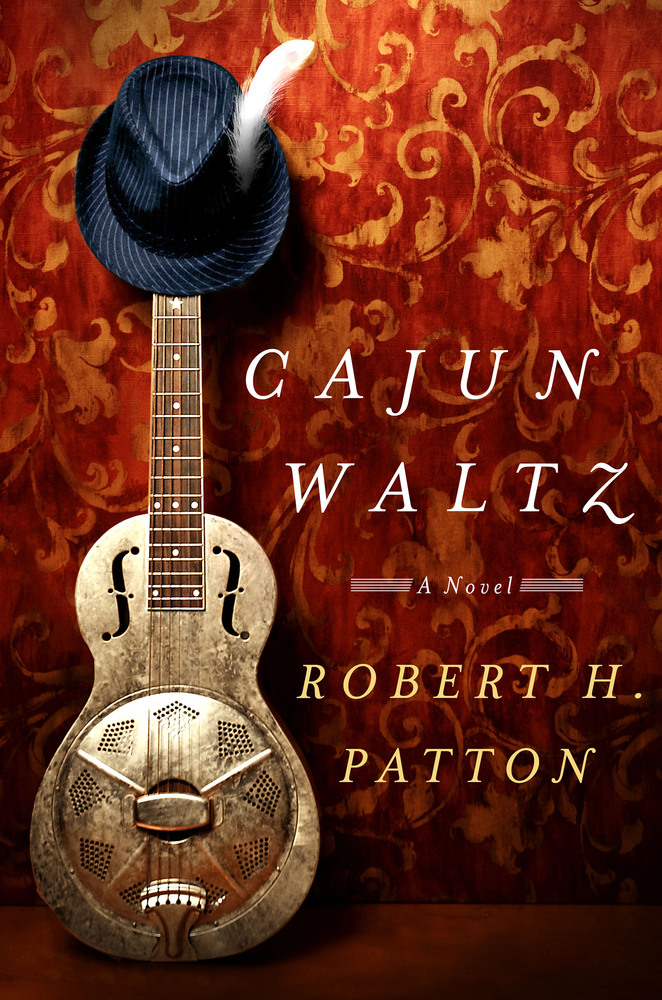
Patton's new novel is Cajun Waltz.

Recently I asked the author about what he was reading. His reply:
Not unusually, I’ve got a mishmash of things on my desk, my office floor, my bedside table, and my iPad. To take them in order:

My desk is crowded with a bunch of nonfiction that I’m reading as background for a series of historical novels I’m doing for Thomas Dunne. The series is based on a book I wrote a few years back about Revolutionary War privateering, so the stuff is mostly related to maritime matters of trade, warfare, and political skullduggery in the colonial era. Atop the pile is N.A.M. Rodgers’s classic study of the Georgian Royal Navy, The Wooden World, and a fine new naval history of the American Revolution by Sam Willis, The Struggle for Sea Power, just released by Norton. Willis covers a broad canvas from Canada to the Caribbean to the European Continent with clarity, smarts, and an appealing light touch. Anyone interested in the subject should check it out.

Down on my floor there’s A Sea of Words by Dean King, a nicely arranged lexicon of nautical terms and technical jargon relating to colonial ships and seamen. King is a fanatical expert (I mean that as a compliment) on the Aubrey-Maturin novels of Patrick O’Brian. If you saw the Russell Crowe film, Master and Commander, then you know Patrick O’Brian—and you also won’t be surprised that his 15-book series is an utterly accurate and immersive plunge into the world of the Royal Navy in the time of Admiral Nelson. Also on the floor is a throwback to my recent novel, Cajun Waltz. It’s Ann Savoy’s fantastic compendium of the artists, discographies, and lore of America’s Cajun music tradition, Cajun Music: A Reflection of a People. In flogging my novel to anyone who’ll listen, I keep Savoy’s book near at hand so I don’t screw up the facts that inspired the tale.

Things switch up on my bedside table. There are a couple of books by David Shields, Reality Hunger and How Literature Saved My Life. At the risk of looking lazy, I’ll quote what I wrote earlier on my blog about Shields:
He pursues a literary aesthetic that would scorn the fiction I write. I like him all the same. Shields rejects conventional narratives based on the carpentered plot-building of cause and effect. His books are collages of impressions, memories, and insights/puzzlements connected so obliquely they might as well be random - a lot like life, in other words. He's got artistic integrity and erudition quite intimidating to a bourgeois scribbler like me, but I love the wit and humility and sheer quest of his books.
I’ll be honest and add, too, that it helps that Shields’s language comes at you in short sharp bursts that are A) startling, and B) self-contained. So if you dip into his books late at night with your head on a pillow, you can take a quick hit or a long inhale depending on how drowsy you are – and either way it’ll imprint your brain and maybe your dreams in a worthwhile way.

And finally, my iPad: I’m not generally an e-reader guy, but lately I’ve been traveling and the convenience can’t be denied. At the moment I’ve got Alan Bennett’s Untold Stories teed up. A bestseller in Britain, it’s the playwright/screenwriter/novelist’s often comic, always humane memoir of growing up in Leeds, getting comfortable with his sexuality, dealing with failing parents and personal illness, and mainly just muddling through life as a quizzical, eccentric genius. Fantastic stuff.

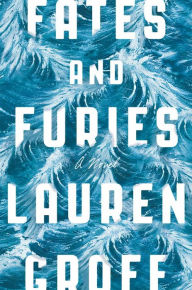
Lastly, I’ve loaded a few contemporary fiction volumes into the iPad so I can keep tabs on the enemy—er, I mean my fellow novelists: Adam Johnson’s short story collection, Fortune Smiles; Dave Eggers’s The Circle, and Lauren Groff’s Fates and Furies. All three books are harrowingly good. Plus they’re written with attention to language and human foible that’s both nuanced and blunt. I’m grateful I’ve got the books in digital form. That way, when I’m done reading I can delete them rather than start again at the beginning and never get anything done of my own. Thank God for small blessings, right?
Visit Robert H. Patton's website.

My Book, The Movie: Cajun Waltz.

--Marshal Zeringue