Thursday, February 23, 2023

Julie McElwain

Julie McElwain is a national award-winning journalist. Her first novel, A Murder in Time, was one of the top 10 picks by the National Librarian Association for its April 2016 book list, and was selected as the mystery to read in 2016 by OverDrive Inc., a digital distributor serving more than 34,000 libraries around the world. The novel was also a finalist for the 2016 Goodreads' readers choice awards in the Sci-fi category, and made Bustle's list of 9 Most Addictive Mystery series for 2017. Town & Country magazine recently selected A Murder in Time as one of 35 best time travel books.

A Murder in Time has been optioned for television/movie development.

A Twist in Time and Caught in Time — the second and third installments of the In Time series — were released in April 2017 and July 2018, respectively. Both novels were selected by The National Librarian Association for their Must-Read lists. Betrayal in Time earned a starred review from Publishers Weekly.

McElwain lives in North Dakota.

The new novel in the In Time series is Ripples in Time.

Recently I asked McElwain about what she was reading. Her reply:
I recently had the pleasure of reading The Hunting Party by Lucy Foley. The story is a beautifully written whodunit told from multiple viewpoints, and alternates between three days in the past and the present (when the body is discovered). Foley gathers a group of friends (most having met at university) in a remote lodge in the Highlands, and allows the characters to propel the story forward by slowly revealing their petty disagreements, jealousies, and hatreds, which have been festering for years. For a majority of the book, you are not only trying to guess who the murderer is, but also who was murdered. As someone who has always loved Agatha Christie, I am putting Foley on my go-to list when I want to cuddle up with a good book in front of the fireplace and a cup of strong English tea.
Visit Julie McElwain's website.

The Page 69 Test: Caught in Time.

My Book, The Movie: Betrayal in Time.

The Page 69 Test: Betrayal in Time.

Q&A with Julie McElwain.

The Page 69 Test: Shadows in Time.

My Book, The Movie: Shadows in Time.

--Marshal Zeringue

Saturday, February 18, 2023

Alyssa Wees

Alyssa Wees is the acclaimed author of The Waking Forest and Nocturne. She grew up writing stories about her Beanie Babies in between ballet lessons. She earned a BA in English from Creighton University and an MFA in fiction writing from Columbia College Chicago. Currently she works as an assistant librarian in youth services at an awesome public library. She lives in the Chicagoland area with her husband and their two cats.

Recently I asked the author about what she was reading. Wees's reply:
The thing that first drew me to Strega by Johanne Lykke Holm was the title, which means “witch” in Italian. It’s about a nineteen-year-old girl who goes to work as a maid in a hotel where there are no guests day after day. But after a large and glamorous party is held there one night, a girl goes missing and nothing will be the same. This is a short book, but it’s as sharp as a blade, dripping with a haunting, oppressive atmosphere and characters that purposefully blend together into one voice, one piercing cry against the boundaries and expectations of womanhood. It’s surreal and labyrinthe, a ghost story though there isn’t necessarily a ghost. It reads almost like a teenage girl whispering in your ear the wildest story you’ve ever heard, wherein nothing really happens except that the whole world ends. There are no easy or clear answers to be found here, leaving a lot to the reader to deduce, and begs a subsequent read to unlock all its mysteries. Overall Strega is intriguing, fantastically written, and one of my new favorites.
Visit Alyssa Wees's website.

My Book, The Movie: The Waking Forest.

The Page 69 Test: The Waking Forest.

--Marshal Zeringue

Thursday, February 16, 2023

D.W. Buffa

D.W. Buffa's recent novel is The Privilege, the ninth legal thriller involving the defense attorney Joseph Antonelli. The tenth, Lunatic Carnival, is due out soon. He has also published a series that attempts to trace the movement of western thought from ancient Athens, in Helen; the end of the Roman Empire, in Julian's Laughter; the Renaissance, in The Autobiography of Niccolo Machiavelli; and, most recently, America in the twentieth century, in Neumann's Last Concert.

Here is Buffa's take on the reading list of John F. Kennedy:
When John F. Kennedy gave the commencement speech at Yale and was given an honorary degree, he remarked, “I now have the best of both worlds: a Yale degree and a Harvard education.” When he hosted a dinner for all the living American recipients of the Nobel Prize, he wrote on the margin of his prepared remarks a line that put in perspective the changes in what education had come to mean: “There has not been this much intelligence gathered together in a single room of the White House since Thomas Jefferson dined here alone.” Everyone laughed, but behind the easy charm and civility, Kennedy wanted to remind them that for all our so-called progress, the mind of Thomas Jefferson was beyond our reach, if not our comprehension.

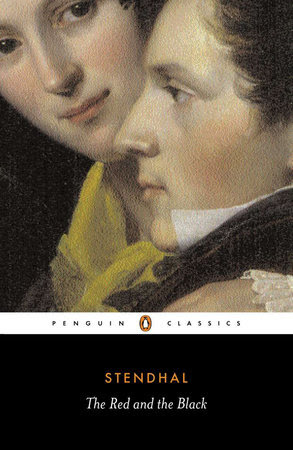
Kennedy had always been a voracious reader. His list of favorite books includes biographies of Lincoln, John Quincy Adams, Henry Clay, and the speeches of Daniel Webster. He read the seven volumes of Gibbon’s Decline and Fall of the Roman Empire and the two thousand pages of Winston Churchill’s biography of his ancestor, the Duke of Marlborough, which some consider the greatest work of history written in the twentieth century. His favorite novel was Stendhal’s The Red and The Black, written in the early 19th century. With his interest in American history, his interest in Thomas Jefferson, it seems more than possible that he read among Jefferson’s papers a letter written in 1785 prescribing a course of study for a young man still in school, a letter that demonstrates, as well, or better, than anything else could, the difference in the way we think about education.

“For the present,” writes Jefferson, “I advise you to begin a course of ancient history.” If this seems to us, with our modern, scientific, knowledge, a strange thing to suggest, what Jefferson next suggests seems almost demented. Everything, he insists, should be read, “in the original and not in translations.” The histories of Herodotus, Xenophon, Arrian and Diodorus Siculus, the philosophical works of Plato, Cicero, Seneca and Epictetus, are to be read in the original Greek or Latin. Almost in passing, Jefferson adds, “You have read or will read in school, Virgil, Terence, Horace, Anacreon, Theocritus, Homer, Euripides, Sophocles,” only to then observe the necessity of “reading Milton, Shakespeare, Pope and Swift.”

What Kennedy would have learned from Jefferson’s letter, he would have learned all over again from the writings of a more immediate predecessor in the presidency, Theodore Roosevelt, who read, and wrote about, nearly every great work of literature and history ever written. In an essay with the curious title, The Pigskin Library, Roosevelt explained that he always took books with him when he went on hunting and other expeditions, but that they would invariably be “stained with blood, sweat, gun oil, dust and ashes; ordinary bindings either vanished or became loathsome, whereas pigskin merely grew to look as a well-used saddle looks.”

Among the books he took along on his journeys were Aeschylus, Sophocles, and Aristotle, the Odyssey, Gibbon, Parkman, Theocritus and Lord Acton’s Essays. That was just the beginning. “Once I took Ferrero’s History of Rome, and liked it so much that I got the author to come to America and stay at the White House.” There is something irrepressible in the eager enthusiasm of a president who thought reading not just one of the most serious, but one of the most exciting, things any one could do. His interest, his curiosity, were unceasing, and grew with each new thing he read. He took Euripides because he had been reading Murray’s History of the Greek Epic. He read Mahaffey’s essay on Hellenistic Greece and took Polybius on his next trip. He read a book about Alexander the Great and took Arrian on the next. He took Moby Dick because he was reading Omoo and Typee. “I took Dumas’ cycle of romances dealing with the French Revolution because I had just finished Carlyle’s work thereon - and I felt that of the two the novelist was decidedly the better historian.”

Teddy Roosevelt read everything and enjoyed, and learned from, every word. President Eliot of Harvard published a list of books every well-educated person should read, the once famous “five-foot shelf” of the greatest books ever written. Roosevelt found it insufficient. He would not have included, “as Mr. Eliot does, third or fourth rate plays, such as those of Dryden, Shelley, Browning, and Byron (whose greatness as poets does not rest on such exceedingly slender foundations as the dramas supply), and at the same time completely omit Gibbon and Thucydides, or even Xenophon and Napier. Macaulay and Scott are practically omitted from Mr. Eliot’s list; they are the two nineteenth-century authors that I should most regret to lose.” Eliot includes the Aeneid, but leave out the Iliad, “to my mind this is like including Pope and leaving out Shakespeare.”

On August 27, 1912, four years after the end of his second term, Roosevelt, now the president of the American Historical Association, delivered the annual address, entitled History as Literature. “The great speeches of statesmen and the great writings of historians can live only if they possess the deathless quality that inheres in all great literature,” he insisted. History should “possess that highest form of usefulness, the power to thrill the souls of men with stories of strength and craft and daring, and to lift them out of their common selves to the heights of high endeavor.”

Those who were young enough to still have youthful dreams when John F. Kennedy first took office will not have to be reminded that “the power to thrill the souls of men” was once more than just a memory of what Winston Churchill had done during the Second World War. No one, certainly no other American president after the Second World War, has used the English language to inspire a generation to think of “the heights of high endeavor.” No one, certainly no American president since Kennedy, has suggested that the purpose of American life should be the pursuit of “human excellence.” And if what we read has some bearing on what we learn to think, it is with more than ordinary interest that we learn that of all the books that John F. Kennedy read, his two favorites were both about British politics, which, more than American politics, were shaped and guided, and often decided, by a statesman’s ability to speak.

Lord M, David Cecil’s biography of Lord Melbourne, prime minister in the early years of Queen Victoria’s long nineteenth-century reign, is a wonderfully well-written book. Lord Melbourne was William Lamb, who had the misfortune to marry a woman too beautiful for her own, or anyone else’s, good. Lady Caroline Lamb was not just beautiful, but erratic, with the childlike confidence that the world was a magical place and that all the other people in it wanted nothing so much as to pay tribute to whatever she decided to do, however outrageous it might be. As there was nothing more likely to draw public attention than to fall in love with Lord Byron, she did so, or at least acted as if she had. Byron, for his part, was perfectly prepared to fall in love with her, or act as if he had, until he got tired of her and it was time to conquer someone new. Lady Caroline, who would write a novel about her great love affair, was certain that this was not how a great love affair was supposed to end. She became frantic, then she became insane.

The world in those days, as Churchill once put it, “was for the few, and the very few.” Marriages were arranged for reasons more durable than love, and infidelity was both common and, if done discreetly, ignored. It was only when it became notorious, and a threat to the reputation of the ruling class, that society closed its ranks and the woman, though almost never the man, was officially, and permanently, forgotten. Caroline Lamb was deserted by everyone, everyone except her husband. Because of his astonishing self-possession and generosity of sentiment, Melbourne became one of the most admired men of his time. Even more than his easy temper, Melbourne’s ready wit and quick intelligence made his selection as prime minister seem almost inevitable. It was Melbourne, with his rare sensitivity and remarkable tact, who taught the young Queen Victoria her duties as a sovereign and gave her the confidence she could perform them as well, or better, than anyone had.

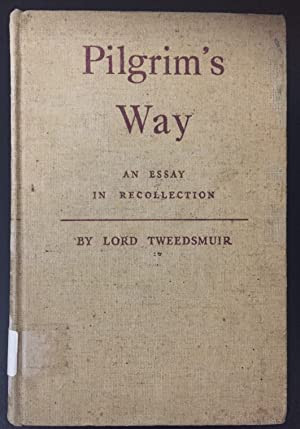
John Buchan’s Pilgrim’s Way is an account of how the world changed between the end of the nineteenth-century and the beginning of the Second World War. Buchan, who studied classics at Oxford at the end of the nineteenth-century, knew everyone who played an important part in British politics and government. After everything that happened, after the First World War, after all that science, applied science, had produced, all Buchan could see was a nightmare, not a return to “barbarism, which is civilization submerged or not yet born, but to de-civilization, which is civilization gone rotten.” In such a world, “everyone would have leisure. But everyone would be restless, for there would be no spiritual discipline in life.” Everyone “would be comfortable, but since there could be no great demand for intellectual exertion, everybody would be also slightly idiotic. Their shallow minds would be easily bored and therefore unstable. Their life would be largely a quest for amusement.” Reading Pilgrim’s Way, which was written in l939, this is the kind of future the young John F. Kennedy was warned about: “It would be a feverish, bustling world, self-satisfied and yet malcontent, and under the mask of a riotous life would be death at the heart….Men would go anywhere and live nowhere; know everything and understand nothing…a world which claimed to be a triumph of the human personality would in truth have killed that personality.”

Both the bright promise of Thomas Jefferson’s eighteenth-century America in which education meant learning Greek and Latin so the ancient authors could be properly read and understood, and the chance for Americans in the industrial age to rise above themselves and live lives of “high endeavor” by the constant, lifelong reading of history and literature, passed out of sight for John Buchan, replaced by a world of cold indifference to everything but the narrow calculations of small-minded men. If it is impossible to know, it is hard not to imagine, that much of what John F. Kennedy tried to do, the call to greatness, the call to sacrifice, the insistence that nothing was more important than the pursuit of human excellence, was inspired, not only by what he had seen with his own eyes, a young man in Great Britain while Britain struggled with whether or not it was willing to go to war, but what he read, and read more than once, Pilgrim’s Way, the book that, along with David Cecil’s Lord Melbourne, remained through his brief life one of his two books he prized more than all the others.

In The Education of Henry Adams, Adams, the grandson of one president and the great- grandson of another, remarked that a line drawn from the presidency of George Washington to the presidency of Ulysses S. Grant would turn the theory of evolution on its head. But while Grant lacked the capacity to be a decent president, he was a great general and the author of the greatest memoir any American president has written. Extend the line Adams traced from Washington to Grant farther out, draw it through more than two centuries to the present day. - What do we see? After Teddy Roosevelt, who not only read everything, but wrote some of the best history written by an American; after John F. Kennedy who, if he did not read as much, or as widely, as Roosevelt, read enough to learn how powerful the English language can be - What do we have? Hillary Clinton, it is true, had a list of favorite books, but with the exception of two biographies of contemporary politicians, and one work of modern history, the books she preferred were mysteries and thrillers, the popular and ephemeral fiction of the present day.

Theodore Roosevelt wrote more than twenty volumes of serious prose, essays on literature, histories of American statesmen and world events. John F. Kennedy wrote Why England Slept, an account of England’s failure to act in the years leading up the Second World wars, and Profiles in Courage, a history of members of the United States Senate who sacrificed their political careers to do what they thought was right for the country. Bill Clinton wrote, with James Patterson, a mystery, the name of which no one now remembers. Donald Trump, before he became president, only wanted to write books about himself and hired other people to write them, and then, after he became president, was too busy watching himself on television to think of much of anything else.

It used to be said that the world would end, not with a bang, but with a whimper. It will more likely end with the flickering images of an electronic device, and the blank stares of millions of eyes watching through the endless night, the only past remembered what was watched the night before. Kill the past, we kill the future.
Visit D.W. Buffa's website.

Third reading: The Great Gatsby

Third reading: Brave New World.

Third reading: Lord Jim.

Third reading: Death in the Afternoon.

Third Reading: Parade's End.

Third Reading: The Idiot.

Third Reading: The Decline and Fall of the Roman Empire.

Third Reading: The Scarlet Letter.

Third Reading: Justine.

Third Reading: Patriotic Gore.

Third reading: Anna Karenina.

Third reading: The Charterhouse of Parma.

Third Reading: Emile.

Third Reading: War and Peace.

Third Reading: The Sorrows of Young Werther.

Third Reading: Bread and Wine.

Third Reading: “The Crisis of the Mind” and A Man Without Qualities.

Third reading: Eugene Onegin.

Third Reading: The Collected Works of Thomas Babington Macaulay.

Third Reading: The Europeans.

Third Reading: The House of Mirth and The Writing of Fiction.

Third Reading: Doctor Faustus.

--Marshal Zeringue

Saturday, February 11, 2023

Caroline Lea

Caroline Lea grew up in Jersey in the United Kingdom. Her fiction and poetry have been shortlisted for the Bridport Prize, the Fish Short Story Competition and various flash fiction prizes. She currently lives in Warwick with her two young children. Her work often explores the pressure of small communities and fractured relationships, as well as the way our history shapes our beliefs and behavior.

Prize Women is Lea's fourth novel.

Elodie Harper, bestselling author of The Wolf Den, called it “a profoundly moving and absolutely gripping novel about the choices women face – and the choices they are denied. I cannot recommend it highly enough.”

Recently I asked the author about what she was reading. Lea's reply:
Woman having babies for money sounds like a pitch for a dystopian fiction; however, Prize Women is based on true events, inspired by the real-life drama which ensued when a Toronto lawyer died in 1926 and left the majority of his vast fortune to the woman who could have the greatest number of babies in the ten years following his death. Today, in a space where women’s bodily autonomy is being challenged and their bodily rights slowly stolen away, my book feels horrifyingly relevant, and it is this that has shaped many of the books I have been reading and rereading over the past months.

As I approach publication, I’ve been increasingly drawn to novels which pit women and their bodily ownership against social expectations: Women Talking by Miriam Toews focuses on true events in an isolated religious community: over a number of years, the women were drugged and raped by the men in their village, who then tried to convince the women that they'd been attacked by Satan. The incident is unspeakably horrific, but Toews gives voices and agency to the women as they debate whether they should stay, leave, or fight the men. Gentle humour in the face of horror and bonds between women are themes in Prize Women too – the Toronto 'baby race' put women on trial, without ever giving them a real voice: their words were filtered by journalists and twisted by gossip -- something that feels both pertinent and horribly relatable to readers almost a century later.

Although Prize Women is based on real events, it's alarmingly easy to make comparisons with novels set in dystopian societies: I’ve recently reread The Handmaid's Tale, as well as rewatching the excellent series. I’ve been drawn to the way it explores the exploitation of women's bodies. Margaret Atwood famously said that she ‘would not put any events into the book that had not already happened.’ Likewise, the circumstances in Prize Women, while shocking, are disturbingly familiar: to this day, some countries offer financial incentives to women for having children or else question their reasons for remaining childless, or their right to be mothers.

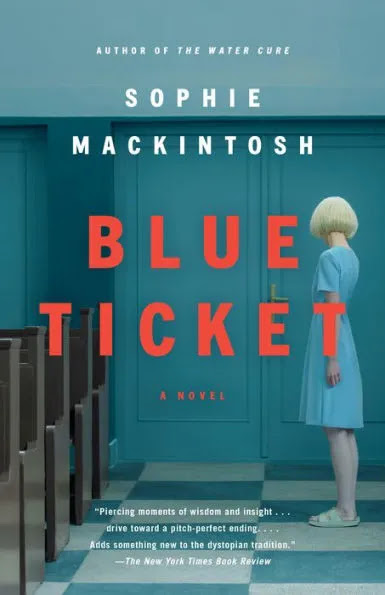
This loss of freedom is also present in Blue Ticket by Sophie Mackintosh: a chilling novel about women who are awarded a coloured ticket that dictates whether they may have children or a career. In The School for Good Mothers by Jessamine Chan, if women are deemed to have parented badly, their children are removed and the women are sent to a brutal boot camp where they are taught how to be 'good' mothers – whatever that might mean. Terrifyingly, as in Prize Women, the idea of the ‘good’ mother is based on a restrictive set of societal values, often founded on superficial judgements about outward behaviour: those who seem to be best performing the role of ‘good’ mother are the (often privileged) women who are the most worthy, the most deserving, the most praised.

External social judgements and class distinctions are two of the defining themes in Barbara Kingsolver’s wonderful novel Demon Copperhead, a modern reframing of David Copperfield, which translates Dickens’s ideas about poverty and social inequality in Victorian London into a searing exploration of poverty in America and particularly the drug crisis in deprived rural communities. Like Prize Women, Kingsolver’s novel depicts characters who are, at least initially, the victims of poverty in a society that deems them worthless. And like some of the characters in Demon Copperhead, my characters search for a way to make their voices heard, to assert their right to exist and, hopefully, to thrive.

Lastly, I’ve been revisiting two wonderful novels from last year, which feature brilliant women: both Lessons in Chemistry by Bonnie Garmus and The Whalebone Theatre by Joanna Quinn contain female characters who, in the face of societal judgement and censure, defiantly define themselves and assert their voices, and their right to be heard. I hope Prize Women will remain with readers the way these books have stayed with me.
Follow Caroline Lea on Twitter.

The Page 69 Test: The Glass Woman.

My Book, The Movie: The Glass Woman.

My Book, The Movie: The Metal Heart.

Q&A with Caroline Lea.

The Page 69 Test: The Metal Heart.

--Marshal Zeringue

Tuesday, February 7, 2023

Megan Chance

Megan Chance is the critically acclaimed, award-winning author of more than twenty novels, including A Splendid Ruin, Bone River, and An Inconvenient Wife. She and her husband live in the Pacific Northwest.

Chance's new novel is A Dangerous Education.

Recently I asked the author about what she was reading. Her reply:
The Whalebone Theater by Joanna Quinn

I picked this one up because I am a sucker for books about artists and actors, but also because I have a real soft spot for Europe after the first World War, and aristocratic families left with huge estates and no money, and though I don’t really love and in fact am growing really tired of books about WWII, and am unlikely to read one unless you’ve got something very new and unusual to add, there was enough in the description here, with theaters made of whalebone and intrepid missions and innocence lost, and again—actors and theater—that I decided to try it.

I was very glad I did. I knew from the first paragraphs that I was in the hands of a very good writer, and I ended up not being able to put it down. In fact, I loved this book, and it became my first favorite read of 2023. It was intricate, complicated, and emotional, with a complex family that is more than only biological, and bonded in strong and interesting ways. I heartily recommend it.

We That are Left by Clare Clark

I have loved Clare Clark since I first read her The Nature of Monsters. I think she’s a wonderful and subtle writer. This book also happens to be set during and after WWI, and again, in a English estate with a family greatly impacted by the war. So … pushing my buttons again. This one I went into knowing I was going to have a good writer to guide me. The book is about the Ellinghurst estate, the Melville children who will inherit it, and their friend, Oskar. The story takes them through the war and into adulthood, revealing secrets and intricacies as it goes. It's a story about change and resilience, and it’s an intense and intelligent, with a sense of place and period that just grabs hold and doesn’t let go. The melancholy mood of this one stayed with me for a while. It felt very real.

Trespasses by Louise Kennedy

Another of my favorite periods is the time of the Troubles in Ireland. This book was recommended to me by a bookseller friend, and it is wonderful. It takes you right into a small town near Belfast, where the heroine, Cushla, tends to her alcoholic mother and works as a teacher at a parochial school. Her brother runs a pub there, where he carefully treads a neutral line between Protestants and Catholics. Then Cushla becomes involved with a married barrister who is famous for defending IRA members, and everything in her life is called into question. The novel illustrates in a heart-wrenching way how brutally we deal with one another, and whether it’s ever possible to find freedom for oneself within the constraints we place upon ourselves and our world, those of allegiance, passion, community and family.
Visit Megan Chance's website.

Q&A with Megan Chance.

The Page 69 Test: A Dangerous Education.

My Book, The Movie: A Dangerous Education.

--Marshal Zeringue

Saturday, February 4, 2023

Sarah Rayne

Sarah Rayne is the author of many novels of psychological and supernatural suspense, including the Nell West & Michael Flint series. She lives in Staffordshire.

Rayne's new novel is Chalice of Darkness, Book One of the Theatre of Thieves series.

Recently I asked the author about what she was reading. Her reply:
Admist the turmoils of the last few years, I’ve turned to old favourites, and there’s a remarkable reassurance in stepping into earlier eras.

I have re-read (for possibly the twelfth time), Broome Stages by Clemence Dane.

Clemence Dane was a highly thought-of novelist and playwright of her era. (Her best known plays are Will Shakespeare, Granite, and Bill of Divorcement). Broome Stages was written in the 1930s, and I discovered it many years ago, and lost an entire four-day bank holiday reading it. It’s a very long book – 700 pages – and spans the years between 1715 and 1930, covering seven generations of a theatrical family. The story begins with travelling players in tavern courtyards, and traces the family’s rise – through the fruity old Victorian actor managers who re-wrote Shakespeare to suit themselves, and into the early years of the 20th century, with the dawn of the early movies. It’s about the changing world of the theatre, but it’s also about the Broomes themselves – their loves and hates and feuds, and the building of a theatrical dynasty.

One of the reviews of the time had this to say:
Broome Stages is more than a novel. It is a social-history and a social-comedy, an epic. The genealogy is so intricately and ingeniously mapped and explained, they make that other famous family in fiction, Mr Galsworthy’s Forsytes, seem like a pack of Victorian upstarts.
The other novel that’s been to hand recently is The Hopkins Manuscript,(also published in an abridged version as The Cataclysm).

It’s by R C Sherriff, who’s probably best known for his classic play about the Great War, Journey’s End, and also his screenplays for famous films such as Goodbye Mr Chips, Home at Seven, and The Dam Busters.

The opening line of the book is a terrific hook:
When the Royal Society of Abyssinia discovered The Hopkins Manuscript two years ago in the ruins of Notting Hill, it was hoped that some valuable light would at last be thrown upon the final tragic days of London.
It’s the story, in first-person narrative, of a rather self-important, but ultimately surprisingly courageous and heroic retired schoolteacher, who finds himself caught up in cataclysmic events. The moon has veered off course, and is set to crash into Earth. The book is the story of how Edgar Hopkins and the people immediately around him, deal with this – in practical as well as emotional terms.
Visit Sarah Rayne's website.

Q&A with Sarah Rayne.

My Book, The Movie: Chalice of Darkness.

--Marshal Zeringue

Wednesday, February 1, 2023

Craig DiLouie

Craig DiLouie is an author of popular thriller, apocalyptic/horror, and sci-fi/fantasy fiction.

In hundreds of reviews, DiLouie’s novels have been praised for their strong characters, action, and gritty realism. Each book promises an exciting experience with people you’ll care about in a world that feels real.

These works have been nominated for major literary awards such as the Bram Stoker Award and Audie Award, translated into multiple languages, and optioned for film. He is a member of the HWA, SFWA, International Thriller Writers, and IFWA.

DiLouie's new novel is Episode Thirteen.

Recently I asked the author about what he was reading. His reply:
A recent read I’d like to give a shout out to is Theodore Roszak’s Flicker. Published back in 2005, it’s a tour de force journey through the history of cinema and Hollywood, sprawling and lavish and finely written with believable, expert detail. While I quibbled with the beginning and end, it’s a hell of a ride, blending film theory, history, and an ancient conspiracy theory through the lens of an unsung horror movie director.

The book is the memoir of Jonathan Gates, a student at UCLA who seeks out foreign films for their titillating erotic honesty. After he meets Clare, the proprietor of an underground theater who is a genius critic in the making, he begins a love affair with both her and film. This leads him to the discovery of Max Castle, an obscure German horror director from Hollywood’s golden age whose abominable B movies hold a certain power. Eventually becoming obsessed with finding and documenting Castle’s work, he ends up on a journey that reveals a secret history of film, Hollywood, and an ancient religious conspiracy.

What a sprawling, interesting novel this is. Roszak certainly takes his time building his ideas, showing himself to be a master of pacing, the slow reveal, and how to tease out a massive and bizarre conspiracy theory that on the page feels utterly real. Engaged by the colorful characters, smart language, central mystery, weird eroticism, and thick film theory and history, I couldn’t stop reading. I found myself as invested in Max Castle and going ever deeper into the larger mystery as the protagonist was. I absolutely loved the idea of movies being planted within movies within movies. This is the kind of novel where the ideas are as intriguing as the story. The characters are wonderfully colorful, from pure inventions like Zip Lipsky, Castle’s belligerent cameraman to a fictionalized Orson Welles and John Huston.

I’d recommend this one for readers with the kinds of brains that eat language, readers who love film, and those who love a great sprawling mystery.
Visit Craig DiLouie's website.

My Book, The Movie: One of Us.

The Page 69 Test: One of Us.

The Page 69 Test: Our War.

The Page 69 Test: Episode Thirteen.

--Marshal Zeringue

Tuesday, January 24, 2023

Stephen Policoff

Stephen Policoff is the author of Beautiful Somewhere Else, which won the James Jones Award, and was published by Carroll & Graf. His second novel, Come Away,
won the Dzanc Award, and was published by Dzanc Books in 2014. He was writer-in-residence at Medicine Show Theater Ensemble, with whom he wrote Shipping Out, The Mummer’s Play, Ubu Rides Again, and Bound to Rise, which received an Obie. He was also a freelance writer for Cosmopolitan, Ladies Home Journal, New Age Journal, and many other publications. He helped create Center for Creative Youth, based at Wesleyan University, and has taught writing at CUNY, Wesleyan, and Yale. He is currently Clinical Professor of Writing in Global Liberal Studies at NYU, where he has taught since 1987.

Policoff's newest novel is Dangerous Blues.

Recently I asked the author about what he was reading. Policoff's reply:
Like my taste in music, my reading list is extremely eclectic.

I recently read two books by acquaintances of mine. Funeral Train by Laurie Loewenstein is a wonderful, atmospheric mystery set in the Great Depression; I rarely read mysteries but Loewenstein writes such great characters and creates such a vivid picture of life in the Dust Bowl that I was immediately drawn in. Ghosts of the Missing by Kathleen Donohoe is a lovely, elegiac novel about love, loss, and being haunted, subjects of particular interest to me. It’s a beautiful novel and should be better known.

Meanwhile, I have just re-read Train Dreams by Denis Johnson because I am teaching it in my Creative Writing class this semester. I admire and have sometimes sought to emulate Johnson’s ability to write melodically about horrid human behavior, to intertwine melancholy and dark laughter. I also have been reading Ling Ma’s first story collection, Bliss Montage. I am always looking for fiction which my students will not have read already (not that they read that much anyway), stories which show different ways of approaching the idea of writing fiction. Ma’s stories are intriguingly odd—surreal at times, science fictionish at times, beautifully detailed and truthful at times. She is a useful model, I think, for anyone seeking to write stories which do not necessarily fit into any preconceived
Visit Stephen Policoff's website.

The Page 69 Test: Come Away.

My Book, The Movie: Come Away.

--Marshal Zeringue

Thursday, January 19, 2023

Vicki Delany

Vicki Delany is one of Canada’s most prolific and varied crime writers and a national bestseller in the U.S. She has written more than forty books: clever cozies to Gothic thrillers to gritty police procedurals, to historical fiction and novellas for adult literacy. She is currently writing four cozy mystery series: the Tea by the Sea mysteries for Kensington, the Sherlock Holmes Bookshop series for Crooked Lane Books, the Catskill Resort mysteries for Penguin Random House, and the Lighthouse Library series (as Eva Gates) for Crooked Lane.

Delany is a past president of the Crime Writers of Canada and co-founder and organizer of the Women Killing It Crime Writing Festival. Her work has been nominated for the Derringer, the Bony Blithe, the Ontario Library Association Golden Oak, and the Arthur Ellis Awards. Delany is the recipient of the 2019 Derrick Murdoch Award for contributions to Canadian crime writing. She lives in Prince Edward County, Ontario.

Her newest novel in the Sherlock Holmes Bookshop series is The Game is a Footnote.

Recently I asked the author about what she was reading. Delany's reply:
I do most of my best reading on airplanes. I love the isolation of being on a plane, just me and my book. I find that it’s about the only time anymore I have the time and space to simply immerse myself in a book, with none of those pesky distractions like Twitter, Facebook, and household chores.

Over the Christmas holidays this year, I went to Nelson, British Columbia to visit my daughter and her family. Not a lot of reading got done during the visit (the kids being 4 and 13 months doesn’t lead to much free time) but I did take several books with me for the long flights.

Prior to a recent trip to Italy, I read The Color Storm by Damian Dibben specifically because it’s set in 16th century Venice. I enjoyed that book enough to see what else he’d written and was delighted to find Tomorrow. The book is told entirely from the POV of a dog. And not just any dog. In the year 1815 a dog is in Venice, waiting for his master to return. He’s been waiting for two hundred years. And so begins a story of loyalty, friendship, love. And the price of immortality. Perfect airplane reading.

I also read This is the Night they Come for You by Robert Goddard. I’ve been a fan of Goddard for many, many years. He’s been called “the master of the triple cross”. His books are usually about some average English guy who finds himself embroiled in events far beyond his control. I’d rank this book as just okay, and definitely not one of his best, although it does provide an interesting look into the modern history and current situation of Algeria. I’d recommend an earlier book of his, that I also recently read, Days without Number, as an example of just how Goddard can work one twist after another.
Visit Vicki Delany's website, Facebook page, and Twitter perch.

The Page 69 Test: The Game is a Footnote.

--Marshal Zeringue

Thursday, January 12, 2023

Darcie Wilde

Darcie Wilde is the award-winning author of stylishly adventurous historical mysteries and romances, including the Rosalind Thorne Mysteries, a Regency-set series inspired by the novels of Jane Austen, as well as the Regency Makeover Trilogy. She has also written, under the name Sarah Zettel, Locus and Philip K. Dick Award-winning novels, including Fool's War, a New York Times Notable Books of the Year selection.

Wilde's new novel is The Secret of the Lost Pearls.

Recently I asked the author about what she was reading. Her reply:
I’m writing this during the first week of 2023. 2022 was a rollercoaster of a year for me personally, as I know it was for a lot of people. One of the ongoing bright spots was the number of good books that came my way.

Sister Novelists by Devoney Looser. Warning: This is a total fangirl moment. I loved this book! I started reading it for research, which rapidly turned into reading for pleasure and more than a little amazement. This is a biography of Jane and Maria Porter, sisters who were contemporaries of Jane Austen, and between them invented the genre of historical fiction years before Sir Walter Scott came along and took credit for it. It’s a big book, but perfect for reading on a long winter’s night. The writing is approachable and yet full of amazing detail about these women’s lives and the world they moved through. Anybody who reads or watches works set in the English Regency should read this one. It is nothing short of amazing.

The Haunting of Maddy Claire by Simone St. James. This one was off the beaten path for me. I don’t read horror on a regular basis, but I do love a gothic. Daphne DuMaurie’s Rebecca is one of my all time faves. Maddy Claire was a real discovery for me. I heard about it on the She Wore Black podcast and shoutout to the host, because I am now a superfan. Set in the 1920s about a woman who is tired of her dreary, lonely life, and who ends up in a job as an assistant to a paranormal investigator going out to the countryside to investigate a particularly active haunt. It’s well-written, got great characters, loads of suspense, and a great love story all told with gothic flare. There is definitely going to be more Simone St. James in my upcoming year.

The Woman in the Library by Sulari Gentill. I recommended this one to a friend. When I asked her what she thought of it, she said, “That book is a real mind-bleep.” She’s right. It’s a piece of meta-fiction where in between chapters we’re getting letters about the process of writing the book. This kind of structure can, frankly, get annoying in a hurry, unless the author’s got a good reason for it, and they handle it with energy and expertise. Gentill does both, and her letters helped increase what was already a suspenseful mystery.
Visit Darcie Wilde's website.

The Page 69 Test: The Secret of the Lost Pearls.

--Marshal Zeringue