Thursday, December 13, 2012

Marc Myers

Marc Myers is the author of Why Jazz Happened—the first jazz social history that looks at the unlikely social, economic and technological events that caused jazz styles to change between 1942 and 1972, the music’s golden three decades.

Myers is a frequent contributor to the Wall Street Journal, where he writes on music and architecture, and he posts daily at JazzWax.com, which recently was named “Blog of the Year” by the Jazz Journalists Association.

Last month I asked the author what he was reading. His reply:
I just finished Sean Wilentz’s 360 Sound: The Columbia Records Story. Wilentz is a professor of history at Princeton University and author of Bob Dylan in America and other books on music and history. It’s a large, coffee table-sized book—which is fabulous, since music history is also about colorful record labels, dramatic album covers, eccentric artists and imposing personalities. You need to see what all of this looked like—from the portraits to the candids—to grasp the importance. But most of all, Wilentz is a first-rate social historian and storyteller who develops a superb narrative. I love music history books that approach their subject as a dramatic work, where the artists and executives are actors in an unfolding story with ups, downs and turning points. This book has it all—with the focus on a single major label that has long dominated the industry back to the earliest days of recording.

I also recently finished Jon Burlingame’s The Music of James Bond, which provides an undercover look at how each Bond film’s theme song and soundtrack came together—the writing and orchestral aspects as well as the intrigue and dirt. Burlingame is a sharp, analytic West Coast journalist and he teaches film-music at the University of Southern California.

Two other books I’ve completed are The Jazz Standards: A Guide to the Repertoire, by Ted Gioia, a breezy history of songs most favored by jazz artists, and Something to Live for: The Music of Billy Strayhorn by Walter van de Leur, which was written in 2002 and sheds light on the narrow space between Duke Ellington and Strayhorn, his chief composer/arranger.
Read more about Why Jazz Happened at the book’s official site, and visit JazzWax.com.

--Marshal Zeringue

Wednesday, December 12, 2012

Melinda L. Pash

Melinda L. Pash received her Ph.D. in history from the University of Tennessee in 2005 and teaches at Fayetteville Technical Community College in Fayetteville, North Carolina. Her new book is In the Shadow of the Greatest Generation: The Americans Who Fought the Korean War.

Earlier this month I asked the author about what she was reading. Pash's reply:
Currently I am reading one book and rereading two others.

First, let me start with my rereads. I was born in 1969, only a few years before the end of the American Vietnam War. But, my earliest historical memory is of my dad sitting with me, watching the evacuation from Saigon in 1975 and saying, “This is history being made.” Consequently, despite growing up in a time when nobody wanted to talk about Vietnam, I had a healthy interest in the war. I picked up books like Stanley Karnow’s Vietnam: A History, but at 17 or 18, this sort of book just did not speak my language. Then, in college, I found Tim O’Brien’s The Things They Carried. That book changed my life, drawing me vicariously into the world of war and forever interesting me in the experiences of men (and women) in the war zone. Ultimately, that book, and Tim O’Brien’s beautiful writing, led me to interview Korean War veterans and write In the Shadow of the Greatest Generation. I also have to credit O’Brien’s book with desensitizing me to the language of veterans—“Send guys to war, they come home talking dirty.” So, I’m rereading the book decades later to see if I still love it as much.

The other book I am rereading (with my 10 year old son) is From the Mixed Up Files of Mrs. Basil E. Frankweiler by E. L. Konigsburg. When I was child, this book made me realize that the past is really a secret and a mystery to be enjoyed. That probably doomed me to become a historian. But, the book is great and has withstood the test of time.

The newest book I am reading is Robert L. O’Connell’s The Ghosts of Cannae. At the college where I teach, I am the primary instructor of Western Civilization I and I have become more and more interested in the Romans. This book caught my eye because Cannae was, of course, one of the worst military disasters ever, with tens of thousands of Romans killed in a single day. But, Ghosts thus far exceeds my expectations, opening a window into the minds and cultures of both Rome and Carthage while at the same time telling a great story.
View the trailer for In the Shadow of the Greatest Generation, and learn more about the book at the New York University Press website.

--Marshal Zeringue

Tuesday, December 11, 2012

Kimberley Brownlee

Kimberley Brownlee is an Associate Professor in Legal and Moral Philosophy at the University of Warwick School of Law. Before joining Warwick in 2012, she was a Lecturer and Senior Lecturer at the University of Manchester. She holds a BA in Philosophy (McGill), MPhil in Philosophy (Cambridge), and DPhil in Philosophy (Oxford; Rhodes Scholar). She has held a Canada-US Fulbright Visiting Research Fellowship, Philosophy Department, Vanderbilt University; an HLA Hart Visiting Research Fellowship, University College, Oxford; a Centre for Ethics, Philosophy, and Public Affairs Visiting Fellowship, Philosophy Department, St Andrews University; and a UCLA Law School Visiting Scholar position. She is the Honorary Secretary for the Society for Applied Philosophy and a member of the Executive Committee of the British Philosophical Association. In 2012, she was awarded a Philip Leverhulme Prize from the Leverhulme Trust.

Her new book is Conscience and Conviction: The Case for Civil Disobedience.

Recently I asked Brownlee what she was reading.  Her reply:
Lately, my partner has been reading to me the Flavia de Luce mysteries by Alan Bradley. My mother recommended them to us as heart-warming and funny - which are great traits in books to real aloud. Flavia is an irrepressible and irresistible eleven year-old with a talent for chemistry and crime investigation. The Flavia books are not whodunnits in the sense that the reader could figure out who the murderer is by paying close enough attention, which is a good thing since I occasionally fall asleep while my partner is reading.

The most unputdownable novels I've read over the last few months are The Taliban Cricket Club, Cutting for Stone, and Sweet Tooth. My recent non-fiction reading has included Moonwalking with Einstein and Turning the Mind into an Ally. And, my current reading for research has focused on human rights. Some of the titles I return to again and again are James Griffin's On Human Rights and James Nickel's Making Sense of Human Rights (2nd ed.).
Learn more about Conscience and Conviction at the Oxford University Press website.

--Marshal Zeringue

Monday, December 10, 2012

Ed Kovacs

Ed Kovacs has worked for many years as a private security contractor deploying to challenging locations worldwide. He is a member of AFIO, Association for Intelligence Officers, the International Thriller Writers organization, and the Mystery Writers of America.

His novels include Storm Damage and its recently released follow-up, Good Junk.

A couple of weeks ago I asked Kovacs what he was reading. His reply:
I just found a dog-eared copy of Tom Clancy’s eleven-hundred-page thrill ride, The Bear and the Dragon. I’m currently working on a security contract at a remote location in a former Soviet Republic, so Clancy’s Russian settings and characters, and insights into Russian thinking are all very germane, since I liaise with many Russian military, security and intelligence types on a daily basis.

Clancy is simply a Grand Master of commercial thriller fiction that rises above the genre. When I deployed here I had already started writing my 5th novel, an espionage/conspiracy thriller set in Central Asia with a security contractor hero. I can’t do much writing due to the long hours my duty requires, but I found the coincidence of stumbling upon his book in a “hotel” “library” curious (there are almost no English-language books to be had here, unless you have high-speed Internet and can download e-books).

The Bear and the Dragon is almost like a reference work; reading a bit of it here and there helps me stay focused on writing my own book, when I try to crank out some pages in my off-duty hours. Clancy sets a very high bar for the rest of us to emulate.
Visit Ed Kovacs's website.

My Book, The Movie: Storm Damage.

The Page 69 Test: Storm Damage.

Writers Read: Ed Kovacs (December 2011).

--Marshal Zeringue

Sunday, December 9, 2012

Howard Andrew Jones

Howard Jones’s debut historical fantasy novel, The Desert of Souls (Thomas Dunne Books 2011), was widely acclaimed by influential publications like Library Journal, Kirkus, and Publishers Weekly, where it was labeled “a splendid flying-carpet ride.” It made Kirkus’ New and Notable list for 2011, and was on both Locus’s Recommended Reading List and the Barnes and Noble Best Fantasy Releases list of 2011. Additionally, The Desert of Souls was a finalist for the prestigious Compton Crook Award, and a featured selection of The Science Fiction Book Club. Its sequel, The Bones of the Old Ones, hits bookstores this week.

A couple of weeks ago I asked Jones what he was reading. His reply:
Because I’m writing in a version of the 8th century, albeit one where magic and dark horrors actually exist, I always have at least one book underway for research purposes. Right now I’m (re) reading the Shahnamah, or Persian Book of Kings, the epic poem written by Abolqasem Ferdowsi in the early 9th century. The recent prose translation by Dick Davis is pretty captivating, and I just finished a section about the adventures of Sekander, or, as we know him, Alexander the Great. It was fascinating to see the Macedonian conqueror depicted as a mythological figure torn between his drive for adventure and his duties as a monarch. Soon I’m going to be re-visiting a long section about the hero Rustam, who is a little like Herakles, complete with a series of labors.

I began the Shahnamah some years ago so that I’d know some of the fables and legends my characters might have heard, but it wasn’t too long before the sheer imaginative scope and pathos captivated me. It’s a book I revisit and think about frequently.

I’ve just finished Peadar Ó Guilín’s The Inferior. I’d heard good things about the book, and, having met Peadar and enjoyed his company at the 2012 Worldcon, decided to give it a go. In some ways The Inferior was a throwback to old adventure science fiction/fantasy of the kind Andre Norton used to write. Yet because of its modern pedigree it was able to take on topics older books could never have tackled. Don’t get me wrong – it’s primarily an adventure novel – but like the best speculative fiction, subtly turns a mirror on our own time, asking us to question conceptions about societal roles as it entertains.

I’ve just finished Killer’s Moon, by Ben Haas writing as John Benteen. A few years back I would have turned up my nose at a western, let alone a 70s series western, but I’m actually getting a little wiser with age. Sure, the Haas Fargo novels have formulaic elements, but Haas was a master with pace and setting. I never fail to take a few mental notes about how Haas works his magic. He knew how to evoke visceral details without slathering on the description, and how to deliver surprises even while writing formula. He also manages to portray the challenges of wilderness living, working with horses, and other details useful to someone wanting to write of an earlier time, west or east. To get to this good stuff, though, you have to look past the 70s sexism and a few other issues. It’s like eating a tasty hamburger made by an excellent cook who insists on using a pickle you don’t like. In the case of Haas I love the rest of the food so well I usually just eat the pickle, even if I normally prefer salmon…

Despite this long preamble, this was my least favorite Fargo title yet. Some sections felt a little perfunctory. Another great strength of these old westerns, though, is that none are longer than 60 thousand words , so they’re quick reads. I wish short books like that were still in vogue.

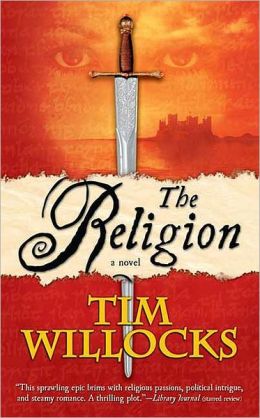
I’ve just started The Religion, by Tim Willocks, a novel that’s been sitting on my “to be read” pile for several years. It’s devoted to the Turkish Siege of Malta although I haven’t gotten to that part yet. I’ve heard great things about it from sources I usually rely upon, and so far the opening sections are vivid and striking, if harrowing. I’m eager to see what happens next.
Visit Howard Andrew Jones's website.

--Marshal Zeringue

Friday, December 7, 2012

Gregory D. Johnsen

Gregory D. Johnsen, a former Fulbright Fellow in Yemen, is a PhD candidate at Princeton University. A frequent guest on NPR, he has contributed essays to the New York Times. His new book is The Last Refuge: Yemen, al-Qaeda, and America's War in Arabia.

Not so long ago I asked the author what he has been reading. Johnsen's reply:
For most of the past four years, as I have been writing The Last Refuge, I’ve read primarily fiction. I’m not really sure why this is, but I’m a big believer in reading what you like and so I just went where my tastes led.

Now that I’m finished with the book I’ve found my tastes running more toward non-fiction, particularly biographies. That change is represented in the books that are currently next to my bed, which are:

The Back Chamber (Donald Hall): Donald Hall is my favorite poet, and fall always puts me in the mood to read him. He reminds me of cold mornings, spiced apple cider, and New England – all things I associate with fall and the creep of winter’s beginnings.

A few weeks ago The New Yorker published an essay that mentioned that The Back Chamber was his final collection of poetry. I hope that’s not true. But if it is he has left us with a great one. The centerpiece and longest piece is “Ric’s Progress,” a biography as poem. Wonderfully spare and full all at once, it is the type of poem that I like to read late at night with a mug of something warm.

The Wisdom Books (Robert Alter): Next to the Psalms, the wisdom books of Job, Proverbs, and Ecclesiastes are my favorite books of the Bible. Browsing in my local bookstore a couple of weeks ago, I came across this translation with notes by Robert Alter. I was hooked immediately, and now I spend a little time most days reading a few chapters aloud to myself.

Every Love Story is a Ghost Story (D.T. Max): I have never read David Foster Wallace’s sprawling novels – Infinite Jest or The Pale King – preferring his non-fiction to his fiction. But this wonderfully readable biography by D.T. Max convinced me that I should do so, and soon. Max pulled off the rare feat of transforming a great article – a profile of Wallace for The New Yorker – into a fantastic book. Like most of my favorite reads, this one sucked me in to its own little universe for a few hundred pages before spitting me back out a little sadder and a bit more uncertain of the life I see around me. I turned the last page with a touch of regret.

I’m Your Man: The Life of Leonard Cohen (Sylvie Simmons): Other than loving “Tower of Song” and “Hallelujah,” I didn’t know much about Leonard Cohen. Several years ago a friend gave me a copy of Beautiful Losers, which I read one weekend in Yemen. I read Simmons' new biography of Cohen on my latest trip to Yemen. Not as well written as Max’s biography of David Foster Wallace, it still manages to bring Cohen and all his many foibles to life.

Sweet Tooth (Ian McEwan): I always get excited when I hear about a new Ian McEwan novel. I loved Atonement and Saturday. His earlier stuff, particularly his short stories, don’t have the same level of enjoyment for me, but knowing how talented he is I still look forward to each new release. I’m also a big fan of spy novels – particularly Alan Furst, and the latest by Charles Cumming was good as was Dan Fesperman’s The Double Game – and so when I heard Sweet Tooth was a spy novel I couldn’t wait to buy it. I found it at a bookstore before the official release date and finished it over Thanksgiving. It started out great and I was hooked, but I hated the end, which seemed, to me, too clever by half. It reminded me of the ending to Amsterdam, which I also disliked – although many others liked the tidiness of that ending.

Midnight’s Children (Salman Rushdie): On the way home from Thanksgiving I picked up a copy of Midnight’s Children. I’m a big fan of Salman Rushdie, particularly some of his early novels. Shame is my favorite, and still the best book I’ve read on Pakistan. I’m not terribly far into this one, but like the best Rushdie it has already captured me with its playful language and wonderful description of one character’s nose.
Read more about The Last Refuge at the W.W. Norton website.

--Marshal Zeringue

Thursday, December 6, 2012

Pallavi Aiyar

Award winning journalist and author Pallavi Aiyar spent six years living in a hutong home in the heart of the old imperial city of Beijing. She reported from across China for the Hindu and Indian Express in addition to teaching English at the Beijing Broadcasting Institute. She is the winner of the 2007 Prem Bhatia Memorial Award for excellence in political reporting and analysis for her dispatches from China. Her book Smoke and Mirrors: An Experience of China won the Vodafone-Crossword Popular Book Award for 2008. Aiyar's first novel, Chinese Whiskers, was published by Harper Collins India to excellent reviews, and is now available from St. Martin's Press in the US. She currently lives in Brussels with her husband, son and two Chinese cats, where she writes about Europe for the Business Standard. She has degrees in Philosophy, History and Media Sociology from St. Stephens College Delhi University, Oxford and the London School of Economics.

Late last month I asked the author what she was reading. Aiyar's reply:
I’ve just finished reading the most mesmerizing book called the Sly Company of People Who Care, by a cricket journalist, Rahul Bhattacharya. It's set in Guyana, a country I knew absolutely nothing about, and it's made me want to pack a bag and get the first ticket out there I can. The lilting, sassy, seductive, creolese used throughout the book was a particular draw for me.

I’ve also recently devoured (in a day) Amy Chua’s Battle Hymn of the Tiger Mother, possibly making me the last mother on the planet to have read it. It’s made me ponder some tough parenting questions as I battle with my own 4 year old trying to figure out just where to set the boundaries.

On my list to read is Indian literary critic Nilanjana Roy’s debut novel, The Wildings. It’s about cats and it's set in the neighborhood in Delhi I grew up in, so I’m pretty sure I’ll enjoy it.
Visit Pallavi Aiyar's website.

--Marshal Zeringue

Wednesday, December 5, 2012

Eileen Cook

Eileen Cook spent most of her teen years wishing she were someone else or somewhere else, which is great training for a writer. She is the author of The Almost Truth, Unraveling Isobel, The Education of Hailey Kendrick, Getting Revenge on Lauren Wood, and What Would Emma Do? as well as the Fourth Grade Fairy series. Her latest book is The Almost Truth.

Recently I asked Cook about what she was reading.  Her reply:
One thing you can count on is that you'll always find me reading something. I get anxious when I don't have a stack of books waiting to be read. I just finished re-reading John Green's The Fault in Our Stars. It was one of my favorite books of this past year. I wanted to re-read it with a writer's eye, versus when I read it the first time and cried all the way through.

I am currently reading Justin Cronin's The Twelve. This is a vampire, post apocalypse type book. I am obsessed with the TV show The Walking Dead so the next best thing to reading about zombies, is reading about vampires.

My next book to-be-read is The FitzOsbornes at War by Michelle Cooper. This is the third in a series. I've loved every book so I've been saving this one to be read over the Christmas holidays. If you like Downton Abbey you'll love this book and series.
Learn more about the author and her books at Eileen Cook’s website and blog.

My Book, The Movie: Getting Revenge on Lauren Wood.

My Book, The Movie: The Education of Hailey Kendrick.

--Marshal Zeringue

Monday, December 3, 2012

Philip Sington

Philip Sington is the author of The Einstein Girl and Zoia’s Gold. His latest novel is The Valley of Unknowing.

Last month I asked the author what he was reading. Sington's reply:
With two small children working an effective pincer movement on my free time, the reading I do at the moment is almost all of relevance to what I’m writing or plan to write. Right now that means books about the First World War. Navigating through the vast wealth of literature on this subject has been a study in itself, but two books in particular have stood out so far.

Among fictionalised accounts, Frederic Manning’s The Middle Parts of Fortune (1929) is almost unique in recording faithfully the ordinary private soldier’s experience at the front, and often in his own (distinctly foul) language. Ernest Hemingway called it ‘the finest and noblest book of men in war that I have ever read’, and yet for most of the last century it languished in obscurity. This was thanks firstly to its emasculation at the hands of editors alarmed at the obscenities – for which, in those days, they could be prosecuted. An unexpurgated version of the book did not become available to the public until 1977, forty-two years after Manning’s death. The other reason for its absence from the canon of First World War fiction was its author’s aversion to self-promotion. Editions published in his lifetime appeared not under his own name, but as the work of ‘Private 19022’.

Beyond its sheer authenticity, The Middle Parts of Fortune sheds a piercing light on the human response to the horrors and the demands of war: to the ever present possibility of death, the loss of comrades and friends, and the requirement to kill, often at close quarters. Like Remarque’s All Quiet on the Western Front, it’s one of those books you’ll be glad you read, even if you never really wanted to.

The other book that’s impressed me hugely is The Unknown Soldier (published in the US as Unknown Soldiers) by Neil Hanson (2005). It tells the story of the millions of men who were classified as ‘missing’ on the Western Front, and who to this day have no known grave. What make’s Hanson’s history so compelling is his decision to follow three individuals (a British ‘Tommy’, a German army officer and an American airman) right through their military careers, right up until the day they too are missing in action. Through their letters and those of their loved ones, we get to know these men and to care about them. This makes their disappearance in the carnage of war almost as appalling for the reader as it must have been for the people who knew them. Among recent histories, The Unknown Soldier brings home the stupidity and waste of war with special force.
Visit Philip Sington's website.

--Marshal Zeringue

Saturday, December 1, 2012

Joy Fielding

Joy Fielding is the New York Times bestselling author of Now You See Her, The Wild Zone, Still Life, Charley’s Web, Heartstopper, Mad River Road, Puppet, Lost, Whispers and Lies, Grand Avenue, The First Time, See Jane Run, and other acclaimed novels.

Fielding's new novel is Shadow Creek.

Last month I asked the author what she was reading.  Her reply:
I just finished reading 419, a novel by fellow Canadian Will Ferguson, which just won the prestigious Giller Prize for fiction. It's a fast-paced, literate thriller about the various financial scams coming out of Nigeria and their potentially deadly consequences. The book appealed to me because of its original premise and the fact I'm always searching for well-written thrillers - sadly, I don't find too many of them. This one was both beautifully written and a real page-turner. It was very hard to put down. I read two-thirds of it in one sitting!

I also recently purchased Salman Rushie's memoir, Joseph Anton, because it deals with the years he spent in hiding after the fatwa, and I thought his story would be fascinating. I've only just started it, and so far, so good.

Two other books I've just purchased are Ian Frazier's The Cursing Mommy's Book of Days, which promises to be hilarious, and Lynn Crosbie's Life Is About Losing Everything, which sounds anything but, but I know her and I'm curious to see what she's been up to. I've actually been called up for jury duty, and I'm taking The Cursing Mommy with me to read while I'm in the prospective jury pool, waiting to find out if I have to serve. Maybe if they see me laughing out loud repeatedly, they'll assume I'm crazy and send me home.
Visit Joy Fielding's website.

The Page 69 Test: Shadow Creek.

--Marshal Zeringue