Thursday, May 12, 2011

Christopher Farnsworth

Christopher Farnsworth is a screenwriter and the author of Blood Oath, which has been optioned for film and published in nine countries. He lives in Los Angeles.

His new novel is The President's Vampire.

Last month I asked him what he was reading. His reply:
My mother-in-law, God bless her, just handed me the most useful reference work I’ve received in a long time. Robert Young Pelton’s The World’s Most Dangerous Places is a smart, well-researched and scathingly funny collection of facts about every country where you’re likely to get your skull perforated by a cheap Chinese knockoff of an AK-47.

As a former reporter, I have a sometimes pathological need for my made-up stories about vampires and secret agents seem accurate. So I bother my friends in the military for details of aircraft and weapons and even harass complete strangers for things like the White House floor plans. (That probably got me on a Secret Service watch list.)

But Pelton’s book is exactly the sort of thing a guy who’s never been near a combat zone needs if he’s going to write international intrigue. There are handy charts and lists: “How to Avoid Land Mines;” body armor rated by bullet-stopping power; places you are most likely to be kidnapped; the naming customs of Zimbabweans (“Stalin Mau Mau,” “Fullydilated.”); weird stuff that should be in every good adventurer’s kit, including day-glo pink bubble gum.

While packed with authentic detail, the book is also a staggering advertisement of just how lucky we are to have survived over 200 years as a democracy. In many places, automatic weapons decide everything from elections to traffic disputes. The recent killings of journalists Tim Hetherington and Chris Hondros in Libya are a stark reminder that the real world is still full of terrors that aren’t imaginary. Pelton and his co-authors go out and face them so desk-bound writers like me don’t have to. (If you need another reminder, the contributors list includes two “In Memoriam” entries.)

But there’s a real sense of crazed optimism that pervades the book as well. Much of what Pelton and his co-authors discuss would be crushingly depressing if it weren’t for their ability to find the jokes among the shrapnel. I’ve found myself laughing out loud and wincing at the same time. Human heads on pikes in Algeria, for instance, are called “Jihadsicles.”

In the very first pages, Pelton writes that everyone is going to die, no matter what. “It’s no big deal,” he says. “Death doesn’t really wear a smelly cloak and carry a scythe.” And that may be the most important lesson in the book. So much of our lives now are about minimizing discomfort, inconvenience or surprise. With our earbuds plugged in, we don’t even have to be exposed to random noise when we walk. Then Pelton returns from the brink of grim death with a smile and a good story. In short, he shows us what it’s like to be brave. And by comparison, it doesn’t seem quite so insane to take a few risks of our own.
Visit The President's Vampire website.

The Page 69 Test: Blood Oath.

--Marshal Zeringue

Wednesday, May 11, 2011

Carola Dunn

Carola Dunn is the author of the Daisy Dalrymple mystery series, set in England in the 1920s. The nineteenth in the series, Anthem for Doomed Youth, is just out.

However, she is now writing her third Cornish Mystery, following A Colourful Death.

As this series is set in the 1960s and one of the protagonists is a woman police detective, she's been reading books relevant to that period and subject, including:
A Different Shade of Blue is a fascinating book about the difficulties encountered by women joining the male-dominated environment of the police, by Adam Eisenberg, Commissioner of the Municipal Court in Seattle. He interviewed women police officers who had joined the Seattle force from the 1940s onward. Reading their stories has helped me understand what my character, DI Megan Pencarrow, would have faced.

I've just finished reading a couple of mysteries I picked up at a thrift shop. For Old Crime's Sake (aka Lucky Jane), by Delano Ames, was published in 1959. It's one of his series starring Jane and Dagobert Brown—lots of fun and I'll be looking for others in the series. The second find was The Spy with a Cold Nose (1966), by Ray Galton and Alan Simpson. It's apparently a novelization of the movie, not the best of recommendations, but it's funny, if shallow.

The Wolf in the Parlor: the eternal connection between humans and dogs, by Jon Franklin, is an interesting development of a theory that the mutual adoption of early humans and wolves is responsible for our evolution into modern man, as well as wolves into dogs. As a dog person I'm happy to believe it!

And as a dog person, I also adore Spencer Quinn's Chet and Bernie mysteries. Chet, the dog, is the first person protagonist, and usually that would put me off altogether. I can't stand most books with animals thinking like people. But Chet is so well depicted as a canine with canine instincts, who loses track of his thoughts when an interesting smell comes along, that the books are a delight. The one I've read most recently is To Fetch a Thief.
Visit Carola Dunn's website.

Read--Coffee with a Canine: Carola Dunn & Trillian.

The Page 69 Test: A Colourful Death.

The Page 69 Test: Anthem for Doomed Youth.

--Marshal Zeringue

Tuesday, May 10, 2011

Sandra Dallas

Sandra Dallas was dubbed “a quintessential American voice” by Jane Smiley, in Vogue Magazine. Her novels with their themes of loyalty, friendship, and human dignity have been translated into a dozen foreign languages and have been optioned for films.

She is the recipient of the Women Writing the West Willa Award for New Mercies, and two-time winner of the Western Writers of America Spur Award, for The Chili Queen and Tallgrass. In addition, she was a finalist for the Colorado Book Award, the Mountain and Plains Booksellers Assn. Award, and a four-time finalist for the Women Writing the West Willa Award.

Dallas's novels include Prayers For Sale and The Bride's House.

Last month I asked her what she was reading. Her reply:
I'm reading Waffles by Betty Rosbottom with incredible photographs by Sheri Giblin. I know, I'm supposed to say I'm reading Dostoyevsky or A Tale of Two Cities or that I'm reviewing my notes on War and Peace, but heck, what greater pleasure is there than reading about food. Except eating it, of course. Waffles for Sunday breakfast is a tradition in our house. And Waffles has all sorts of delights-blueberry, pumpkin, and ginger waffles with peaches and cream, dessert waffles with chocolate sauce. Yum!
Learn more about the book and author at Sandra Dallas's website and blog.

The Page 69 Test: Prayers For Sale.

--Marshal Zeringue

Monday, May 9, 2011

Vicki Delany

Vicki Delany is one of Canada’s most popular crime writers. The fifth book in her critically acclaimed Constable Molly Smith series set in the mountains of British Columbia is Among the Departed from Poisoned Pen Press.

Having taken early retirement from her job as a systems analyst in the high-pressure financial world, Delany is settling down to the rural life in bucolic, Prince Edward County, Ontario where she grows vegetables, eats tomatoes, shovels snow, and rarely wears a watch.
A lot of writers say that they don’t read while they are writing, or at least not the same type of book. But as I write every single day and start another book the day I finish one, I wouldn’t ever be able to read the sort of books I like to read. Which are the type of books I write.

I get a lot of inspiration from the books I read and I think it’s extremely important that writers do read, and read a lot. At the moment I’m taking a break from the Constable Molly Smith series to write a standalone for Poisoned Pen Press. This will be a book in the British Gothic tradition, although set in Canada. Similar in tone to one of my earlier books, Burden of Memory. Therefore, at the moment, I’m heavily into reading gothics. To my delight I have just found out (after I started my own new book) that the gothic is back and is the new big trend. S.J. Bolton and Kate Morton are two of the new masters at that tradition.

Right now, I’m reading Blood Harvest by S.J. Bolton. I’m about a quarter through it and it’s just great. Tension is building slowly and steadily, the way I like it. The setting is perfect for this sort of story – a village in England high on the moors and the site of two grand old churches, and the protagonist is a very modern Vicar. There is a hint of the supernatural, but still only a hint so we are left wondering what is really going on out on the moors.

In the similar vein, but a very different story, I’ve just finished The Forgotten Garden by Kate Morton. All about family secrets from 1910 that a contemporary woman wants to uncover. Morton did a great job of managing many different points of view and moving back and forth through time without ever letting the reader get confused as to who was doing what when. I enjoyed this one very much, although I will confess that I found the ending highly predictable. Nevertheless, I bought Morton’s newest book, The Distant Hours.

Next on my stack, however, is something a bit different and that’s Crying Blood by Donis Casey. I was at Poisoned Pen bookstore in Scottsdale AZ a couple of weeks ago for the launch of Among the Departed, the fifth book in my Constable Molly Smith Series, and I picked up Crying Blood because I’ve read Casey’s other books in the Alafair Tucker series and really enjoyed them. It’s a great historical series set in Oklahoma in the beginning of the 1900s.

When I read fiction, I read one book all the way through before beginning another, but I will intersperse fiction with non-fiction. At the moment it’s On the Farm by Stevie Cameron, an investigation of the Robert Pickton serial-killer case in Vancouver. Truly chilling.

I don’t often read non-fiction crime but I have a reason for reading On the Farm and that’s that I will be giving a workshop in August at the Wolfe Island Scene of the Crime festival on The Criminal Mind: Writing the Villain. Although I write fiction, I do aim for veracity in my books and I’m hoping to teach that in the workshop. My friend Barbara Fradkin a psychologist by profession and the author of the dark, edgy Inspector Green series (it’s a small world: I see that Barbara has just been featured on your My Book, The Movie blog), has lent me Serial Killers: the Method and Madness of Monsters by Peter Vronsky. No doubt that one’s going to be a pretty chilling read also.

To lighten the mood a bit, I am saving Mary Jane Maffini’s The Busy Woman’s Guide to Murder. How can you resist a book with that title? Maffini’s books are cozy and I don’t normally read cozies, but she tackles important subjects with a light touch that always provides a good read. Just what I’ll need after my venture into the dark side.
Visit Vicki Delany's website, Facebook page, and Twitter perch.

The Page 69 Test: Among the Departed.

My Book, The Movie: Among the Departed.

--Marshal Zeringue

Sunday, May 8, 2011

Carol Wallace

Carol Wallace is the author of numerous books, including The Official Preppy Handbook, which she coauthored. A graduate of Princeton University, Wallace received a M.A. in art history from Columbia University in 2006. The research for her M.A. thesis provided the foundation for Leaving Van Gogh, her first historical novel.

A few weeks ago I asked her what she was reading. Her reply:
Like many committed readers, I’ve usually got several books going at once: different books for different moods.

There is always something soporific by my bed: that could be nonfiction but at the moment – and in the imaginable future – it is Proust’s A la recherche du temps perdu. I had previously attempted this in English, and got stuck because it is so very dense and slow. But somehow reading it in French is easier: there is always a certain sense of achievement in merely unraveling the sentences. At two pages per night, it will take me another 3 years to finish. I’m a substantial way through A l’ombre des jeunes filles en fleur and the narrator has finally managed to meet Albertine. He is attempting to persuade himself that she is a worthy object of his affection because he has put so much effort into making her acquaintance, but even I can tell that she is abrupt and crude. (She uses a lot of words that aren’t in my dictionary, that’s how I know.)

I’m also reading a novel by Henry Green. A friend gave me the beautiful Penguin volume that contains three short Green novels, Loving, Living, and Party Going. He’s a sly fellow, that Henry Green. Loving and Living are full of dodges and misdirection – Party Going takes that technique even further. We are in an enormous train station in a pea-soup fog. The characters are mostly the members of a party of rich young people who are gathering for a trip to the South of France, but the fog has completely upset their plans. Green seems to be most interested, here, in miscommunication: fog as metaphor as well as literal plot device. The novel begins with a weird episode involving Miss Fellowes, the aunt of one of the party goers, who feels compelled to pick up the body of a pigeon that flies into a wall of the station. She then, for some reason, thinks it’s a good idea to wash it in the sink of the ladies’ room, and carries it around with her for the rest of the evening. I don’t know why, and probably never will know. I must admit I’m finding Party Going a little tedious: the characters are intentionally shallow, the situation trying. There’s a great deal of futile fussing about luggage and insincere gossip about a character called Embassy Richard who did or did not crash a party. The best business has to do with the negotiations between various classes packed together in this train station under considerable strain.

And then, because it arrived in the mail as a present and because I love this kind of thing, I’m also reading Parisian Chic by Ines de la Fressange. So far I have not found any of her tips to be applicable to a woman of a certain age who spends her day at her desk, but I live in hope.
Visit Carol Wallace's website.

The Page 69 Test: Leaving Van Gogh.

--Marshal Zeringue

Saturday, May 7, 2011

Jeremy Robinson

Jeremy Robinson is the author of ten novels available in eight languages, including the highly acclaimed Jack Sigler thrillers, Pulse, Instinct, and Threshold.

He is also the writer and illustrator of The Ninja's Path, a humorous inspirational for ninjas, written under the pen name Kutyuso Deep.

Robinson is the chairman and founder of New Hampshire AuthorFest, a non-profit organization promoting and supporting literacy in New Hampshire.

Last month I asked him what he was reading. His reply:
Right now I’m reading The Shepherd by Ethan Cross. It’s a serial killer story, which normally isn’t my thing because I am easily freaked out by horror when it could be real (monsters don’t bother me). And now I’m locking my windows and doors at night because this is one freaky story!

Before that was Beneath the Dark Ice by Greig Beck, which is much more my standard reading—a team of scientists and military explore the Antarctic underground and find monsters. Sounds like something I would write!

And before that was The Eden Project by John Bolin which was also very enjoyable and about nanotech in the Amazon rainforest. All three are action packed and contributors to my insomnia.

I should also mention that Beneath the Dark Ice was the only novel I’ve paid more than $2.99 for in the past four months (since getting my Kindle). I’ve been delighted to find several quality self-published books for $2.99 or less, which is what I offer many of my books for as well, including my favorite, The Last Hunter, the sequel to which will be released in June!
Visit Jeremy Robinson's website.

My Book, the Movie: Instinct.

The Page 69 Test: Instinct.

The Page 69 Test: Threshold.

--Marshal Zeringue

Friday, May 6, 2011

John J. Miller

John J. Miller writes for National Review, the Wall Street Journal, and many other publications. He is the author of several books, including The Big Scrum: How Teddy Roosevelt Saved Football and The First Assassin, a historical thriller set during the Civil War. The Chronicle of Higher Education has called him “one of the best literary journalists in the country.”

Recently I asked him what he was reading. His reply:
Next fall, I’m teaching a college course on the history of journalism, so I’m reading and re-reading a lot of material that will appear on the syllabus--including Innocents Abroad, the book that made Mark Twain famous and helped invent the genre of travel journalism. “I am not here to write Patent-Office reports,” promises Twain during an early stop on his European tour. Instead, he delivers scathing observations about everything: “The community is eminently Portuguese--that is to say, it is slow, poor, shiftless, sleepy, and lazy.” Ouch! Almost nobody escapes Twain’s mockery. When our correspondent arrives in Milan and sets his eyes on The Last Supper by Leonardo Da Vinci, he comments that the students who are copying it are producing versions superior to the original. Twain himself, of course, is hard to reproduce.

In the category of reading for pure pleasure, I’m presently enjoying The Lock Artist by Steve Hamilton. I’m loyal to Hamilton because his Alex McKnight mystery series, set in my home state of Michigan, is so good. The Lock Artist features a different protagonist (a young safecracker who is also mute) and mostly non-Michigan settings. The plot works well but ultimately the book is driven by its leading character and his strange condition. Also, I met Hamilton last summer at a bookstore in Traverse City and had him sign my copy. I want to finish it before his next McKnight novel, Misery Bay, comes out in June.
Visit John J. Miller's website.

The Page 99 Test: The Big Scrum.

--Marshal Zeringue
Thursday, May 5, 2011

Douglas Corleone

Douglas Corleone is a former New York City defense attorney and winner of the Mystery Writers of America/Minotaur Books First Crime Novel Competition for One Man's Paradise. He now lives in the Hawaiian Islands with his wife and son.

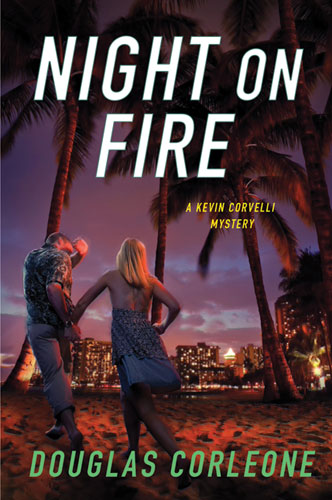
His new novel is Night on Fire.

A few weeks ago I asked him what he was reading. His reply:
Since I write in the genre, I try to read every legal thriller that crosses my radar. 2011 is a great year for legal thrillers. Earlier this year, I read David Ellis’s Breach of Trust, the second in his Jason Kolarich series. I’ve been hooked on David Ellis ever since his debut novel Line of Vision, and I think he may well be the best legal thriller writer out there today.

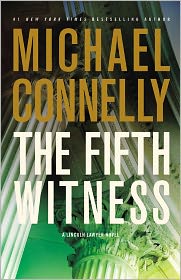
Right now I’m reading Michael Connelly’s fourth Mickey Haller novel, The Fifth Witness. Connelly’s protagonist Mickey Haller is one of the greatest lawyer-protagonists to ever hit the page, and I’m thrilled to see Connelly following him. I thought The Lincoln Lawyer movie was very well done, and I’d be delighted to see Matthew Mc Conaughey reprise the role of Mickey Haller for The Brass Verdict and The Reversal.

In May, I’m looking forward to the release of Trader of Secrets by one of my greatest influences, Steve Martini. In fact, Martini’s Paul Madriani series inspired me to write the Kevin Corvelli series. I’ve been following Steve Martini since I was in high school – Trader of Secrets will be his twelfth Paul Madriani novel, and I’d happily read another dozen or two.

And this summer, Minotaur Books is releasing the latest Andy Carpenter novel by my friend David Rosenfelt. David’s legal thrillers are so much fun, and if I hadn’t read them, I probably never would have attempted the humor I use in my Kevin Corvelli novels. I first contacted David shortly before the release of One Man’s Paradise and was ecstatic to find he is as funny in his correspondence as he is on the page. And that he has just as much heart as Andy Carpenter. One Dog Night releases in early July.
Visit Douglas Corleone's website.

The Page 69 Test: One Man's Paradise.

The Page 69 Test: Night on Fire.

--Marshal Zeringue
Wednesday, May 4, 2011

Michael S. Neiberg

Michael Neiberg, a native of Pittsburgh, is an historian who specializes in the ways that societies interact with war and military institutions. His latest book, Dance of the Furies: Europe and the Outbreak of War in 1914, analyzes the events of that fateful year from the perspective of “ordinary” Europeans. He has been a Guggenheim fellow, a founding member of the Société Internationale d’Étude de la Grande Guerre, and the Harold K. Johnson Visiting Professor of History at the United States Army War College in Carlisle, Pennsylvania.

Last month I asked him what he was reading. His reply:
My next book is about the dramatic liberation of Paris in 1944, so I am reading everything I can find about the city. I’ve visited Paris many times and had the opportunity to enjoy a couple of extended research visits there, but I still find it a hard city to really know. To me, Paris is best summed up not by its monuments or by its beautiful architecture, nor even by its people (so many of whom are not from Paris), but by its doorways. Normally uninviting on the outside, they sometimes open up to reveal beautiful courtyards, hidden green spaces, and opulent foyers. They have always suggested to me two truths about Paris: first, that its secrets will never fully reveal themselves and second, that there is always more to this magnificent city than meets the eye.

A city with more than 2,000 years of history behind it has a lot of tales to tell. The book I am currently reading, Graham Robb’s Parisians: An Adventure History of Paris, tells some of the most fascinating. Included are stories not only of Parisians themselves, but of some of the more famous visitors to the city, including Napoleon, who lost his virginity to a working girl in the Palais Royal; Hitler, who came for a few hours to pronounce his amateur artist’s condemnation of Sacré Coeur and the Panthéon; and Charles de Gaulle, who walked calmly out of Notre Dame the day after the liberation as shots from a sniper landed at his feet. Also detailed are some of the macabre and bizarre stories that have given the history of Paris its distinct character, such as the tale of the young cobbler arrested on his wedding night for a crime he did not commit. Years later and in possession of a great fortune, he took his grisly revenge in a tale that may well have inspired Dumas to write The Count of Monte Cristo.

Robb’s book (and his even better book on rural France, The Discovery of France: A Historical Geography) will entertain anyone who has ever been to Paris. Eric Hazan’s The Invention of Paris: A History in Footsteps is for those who know – or think they know – the city. The story of Baron Georges-Eugène Haussmann’s redesign of Paris under Napoleon III is normally celebrated for creating the parks, sewers, and modern boulevards that made the French capital the envy of the world. Hazan, however, takes aim at Haussmann (and at other periods of urban renewal as well), leveling a savage critique at the human costs of such massive transformations. Working his way around the city outward in a spiral to match the layout of the city’s neighborhoods, his work is opinionated, savage, and a sympathetic look at a Paris that no longer exists.

I also recently read Agnès Humbert’s harrowing yet uplifting Résistance. Written in 1946, it reappeared in France in 2004, and in 2008 the first-ever English translation was published. Humbert was part of the first true resistance group in Paris. Working with other staff members of the Musée de l’Homme in the Trocadéro, she distributed anti-Nazi leaflets and began to organize people who refused to sit idle while the Germans martyred their beloved Paris. While visiting her ailing mother in the hospital she was arrested and imprisoned in some of the city’s most notorious prisons before being sent to Germany to perform dangerous forced labor. She remained in Nazi captivity until rescued by the Americans in 1945, whereupon she helped her saviors hunt war criminals and reorganize German society. After the war she returned to her beloved Paris, where she died in 1963.

The three books reveal three different versions of Paris. To Hazan, a native Parisian, it is a place where the spirit of “progress” and the power of capitalism have let nothing stand in their way, even if entire communities needed to be destroyed in the process. To Robb, an Englishman, it is a place that forever enchants and mystifies its visitors. To Humbert, the daughter of a French senator and a woman of extraordinary courage, it was home to the best and worst of human nature. To me, an American historian, it is still a place that tries as stubbornly as it can to keep its secrets.
Learn more about Dance of the Furies at the Harvard University Press website.

The Page 99 Test: Dance of the Furies.

--Marshal Zeringue

Tuesday, May 3, 2011

David A. Kirby

David A. Kirby is Senior Lecturer in Science Communication Studies in the Center for the History of Science, Technology and Medicine at the University of Manchester in the UK.

He has published numerous professional and popular articles on the intersection between science, media and entertainment including cinema’s depiction of genetics and biotechnology and science’s role in storytelling and media production. His recently published book Lab Coats in Hollywood: Science, Scientists, and Cinema explores the role that science consultants play in the production of popular films and the impact of these films on science and technology.

A few weeks ago I asked him what he was reading. His reply:
I watch a lot of movies and television shows for my research and teaching. So, I tend to read books rather than watch television when I relax after work. This means that I end up reading a fair number of books each month.

I recently read Shooting in the Wild by Chris Palmer to learn more about the process of wildlife filmmaking. The best way to describe the book is that it is both educational and disturbing. For those who love wildlife films like I do, you should be prepared to learn how the sausage is made. Palmer’s tell-all is not afraid to reveal the lengths that some in the wildlife filmmaking trade are willing to go in order to obtain dramatic footage of animals. Some of the more ethically questionable tactics include baiting, staging, and provoking animals and the use of enclosures, trained animals, and special effects. Palmer is sympathetic to the pressure his filmmaking colleagues are under to get the most spectacular shots possible, but he does not excuse their lack of ethical judgement. He clearly has a passion for wildlife films and for how they can be used to help conservation efforts. I think this is an important book and hope wildlife filmmakers adopt the recommendations Palmer makes in the concluding chapter.

I teach a science fiction class and, in this case, I do enjoy taking my work home with me. I try to read a wide variety of SF including classics in the genre such as Arthur C. Clarke’s Childhood’s End as well as more recent work like the Hugo Award winning Spin by Robert Charles Wilson. In fact, Wilson’s book appealed to me because it reminded me of Clarke’s story which is one of my favourite novels. Both books feature extraordinary non-violent events that presage the end of the human race and leave the final human generation contemplating the meaning of their existence. In the case of Childhood’s End it is the arrival of an alien race that facilitates the fusion of the last generation’s children into an intergalactic, hyper evolved group mind. In Spin, a mysterious shell surrounds the world and slows down time on earth such that the rest of the universe, including our Sun, ages at a rate of 100 million years for every year on Earth. The story is told from the perspective of Tyler Dupree who Wilson has crafted as a flawed but ultimately sympathetic character. Tyler nurses a serious inferiority complex, pines all his life for an unrequited love, coddles his brilliant but unstable best friend and, yet, has clearly kept a moral center despite living in a world where most people have been numbed by a lack of future.

As part of a book club I read the historical novel The Street Philosopher by Matthew Plampin. Since I am an American living in Manchester, England it was fun to get a sense of what this city would have been like in the mid-nineteenth century. Plampin's historical research was very impressive and he does an excellent job conveying the smog filled atmosphere of industrial age Manchester. His research also shows through in his descriptions of the Crimean War, which is considered by many historians to be the first “modern” war. Plampin plays around in interesting ways with the standard class warfare found in many British historical novels set during this time period. On the one hand, the Irish working class newspaperman Richard Cracknell uses his work to shine light on the military incompetence of wealthy officers who had purchased their commissions, while on the other hand he is also shown to be a selfish, drunken individual whose sense of morality does not extend to his personal relationships. Even the (literal) moustache-twirling aristocratic villain is not depicted as inherently evil. He merely sees nothing wrong with his actions since he believes he is entitled to act this way by virtue of his high born status.

My next reading challenge will be to tackle Neal Stephenson’s philosophical novel Anathem.
Visit David A. Kirby’s webpage or learn more about Lab Coats in Hollywood at the MIT Press website.

The Page 99 Test: Lab Coats in Hollywood.

--Marshal Zeringue