Sunday, October 2, 2011

Philip Kitcher

Philip Kitcher is the John Dewey Professor of Philosophy at Columbia University.

His new book is The Ethical Project.

Last month I asked him what he was reading. His reply:
At present I’m reading three books (at different times of day). I tend to begin with the final volume of Thomas Mann’s diaries (Tagebücher). All ten volumes are a wonderful mixture of the mundane and the unusual. Mann tells us all sorts of details about his intake of coffee, his sleep troubles and his constipation, his visits to the barber and his daily walk. He also records his recurring struggles to write, the oppressive obligations imposed by all the letters he receives, his omnipresent sense that he is in decline and that life isn’t worth living, and – occasionally – the joy he feels at receiving an honor, or having a good conversation, or seeing a beautiful young man beside the seaside (or in a restaurant, or on the tennis court ...). The last volume is particularly poignant, because, while he is being celebrated day after day, he is wracked by the difficulty of finding a rewarding writing project: his life is superficially triumphant but feels desperately hollow.

Later in the day, I turn to James Wood’s beautiful little book, How Fiction Works. Wood is a marvelous companion to literature in a variety of traditions across several centuries. He writes easily and clearly about complicated ideas, and enhances any avid reader’s understanding of the techniques of fiction. Since I am very interested in philosophical themes in works of literature, I was on the look out for an accessible theoretical discussion of fiction. It’s a joy to find it.

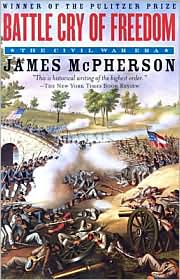
In the evenings, I’m trying to remedy my appalling ignorance of the history of the American Civil War (something they never told us anything about in my, otherwise excellent, British school). James McPherson’s Battle Cry of Freedom came with some really impressive recommendations, and I’m reading it on my Kindle. Warning: better to buy the old-fashioned book, since crucial tables and maps are illegible on the Kindle version. McPherson deserves high praise for his ability to organize the material, and for his wide-ranging coverage of issues. But how I wish he were a better writer! The prose is sober, comprehensible, straghtforward ... and leaden. Maybe, it’s just because I read it in the evening, but I don’t think so.
Learn more about Kitcher's new book, The Ethical Project.

The Page 69 Test: Philip Kitcher's Living With Darwin.

--Marshal Zeringue

Friday, September 30, 2011

Nora McFarland

Nora McFarland is the author of the Lilly Hawkins Mysteries from Touchstone/Simon & Schuster. The latest book in the series, Hot, Shot, and Bothered, was released last month.

A few weeks ago I asked the author what she was reading. Her reply:
On a recent flight from Atlanta to Los Angeles I had the pleasure of reading The Crime Writer by Gregg Hurwitz. It’s the best book I’ve come across in a long time. Aside from the excellent pacing and characters, it evoked everything I love about The City of Angels. The atmosphere of tarnished glamour and unexpected violence is skillfully rendered. This is Los Angeles as Ross MacDonald or Raymond Chandler might portray it, were they writing today.

The main character is a thriller-writer who’s been convicted of murdering his former fiancée. With no memory of the crime, and released after earning a verdict of temporary insanity, he begins untangling the threads of what really happened that night. He attacks the mystery the only way he knows how, as a writer working out a story.

One of my favorite things about this book is that, despite protestations of innocence, the main character’s investigation is driven by a fear that he might have actually committed the murder. When another woman is killed, the reader is sure of the protagonist’s innocence in that crime, but Hurwitz cleverly dangles the possibility of a copycat or even someone framing the main character out of revenge for the first murder, thus leaving open the possibility of his guilt in the original crime. I was unsure right up until the very end. Part of why The Crime Writer is a rare pleasure.
Visit Nora McFarland's website and join her on Facebook.

My Book, The Movie: Nora McFarland's A Bad Day's Work.

--Marshal Zeringue

Thursday, September 29, 2011

Henri Cole

Henri Cole was born in Fukuoka, Japan, in 1956 and raised in Virginia. He has published eight collections of poetry, including Middle Earth (FSG, 2004) which was a finalist for the Pulitzer Prize in Poetry. He has received many awards for his work, including the Kingsley Tufts Award, the Rome Prize, the Berlin Prize, a Guggenheim Fellowship, and the Lenore Marshall Award.

His most recent collection is Touch (Farrar, Straus & Giroux, 2011). He teaches at Ohio State University, is poetry editor of The New Republic, and lives in Boston.

Earlier this month I asked Cole what he was reading. His reply:
I’ve been reading a jumble of things:

My Queer War by James Lord—I miss James Lord, the biographer and memoirist, who died in 2009. His sane, incisive remembrances of others are always shrewd self-portraits. This book traces his career in the armed forces, beginning in 1942, from Nevada and California to France and Germany, a journey which brings him to terms with his sexuality while making acquaintances with the likes of Picasso and Stein.

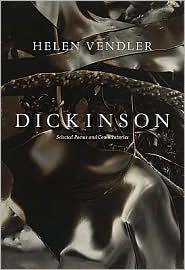
Dickinson: selected poems and commentaries by Helen Vendler—This book brought me closer to Emily Dickinson, like a lantern in the night. Its 150 short trenchant essays present a revisionist portrait of Dickinson who uses landscape (and its creatures) to mediate emotion in her epigrammatic, terse, abrupt, surprising, unsettling, flirtatious, savage, winsome, metaphysical, provocative, blasphemous, tragic, and funny poems. I agree with Seamus Heaney, who calls Vendler the “best close reader of poems to be found on the literary pages.”

Sourland by Joyce Carol Oates—This hopeful collection of sixteen stories has subterranean themes of loss, grief, and trying to move on. It takes its name from the Sourland Mountain Preserve where the protagonist finds herself at the conclusion. Oates writes about people—some loving and domestic, others not at all—who make mistakes, gropingly and intuitively. I believe her world.

American Rendering by Andrew Hudgins—These dark, funny poems are chosen from seven previously published books. A literary descendent of James Dickey, Hudgins has a formal, descriptive, Southern Gothic imagination.

Next up in the pile of books beside my bed are new poetry collections by Rosanna Warren (Ghost in a Red Hat), Yusef Komunyakaa, (The Chamelion Couch), Dana Levin (Sky Burial), and Robert Pinsky’s Selected Poems.

Also, I loved loved Elizabeth Bishop and The New Yorker (The Complete Correspondence)—A favorite poet is revealed worrying about all the things you and I experience: where is she going to live? where is she going to work? what about her retirement and her health insurance? who is going to love her? And on and on. It’s heartbreaking but shows us that no one is immune to these human concerns.
Visit Henri Cole's website.

Writers Read: Henri Cole (December 2009).

--Marshal Zeringue

Wednesday, September 28, 2011

Dave Zeltserman

Dave Zeltserman was born in Boston and educated at the University of Colorado. A former software engineer, he is the author of nine horror and crime novels including Outsourced and Pariah.

His new novel is A Killer's Essence.

Zeltserman's reply to my recent query about what he has been reading:
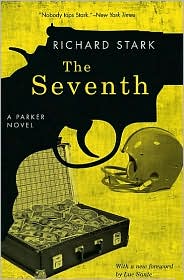
I just finished Richard Stark's The Seventh. This is a classic crime novel where a heist gets pulled off successfully and then everything that can go wrong afterwards goes wrong. The title "The Seventh" comes from the book being Stark's (Donald Westlake's) seventh Parker novel, and that each of the seven members of the crew for the heist are going to split one seventh of the take, but the title also serves as a punchline at the end. Stark/Westlake wrote many great crime novels in the Parker series, but since there were so many of these books (26 of them) we tend to group them all together as a great series as opposed to singling out some of the books as great crime novels, which is a shame.
Visit Dave Zeltserman's website and blog.

My Book, The Movie: Small Crimes.

The Page 69 Test: Pariah.

The Page 69 Test: Outsourced.

Writers Read: Dave Zeltserman (February 2011).

My Book, The Movie: Outsourced.

The Page 69 Test: A Killer's Essence.

--Marshal Zeringue

Tuesday, September 27, 2011

Valerie Frankel

Valerie Frankel is the author of Thin Is the New Happy and such chick lit favorites as The Accidental Virgin, The Girlfriend Curse and Hex and the Single Girl. The former articles editor at Mademoiselle, Frankel has contributed to the New York Times, O, Glamour, Allure, Self, Good Housekeeping, among many other publications.

Her new memoir is It's Hard Not to Hate You.

Recently I asked Frankel what she was reading. Her reply:
Just finished The Magicians by Lev Grossman. Not to minimize the wonderful use of language (including a few words I had to look up), the story is, basically, Harry Potter goes to college, gets drunk, gets laid and meets a gay person. The MC is Quentin Coldwater, a geeky smart boy in perpetual longing for something he can't quite name. Hogwarts is reimagined as Brakebills, a super selective college in upstate New York with classes on practical magic and theory. During his undergrad years, Quentin undergoes the personal discovery process and learns as much about himself as he does in the classroom. He drinks and sleeps around as a post-grad in NYC, and deepens his understanding about life, magic and how they intersect, in much the same way most of us did in our twenties whether we're magicians or not. With Quentin and his crew, the reader takes Narnian flight to other worlds, not always in human form. Evil is vanquished, friends won and lost. It's a thoroughly satisfying adventure, with rare insight and special nostalgia for the magic of youthful friendship.
Visit Valerie Frankel's website and Facebook page.

My Book, The Movie: It's Hard Not to Hate You.

--Marshal Zeringue

Monday, September 26, 2011

Jason Webster

Jason Webster was born in California and was brought up in England and Germany. After spells in Italy and Egypt, he moved to Spain in 1993, where he was inspired to write a number of highly acclaimed nonfiction titles. He lives near Valencia with his wife, the flamenco dancer, Salud, and their son.

His new novel is Or the Bull Kills You.

A few weeks ago I asked Webster what he was reading. His reply.
I’m attending the Wigtown Book Festival in Scotland at the end of September and have been asked to talk briefly about a ‘lost classic’. So I’ve been flicking through a wonderful book that has been sitting on my shelves for some years now - What’s What! Published in 1902, it was meant to be something of an accompaniment to Who’s Who? But where the latter gave the names of the great and the good of the land, What’s What! was more an encyclopaedia, or an attempt to define what an Edwardian gentleman was supposed to know, and even think. ‘A guide for to-day for life as it is and things as they are.’

There are entries on everything from ‘Cataracts: Treatment of’ to ‘Comparison of English, German, French and Italian as singing languages’, ‘Devil-Worship in France’, ‘Hats, Prices of,’ and ‘The American Civil Service: its “sweet reasonableness”.’

Perhaps you’re suffering from consumption? Well, the authors have a list of all the best spas in Europe to go to for a cure, including train ticket prices and cost of accommodation. (Getting to Davos from London, for example, would cost you £6 12s. 4d. changing at Basle and Zurich, while a room would set you back anything from 13 to 19 Franks a day. ‘Drinks and drugs extra’.)

You’re wondering about women’s rights, and whether women should be allowed to work? There’s an article giving the standard viewpoint of the day on the topic, as well as whether it was healthy for ‘the fairer sex’ to ride bicycles.

And just what is this new thing called ‘electricity’? (An ‘invisible agent, of whose precise nature little is known…’)

History books and novels can give us a sense of the past, but I doubt I have ever quite had the same sense of travelling back in time as I do when reading these entries. Give me a town house in Mayfair, a top hat and a droopy moustache, and the picture would be complete.

Sadly, What’s What! was meant to be the first of many, supposedly annual, editions. And there is an appeal in the introduction from Harry Quilter, the prime mover of the project, for readers to send in information for updating and completing the work (amazingly, the 1,182 pages were written in about a year). But no further editions were published. As it is, it remains an indispensable resource for anyone contemplating writing a novel set in turn-of-the-century London.

I live in the city of Valencia, on Spain’s eastern Mediterranean coast. Like most of the country, it has a curious relationship with its complex history, not least the Moorish period, when this part of the world was ruled by Muslims.

Most people will tell you that Moorish Spain came to an end in 1492, with the fall of Granada. And that’s true up to a point. What many forget is that very large numbers of Moors continued living in Spain for another hundred years, until they were finally expelled in 1609. And Valencia had one of the largest concentrations of these ‘Moriscos’ - or little Moors, as they were then referred to.

I’m fascinated by the Moriscos, not least because they are a largely forgotten people. Muslims in North Africa tended to look down on them as tainted by living under Christian rule, while Christians were suspicious of them, fearing that they might ally themselves with the ‘Islamic threat’ from abroad and cause problems.

The parallels with our own times - the fears, mistrust and paranoias - are all too obvious. And so I was delighted when a friend gave me a book the other day on the subject, Entre tierra y fe (Between Land and Faith). A series of articles by experts detail everything from the way the Moriscos worked the land, to their traditional medicines, use of paper, artwork, and how they built their houses.

The book goes a long way to explaining how much of the world I see around me - and by extension the world beyond - came into being thanks to the centuries of Moorish presence here. Everything from the food I eat (oranges, artichokes, spinach, saffron, rice), to the clothes I wear (cotton cloth - light colours in summer and dark ones in winter), the games I play (chess) and even the way I think, can be traced back to Moorish Spain.

Finally, I picked up a copy of Robert Harris’s thriller Archangel yesterday and can hardly put it down. He is a master of drawing you in, bringing to life a world and a time you know a little about (this time Soviet Russia) and then telling you some of the darkest secrets that it holds.

Hooking the reader in, entertaining, informing and creating a whole and believable world to step inside - these are some of the most important skills for a writer, and Harris is a very clever technician.
Visit Jason Webster's website and blog.

My Book, The Movie: Or the Bull Kills You.

The Page 69 Test: Or the Bull Kills You.

--Marshal Zeringue

Sunday, September 25, 2011

William Giraldi

William Giraldi teaches at Boston University and is Senior Fiction Editor for AGNI. His nonfiction and fiction have appeared in The New York Times Book Review, Georgia Review, Bookforum, Southern Review, The Believer, Kenyon Review, Poets & Writers, Yale Review, The American Scholar, Antioch Review, TriQuarterly, and Salmagundi. His essay on amateur bodybuilding, “Freaky Beasts,” received a Pushcart Prize and was listed among Most Notable Essays in Best American Essays 2010. His essay “The Physics of Speed” was a finalist for a 2011 National Magazine Award.

His new novel is Busy Monsters.

Earlier this month I asked Giraldi what he was reading. His reply:
Alistair MacLeod's story collection Island is a solemn masterpiece. The solemnity is located primarily in the prose; though simple, declarative, and concrete – MacLeod has clearly been influenced by the early Hemingway – there is a fable-like eeriness to his style as he tells the stories of spiritually deprived people living an austere life in Cape Breton, Nova Scotia. MacLeod’s is an austerity worthy of Jack London, and yet London cannot match the haunting beauty of MacLeod’s narratives and the prose that sustains them. Without purple poetics or elusive abstractions, the prose often builds to a lulling, hypnotic effect, and once it has pulled you into MacLeod’s world, it feels oddly like some grand, expensive narcotic. These are stories about fishermen, about great-great-grandfathers, about families with twelve children. In “The Road to Rankin’s Point,” a young man with an unnamed terminal illness takes a dangerous car ride to visit his dying grandmother; the news of his fate causes her to die that night, as if she refused to live another day with the knowledge that her grandson will not have a full existence. “The Closing Down of Summer” has a miner explaining his life but with no specific story to tell; he is soon off to a mine in Africa and fears imminent death; this is, perhaps, his final testament. “As Birds Bring Forth the Sun” is really a ghost story whose spirit owes something not to London’s White Fang, but to Conan Doyle’s The Hound of the Baskervilles. It manages to be mythic and surreal and yet still strikingly appropriate to MacLeod’s time and place. Much of this collection feels ghostly, which is bizarre for stories so firmly rooted in reality, in the everyday struggle to survive. The dead are never far from the living; the landscape is forever white; the moaning wind grates the nerves; the icy waves explode ashore. As befits the climate, interaction between people is rare; dialogue is scarce. Long stretches of narration are interior, nearly Jamesian in their reflection. An outward, dramatic tension is often sacrificed to this interiority; the process of thinking, of reflecting and remembering, becomes the narrative drive. In another nod to Hemingway – specifically the Nick Adams stories – the facts of blood and bone, of rock and water, supplant the facts of narrative, and so it is not uncommon to be given only the subtlest hints as to a character’s situation. These are stories that crawl into you and live forever.
Visit the Busy Monsters website and Facebook page.

--Marshal Zeringue

Friday, September 23, 2011

Caitlin Horrocks

Caitlin Horrocks lives in Michigan by way of Ohio, Arizona, England, Finland, and the Czech Republic. She is the author of the story collection, This Is Not Your City. Her stories and essays appear in The Best American Short Stories 2011, The PEN/O. Henry Prize Stories 2009, The Pushcart Prize XXXV, The Paris Review, Tin House, One Story and elsewhere. Her work has won awards including the Plimpton Prize, a Bread Loaf Writers Conference Fellowship, and scholarships from the Sewanee Writers' Conference and the Norman Mailer Writers Colony.

Not so long ago I asked her what she was reading. Her reply:
I just finished the short story collection For Sale By Owner by Kelcey Parker. The jacket copy describes these as “tales of twisted domesticity,” and I’d heard Kelcey read one of her stories out loud before I started her book, about a woman who gives up her family for Lent, sleeping at a local motel and eating fish sandwiches at the Hooters down the street. But somehow I still wasn’t fully prepared for how delightfully “twisted” these stories are: the characters have largely achieved the things they thought they wanted, the things they were supposed to want—husband, children, suburban McMansions. But they find themselves dissatisfied: “How had she ended up in this unfamiliar, even unreal, life? She hadn’t, like her daughter, wished to be a mermaid. She had not wished for the impossible.” This is a familiar refrain, in both life and fiction, but Parker strives mightily, and successfully, to make these stories giddily unfamiliar.

In “Domestic Air Quality,” a woman confesses her anxieties to the pages of a market research survey about the air in her home. Another woman lets a company build a road through her head. But the playfulness is always more than gamesmanship—in “The Complete Babysitter’s Handbook,” a series of titled sections (“Attempted Murder, Part I,” “Rob is Greeted With Hugs”) gradually paint a family portrait that is much more complicated than the reader initially guesses.

One of my favorite stories in the book, “I Heard a Fly Buzz,” is just a single page long. In it, a newlywed claims that she bumbled her vows because a fly flew into her mouth at the crucial moment. Her insistence is funny until she confesses that the fly is still there, inside her, “feeding, daily, upon my heart.” The women in Parker’s book make you sit up and notice their humor and originality, and then settle on in, striking at the reader’s heart with all their complex yearning.
Visit Caitlin Horrocks's website.

--Marshal Zeringue

Thursday, September 22, 2011

Daniel Polansky

Daniel Polansky is the author of Low Town.

According to Publishers Weekly, "Polansky hits all the right notes in his intelligent first novel, a blend of dystopian fantasy and hard-boiled crime....Sharp, noir-tinged dialogue and astute insights into class struggle mark Polansky as a writer with a future."

Polansky's reply to my recent query about what he was reading:
I just finished reading The Old Regime and the Revolution by Alexis de Tocqueville, which was the first part of what was meant to be a meditation on the French Revolution comparable to his epic work Democracy in America, but which death stopped him from completing. I'm really fascinated by the French Revolution, and obviously Tocqueville is one of the great historical thinkers of all time so this was really a pleasure to wade into.

On a somewhat lighter end I also just put away Tinker, Tailor, Soldier, Spy by John Le Carré, which was awful fun although probably about 150 pages longer than it needed to be. I also think it's funny that, between Le Carré and Ian Fleming we've been given this impression of the British intelligence agencies as being hyper competent, when mostly all they did during the Cold War was leak information to the Soviets. Thanks Kim Philby!
Visit Daniel Polansky's website.

My Book, The Movie: Low Town.

--Marshal Zeringue

Tuesday, September 20, 2011

Dani Kollin

Dani Kollin is an advertising copywriter currently living in Los Angeles, California. He has also worked as a creative director and copywriter in the print, broadcast and new media fields. In addition to being happily married and the proud father of three children, Kollin is also an avid endurance cyclist and surfer. He and his brother Eytan are co-authors of The Unincorporated Man, The Unincorporated War, and The Unincorporated Woman.

Recently I asked him what he was reading. His reply:
Sex and Violence in Zero-G, Allen M. Steele

I just finished reading Allen M. Steele’s, Sex and Violence in Zero-G, a compilation of short stories about what the Hugo award winning author refers to as "Near Space." Because the stories all take place within relative spitting distance of Earth, they feel that much more real. In fact, one story, "Walking on the Moon" comes close to ranking up there with one of my favorite short stories of all time, Ray Bradbury's "The Wilderness." Both illustrate an aspect of the future that’s far more psychological than technical. And ultimately a good story needs to be visceral in order to succeed. Steele, like Bradbury before him, succeeds mightily with this collection.

The Citizen's Constitution: An Annotated Guide, Seth Lipsky

The Constitution is so often wielded around by politicians to shame the opposition into submission it might as well be rolled up and used as a spanking tool. I was bothered by my ignorance on the matter and determined to learn a little more about this pivotal document. Seth Lipsky’s book is essentially a Constitution for dummies. He takes every section of the U.S. Constitution and, in Talmudic fashion, patiently explains the history and context behind each. It’s a straightforward, unbiased and surprisingly delightful romp into our nation’s history.

Multiplex Fandango, Westin Ochse

There’s a good reason I'm a hard science fiction writer. I feel like the stuff Eytan and I write about is real enough that it actually can happen and that, for me at least, makes for a good read and even better visceral experience. Bram Stoker award-winning author Weston Oches’ Multiplex Fandango, a collection of his best short stories forced me to reconsider. This collection is kind of like having a drink that someone's slipped a ruffie into. One minute you're ambling along to the nice prose and lovely setting, the next you're being mind-#$#!ed. Even worse - you like it. Well, I was so enthralled by this collection that I convinced Weston to share some of his short stories with anyone out there willing to step off their "I only read" perch. Of the three he's allowed me to send, my absolute favorite is "Hiroshima Falling." If you only read one - read that.
Visit Dani Kollin's blog and The Unincorporated Man website.

Writer's Read: Dani Kollin (May 2010).

My Book, The Movie: The Unincorporated Woman.

--Marshal Zeringue