Thursday, October 13, 2011

Alma Katsu

Alma Katsu is the author of The Taker, a gothic tale of desire, obsession and the need within us all for redemption.

The Taker
has been described as "an epic supernatural love story" and compared to The Historian," Interview with the Vampire, and Twilight even though it doesn't have one vampire in it.

A few weeks ago I asked Katsu what she was reading. Her reply:
I’m in the middle of revisions for the second book in The Taker Trilogy, and that means I’m doing little reading for pleasure. But man cannot live by his own writing alone, so I’m sneaking in a couple books in my rare free time:

Property by Valerie Martin. This book, which won the Orange Prize in 2003, is the story of a woman unhappily married to a brutish plantation owner, who has had two children by one of the family’s slaves.

I heard about this book from another writer. I have a ‘thing’ about books with unsympathetic narrators, probably because I am drawn to create these characters myself. I know how hard it is to create characters that are so well developed and real and compelling that you can’t stop following them, and I am intensely curious as to how other writers pull it off. Property’s subject matter is off-putting, but the book is so well written that I couldn’t stop reading, because I was studying how she did it. Indeed, it was like taking an exquisitely woven piece of lace and pulling it apart stitch by stitch to discover how its beauty had been made.

Reamde by Neal Stephenson. I haven’t read much of his work, but enjoyed Quicksilver so much that I thought I would attempt Stephenson’s latest novel, another huge doorstopper of a book. I’ve just started it and so I haven’t much to say. I chose Stephenson in order to analyze his writing as well as to enjoy it. He is wildly imaginative in addition to being highly logical and, reportedly, a prolific writer whose work comes out so ready made that it needs little editing. What writer wouldn’t like to have half his ability?
Visit Alma Katsu's website and blog.

--Marshal Zeringue

Wednesday, October 12, 2011

Jacques Strauss

Jacques Strauss is a South African freelance digital producer and consultant and the author of the debut novel, The Dubious Salvation of Jack V..

Recently I asked him what he was reading. His reply:
I’ve just finished re-reading Boyhood, Youth and Disgrace by JM Coetzee. I’m a big fan of Coetzee. I was recently asked by someone if there was any point in writing books about South Africa and Apartheid and all that jazz when you have the likes of Coetzee and Gordimer around (which was an awfully mean question) and all I could say was, ‘Well … um possibly not.’In the developed West, where we are very rarely confronted with decisions of great moral import, we all seem to have a sweet but untested optimism in our own good character, in our virtuousness, our own propensity for heroism in the face of injustice or evil. Having grown up in South Africa I am deeply suspicious of anyone who thinks they would have done anything of significance – and I don’t mean voting for the Democratic Party or the PFP or joining the Black Sash – I mean Joe Slovo significant. To really stand up to the system would have taken the kind of bravery and selfless that most of us simply do not possess. This is one of the things that I like so very much about Coetzee and that so fascinates me about the reception of his books. Coetzee teases out the vast chasm between the way we perceive ourselves and the way we actually behave. Much criticism focuses on his ‘unlikeable’ or indeed ‘disgraceful’ characters and my immediate response is – you mean people like me? I think most of his characters are so typical of who we are, and how we behave. Sure, what David Lurie did in Disgrace was wrong and grubby – but could I foresee a situation in which I would do the same? You bet I could and probably worse also. Youth the second volume of the autobiographical trilogy in which he details the time he spent in London, left me feeling well and truly eviscerated.All of which goes some way to explaining, why, when confronted with his body of work and the question of what else could be said, I really didn’t have an answer.
Visit Jacques Strauss's website.

--Marshal Zeringue

Tuesday, October 11, 2011

David Handler

David Handler has written eight novels featuring the mismatched crime-fighting duo of Mitch Berger and Des Mitry. His first, The Cold Blue Blood, was a Dilys Award finalist and BookSense Top Ten pick. He is also the author of eight novels about the witty and dapper celebrity ghostwriter Stewart Hoag and his faithful, neurotic basset hound, Lulu, including the Edgar- and American Mystery Award--winning The Man Who Would Be F. Scott Fitzgerald. Handler lives in a two-hundred-year-old carriage house in Old Lyme, Connecticut.

His new Berger-Mitry novel is The Blood Red Indian Summer.

Earlier this month I asked him what he was reading. His reply:
I'm currently up to my hips in the climax of my next Berger-Mitry mystery, The Snow White Christmas Cookie. I've found that when I'm focused real deeply on the complexities of one of my own plots I can't keep track of someone else's. If I try to do that my head feels as if it's going to explode. Too much information. So I don't usually read novels during this stage of the creative process. Yet I still need to read myself to sleep at night. Can't fall asleep unless I have a book in my hands. The solution that I came up with is short stories.

I am a huge fan of John O'Hara, Irwin Shaw and James Thurber. All three of them were masters whose collected works I'm continually re-reading. Another of my favorites is Jack Finney, who wrote one of my all-time favorite novels, Time and Again, as well as The Body Snatchers, which was made into the 1956 sci-fi classic film Invasion of the Body Snatchers. Finney was also a tremendously gifted short story writer. A volume of his stories called About Time happens to be the book that's sitting on my night stand right now. The stories are incredibly imaginative, enchanting, sprightly and funny. I especially love "The Third Level," which is about a thoroughly modern man who becomes convinced that he has found a secret third level below Grand Central Station where it's still the year 1894. I first read this story at least 30 years ago and yet to this day I always think of it every time I walk through Grand Central. I promise that you will, too.
Visit David Handler's website and blog.

--Marshal Zeringue

Monday, October 10, 2011

Robert H. Frank

Robert H. Frank is an economics professor at Cornell's Johnson Graduate School of Management and a regular "Economic View" columnist for the New York Times, and a Distinguished Senior Fellow at Demos. His books, which have been translated into 22 languages, include The Winner-Take-All Society (with Philip Cook), The Economic Naturalist, Luxury Fever, What Price the Moral High Ground?, and Principles of Economics (with Ben Bernanke).

Frank's new book is The Darwin Economy: Liberty, Competition, and the Common Good.

A couple of weeks ago I asked him what he was reading. His reply:
Djibouti, by Elmore Leonard. Leonard, who was born in 1925, has been writing great novels for more than 60 years. At some point he’s bound to lose his edge. Two or three books back, I thought he might have begun to. But his 2010 entry, Djibouti, was for me one of his best ever. Dara Barr, 36, is an award-winning documentary film-maker who travels with Xavier LeBo, her black, 6’6”, 72-year-old assistant, to shoot a documentary about Somali pirates. Theirs is one of two intriguing relationships that evolve through this intriguing tale. The other tracks the oil billionaire Billy Wynn and his model/actress girlfriend Helene, who are in the purest form of transactional relationship I’ve seen portrayed in fiction. Helene wants a rich husband. Billy wants a perfect woman and has invited Helene to sail around the world with him to audition for the role. He’s sure that, like others before her, she’ll fail. There’s no way they’ll end up happy, you think. But by the time Helene has passed every test Billy could put to her, you’ve begun to believe they’re going to make it.

The Devil’s Star, by Jo Nesbø. Since the runaway success of Stieg Larsson’s three posthumously published novels, booksellers have been scrambling to discover an author to replace him. Norway’s Jo Nesbø is the most promising candidate I’ve come across so far. After early success as a rock musician and an economist in the financial services industry, Nesbø began writing a series of police procedurals set in Oslo. Harry Hole, his brilliant protagonist, is a homicide detective who struggles with alcoholism and an inability to take orders. Nesbø’s writing, spare and elegant, is much stronger than Larsson’s. His plots are highly original and cleverly executed. Repeatedly, you think you see where things are headed when the narrative pivots unexpectedly. I’ve read several in the series now, and haven’t begun to tire of them.

Everything is Obvious, by Duncan Watts. Watts, a former physicist, was a professor of sociology at Columbia before leaving to head a research group at Yahoo. He is a pioneer in the study of how social forces influence behavior. One of his main findings is that when events are mediated by the choices of people linked in social networks, they become chaotic and extremely difficult to predict. Small initial changes often have enormous impact on how things turn out. Once a song or movie becomes a hit, people have ready explanations for why their success was inevitable. But Watts will persuade you to be wary of such explanations. The book’s subtitle is “Once you know the answer.” And before you know the answer, almost nothing is obvious at all.
Visit Robert H. Frank's website.

--Marshal Zeringue

Sunday, October 9, 2011

Jean-Vincent Blanchard

Jean-Vincent Blanchard is Associate Professor of French Studies at Swarthmore College, Pennsylvania. Born in Canada and raised in Europe, he earned his Ph.D. from Yale University in 1997. He is a specialist on pre-revolutionary France, with particular emphasis on the seventeenth century, and has published on a broad range of subjects in politics, history, religion, philosophy, and the arts.

Éminence: Cardinal Richelieu and the Rise of France is his first book in English.

Recently I asked him what he was reading. His reply:
I visited Naples and the Amalfi coast this summer, and I was struck by the extraordinary beauty and culture of the region. I also realized that many writers, from Goethe to Michael Holroyd (A Book of Secrets), have found inspiration there. Upon my return, I quickly compiled a list of all the books that would make me travel again to this land blessed by the gods. Goethe and Holroyd had to wait a bit: I chose to read first the travel journal of Anna Potocka, a quirky Polish countess who wrote in the 1800s. All the while, I kept near me the poems of Gérard de Nerval titled Les Chimères. It seems to me that Nerval communicates perfectly how this coast of southern Italy echoes with the myths of the Greeks and the Romans. My favorite poem is “Delfica.” The poet calls upon a woman, Dafné, to remember the wiser times of the ancient civilization:

Reconnais-tu le temple, au péristyle immense,

Et les citrons amers où s’imprimaient tes dents?

(Do you recognize the temple with its vast peristyle?

The bitter lemons on which your teeth left their mark?)

Now, I’ve just picked up an eighteenth-century novel called Fragoletta, by Henri de Latouche. The action is set in Naples and it features an intriguing androgynous character.
Learn more about Jean-Vincent Blanchard's Éminence at the publisher's website and the book's Facebook page.

--Marshal Zeringue

Friday, October 7, 2011

Mark de Castrique

A native of North Carolina, Mark de Castrique writes mysteries primarily set in the Appalachian mountains. He is an award-winning film and video producer whose work has been broadcast on PBS, HBO, and network-affiliate stations as well as the author of the Sam Blackman mystery series, the Buryin’ Barry series, and two mysteries for young adults. He lives in Charlotte, North Carolina.

His new novel is The Sandburg Connection.

Last month I asked him for some input here at "Writers Read"--his reply:
Or in my case WRITERS LISTEN. I find I have more time in my schedule to listen to books than read them. They make great travel and driving companions, and there is something soothing about having someone tell me a story – a pleasurable experience that goes back to early childhood.

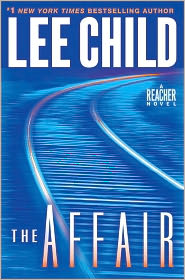
Two authors whose books I always enjoy are Lee Child and David Rosenfelt. Each has developed a character at opposite ends of the Hero Spectrum. Currently I’m listening to Child’s latest Jack Reacher novel, The Affair.

I like Reacher because he’s the contemporary descendent of Raymond Chandler’s knight errant archetype. At six-foot-five and two-hundred-fifty pounds, this mountain of mayhem embodies Chandler’s story title “Trouble Is My Business.” Reacher is a trouble magnet, constantly finding his way in and out of other people’s problems. Chandler writes in the introduction to his short story collection, Trouble Is My Business, “There are the aficionados of deduction and the aficionados of sex who can’t get it into their hot little heads that the fictional detective is a catalyst, not a Casanova.” Reacher is a catalyst who stirs things up, rights wrongs, and basically returns to his nomad existence, a Sir Galahad in armor that he only keeps for a few days before buying new armor at a discount store. He eschews materialism and consumerism in the age of creature comforts gone wild. As the strong, silent type, Reacher can ratchet up the tension in a scene with this common non-dialogue, “Reacher said nothing.” When Child strings a few of those responses in a scene, you know the bad guys should just dial 911 or check the Yellow Pages for the nearest funeral home.

But being a catalyst doesn’t mean that Reacher hasn’t undergone his own changes. Child has let Reacher age and important characters come in and out of his life. The Affair is a back-story tale of Reacher’s early years, as Child explores different eras of his character. His short story earlier this summer, “Second Son,” introduced us to Reacher as a thirteen-year-old boy, and Child’s skill continues to make Reacher a growing character instead of a stagnant caricature. Throw in the excellent reading performance of narrator Dick Hill and you’ve got the perfect combination of story and storyteller.

If Reacher would take on a swarm of terrorists and triumph, David Rosenfelt’s Andy Carpenter would take on a swarm of mosquitoes and lose. I’ve just finished listening to Andy’s latest adventure, One Dog Night, and the Patterson, NJ lawyer is in fine form. As usual, Andy is drawn into defending a client whose innocence appears impossible to prove, while the grim reaper is harvesting everyone associated with the case. When Andy Carpenter says nothing, it’s because he’s unconscious. Faced with danger, he begins to prattle. But his heart’s in the right place, and though he might not be a knight in shining armor, his quick thinking and quick-witted repartee serve the cause of justice and serve up laugh-out-loud situations. Narrator Grover Gardner captures Carpenter’s whining and observations on life with comedic excellence. If you haven’t sampled Rosenfelt’s series, you’re missing out.

Now if Andy Carpenter ever meets Jack Reacher, well, the outcome will depend upon whether Andy faints before Reacher says nothing.
Visit Mark de Castrique's website.

The Page 69 Test: The Sandburg Connection.

--Marshal Zeringue

Thursday, October 6, 2011

Ann Hite

Ann Hite has published more than sixty stories in publications such as: Literary House Review Anthology, Espresso Fiction, Skyline Magazine, Plum Biscuit, Moonwort Review, Foliate Oak, and Spillway Review.

Her new novel is Ghost On Black Mountain.

Her response to my query about what she was reading:
I'm always reading something because I'm a book junkie. But this month’s reads are as follows:

Postcards From Nam by Uyen Nicole Duong is a stirring book with haunting aspects. Mimi is a Vietnamese refugee, who at the age of twelve escapes the fall of Saigon in April of 1975 by securing a place on one of the overcrowded American transport planes. Her father manages to secure the family passage to the United States from their refugee camp in Thailand. Over the years in her new life, Mimi sheds her Vietnamese name and childhood memories. She is the poster child for living the American dream and grows up to attend law school at Harvard. Then the postcards arrive one at a time: handmade paper with intricate drawings, both disturbing and beautiful at the same time. Always they are postmarked Bangkok and signed Nam. Mimi begins her quest to discover who Nam is and what he wants from her.

The Worst Thing I’ve Done by Ursula Hegi has a premise that blew me away. Annie’s parents die right after Annie’s wedding. Her mother was pregnant with Annie’s sister. The baby is saved and Annie becomes a wife, orphan, sister, and new mother in the space of only a few hours. And that’s not even the story. You must read this one.
Visit Ann Hite's website and blog.

The Page 69 Test: Ghost On Black Mountain.

--Marshal Zeringue

Wednesday, October 5, 2011

Ned Beauman

Ned Beauman was born in London and currently lives in New York. His debut novel Boxer, Beetle was shortlisted for the Guardian First Book Award and the Desmond Elliott Prize upon its initial UK release last year, and has recently been praised by the New York Times as "funny, raw and stylish."

Recently I asked him what he was reading. His reply:
As early groundwork for a future project, I've been reading far-fetched novels about isolated communities. I started with García Márquez's One Hundred Years of Solitude. For a book so replete with sex and death, it feels remarkably folksy and twee, and you often find yourself wishing García Márquez would stop giving you his pedantic commentary on events and just hand over the binoculars so that you could see Macondo for yourself. In general, though, I can't disagree with all the critics (and also my dad) who found One Hundred Years of Solitude so exciting when it first arrived in English in 1970.

The next book I read, however, really does need to be deleted from the canon. It's bizarre that the most prestigious award in British science fiction should be named after a guy who simply could not write – at least on the evidence of The City and the Stars, sometimes regarded as Arthur C. Clarke's best work. Here we have childish prose, banal philosophy, and enough discarded plotlines and forgotten characters to fill a small refugee camp. I'd go so far as to speculate that this inept novel may even have played a small part in holding back the wider acceptance of the genre: over the years there must have been quite a few readers of literary fiction who longed to expand their horizons but picked up The City and the Stars and and instead had all their prejudices confirmed.

Brian Aldiss' Non-Stop was published not longer after The City and the Stars and it covers a lot of the same ground, but it's infinitely more vivid and mature. His protagonist Roy Complain is a young thug belonging to a tribe who practise a decayed psychoanalytic religion. Venturing from his home, Complain discovers that the world he knows is really a huge colony ship that has been flying through interstellar space for hundreds of years. Aldiss' images of canteens and swimming pools overgrown by vegetation anticipate his friend JG Ballard by at least a few years.

A far more unexpected resonance was to be found in Mervyn Peake's Gormenghast trilogy, where I just couldn't stop seeing Samuel Beckett. The two authors were writing at the same time, and I certainly won't attempt to prove a direction of influence, nor identify a common ancestor. But both in their settings – grim, shabby, stagnant, ahistorical – and in their dialogue – repetitive, purposeless, tetchy, absurd – the similarity is irresistible. I was pleased to discover that the actor Jonathan Rhys-Meyers read Beckett in preparation for playing Steerpike in the 2000 BBC adaptation of Gormenghast.

The next book of this kind that I'll read is William Golding's Lord of the Flies, which somehow I managed to avoid studying as a teenager. If anyone has any further suggestions, I'd love to hear them.
Visit Ned Beauman's website and blog.

--Marshal Zeringue

Tuesday, October 4, 2011

Tom MacDonald

After a long career in business, Tom MacDonald changed careers and now works in the non-profit sector. He received his BA from Stonehill College, MBA from Boston College, Carroll School of Management and an MFA in Creative Writing from the University of Southern Maine.

His new novel is The Charlestown Connection.

Last month I asked the author what he was reading. His reply:
Heart of Darkness, by Joseph Conrad

A native of Russian Poland (now Ukraine), Conrad's native language was Polish, and yet he is counted among England's great novelists. For twenty years he worked as a seaman, and during that time he sailed to the Congo Free State (only five years old in 1890) where he got his material for Heart of Darkness. He writes of colonial exploitation, mercenaries, hoarders of natural resources, and adventurers--Heart of Darkness is still a great read today. For writers, Conrad is a master craftsman, a genius of language, a writer we can still learn from him today. He seamlessly and metaphorically mixes the the darkness of the African continent with the darkness of the human heart, and its potential for evil and corruption. Five stars.
Visit Tom MacDonald's website.

--Marshal Zeringue

Monday, October 3, 2011

Lena Coakley

Lena Coakley was born in Milford, Connecticut and grew up on Long Island. In high school, Creative Writing was the only course she ever failed (nothing was ever good enough to hand in!), but, undeterred, she went on to study writing at Sarah Lawrence College. She lives in Toronto, Canada.

Witchlanders is her debut novel.

A few weeks ago I asked Coakley what she was reading. Her reply:
I’m reading a book right now that I should hate. I’m a fantasy fan; I liked to be surprised by unique and vivid worlds. Fiction without a fantasy element tends to bore me, especially episodic fiction without a strong narrative line. I picked up Black Swan Green by David Mitchell because he wrote the strange and wonderful novel, Cloud Atlas, not realising that Black Swan Green is an episodic, semi-autobiographical book about growing up in England in the 1980’s. I was prepared to put it down after a few pages; I haven’t yet.

Mitchell’s Britain in the 1980’s is a unique and vivid world. (“Druggy pom-pom bees hovered in the lavender.”) Our hero, Jason Taylor, is a thirteen-year-old stammerer and secret poet. Though he doesn’t realize it, his stammer is an asset to his writing. It forces him to choose words carefully, to find synonyms when the first word that comes to mind is too difficult to say. Some reviewers have called Black Swan Green a British Catcher in the Rye, but I was more reminded of the poetry of Laurie Lee’s classic, Cider with Rosie, an account of that author’s childhood in Britain after the First World War.

Nothing much happens in Black Swan Green other than a young poet’s coming of age, but in the hands of a great writer, that is quite enough.
Visit Lena Coakley's website, and follow her at Facebook and Twitter.

--Marshal Zeringue