Wednesday, August 14, 2013

Dayna Lorentz

Dayna Lorentz is the author of the Dogs of the Drowned City series (Scholastic) and No Safety in Numbers.  Her latest book is No Easy Way Out, the sequel to No Safety in Numbers.

Recently I asked the author about what she was reading. Lorentz's reply:
I just finished Brave New World by Aldous Huxley, which I read with a high school student I’m mentoring. I loved how the book played with my expectations. The story went exactly where I thought it would—the journey from Inside to Outside and back again—but in a completely unexpected and wonderfully jarring way.

In terms of the science and technology of the story, it was interesting what advances Huxley could not envision—the Internet, for example, or computer-operated elevators, or jets. It made me think about the limits of my own imagination, or any author’s: how writers’ creative powers are constrained by the times, and particularly the scientific paradigm, in which they find themselves.

I’m also reading Crime and Punishment by Fyodor Dostoevsky with my book group. At one point in Part Two, a significant fact is revealed that changes the reader’s entire understanding of everything that has come before. My book group had an intense discussion about whether this was Dostoevsky screwing up and not being able to go back and edit once he was so far into the manuscript (Would he have done things differently if given a word processor, or even a typewriter and some Wite-Out?), or whether there was a plausible, character-based reason for why this critical fact was not revealed earlier.

Also on my nightstand is Game of Thrones by George R.R. Martin. Having watched the TV show version of the story, I’m finding it fascinating to go back and see how the story is different—not in fact, but in feel—experiencing events not through the cold, objective eye of the camera, but through the constricted, subjective viewpoints of the various characters.

Finally, I’m reading in a rather scattershot way Letters to a Fiction Writer, edited by Frederick Busch. It’s wonderful to peek into the writing lives of others. Writing is such a lonely profession—most days, it’s just me and my imaginary friends—that it’s a comfort of sorts to know that there are so many others out there, struggling alone with their imaginary friends, too.
Visit Dayna Lorentz's website and blog.

Read--Coffee with a Canine: Dayna Lorentz & Peter and Kerry.

My Book, The Movie: No Safety in Numbers.

--Marshal Zeringue

Tuesday, August 13, 2013

Brad Smith

Brad Smith was born and raised in southern Ontario. He has worked as a farmer, signalman, insulator, truck driver, bartender, schoolteacher, maintenance mechanic, roofer, and carpenter. He lives in an eighty-year-old farmhouse near the north shore of Lake Erie. Run Means Red, the first novel in his Virgil Cain series, was named among the Year’s Best Crime Novels by Booklist.

Smith's new novel, Shoot the Dog, is the third Virgil Cain mystery.

Recently I asked the author about what he was reading.  His reply:
I recently finished Devil In The Grove, Gilbert King’s terrific book about racial injustice during the Jim Crow days in Florida, circa 1950. It’s an account of future Supreme Court Justice Thurgood Marshall’s attempt to exonerate three young black men falsely accused of raping a white woman. Coincidentally, the George Zimmerman trial was underway as I was reading. We’d like to think that we’ve put a lot of distance between ourselves and those dark days 60 years ago. The Zimmerman verdict proved that we haven’t.
Visit Brad Smith's website and Facebook page.

--Marshal Zeringue

Sunday, August 11, 2013

Amy Gail Hansen

Born in the Chicago suburbs, Amy Gail Hansen spent her early childhood near New Orleans. She holds a BA in English from Carthage College in Kenosha, Wisconsin. A former English teacher, she works as a freelance writer and journalist in suburban Chicago, where she lives with her husband and three children. The Butterfly Sister is her debut novel.

About as week ago I asked the author about what she was reading. Hansen's reply:
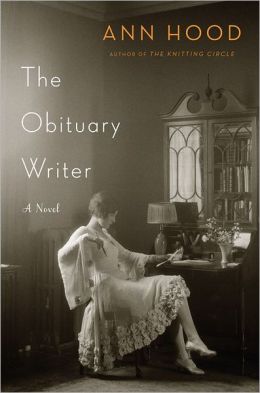
I have always found it hard to read more than one fiction book at a time, so I am a one-book girl when it comes to novels. My current read? The Obituary Writer by Ann Hood. I picked it up because I was enchanted by the cover image and the title (I used to write obituaries and gave the job to my heroine in my debut novel, The Butterfly Sister.) Hood writes from two different points of view—one is Claire, a suburban housewife in the 1960s and the other is Vivien, an obituary writer in 1919. I was hooked from the very first line, which mentions the words affair and missing boy in the same sentence. I am mesmerized by Hood’s writing—her ability to evoke so much emotion in such few words. I have recognized parts of myself in both of the main characters, as Hood captures the female mind beautifully, and this only connects me to her story more.

I like to balance fiction with non-fiction, so the two sides of my brain are both happy, so I’m also reading The Tao of Martha by Jen Lancaster, a hilarious memoir about a woman who tries to emulate Martha Stewart for an entire year. I bought the book at Lancaster’s recent Chicago area signing but I would have picked it up regardless, since I am a wanna-be Martha. I am in love with everything house and home, and try to be a domestic diva, many times with devastating results. Lancaster’s book is fresh, funny, and endearing.
Visit Amy Gail Hansen's website.

--Marshal Zeringue

Friday, August 9, 2013

Paul D. Miller

Paul D. Miller is a political scientist in the National Security Research Division at the RAND Corporation. He served as Director for Afghanistan and Pakistan on the National Security Council staff from 2007 through September 2009. Prior to joining RAND, Miller was an assistant professor at the National Defense University in Washington, D.C., at which he developed and directed the College of International Security Affairs' South and Central Asia Program. He also worked as an analyst in the Central Intelligence Agency's Office of South Asian Analysis, and served in Afghanistan as a military intelligence officer with the U.S. Army.

Miller's new book is Armed State Building: Confronting State Failure, 1898–2012.

Recently I asked the author about what he was reading. Miller's reply:
It's not often I get bragging rights for my reading list, but this is a once-in-a-lifetime opportunity. I actually recently read Tolstoy's War and Peace. I've been trying to read the classics that I never got around to earlier in life, and this was the big one. It reads like Pride and Prejudice and Blitzkrieg: a story of the lives and loves of a bunch of 19th Century European aristocrats as the apocalypse happens around them. I loved it. Tolstoy is famed for his minute descriptions of the manners and inner lives of his characters; as a veteran, I found his battle scenes equally vivid and believable. Of course, Tolstoy uses the grand narrative of Napoleon's invasion of Russia (which doesn't actually happen until page 603) as an excuse to pontificate on his idiosyncratic, somewhat fatalistic view of free will and historical determinism. It's a view I don't agree with, but it is one which with it is worth grappling.

Professionally, I am working my way through Henry Nau's book on international security and U.S. foreign policy At Home Abroad. It attempts to blend realism with the insights of the democratic peace literature. The theoretical section is brilliant—I am both chagrined and relieved to find I have really no original thoughts of my own at all—but the application is a bit out of date, as the book is over a decade old.
Learn more about Armed State Building at the Cornell University Press website.

--Marshal Zeringue

Thursday, August 8, 2013

Stewart Lewis

Stewart Lewis is a singer-songwriter and radio journalist and is the author of You Have Seven Messages. He lives in Washington, D.C.

His new novel is The Secret Ingredient.

Not so long ago I asked Lewis about what he was reading. His reply:
What am I reading? The question is what am I not reading. I read voraciously. Recently, to brush up on YA, I read The Fault in Our Stars. I felt it was well written, but slightly overrated. It seemed like every character, kids and adults, were too clever. Still, do I wish I wrote it? Yes. The thing has sold a kajillion copies. My first YA novel, You Have Seven Messages, was displayed next to it at Barnes and Noble. I was thrilled.

I recently read the adult novels, Where’d You Go, Bernadette? and Beautiful Ruins. They were both captivating and stellar. WYGB for it's unique format (told basically in letters) and it's laugh-out-loud hilariousness, and Beautiful Ruins for it's nostalgia, and the way it gave me a sense that anything was possible.
Visit Stewart Lewis's website, Facebook page, and Twitter perch.

--Marshal Zeringue

Tuesday, August 6, 2013

George Bishop

George Bishop holds an MFA from the University of North Carolina at Wilmington, where he won the department’s Award of Excellence for a collection of stories. He has spent most of the past decade living and teaching overseas in Slovakia, Turkey, Indonesia, Azerbaijan, India, and Japan. He now lives in New Orleans.

Bishop's stories and essays have appeared in The Oxford American, Third Coast, Press, American Writing, and The Turkish Daily News, among others.

His first novel, Letter to My Daughter, was published by Ballantine Books in 2010. His new novel, also by Ballantine, is Night of the Comet.

Recently I asked the author about what he was reading. Bishop's reply:
Instead of describing what I’m reading now, I thought it might be more interesting to look at what I was reading while I was writing my latest novel, The Night of the Comet.

During the thick of working on Comet, I read Leo Tolstoy’s War and Peace for the first time. It might not be all that evident, but Tolstoy’s novel had a profound impact on the eventual tone and even the shape of my book. Going into Comet, I remember wanting to write something smart, edgy, modern, ironic—the kind of literary fiction that seems to attract attention and praise these days. But Tolstoy’s humanism, his calm, patient, sympathetic voice, reformed me, and I began to aspire to write something that he might’ve approved of. It’s a tall order, I know. But as writers, we only have so much time and so many books in us, and so why aim for anything less than the best? I find this attitude reflected more and more both in my reading and in what I try to accomplish as a writer. Entertaining is good, shocking is fun, innovative is interesting, but profound and meaningful and relevant: that’s much better, isn’t it?

That’s not to say I’ve achieved any of that with The Night of the Comet. But I hope I was able to capture at least a hint of Tolstoy’s breadth, compassion, and honesty in my little book.

About the shape of my novel: I was having a hell of a time trying to figure out how to divide up the chapters, because the story jumped around so much in time and focus. Then I saw how brief the chapters were in War and Peace, and I reasoned that if it was good enough for Tolstoy, it was good enough for me. That’s how I eventually decided to section my novel into fifty or so relatively short chapters.
Visit George Bishop's website.

--Marshal Zeringue

Monday, August 5, 2013

Kathryn Lasky

Kathryn Lasky is the Newbery Honor-winning author of over one hundred books for children and young adults.

Her new book is Guardians of Ga'Hoole: The Rise of a Legend.

Late last month I asked the author about what she was reading.  Lasky's reply:
People are always so surprised when they find out that I read so much nonfiction—especially history and science. They think it’s weird that an author like myself who writes fantasy series like The Guardians of Ga’Hoole or The Wolves of the Beyond would look to the real world. But I do. You just can’t pull all this out of a hat. You need some grounding in reality. For example, for my new book, The Rise of A Legend, one of the books I read was No Easy Day about the Navy SEAL team mission to assassinate Osama Bin Laden. I mean, I am about as far from a Navy SEAL as one could get. I won’t go into details but I am of a certain age and have gray hair. I’m a grandmother for crying out loud! And I don’t know much about counter terrorism or assassination. So I had to read some books on it. In addition to No Easy Day I had to read several books on volcanology and was particularly interested in volcanoes in regions with a lot of ice.

I don’t read all science. Right this minute I am reading Neil Gaiman’s new book The Ocean at The End of the Lane. Neil Gaiman in truly a master of blending a world of fantasy with the quotidian world of cozy domesticity. There is no one like Neil Gaiman for conveying those weird dream-like states where you feel the characters almost paralyzed against some nameless, undefinable fear. Absolutely chilling!

I also love reading Jane Austen. I have a courtship and marriage proposal in one of my owls books that I think of as straight out of Emma. No one will think of that except me when they read the book. I mean it’s two owls not Emma and Mr. Knightly. But believe me I re-read parts of Emma to make that work.

I also read for voice and not just factual information. Before I started writing The Rise of A Legend I re-read an old book called The Book of Ebenezer Le Page. It is told from the point of view of an old man who lived on one of the Channel Islands, Guernsey, from before World War I to after World War II. Ebenezer had the most compelling voice of any character I had ever encountered in fiction. I had decided to write The Rise of a Legend in the first person and I thought I want to mimic that voice of Ebenezer because indeed Ezylryb, the main character, an irascible old owl, had always reminded me of Ebenezer Le Page.

So my books are often compilations of voices I have heard or read, images I have seen. A reader would never be able to specifically identify a phrase or an event or even a character. I make these things my own, or my book’s own. But it is as if all the books I have ever read are constantly flowing through me. It’s sort of like life. I am a careful observer of sunsets and dawns and weather in general and I file the special ones away someplace in my brain and then take them out and turn them over and peer at them as if they are wonderful jewels, and then think now where I could use this in a book?
Visit Kathryn Lasky's website.

--Marshal Zeringue

Saturday, August 3, 2013

Susanna Daniel

Susanna Daniel was born and raised in Miami, Florida, where she spent much of her childhood at her family’s stilt house in Biscayne Bay.

Her debut novel, Stiltsville, was awarded the PEN/Bingham prize for best debut work published in 2010. Stiltsville was also named a 2011 Summer Reading List pick by Oprah.com, a Best Debut of 2010 by Amazon.com, a Best Book of 2010 by the Huffington Post, and a Discover Great New Writers pick by Barnes & Noble. Daniel’s second novel, Sea Creatures, about a woman who ultimately must face the unthinkable choice between her husband and young son, is now available from HarperCollins. Abraham Verghese called Sea Creatures a “captivating, haunting novel.”

A couple of weeks ago I asked the author about what she was reading. Daniel's reply:
I’ve just finished Dale M. Kushner’s broad and impressive debut novel, The Conditions of Love, and I’m stunned – stunned – that I’m not hearing about it every time I pick up a newspaper or open a browser. It’s a classic, sweeping story of a girl’s life and the relationships that define her, from birth to old age – exquisitely detailed, finely paced, deliciously ambitious.

Before that, I read Lionel Shriver’s newest, Big Brother, and though I count myself a great fan of Shriver’s career, I can’t say I admired the prose or the story (this was true of We Need to Talk About Kevin, too, which I regretted reading even as I couldn’t put it down – that’s her particular and peculiar talent, I think. (Incidentally, I like to intentionally misname that book What We Talk About When We Talk About Kevin. For some reason, this rolls off the tongue more easily). What I consistently admire, though, is Shriver’s moxy. This is a word she would surely despise. I think there’s a lot about me she’d despise, actually – she seems like a person under whose gaze I would wither. But I remain persistently in awe of her.

(My admiration for the career more than each novel in particular extends also to Ian McEwan, who writes novels on a spectrum of readable-but-middling to unbelievably terrific – and who can do anything but respect the hell out of that? Ditto Meg Wolitzer. If I could, I’d choose to be a prolific but uneven novelist rather than an impeccable but parsimonious novelist any day of the week.)

Arcadia by Lauren Groff was the most satisfying – really, the most perfect -- novel I’ve read recently, and After Visiting Friends, the journalistic memoir by Michael Hainey, was the most inspiring. Because of that book, I started embarked on a large-scale project about my sister’s fatal accident in 1976.
Visit Susanna Daniel's website and blog.

The Page 69 Test: Stiltsville.

--Marshal Zeringue

Friday, August 2, 2013

Jim Noles

James L. “Jim” Noles, Jr., is a partner in the Environmental & Natural Resources Section of Balch & Bingham, LLP, in Birmingham, Alabama.  An Army brat and former Army officer, he is a graduate of the United States Military Academy at West Point and the University of Texas School of Law.  To date, his books have covered a variety of non-fiction subjects and his articles have appeared in such diverse publications as the New York Times, the Philadelphia Inquirer, Smithsonian Air & Space, Preservation, Urban Land, Continental, Thicket, Portico, Executive Traveler, Alabama Heritage, Mental Floss, America’s Civil War, and the Birmingham News.

His latest book is Dog Days: A Life in a Year of a Dog Named Pinot.

Last month I asked Noles about what he was reading.  His reply:
I’m reading a couple of books right now. One of them is Rick Atkinson’s The Guns at Last Light. It is the third book in his Liberation Trilogy, a history of the Allied liberation of Europe and defeat of Germany and Italy during World War II. Atkinson does a marvelous job of weaving individual narratives of individual officers and soldiers onto a broader strategic stage. His writing is first-rate. I think my dad paid the book the highest compliment when he said that was rationing his reading of it so that he did not finish it too soon!

I’m also reading The Legend of Bagger Vance which is, admittedly, about twenty years old now. You might remember the movie that starred Matt Damon and Will Smith. My eleven-year-old son is playing golf right now and I picked it up thinking that he might appreciate it. It’s probably a little too philosophical for him at this point but I’m enjoying it. I need a Bagger Vance in my life.

That’s about it on the recreational reading front. On the job, I’m currently reading a white paper entitled “Potential Enhancements to the Alabama Solid Waste Landfill Permitting Process,” but I won’t say anything about that. I wouldn’t want to spoil the ending for all of your readers who are waiting for it to be made into a major motion picture.
Visit Jim Noles's website.

--Marshal Zeringue

Thursday, August 1, 2013

Kate Kelly

Kate Kelly is the author of some 40 books—many of them collaborations—and publisher of the website, America Comes Alive. Her latest book is You Lucky Dog! From Homeless to Famous.

Recently I asked the author about what she was reading. Kelly's reply:
There is rarely a moment when I am not reading but much of my reading involves research and articles on whatever I’m writing about.

Audio Books

However, I have two main methods I use for reading for pleasure. One is via audio book. I listen when I’m driving or walking my dogs. (I think I have always had “scent hounds,” dogs that like to smell every blade of grass on a walk, which makes our walks very slow---and they would be agonizing if I didn’t have a book to listen to.) Audiobooks have a very important requirement---they must be well-told tales. If I stop to chat with a neighbor when walking the dogs, or encounter some sort of problem while driving, it’s important that I am able to accept an interruption but be listening to a story that has a strong enough narrative that I can assess what happened when I became distracted.

Some of my favorite audiobooks are mysteries, and I’m a huge fan of Michael Connelly. I liked him before we moved to Los Angeles, but now his mysteries are even more interesting to me since I live in the city where he sets his stories. The most recent one I listened to was The Black Box, a mystery that goes back in time to a Los Angeles where the Watts Riots were taking place. I enjoy Connelly’s characters, and he does a good job of leading you through the clues to a successful unfolding of the mystery.

Stephen King is another great storyteller whose books make for great listening. His latest, Joyland, takes place in 1973 and concerns characters at a North Carolina carnival that is struggling to stay afloat. The protagonist is a college-age boy who comes for a summer job and learns a lot about life and love and himself while puzzling through a long-ago murder at Joyland. A ghost makes just the right number of appearances to be fun without being silly.

This week I tried humor and downloaded Ellen DeGeneres’ book, Seriously, I’m Kidding. The book is quirky and fun and read by Ellen herself. I’m never around to watch her talk show so I enjoyed getting to know her via audio book, and I came away with profound respect. Never in a lecture-y tone, Ellen talks about the desirability of promptness, being loyal to yourself, and all sorts of common sense of advice, but it’s lovely hearing it voiced with humor by a well-known personality like Ellen. I know that she believes strongly in pet and animal rescue (I think her main cause is The Gentle Barn) so I was drawn to her because that is certainly a cause that is important to me.

Special Time for Leisure Reading

Since I spend many of my days at the computer reading from the web or taking notes from books or conducting interviews, I needed a way to establish a time and a “zone” for leisure reading. My husband and I finally implemented an after-dinner reading time where work-related reading is allowed only under duress!

The Son by Philipp Meyer was my most recent leisure book. The Son is a sweeping epic about several generations of landowners in Texas. I had been eagerly awaiting the release of this book because I had so loved Meyer’s first book, American Rust. (American Rust is about two high school kids whose lives are ruined by a tragic accident that occurs in their hometown, an old manufacturing town in the rust belt of western Pennsylvania.)

American Rust was a compelling, well-told-tale with characters that you couldn’t help but care about. I found The Son, written in a nonlinear fashion, to be less engaging. The time-hopping made it more difficult to get hooked into all the characters, and for me the story did not have the same power. While I wouldn’t consider it “work” reading, I did enjoy it for Meyer’s picture of Texas 100-150 years ago. He had done his research so the book did have value for me.

A Hungry Heart: A Memoir by Gordon Parks was actually work-related reading, but the book is so good it deserves mention. I was writing an article about Gordon Parks for a magazine, The Westchester Historian, and wanted to read one of his memoirs so I picked up A Hungry Heart. In addition to being a top-flight photographer, Parks was an amazing writer. He lived a fascinating life, and A Hungry Heart relates so many interesting stories: the discrimination he faced in Washington, D.C. when he first began working for the Farm Security Administration; how he got hired at Life magazine; how he infiltrated a gang in Harlem to tell their story; what happened when the family returned from his assignment in Paris; what his family life in Westchester County was like. The book is a total joy to read.

My other two recent reads were A Man and His Ship by Stephen Ujifusa and Swamplandia! by Karen Russell. A Man and His Ship is nonfiction and is the story of William Francis Gibbs (1886-1967), a man who was obsessed with ship building. He commits his entire life to learning the skills he needs and then finding the money required in order to build the largest and fastest luxury liner to cross the Atlantic Ocean. Readers are introduced to the competitive world of ship-building, and we learn that “beating the travel time” of other vessels crossing the ocean was a captain-to-captain competitive sport. In 1959 air travel began to cause serious inroads to ocean liners, and the U.S.S. United States is now in dry dock in Philadelphia. William Gibbs’ s granddaughter is trying to raise money for its conservation.

Karen Russell’s Swamplandia! fits in with my interest in reading books set in theme parks or at carnivals. Swamplandia! is a story about the Bigtree family who run an alligator-wrestling tourist attraction in Florida. Business is being lost to bigger national tourist attractions, and Swamplandia is struggling to stay afloat. The book follows the fate of father and children to a satisfying conclusion.

The best part about writing down what I have recently read is that ultimately, I turn my eyes forward and think about the next book I’ll pick up… The Night Circus by Erin Morgenstern.
Visit Kate Kelly's America Comes Alive website, and learn more about You Lucky Dog! From Homeless to Famous.

Read--Coffee with a Canine: Kate Kelly and Lucy.

--Marshal Zeringue