Thursday, July 11, 2013

Andrew Hudgins

Andrew Hudgins was born a military brat in Fort Hood, Texas, in 1951, moving to New Mexico, Ohio, and England before elementary school in North Carolina and California. His family lived for one year outside Paris before his father was transferred to Montgomery, Alabama, in 1966, the year after the Selma-to-Montgomery march. He has attended Huntingdon College, the University of Alabama, the Iowa Writers’ Workshop, and Stanford University. His poetry has been a finalist for the Pulitzer Prize and National Book Award. He lives in Columbus, Ohio, and teaches at The Ohio State University.

Hudgins's new book is The Joker: A Memoir.

Late last month I asked the author about what he was reading.  His reply:
Christopher Marlowe: Poet & Spy, by Park Honan.

Honan gives us complex portrait of a complex poet who made his living as a playwright and as a government spy. Marlowe’s recruitment into the secret service at Cambridge, his botched missions in Europe, and his abandonment by the agency after his patron dies, and his death in a ambiguous scuffle that may have been an assassination, sounds just like the plot of a John le Carré thriller. But Honan is careful to present Marlowe as a poet and playwright as much as an intriguer, and he traces the poet’s development and his importance in the evolution of English drama.

Birds of the Air, by David Yezzi.

There are many fine and engaging poems in David Yezzi’s Birds of the Air, but the one that has stuck in my head for the past three weeks is the long blank-verse narrative at the center of the book. “Tomorrow and Tomorrow” is the story of a waiter and wannabe actor who lands a role in theatrical company touring Macbeth through West Germany: “Every night/we died a dozen deaths on different stage.” The poem is often pointedly funny: “Our Banquo’s name is Bill” and “Duncan’s name is Neil.” But our narrator keeps in only sporadic long-distance telephone contact with his girlfriend in the States, and he is not a model of fidelity. As things spiral out of control, their failures in life play out against the backdrop of Shakespeare’s greater tragedy. Unlike their Macbeth, Yezzi’s “Tomorrow and Tomorrow” is a stunning success.

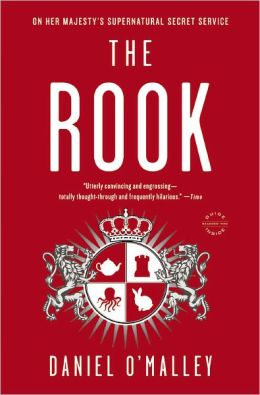
The Rook by Daniel O’Malley.

I was hooked from the beginning. Our heroine reads a note explaining that the note’s writer has erased her own essence and somehow lodged the note’s reader in her body. The note also informs her that as Myfanwy Thomas she is a senior operative in a secret society of paranormal agents, and by the way, if she has survived long enough to read the note, she has already survived several attacks on her life by a mole in the organization. Events move swiftly from there. The book is zippy, suspenseful, inventive, and often funny. I couldn’t put it down.

A History of Marriage, by Elizabeth Abbott.

A History of Marriage has a daunting subtitle: “From Same Sex Unions to Private Vows and Common Law, the Surprising Diversity of a Tradition.” The book, though, is not daunting at all. It’s a sprightly but careful and even-handed survey of the institution from every important angle, including from the perspective of those who remain “Unmarried and Often Single.” Abbott is a professor at the University of Toronto, and her knowledge of how marriage differs between the U.S. and Canada is one of the delights of the book. But as Henny Youngman says, “The secret of a happy marriage remains a secret.”
Learn more about The Joker, and follow Andrew Hudgins on Facebook.

Writers Read: Andrew Hudgins (March 2009).

--Marshal Zeringue

Wednesday, July 10, 2013

Tom Young

Tom Young is an Air National Guard veteran and the author of war novels including The Renegades, Silent Enemy, and The Mullah’s Storm. His latest novel is The Warriors, which Kirkus Reviews calls “an expertly rendered tale of lingering hostilities rooted in the former Yugoslavia.”

Recently I asked the author about what he was reading.  Young's reply:
Very seldom do I reread a book. But I have just reread Wind, Sand and Stars by the French author and aviator Antoine de Saint-Exupéry.

Saint-Ex’s lyrical descriptions of flight, his gift for word pictures, and his humanist philosophy captivated me when I first read him. I was still in my teens, and I knew nothing about flying. But Saint-Ex gave me the urge to fly. His airplane took him through an exotic world of foreign lands to visit, storms to battle, great distances to traverse. I wanted to live in that world.

Now that I have just retired as an Air National Guard flight engineer with nearly 5,000 hours of flying in more than 40 countries, I returned to the book that helped send me into that career.

Through the printed word, I traveled again with Saint-Ex. Turns out I have flown to many of the places he described in Wind, Sand and Stars. Revisiting his descriptions felt like a conversation with a longtime squadron mate.

I agreed with him wholeheartedly when he said, “I know of nothing, nothing in the world, equal to the wonder of nightfall in the air.” The horizon reddens and fades, and as the moon rises over the landscape, a certain optical illusion can make it appear you will fly over the moon. I can recall climbing away from Bagram Air Base, Afghanistan, with an orange moon hanging above the mountains. The beauty of evening seemed all out of accord with the strife on the ground.

Then came the full dark of night. Saint-Ex wrote, “I have seen the sky streaked with so many trailing sparks that it seemed to me a great gale must be blowing through the outer heavens.”

Roger that, Saint-Ex. Sounds like the Afghan sky viewed through night-vision goggles.

He also captured brilliantly the image of desert dust storms that “turn the sky into a yellow furnace and wipe out hills, towns, and river-banks, drowning earth and sky in one great conflagration.” From the flight deck of a C-130 Hercules, I once watched such a storm roll across Iraq. I can imagine how ominous it might have appeared to the pilot of a cloth-winged plane of the 1930s.

If you fly for long enough, you will eventually know the pain of losing comrades. Saint-Ex wrote eloquently of such losses, and of the hazards that inflict them. One of his lines struck me when I first read it as a kid, and as an older flier I know its truth all too well: “below the sea of clouds lies eternity.” The line now brings to mind flag-draped boxes and a flyover above Arlington National Cemetery.

Saint-Ex entered that eternity beneath the clouds during a mission in his P-38 Lightning in World War II. I’ve often thought it a shame that he didn’t get to live longer and write more. But he left an immortal body of work, and in his pages, any reader can take flight.
Visit Thomas W. Young's website and blog.

My Book, The Movie: The Mullah's Storm.

Writers Read: Thomas W. Young (August 2011).

Writers Read: Tom Young (August 2012).

--Marshal Zeringue

Tuesday, July 9, 2013

Jon McGoran

Jon McGoran has written about food and sustainability for twenty years, as communication director at Weavers Way Co-op in Philadelphia, and now as editor at Grid magazine. During that time he has also been an advocate for urban agriculture, cooperative development and labeling of genetically engineered foods. He is a founding member of the Philadelphia Liars Club, a group of published authors dedicated to promotion, networking, and service work. He lives in Philadelphia with his wife and son.

McGoran's new novel is Drift.

Recently I asked the author about what he was reading. McGoran's reply:
One of the cruelest hardships of my life as a busy writer is that I am often forced to choose between reading and writing. Lately though, I’ve somehow been managing to do a good amount of both – putting together a respectable page count for Deadout, the sequel to my novel Drift, and reading some truly fine books. This might explain the dark rings under my eyes, but there is nothing like an impending deadline (or one receding in the rearview) to help boost your productivity. And nothing like some great books to keep you up reading, when you should be collapsing to sleep after a night spent writing.

I made a couple of much-anticipated book purchases just before going to BEA for a couple of signings, one with my publisher, Tor/Forge, and one with the Mystery Writers Association (MWA). At the MWA booth, I had the great pleasure of meeting (briefly) George Pelecanos, and the even greater and more sustained pleasure of reading his newest, The Cut.

Pelecanos has an economical and effortless style that immediately pulls you in and involves you in his characters, and his tight and well-crafted plot doesn’t wait to get started. My long-delayed Amtrak train back from BEA provided a welcome opportunity to get deep into the book.

After The Cut, I put aside the pile of other books from BEA and returned to the two I had purchased just before hand.

Booklist’s review of Drift included a line I was particularly excited by: “Readers who enjoy Michael Crichton or liked Paul McEuen’s Spiral, or even the nonfiction biothrillers by Richard Preston, will find much to enjoy here.” As a fan of Crichton and Preston, I took that to be very high praise. But I hadn’t heard of Spiral, by Paul McEuen. Well, now I have, and I am that much more humbled by Booklist’s kind words. Spiral is an excellent read, a smart combination of a believable thriller plot, plausible but disturbing science, and engaging, human characters that draw you in and make you care. High praise indeed.

Finally, I just started reading Case Histories by Kate Atkinson. I’ve been hearing people raving about Atkinson for years, but haven’t read any of her books, and now I’m glad I haven’t, because now I still get to. Only a few pages into it, I am already fully engaged by Atkinson’s writing and storytelling, and I can tell I am in for a big treat.

I don’t know how long this string of winners can last, but I’m going to ride it until it ends.
Visit Jon McGoran's website, Facebook page, and Twitter perch.

--Marshal Zeringue

Monday, July 8, 2013

Stephen Kiernan

Stephen Kiernan's new novel is The Curiosity.

Last month I asked the author about what he was reading. Kiernan's reply:
As a literary omnivore, rarely do I have fewer than four books going at once. I read to suit my mood in the way many people choose what music they put on. At the moment I’m enjoying:

A Voyage for Madmen by Peter Nichols, about the 1968 solo nonstop sailing race around the world. I picked up this book as research for my next novel, but discovered it is one of the great adventure reads ever. In an era when NASA was closing in on the moon, nine men set out to perform a heroic feat closer to home. Only one made it all the way.

Mark Twain by Ron Powers. I read too few biographies, though there’s not one I’ve regretted opening. When this book was a National Book Award finalist I bought a copy, but it fell to the bottom of my stack. My mistake. Once I began this colorful individual’s story, I realized the book was a masterpiece, a perfect match of author and subject, and the kind of biography that can only be written by someone who has studied its central character for a lifetime. Powers not only understands Twain, he fully comprehends the cultural context of the era in which he lived and wrote. Occasionally the author indulges himself in sardonic reflections on today’s society as well, and the tone is deliciously reminiscent of Twain. While I am deliberately reading this book slowly, to savor it, I predict I will be giving it as a gift for years.

The Round House by Louise Erdrich. Though only a few dozen pages into this recent novel, I am completely hooked.

For poetry, I’m enjoying Major Jackson’s first collection, Leaving Saturn. Lately I’ve also been visiting Stephen Mitchell’s lucid translations in Selected Poems of Ranier Maria Rilke, possibly my most reread book.

Introductory Oceanography by Harold Thurman and Charles Chapman’s Piloting: Seamanship and Small Boat Handling (56th edition) are also near to hand, again for research purposes. Despite their dry text, both contain the seeds for hundreds of poems, and a good dozen short stories.
Visit Stephen Kiernan's website and blog.

My Book, The Movie: The Curiosity.

--Marshal Zeringue

Sunday, July 7, 2013

Ivy Pochoda

Ivy Pochoda graduated from Harvard University with a degree in Classical Greek and English. She was a champion squash player and a six-time member of the United States Women's National Squash Team.

Her debut novel, The Art of Disappearing, was published in 2009.

Pochoda's new novel is Visitation Street.

Last month I asked the author about what she was reading.  Her reply:
Perhaps the single most important goal that I set for myself in writing my recent novel Visitation Street was evoking the neighborhood of Red Hook where the book is set. Red Hook is as important a character to me as any other in the book. I no longer live in Red Hook or in Brooklyn for that matter. I live in Los Angeles. So recently I’ve been reading about LA. I’ve just reread John Fante’s amazing novel Ask the Dust which is set in my current neighborhood—gritty ole downtown LA (DTLA). I’m really drawn to neighborhoods that are layered, indigence on top of industry, a crumbling, decrepit town replacing a rich, glittery one. Fante captures this aspect of downtown Los Angeles magnificently in his unique gruff style.

I’m currently reading (and loving) another Los Angeles novel—Matthew Specktor’s American Dream Machine. Specktor also manages to portray the layers of Los Angeles in ways I’ve never seen before. The Los Angeles of American Dream Machine is in that celluloid city I have little to do with over in my downtown enclave, an oasis that shimmers to the West, both alluring and repugnant. But unlike other stories of Los Angeles, Specktor, in his smart cheerful prose, doesn’t dwell morosely on the dystopia of broken dreams and the city and the industry are more than a serpent eating its own tail.

Now that it’s summer I am going to read the fun stuff. I’m embarrassed to say that I haven’t read Wolf Hall or Bring Up the Bodies. These seem like the perfect companions for my two week New England vacation.
Visit Ivy Pochoda's website.

The Page 69 Test: The Art of Disappearing.

--Marshal Zeringue

Friday, July 5, 2013

Laura Powell

Laura Powell grew up in the Brecon Beacons and spent most of her childhood with her nose in a book. She went on to study classics at Bristol and Oxford, then spent five years working in the editorial departments of both adult and children's publishers. She now lives in West London.

Powell's latest novel is Witch Fire, the sequel to Burn Mark, one of Kirkus Reviews' "Best Teen Books of 2012."

Not so long ago I asked the author about what she was reading. Powell's reply:
Illustration has always been important to me, probably because my dad’s a painter. I firmly believe that picture-books shouldn’t just be for kids and so The Folio Society, which publishes illustrated hardback editions of classic books, is very bad for my bank account. I’ve just saved up for a copy of Pushkin’s Eugene Onegin, illustrated by the Balbusson sisters. It’s a nineteenth-century novel in verse but please don’t let that put you off – it’s romantic, tragic, witty and surprising.

The book I really wish I’d written is Prep by Curtis Sittenfeld. I’m slightly obsessed with boarding school books (I boarded myself, and hated it) and this is the sharpest and smartest I’ve read. Ever since Prep, I’ve been a Sittenfeld fan-girl and I can’t wait to get stuck into her latest, Sisterland, which is about twins with paranormal powers.

I always have at least one YA novel on the go, and this week it’s Hidden Among Us by Katy Moran. It’s a modern fae-story but avoids the usual clichés to chilling effect. The story is told from lots of different perspectives and to my great joy isn’t focussed on romance, but the equally compelling dynamics of friendship and family.
Visit Laura Powell's website.

Learn about Laura Powell's top ten heroes in disguise.

My Book, The Movie: Witch Fire.

The Page 69 Test: Witch Fire.

--Marshal Zeringue

Thursday, July 4, 2013

Gerry FitzGerald

Gerry FitzGerald has been in advertising for nearly thirty years and owns an advertising agency in Springfield, Massachusetts. He holds a master’s in journalism from the Medill School at Northwestern University and is a graduate of the University of Massachusetts at Amherst. He lives in East Longmeadow, Massachusetts with his wife, Robin.

His new novel is Redemption Mountain.

A couple of weeks ago I asked FitzGerald about what he was reading. His reply:
For the past several years, my reading has been confined almost exclusively to non-fiction books about mountain climbing. Actually, I’ve been an arm-chair mountaineer for many years, beginning, as many others did, with Herzog’s classic Annapurna when I was a teenager. When I decided a few years ago that my second novel would be about three women mountain climbers racing to be the first female to summit all fourteen of the 8,000 meter mountains, my research began again in earnest. My library contains perhaps fifty or sixty climbing books, and my Kindle another dozen.

Most recently, I reread two of the books most pertinent to my story, which are in fact mentioned prominently in my book. The Last Step: The American Ascent of K2 by Rick Ridgeway, is a classic mountaineering book about the first American expedition to reach the summit of K2, in 1978. If you feel the urge to read just one book about Himalayan mountaineering this summer, this is a great choice – beautifully written and fabulous photography.

The other book that I needed to reread was a personal favorite of mine, although a lesser known book than many in the category. Jennifer Jordan’s Savage Summit: The Life and Death of the First Women of K2, is enthralling and heartbreaking. Even at a second reading, I still have tears in my eyes at the end of the accounts of the first five female summiteers of K2.

Like many writers, I think, I always have two or three books open at one time. In my locker at the YMCA, to make that hour on the cross trainer even close to bearable, I have Bill O’Reilly’s Killing Lincoln (which I finished in April), and Killing Kennedy, a wonderful and easy book to come back to after a week or two of laziness.

Of course man does not live by bread alone, so earlier this year I took a break from the mountains to read The Lotus Eaters by Tatjana Soli, a beautifully written, engrossing story. I particularly enjoyed being re-immersed in the sights, smells and noises of Saigon, where I spent 1970.

Waiting on my Kindle is A Prayer For Owen Meany, the only John Irving I’ve missed. I’ll start it this weekend. Promise.
Visit Gerry FitzGerald's website.

--Marshal Zeringue

Wednesday, July 3, 2013

Courtney Angela Brkic

Courtney Angela Brkic is the author of the new novel The First Rule of Swimming, Stillness: and Other Stories and The Stone Fields. Her work has also appeared in Zoetrope, The New York Times, The Washington Post Magazine, Harpers & Queen, the Utne Reader, TriQuarterly Review, The Alaska Review and National Geographic, among others. Brkic has been the recipient of a Fulbright scholarship, a fellowship from the National Endowment for the Arts and a Whiting Writer’s Award. Stillness was named a Barnes and Noble Discover pick, a 2003 Chicago Tribune "Best Book" and a 2003 New York Times "Notable Book". The Stone Fields was shortlisted for a Freedom of Expression Award by the Index on Censorship. She lives outside of Washington, DC, with her husband and son, and teaches in the MFA program at George Mason University.

Last month I asked Brkic about what she was reading. Her reply:
One of my quirks as a writer is that I find it very hard to read while I’m working intensively on a project. I tend to work – and to read – in bursts and I’ve just recently started picking up books by other writers again.

I just finished Together Tea by Marjan Kamali, which I found lovely. It’s the story of a mother and daughter who have fled Iran after the Revolution and settled in the United States. Darya, the mother, is a talented mathematician who puts her skills to use by making up spreadsheets which, she hopes, will help her daughter (Mina) find a husband. This doesn’t make Mina very happy at all. Kamali does a wonderful job depicting family bonds, particularly in a family that has been uprooted and must find its way in a new country. Marjan and I were students together at NYU and I immediately connected with her writing. And I am so glad that other readers have the opportunity to experience her storytelling, as well.

Currently, I’m reading Cooked by Michael Pollan. I fell in love with The Omnivore’s Dilemma. Pollan is so much more than a food writer, and what he has to say about this most basic – and most complex – human behavior is extremely moving.

Up next are Gaining Ground by Forrest Pritchard and Last Friends by Janet Gardam (the final book in the Old Filth trilogy). Pritchard’s memoir details his decision to run his family farm in Virginia – a farm whose wonderful produce my family buys at our local farmer’s market! And Gardam is one of my favorite writers.

I’m hoping to work on my next project this summer. But, for now, I’m enjoying life on the other (reading) side.
Visit Courtney Angela Brkic's website and learn more about The First Rule of Swimming.

--Marshal Zeringue

Tuesday, July 2, 2013

Eleanor Kuhns

Eleanor Kuhns's second Will Rees mystery is Death of a Dyer.

Recently I asked the author about what she was reading.  Her reply:
I just started Good Man Friday by Barbara Hambly. I love the character of Benjamin January. Hambly makes him so believable I feel I know him so the treatment of a black man during that period is horrifying. After I finish Good Man Friday I plan to read The Incense Game by Laura Joh Rowland. Japan, especially in the early 1700s, was truly an exotic society.

My previous book was nonfiction: Woman's Work, The First 20,000 Years. It covers the history (archaeological as well as cultural) of the textile arts: weaving and dyeing primarily from their beginning in the Neolithic. Fascinating. I feel sort of humbled to be at the end of such a long line. I love knowing the history of things. Since my main character is a weaver (and I also weave), I continually research looms. I did a lot of research into dyes for Death of a Dyer, to the point of dyeing fiber with onion skins, madder and indigo. We really don't appreciate all that goes into our textiles. I also discovered that I didn't realize how much trade went on during that time period.
Learn more about the book and author at Eleanor Kuhns's blog and Facebook page.

My Book, The Movie: Death of a Dyer.

The Page 69 Test: Death of a Dyer.

--Marshal Zeringue

Monday, July 1, 2013

Peter J. Steinberger

Peter J. Steinberger is the Robert H. and Blanche Day Ellis Professor of Humanities and Political Science at Reed College, where he also served as dean of the faculty from 1997 to 2010. He is the author of The Idea of the State, The Concept of Political Judgment, Logic and Politics: Hegel's Philosophy of Right, and Ideology and the Urban Crisis, and his essays have appeared in the New York Times, Wall Street Journal, Christian Science Monitor, and other general interest publications. Steinberger's new book is The Problem with God: Why Atheists, True Believers, and Even Agnostics Must All Be Wrong.

Recently I asked the author about what he was reading. Steinberger's reply:
I am currently reading – actually for the second time, but this time far more closely – Robert Brandom’s Articulating Reasons: An Introduction to Inferentialism. If the world of modern philosophy has long been divided into two quite distinct camps that pay very little attention to one another – “analytic” and “continental” respectively – Brandom is, along with others in the so-called “Pittsburgh School” such as Wilfrid Sellars and John McDowell, one of the very few analytic philosophers who has been seriously interested in and influenced by the continental tradition. While I myself am a political philosopher rather than a philosopher per se, my approach, like Brandom’s, is to consider a range of continental materials from a (roughly) analytic perspective. Moreover, for many years my work has also been deeply committed to something that seems to me rather like Brandom’s inferentialism according to which both claims and intelligible actions are embedded in, and to be understood in light of, larger structures of metaphysical presupposition that manifest themselves in more or less shared conceptual systems. Articulating Reasons is a presented as a brief and more accessible version of Brandom’s major work, Making it Explicit; but while it is indeed much shorter and less technical than the larger book, its accessibility is not of a sort that would or should attract the general reader – or so I think.

I’m also reading, at bedtime, a mystery by Fred Vargas entitled Sans feu ni lieu. I like mystery novels a lot and my French friends have long recommended Vargas – who is, by the way, a woman, not a man. So far, it’s pretty good.

None of this, by the way, has whole lot to do with The Problem With God – a book that’s very different in all kinds of ways from anything that I’ve done previously.
Learn more about The Problem with God at the Columbia University Press website.

--Marshal Zeringue