Wednesday, September 9, 2015

Stephanie Gayle

Stephanie Gayle’s fascination with crime stories began when she first met a policeman at the age of 4 and outsmarted him. After flirting with the idea of becoming a defense attorney and then suffering through a few years as a paralegal, she decided writing crime fiction would be a lot more satisfying -- and fun. Gayle’s first novel, My Summer of Southern Discomfort, released in 2008 (William Morrow). By day, she's a financial assistant at MIT’s Media Lab.

Gayle's new novel is Idyll Threats.

Recently I asked the author about what she was reading. Gayle's reply:
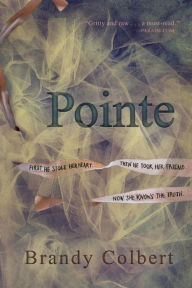
The last book I read was Pointe by Brandy Colbert.

Pointe will be inextricably linked in my mind to staying in the hospital, by my mother’s bedside. She was recovering from heart surgery. I’d volunteered to relieve my dad from nurse duty. My mother has Alzheimer’s and she kept trying to get out of bed. So from 3:00 pm to 11:00 a.m. the next day, I read Pointe. I slept only one hour in ten-minute naps. By novel’s end my eyes felt like they’d been filled with sand, but I kept reading (and convincing my mother she was in the hospital, not home) during the long, terrible night. I’m not sure most books would’ve held my interest in that situation.

I wanted to read Pointe because it’s about an African-American teen pursing ballet while finishing high school - and there aren’t many books like that. The protagonist, Theo, is recovering from anorexia and a broken heart. Theo discovers the man who abducted her best friend Donovan, missing for four years and now returned, was her former boyfriend - a man who lied to her about many things.

The reader follows Theo as she goes to school, ballet lessons, and parties. She makes questionable choices, just like any seventeen year old would. Theo’s voice is genuine, as are the depictions of drug use and sex - nothing is glossed over. She discovers that her ‘relationship’ was nothing but abuse, which is also the source of all her control issues.

Few books I know tackle pedophilia from the victim’s viewpoint with such authenticity and lack of voyeurism. This was Colbert’s debut novel. I look forward to reading more of her work, at home, far away from the hospital.
Visit Stephanie Gayle's website.

My Book, The Movie: Idyll Threats.

The Page 69 Test: Idyll Threats.

--Marshal Zeringue

Tuesday, September 8, 2015

Sara Jaffe

Sara Jaffe is a fiction writer living in Portland, OR. Her first novel, Dryland, is now out from Tin House Books. Her short fiction and criticism have appeared in publications including Fence, BOMB, NOON, Paul Revere’s Horse, matchbook, and The Los Angeles Review of Books. She co-edited The Art of Touring (Yeti, 2009), an anthology of writing and visual art by musicians drawing on her experience as guitarist for post-punk band Erase Errata.

Jaffe holds a BA from Wesleyan University and an MFA from the University of Massachusetts Amherst, and has received fellowships from the Virginia Center for the Creative Arts, RADAR Productions, and the Regional Arts and Culture Council. She is also co-founding editor of New Herring Press, a publisher of prose chapbooks.

Recently I asked the author about what she was reading. Jaffe's reply:
Are all books about adolescents automatically coming-of-age stories? What happens when a teenaged character doesn’t necessarily “become” anything, but simply wades around the mire that is adolescence, accumulating experience if not learning from it? What does it look like to write about teenage characters for an adult audience? This is the sort of narrative of adolescence I tried to create in Dryland, and one that I’m consistently drawn to—but while I was writing the book, I didn’t want to let myself read other books that covered similar terrain (for fear I’d decide I was going about it all wrong). What a pleasure, then, to finally be able to read the various anti-bildungsromans I’ve accumulated over the last few years.

There’s Lucy Ives’ Nineties, which looks at adolescence (in this case in New York City in the titular decade) as a kind of performance, or a series of performances, sometimes contradictory, each acted out with equal insistence. Experiences are at once visceral and mediated through the distancing mechanism of utter self-consciousness.

In Rachel B. Glaser’s Paulina and Fran, young women make art and learn more and less about themselves. I’m particularly taken with the fact that self-knowledge is not the endgame of this book—if anything, one might believe that the characters know themselves less well at the end of the book than they did at the beginning.

Suzette Mayr’s Monoceros is told in the aftermath of a gay teen’s suicide as a series of vignettes from the perspectives of multiple characters affected by this death. Usually alternating POVs bug me, but what I like here is that the different perspectives don’t jigsaw together to tell “the complete story”—rather, they show how such a story is infinitely complex, always incomplete.

I’ve just begun Douglas Martin’s Once You Go Back, and am so taken by his beautiful sentences, the way the narrative simultaneously moves forward and verges on disintegrating with each bloom of childhood pain.

Also on the list: Dia Felix’s Nochita. Lidia Yuknavitch’s Dora: A Headcase. Upcoming reissue of Eileen Myles’ Chelsea Girls.
Visit Sara Jaffe's website.

--Marshal Zeringue

Monday, September 7, 2015

Rajia Hassib

Rajia Hassib was born and raised in Egypt and moved to the United States when she was twenty-three. She holds an MA in creative writing from Marshall University and her short fiction has appeared in Upstreet, Steam Ticket, and Border Crossing magazines. She lives in West Virginia with her husband and two children.

Hassib's new novel is In the Language of Miracles.

Last month I asked the author about what she was reading. Her reply:
I’m currently reading Ann Beattie’s new collection of short stories, The State We’re In: Maine Stories. Ann Beattie is one of my all-time favorite authors, mainly because she writes beautiful, humorous and simultaneously poignant prose while exploring human relationships in the most intricate ways. On the sentence level, her work truly is riveting—I can flip any page open and enjoy fresh, smart imagery, and her choice of details gives even the shortest of her stories the ability to evoke an entire universe. This particular collection features linked short stories, which makes me love it even more, just because it lets me see how Beattie weaves and interconnects those details from one story to the next. I’ve also always found her dialogue particularly fascinating. Economic yet wonderfully natural, Beattie’s dialogue does it all, from adding details to enhancing characterization to moving the plot forward. From the point of view of craft, her dialogue is certainly worthy of close study.

While I usually never read more than one book at a time, I’m currently breaking this rule—mainly because I couldn’t wait until I finished the novel I was on before I started Beattie’s collection of short stories. The novel is The Death of Artemio Cruz by Carlos Fuentes, and I’ve been nibbling on it for some time now, partly because it’s one of those works of fiction that, to me, are to be admired, respected, and studied—even if not necessarily enjoyed. I find Fuentes’s depiction of the protagonist’s emotions, reaction to his impending death, and memories masterful, and he has the ability to change the style of his prose to reflect the scene’s emotional state, which is always fascinating to read, even if, at some points, it can get a bit cumbersome. I picked this novel up mainly out of interest in novels set in periods of political turmoil (something I’m researching for my own work), but I’m drawn to it for the interesting way Fuentes draws the character of his dying, quite immoral protagonist.

How to Get Filthy Rich in Rising Asia, by Mohsin Hamid, is a novel I read a couple of months ago but that has made a lasting impression on me. I’m a big fan of Hamid’s work in general, but this particular novel is a study in detail as well as in structure. I found his ability to portray his protagonists’ entire life—from his childhood to his death of old age—in a slim volume of 222 pages quite impressive. Hamid’s mastery of the second-person narrative continues here, a technique that I admired even if I found it, at times, a bit jarring (all the more so because of his repeated references to the novel as a self-help book in the beginning of each chapter). The novel’s true pull, for me, stems from Hamid’s exquisite, playful language, his spot-on choice of details, and, of course, the various themes he tackles, particularly the theme of social mobility. Hamid has also written one of the most fascinating last sentences I’ve ever read in a novel—18 lines long and such a wonderful ending to a truly admirable work.
Visit Rajia Hassib's website.

--Marshal Zeringue

Saturday, September 5, 2015

Eytan Bayme

Eytan Bayme is a graduate of McGill University and a former stage actor.

His new memoir, High Holiday Porn.

Recently I asked the author about what he was reading. Bayme's reply:
Recently, I was devastated by Shulem Deen’s memoir All Who Go Do Not Return. He was raised as a Chasidic Jew in New York, with no real English education or understanding of the secular world outside his front door. As a teenager, he moves to New Square, New York and becomes a Skverer Chasid, one of the strictest sects within Chasidic Judaism. He marries, has children and immerses himself in the extreme religious beliefs of him community — at one point even trashing the dorm room of a fellow Chasid upon suspicion that he was keeping an inappropriate photograph. But when he starts questioning his way of life and stops believing in God, his community excommunicates him and he loses everything. I loved this book so much because it illustrates the power a community holds over its members at its absolute worst, yet the writer, despite the life shattering restrictions his former friends and neighbors place upon him, still sees the value of peoplehood and the strength of the bonds it can form.

Currently I’m only forty pages into Roberto BolaƱo’s 2666 and I’m amazed that his story of four European academics’ shared love of a mysterious German novelist has kept me turning pages. I’m also amazed at how Bolano gets away with seven page sentences.
Visit Eytan Bayme's website.

My Book, The Movie: High Holiday Porn.

--Marshal Zeringue

Friday, September 4, 2015

Peter Lefcourt

Peter Lefcourt is a refugee from the trenches of Hollywood, where he has distinguished himself as a writer and producer of film and television.

His new novel is Purgatory Gardens.

Recently I asked Lefcourt about what he was reading. His reply:
At the moment, I am reading a book of stories by Alice Munro, entitled Runaway. Full disclosure: I am reading it because it was the choice of my reading group. I dove in reluctantly, but found myself gradually being seduced by the sheer originality of the author’s mind. Munro uses time in a most unconventional and effective manner, bouncing back and forth between present, past and future. Her characters are unpredictable, their apparently conventional lives fraught with all sorts of inner drama. There is a reason this woman won the Nobel Prize in Literature.
Visit Peter Lefcourt's website.

My Book, The Movie: Purgatory Gardens.

The Page 69 Test: Purgatory Gardens.

--Marshal Zeringue

Thursday, September 3, 2015

James R. Benn

James R. Benn is the author of the Billy Boyle World War II series, historical mysteries set within the Allied High Command during the Second World War. The series began with Billy Boyle, which takes place in England and Norway in 1942.

In The White Ghost, the tenth installment of the series, Billy meets a young John F. Kennedy.

Recently I asked Benn about what he was reading. His reply:
The Fate of Others, by Nancy Lefenfeld.

The Fate of Others tells the little-known story of Jewish resistance groups smuggling Jewish children out of occupied France into Switzerland during World War Two. Operating in the Haute-Savoie region, which until 1943 was occupied by Italian troops who often during a blind eye to their activities, the Zionist Youth Movement and other underground groups smuggled hundreds of Jewish children into neutral Switzerland. A little-known story of incredible courage.

Real Tigers, by Mick Herron.

I was lucky enough to get an advance reading copy of this entry in Mick Herron’s series, featuring disgraced MI5 agents exiled to Slough House and sentenced to career-ending mounds of meaningless paperwork. When one of them is kidnapped, the team reluctantly goes into action. Literate and funny, this one stands the Brit spy novel convention on its head.

And for pure fun reading, you can’t beat the tag sale treasures I came up with last week; six copies of the GI Combat comic books featuring The Haunted Tank and other staples of a misspent childhood!
Visit James R. Benn's website.

The Page 99 Test: The First Wave.

The Page 69 Test: Evil for Evil.

The Page 69 Test: Rag and Bone.

My Book, The Movie: Death's Door.

--Marshal Zeringue

Wednesday, September 2, 2015

Sharon Huss Roat

Sharon Huss Roat grew up in Lancaster County, Pennsylvania, and now lives in Delaware with her husband (who makes fonts), her son (who makes music), and her daughter (who makes believe!). She worked in public relations for twenty years before deciding what she really wanted to be when she grew up. Between the Notes is her debut novel. When she's not writing (or reading) books for young adults, you might find her planting vegetables in her backyard garden or sewing costumes for a school musical.

Recently I asked Roat about what she was reading. Her reply:
Almost all of my reading material over the past year has come in the form of Advance Reader Copies from other 2015 debut YA authors who are fellow members of the Fearless Fifteeners. The two in my hands right now are by authors I will be appearing with at book events this fall, so I’ve been very anxious to read their books. I also was intrigued by these two titles because they are very different from my own, and I find it better to be reading something that is not too similar to what I am currently writing.

First is The Cost of All Things by Maggie Lehrman, which I just finished reading this morning. And whoa, it was good. The story is told from four different points of view, three of which are in the present and one in the past. Sounds complicated and hard to follow, but it wasn’t. Kudos to Maggie for pulling that off, and weaving a fascinating magical element through it all—the work of the hekamists, who can cast spells. The chain of events caused by the spells and the four different perspectives are intertwined so seamlessly. I loved it. If I ever try writing from multiple perspectives, I’ll be looking back at this novel for a great example of how to make it work.

Next up is Blood and Salt by Kim Liggett. I haven’t read a scary book in a very long time, and I am both dying to read this one and terrified at the same time! This line from the book jacket is so deliciously frightening: “…something sinister and ancient waits among the rustling cornstalks of this village lost to time.” Ahhhh! There’s "unrequited love and murder, alchemy and immortality.” I haven’t read anything like this in… ever. I can’t wait to dig into it.
Visit Sharon Huss Roat's website.

The Page 69 Test: Between the Notes.

--Marshal Zeringue

Tuesday, September 1, 2015

Julia Keller

Julia Keller was born and raised in West Virginia, and now lives in Chicago and Ohio. In her career as a journalist, she won the Pulitzer Prize for a three-part series she wrote for the Chicago Tribune about a small town in Illinois rocked by a deadly tornado.

Her new novel, Last Ragged Breath, is the fourth book in the Bell Elkins Series.

Recently I asked the author about what she was reading. Keller's reply:
No fiery manifesto, no passionate proclamation, no defiant diatribe—but somehow, this became My Summer of Re-reading. I began revisiting books that I’d first loved long ago. New novels have been in the mix, too, of course—who can resist a fresh face?—but for the most part, I’ve strolled down literature’s memory lane. I re-read My Mortal Enemy by Willa Cather, and found nuances I’d missed the first time around in the brief but pungent story of a woman’s self-betrayal, and then I moved on to Night And Day by Virginia Woolf.

Like everyone, I love To the Lighthouse and Mrs. Dalloway, the novels for which Woolf is mostly known, but for some reason I picked up this, her second novel, once again. I know I’ve read it before—I wrote my doctoral dissertation on Virginia Woolf and read each of her novels multiple times—but for the life of me, I barely remember this one. Yet as I read my battered copy, I keep coming across phrases I had underlined and passages I had circled, complete with copious exclamation points in the margins. The novel seems vibrant and new, as if it could’ve been written just weeks ago. It’s a love story—two couples chat and spar and flit about each other—but it’s so much more than that as well: It is about youth and what happens to it, and it is about how much of our fate lies in our own hands. “Like most people, I suppose,” a character muses, “I’ve lived almost entirely among delusions, and now I’m at the awkward stage of finding it out. I want another delusion to go on with.” This is an astonishingly wise and psychologically acute novel, and it’s also a great deal of fun; Woolf’s playful sense of humor is often forgotten by those who get distracted by her long, mournful face and by her reputation for penning only dense interior monologues. Truth is, Woolf would’ve been the one slipping whoopee cushions beneath the unsuspecting backsides of the Bloomsbury group.

What else? Well, I’m just finishing up Richard Flanagan’s The Narrow Road to the Deep North, winner of last year’s Man Booker Prize, and it is every bit as grave and graceful and heartbreaking as you’ve heard. I adored H Is for Hawk, the memoir by Helen MacDonald about how training a wild creature helped her deal with the wildness of her grief over her father’s death. And I just embarked on Richard Russo’s That Old Cape Magic. I’d sort of given up on Russo after the first few chapters of his Pulitzer Prize-winning work, Empire Falls, which I found coy and unconvincing and vaguely misogynist, and then I chanced upon Bridge of Sighs, and was utterly, insanely captivated. It’s one of those novels that you think about even when you’re not reading it—and that you can’t wait to get back to.

Oh, and I just bought Aurora by Kim Stanley Robinson, and am racing through it. Robinson keeps the “science” in “science fiction,” but his chief gift is in creating narratives and characters that are plausible and compelling. During the same bookstore run, I snatched up The Lewis Man by Peter Man, sequel to Blackhouse. It is said that when you open the score of Wagner’s “Flying Dutchman,” you can feel the sea spray in your face; the same thing happens when you set forth upon this series set in the Outer Hebrides off the coast of Scotland.
Visit Julia Keller's website.

Writers Read: Julia Keller (September 2012).

Writers Read: Julia Keller (September 2013).

Writers Read: Julia Keller (September 2014).

--Marshal Zeringue

Monday, August 31, 2015

Thomas Cobb

Thomas Cobb is the author of Crazy Heart, which was adapted into a 2009 Academy Award-winning film starring Jeff Bridges, and Shavetail, among other books.

Cobb's new novel is Darkness the Color of Snow.

Recently I asked the author about what he was reading. His reply:
Starting with the present and working back a couple of weeks, these are the books I’ve been reading.

Bodies Electric by Colin Harrison. This is an older book of Harrison’s, his second novel if I’m not mistaken. I’m only fifty or so pages in, but Harrison has already set the major conflict as Jack Whitman, who works for The Corporation tries to do a good deed for a woman he met on the subway. The Corporation would seem not in favor of doing good deeds. Colin Harrison is, perhaps, the best thriller writer we have. I always find things to admire in his books.

Go Down Together by Jeff Guinn. Jeff Guinn is the author of The Last Gunfight and Manson, and a personal favorite of mine. Go Down Together, the story of Bonnie and Clyde, is also an earlier work I’ve gone to because Guinn isn’t writing his new books fast enough to suit me. He’s a meticulous researcher and a very fine writer. Guinn sifts through legend to find the truth about Bonnie and Clyde, and comes up with a story that’s even better than the myths we know.

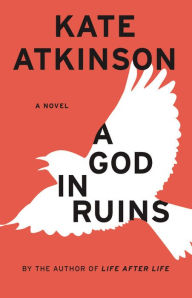
A God in Ruins by Kate Atkinson. Kate Atkinson is my newest favorite writer. I first read her novel Life after Life and was dazzled that she was able to pull off literary effects so beautifully. Reading Atkinson is like watching a great magician. It’s a trick of course, but done so wonderfully, it’s better than reality. A God in Ruins is something of a sequel to Life after Life, and probably better read after Life after Life, but not necessarily so. Her accounts of bombers in World War II are breathtaking.
Visit Thomas Cobb's website.

The Page 69 Test: Shavetail.

My Book, The Movie: Crazy Heart.

The Page 69 Test: Darkness the Color of Snow.

--Marshal Zeringue

Saturday, August 29, 2015

Shannon Grogan

Shannon Grogan is a 2nd grade teacher who writes at night, and at Starbucks or the library while her kids are at ballet and baseball, in a tiny logging town east of Seattle, WA. She holds degrees in education and graphic design/illustration. When she isn’t writing or teaching, she likes baking (gluten-free), shopping at Target, losing to her kids at Skip Bo or Apples to Apples, camping, or wishing she was on a beach. But usually she’s reading, or watching scary movies like Jaws, or reality TV like Cake Boss or Long Island Medium.

Grogan's new YA thriller is From Where I Watch You.

Recently I asked the author about what she was reading. Her reply:
Since I teach 2nd grade, I read for school, usually about 45 minutes a day to my class, and for fun at home, of course!

For my 2nd graders, I usually pick illustrated middle grade books with lots of humor for my classroom read-alouds, like Cecil and Anton: Cats at Sea, and Flora & Ulysses.

I also read picture books and usually pick ones I can use as mentor texts for our own writing. Our favorite this year, because we focused on opinion letter writing, was The Day the Crayons Quit. For both MG and PBs, humor and pictures definitely capture and keep my student’s attention. Good example: when Peach Crayon in The Day the Crayons Quit hides in the crayon box because he’s naked! Nothing gets attention and a laugh in a room of 7-8 year-olds like the word naked!

All books I choose to read in class have to have that the ‘we-can-read-it-over-and-over’!

For fun I’m all about YA!

I stick primarily to darker, pacier contemporary YA, but I love ‘quieter’ character-driven books too. I have too many favorites and favorite authors this year to name them all, but one of my favorite books, that I just finished was The Cost of All Things by Maggie Lehrman.

I usually do not like multiple POV books, and Maggie’s had 4 POVs! But she did such a fantastic job of writing this so seamlessly that I was sucked into the story quickly and couldn’t put it down!

Right now I’m reading The Sacred Lies of Minnow Bly by Stephanie Oakes. It’s based on Grimm’s The Handless Maiden. Loving it so far!

Bottom line, whatever I read, I have to be captured by the characters to keep reading. The characters, no matter what book, will keep me reading!
Visit Shannon Grogan's website.

My Book, The Movie: From Where I Watch You.

The Page 69 Test: From Where I Watch You.

--Marshal Zeringue