Monday, March 18, 2019

Katia Lief (aka Karen Ellis)

Karen Ellis is a pseudonym of author Katia Lief. She is a member of Mystery Writers of America, International Thriller Writers and The Authors Guild. She lives with her family in Brooklyn, NY.

Her new novel is Last Night.

Recently I asked Lief about what she was reading. Her reply:
When I realized that I’d never read Shirley Jackson’s seminal story “The Lottery,” I got a copy of the collection The Lottery and Other Stories. Because this story has been embedded in the literary zeitgeist since it was first published in 1948, I forgave myself for thinking I’d read it—I had seen a short film based on it, so I knew the essentials of the story—but now I craved the experience of reading it in the author’s own words.

I turned to the table of contents, found the titular story at the very end, and started reading. It was short, clear, clean—and powerful. Spoiler alert: A housewife in a small town waits with her neighbors in an annual rite in which someone is randomly selected as a sacrifice believed to bring farming luck. When to her horror her name is chosen, her friends and neighbors gather round and stone her to death.

Jackson’s tour de force in “The Lottery” was showing the shattering effects of rote social custom and thought on the individual. It’s a theme that she revisited in many of the collection’s other stories, and that feels eerily relevant today.

Next up on my TBR pile is Shirley Jackson: A Rather Haunted Life by Ruth Franklin. I’m so curious to learn about the woman behind all that dark brilliance.
Visit Katia Lief/Karen Ellis's website.

The Page 69 Test: Last Night.

--Marshal Zeringue

Saturday, March 16, 2019

Devin Murphy

Devin Murphy grew up near Buffalo, NY in a family with Dutch roots. He holds a BA/MA from St. Bonaventure University, an MFA from Colorado State University, a PhD from the University of Nebraska—Lincoln, and is an Assistant Professor of Creative Writing at Bradley University. He has worked various jobs in national parks around the country and once had a three–year stint at sea that led him to over fifty countries on all seven continents. His fiction has appeared in over 60 literary journals and anthologies, including The Missouri Review, Glimmer Train, The Chicago Tribune, New Stories from the Midwest, and Confrontation. He lives with his wife and children in Chicago.

Murphy's new novel is Tiny Americans.

Recently I asked the author about what he was reading. His reply:
The last few novels I’ve read were all wonderful.

The Vegetarian, by Han Kang, was certainly the most unsettling book I’ve read in a long time. My wife read it first and handed it over when she finished with this sort of concerned expression. The book is broken into three sections that each take a different path into a character’s extreme mental illness. At the start of the story, the focal character can’t get enough sunlight, and is constantly bearing herself to the sky, which was such a strong image that I think of her every time I feel the sun on my own skin now.

Elise Hooper’s Learning to See, about Dorothea Lange, delivers a fascinating look at a rebel who challenges a society set up to suppress women by developing an aesthetic that hews toward the honest beauty and terror found in a single face. Lange becomes the perfect tour guide through the era of the Roaring 20’s, the Great Depression, and The Japanese Internment, asking all relevant questions: What do we do from a place of comfort when we see injustice being done to others? What value does art hold in the face of pain and loss? How do we deal with having cameras in our pockets that both capture a moment and keep us from it? This is a fantastic historical novel that shows off the impressive talent Hooper has for compelling stories.

Lisa Duffy’s This is Home is a phenomenal novel which reveals such unique and endearing characters struggling through upheaval and loss in order to forge the true shape of their family. They face each day with humor, grit, and vulnerability that draws the reader in. Libby, Quinn, Bent, and even the world’s smelliest dog rush to life on these pages and have carved out a place for themselves forever in my imagination. Duffy is a master of writing hope into heartbreak.

I could keep going. I’ve had a lot of great reads lately. There, There, by Tommy Orange, where Native American culture and history are put into gritty contemporary characters who we see interact and interweave in a plot that hammers all through the story, and all through Oakland.

Finally, I was drawn to Where the Crawdads Sing because of Owens' background as a naturalist, and man, does she deliver a stunning look at the natural world of the Carolina coastal region as the backdrop to great love story and murder mystery with a huge twist.
Visit Devin Murphy's website.

My Book, The Movie: Tiny Americans.

--Marshal Zeringue

Thursday, March 14, 2019

Margaret Verble

Margaret Verble is an enrolled citizen of the Cherokee Nation of Oklahoma. Her first novel, Maud's Line, was a finalist for the Pulitzer Prize. She lives in Lexington, Kentucky.

Verble's new novel is Cherokee America.

Recently I asked the author about what she was reading. Her reply:
I tend to buy a whole bunch of wildly different kinds of books in a one or two day period. Then I stack them on my bedside table, and select them for reading according to how I’m feeling at a particular moment, usually in the evening. If I’m writing on the early drafts of a novel, I go lightly on fiction, more heavily on background sources for my work, biographies, histories, or true crimes. Of the books I’ve read in the past two months, my favorites are these:

Lincoln in the Bardo, by George Sanders, is the best novel I’ve read in a couple of years. It’s innovative in style, evocative of deep emotion, historically grounded, and spiritually intriguing. I will read it again. And again. Once is not enough to grasp fully its genius.

The Authenticated History of the Famous Bell Witch, by M.V. Ingram, was first published in 1894, and is the best account of a mystery that hasn’t been solved to this day. I grew up in Nashville hearing about this witch, which haunted the John Bell family in Robertson County, TN, from 1817 to 1821, and then again for a two week period seven years later. The witch was seen and heard by hundreds of people, including doctors, lawyers, legislators, preachers, and Andrew Jackson. The accounts of the phenomenon are so astonishing that I was worried I’d been tricked by a book that wasn’t what it purported to be. So I went to the online newspaper archives of the Nashville Tennessean to be sure it was really published over a hundred and twenty years ago. I quickly found it reviewed on June 26, 1910, as an old, but fascinating, read.

To help correct my deficiencies from being raised in the segregated South, I try to regularly include African American literature or history in my reading. I recently finished Aristocrats of Color: The Black Elite, 1880-1920. This isn’t the first book I’ve read on this particular subject, but the scholarship is sparse, and I am unaware of any first-class literary fiction that brings this fascinating caste of people to life since Edward P. Jones’s masterpiece, The Known World.

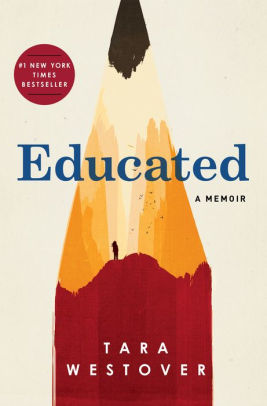
I generally avoid memoirs. I think too many are written, most of our lives aren’t as extraordinary as we think, and biography is a more honest endeavor. That said, I’ve recently read Tara Westover’s, Educated. I found it a harrowing page-turner, hard to put down, and so packed it could be the foundation of an entire semester’s inquiry into the psychology of abuse, the relationship between hyper-religion and mental illness, and the pathology of patriarchy. It's as good as everybody says.

Finally, last night I finished Andrew Morton’s, Wallis in Love: The Untold Story of the Duchess of Windsor, the Woman who Changed the Monarchy. I worked in the U.K. for nine years, and used to have a home there close to the edge of Windsor Great Park. I loved that home and miss it, so I often dip into British literature and history. This is neither the most scholarly nor most scandalous biography of the Duchess of Windsor I’ve ever read, but it certainly held my attention. I was sorry when it ended.
Visit Margaret Verble's website.

--Marshal Zeringue

Tuesday, March 12, 2019

Claire Booth

Claire Booth is a former true crime writer, ghostwriter, and reporter. She lives in California. Her Sheriff Hank Worth Mysteries include The Branson Beauty and Another Man's Ground. The newly released third book in the series is A Deadly Turn.

Recently I asked Booth about what she was reading. Her reply:
I usually have both a fiction and a nonfiction book going at the same time. I’ve tried, but I just can’t read two novels simultaneously. If I do one of each, I find I get the most out of both.

Right now, I’m immersed in the absolutely delightful Dreyer’s English. It’s by Benjamin Dreyer, the copy chief of Big 5 publisher Random House, and it’s a word geek’s dream. You might think it would be a dry lecture on grammar and usage, but it’s not. It’s a witty takedown of pretentious rules and an affirmation of the important ones, like the error of using an apostrophe to make a word into a plural (“For a modest monthly fee, I will come to wherever you are, and when, in an attempt to pluralize a word, you so much as reach for the apostrophe key, I will slap your hand.”)

Dreyer talks about everything from comma placement to dangling modifiers to often-confused words. This is one of my favorites: discreet and discrete (“often mixed up, not only but particularly by the authors of frisky personal ads.”)

I could go on and on, but I’ll leave you to discover the wonders of this book yourself. It’s a must for anyone who loves writing and language.

The other book I’m currently enjoying is Cathy Ace’s The Wrong Boy. Ace is Welsh and has set this book in her homeland. Her joy in this comes through clearly, even though the story itself is dark and layered in menace. Ace has always had a great ability to create really distinct characters, and she does it again here. I’m not finished with it yet, so I can’t weigh in on the ending, but I can say that it’s tightening itself around me like a vise, which I love. So if you’ll excuse me, I’m going to succumb to its pull and get back to reading!
Visit Claire Booth's website.

My Book, The Movie: A Deadly Turn.

The Page 69 Test: A Deadly Turn.

--Marshal Zeringue

Monday, March 11, 2019

Crystal King

Crystal King is a novelist, editor, professor, social media professional, and critical & creative thinker.

Her debut novel, Feast of Sorrow, is about Marcus Gavius Apicius, the man whose name is on the world’s oldest known cookbook.

Her new novel, The Chef's Secret, is a story about a famous Italian Renaissance chef, Bartolomeo Scappi, who was the cuoco segreto (private cook) to several Popes.

Recently I asked King about what she was reading. Her reply:
Time travel has been on my mind lately, it seems. A desire to escape the things of this world? I’m not sure, but I’ve been fortunate to find a bookish escape in several time travel books in recent months.

An Ocean of Minutes by Thea Lim was one of my favorite reads last year. In the midst of a deadly flu pandemic, time travel has been developed as a way to thwart the virus. The cost of the cure is prohibitive for most, so the solution is to jump people ahead to the time when the virus has run its course. Sounds great, right? Except that there is a catch. If you can’t pay for the cure for your loved one in this time frame (interestingly, the 1980s), you can sell yourself into several years of indentured servitude twelve years into the future, working for big corporations to pay off the cost. But that cost proves to be even more devastating for our protagonist, Polly. Absolutely gripping.

I loved The Psychology of Time Travel by Kate Mascarenhas for its take on how time travel was invented--by four women in 1967. One of them suffers a breakdown, is ostracized by her peers, and erased from the history of time travel’s invention. I loved the nearly all female cast, the inventiveness of moving through time, and how two women, Ruby and Odette, are at the heart of a really strange murder mystery. It begs so many questions, particularly--how can you kill a time traveler if they can always move ahead and see how they will die? A fantastic, fast-paced read.

Middlegame by Seanan McGuire isn’t out in the world as of this writing, but I managed to score an early copy. It’s my first introduction to the author, and wow, what a way to enter the world of her imagination. This is time travel of a totally different kind, a story that rips the reader through the worlds of two twins, one who sees and manipulates the world through math, the other through words. Ambitious, epic, and one I highly recommend for the TBR list.
Visit Crystal King's website.

The Page 69 Test: Feast of Sorrow.

--Marshal Zeringue

Sunday, March 10, 2019

Soraya M. Lane

Soraya M. Lane graduated with a law degree before realizing that law wasn't the career for her and that her future was in writing. She is the author of historical and contemporary women's fiction, and her novel Wives of War was an Amazon Charts bestseller.

Lane lives on a small farm in her native New Zealand with her husband, their two young sons and a collection of four legged friends. When she's not writing, she loves to be outside playing make-believe with her children or snuggled up inside reading.

Lane's new novel is The Spitfire Girls.

Recently I asked the author about what she was reading. Her reply:
I have just finished reading The Beantown Girls by Jane Healey. Jane and I are both published by Lake Union (Amazon Publishing), and this book is fantastic, a really great historical women’s fiction read. I liked that it explored something very unique that women were part of during WWII, and I particularly loved the ending.

Right now I’m finishing judging published romance books for Romance Writer’s of America’s RITA award, so those titles are top secret, but next on my reading list for pleasure is Liane Moriarty’s Nine Perfect Strangers. Liane is one of my favourite authors, her books are very addictive, and she’s my go-author for a great vacation read.

I also have Lucinda Riley’s Seven Sisters series waiting to read - we’re heading away in April to Australia, so I’m going to be carrying a lot of paperbacks with me! Yes, I’m very old school, I read on my Kindle for non-fiction research and some reading, but nothing beats holding a paperback.
Visit Soraya Lane's website.

My Book, The Movie: The Spitfire Girls.

The Page 69 Test: The Spitfire Girls.

--Marshal Zeringue

Friday, March 8, 2019

Andrew Ridker

Andrew Ridker was born in 1991. His first novel, The Altruists, is out now from Viking/Penguin. It will be published in seventeen other countries. He is the editor of Privacy Policy: The Anthology of Surveillance Poetics and his writing has appeared in The New York Times, The Paris Review, Guernica, Boston Review, The Believer, St. Louis Magazine, and elsewhere. He is currently an Iowa Arts Fellow at the Iowa Writers' Workshop.

Recently I asked Ridker about what he was reading. His reply:
I recently finished Falconer by John Cheever. I’ve long admired Cheever’s short fiction, but Falconer was unlike anything I’d ever read by him—or anyone, for that matter. In theory it’s the story of a man, Ezekiel Farragut, who is sent to jail for murdering his brother. But Cheever is less concerned with crime and punishment as he is the strange assortment of men who populate Falconer State Prison. Many pages of this short novel are given over to anecdotes delivered by the inmates and staff. These mini-stories are remarkable feats of voice, eccentric and yet wholly believable. Cheever was never incarcerated himself, but he taught a writing class at Sing Sing once, and drew on countless details from that experience while working on the novel. Gritty, unusual, and sexually frank, Falconer is time well spent.

Next on the to-read pile is Vivian Gornick’s memoir Fierce Attachments and Hanif Kureishi’s Intimacy. I loved Gornick’s The Odd Woman in the City, a memoir in fragments about living and walking in New York; it makes you feel as though no sensible person could live anywhere else. I’m a great admirer of Kureishi’s best-known novel, The Buddha of Suburbia, and by all accounts Intimacy is a brutally honest depiction of male selfishness and ennui—a turn-off for some, but catnip to me.
Visit Andrew Ridker's website.

--Marshal Zeringue

Thursday, March 7, 2019

David Downie

David D. Downie has called Paris and the Marais home since 1986. He has written for over 50 publications worldwide including Bon Appétit, The Los Angeles Times, Town & Country Travel, The San Francisco Chronicle, epicurious.com, and Salon.com. He is the author of the critically acclaimed Paris, Paris: Journey into the City of Light, three Terroir guides, as well as several cookbooks and crime novels. He lives with his wife, Alison Harris, a photographer, and creates custom tours via his "Paris, Paris Tours" blog site.

Downie's new novel is The Gardener of Eden.

Recently I asked the author about what he was reading. His reply:
Please understand, when I write “read” I mean listen: blind in one eye, I have low vision in the other. So, I listen to books, most of them read to me by my wife, or I use Librivox.org for audio. Right now, we’re reading A Legacy of Spies by John le Carré. I love his early books—A Small Town in Germany, The Spy Who Came in From the Cold. Some of his later novels didn’t work for me. This one proves le Carré is still the measure of greatness, the best spy fiction writer, ever. The hero is Peter Guillam, now white haired, the last of the disciples of the fictional spymaster, Smiley. Wonderful, un-put-down-able so far, above all for the characters and dialogue.

If ever an old tale, told again a few years back, is a must-read right now, and too topical for comfort, it is Robert Harris’s flawlessly, masterfully written An Officer and A Spy, about the Dreyfus Affair. Polanski is turning it into a movie, working on the streets of Paris as I type this. And the anti-Semitism that drove that shockingly nightmarish affair is rife—again—in France and elsewhere.

A very oldie but a very unexpectedly goodie thriller in the detective genre is the unappealingly named Bat Wing by Sax Rohmer. He wrote the Fu Manchu series and dozens of other mediocre books but this novel is excellent. Voodoo, murder, an elaborate frame up, moody, creepy settings in London and the English countryside, plus a budding romance, all the ingredients come together in this reassuring classic.
Visit David Downie's website.

The Page 69 Test: The Gardener of Eden.

My Book, The Movie: The Gardener of Eden.

--Marshal Zeringue

Tuesday, March 5, 2019

Phillip Margolin

Phillip Margolin has written over twenty novels, most of them New York Times bestsellers, including Gone But Not Forgotten, Lost Lake, and Violent Crimes. In addition to being a novelist, he was a long time criminal defense attorney with decades of trial experience, including a large number of capital cases.

Margolin's new novel is The Perfect Alibi, his second book in the series featuring Robin Lockwood, ex-MMA fighter and Yale law school graduate.

Recently I asked the author about what he was reading. Margolin's reply:
I am addicted to reading and I started reading several novels a week in elementary school. I don't limit myself to one genre so my choices are all over the place. Over ten years ago, I read Book One of Don Quixote by Miguel de Cervantes and really enjoyed it. For some reason, I never got around to reading Book Two. During a recent trip to Spain, I started feeling guilty and bought a new edition of the book. It is hilarious and not the least bit dated. I just finished rereading Book One and took a break to go on vacation, during which I read Heretic, the third book in Bernard Cornwell's Grail Trilogy. Cornwell is one of my favorite writers of historical novels. His Sharpe series is fantastic and Heretic and the other books in the trilogy were terrific. I love Agatha Christie but I've read almost all of her novels, so I recently switched to Dorothy Sayers. I finished my vacation reading with the 1935 Lord Peter Wimsey/ Harriet Vane novel Gaudy Night. I am halfway through and really enjoying it. When I finish I will go back to Book Two of Don Quixote, and I vow to finish it this time.
Visit Phillip Margolin's website and Facebook page.

The Page 69 Test: The Perfect Alibi.

--Marshal Zeringue

Monday, March 4, 2019

Kristen Ghodsee

Kristen Ghodsee is Professor of Russian and East European Studies at the University of Pennsylvania. Her books include Red Hangover: Legacies of Twentieth-Century Communism, Why Women Have Better Sex Under Socialism: And Other Arguments for Economic Independence, and the newly released Second World, Second Sex: Socialist Women's Activism and Global Solidarity during the Cold War.

Recently I asked Ghodsee about what she was reading. Her reply:
Right now, I am reading the excellent book, Cold War Anthropology: The CIA, The Pentagon and the Growth of Dual Use Anthropology, by David H. Price. I have long been interested in the impact of Cold War politics on the discipline of anthropology, and back in graduate school I remember reading an essay by Laura Nader about what she called the “Phantom Factor” in anthropology: the persistent (if hidden) presence of the United States’ Central Intelligence Agency (CIA) in the production of anthropological knowledge about the world. Both Nader and now Price document the uncomfortable relationship between the scholarly study of foreign cultures and the needs of the U.S. military in its efforts to prevent the spread of world communism. After World War II, the CIA had also funneled research monies through dummy funding agencies toward unsuspecting scholars and into many academic research centers and area studies institutes. The Price book exhaustively demonstrates how ethnographic research was often repurposed by the CIA, without the consent of the scholars who produced it. The history of the discipline of anthropology in the United States has been deeply shaped by this covert influence.

I think what I find most fascinating about the discussion is how the use of research grants and fellowships also kept some anthropologists from becoming to critical of U.S. foreign policy, something that Nader also wrote about in the late 1990s. I believe that scholars in all disciplines have a duty to understand the history of knowledge production in their fields, and particularly how that knowledge has been politicized or coopted for different (even nefarious) purposes.
Learn more about Second World, Second Sex at the Duke University Press website.

My Book, The Movie: The Left Side of History.

The Page 99 Test: The Left Side of History.

--Marshal Zeringue